
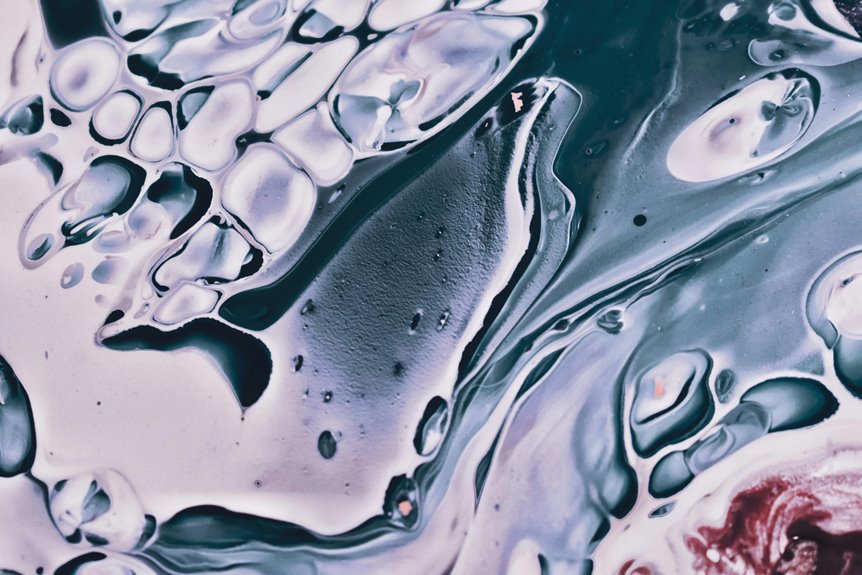
To achieve a watercolor effect with wet tie-dyeing, start with a natural fiber fabric like cotton or silk and dampen it evenly, but not soaked. Apply fiber-reactive dyes gently using spray bottles or brushes, letting colors blend softly without harsh edges. Control water and dye amounts carefully to prevent muddy colors and maintain vibrancy. Allow the dye to set properly before rinsing and washing gently. With the right techniques, you’ll master soft, flowing color blends, and there’s more to discover about perfecting this beautiful style.
Key Takeaways
- Thoroughly dampen but do not soak the fabric for controlled dye blending and soft edges in wet tie-dyeing.
- Use fiber-reactive dyes on natural fibers like cotton for vibrant, lasting watercolor effects.
- Gently apply dyes with spray bottles or brushes to encourage natural color diffusion on wet fabric.
- Layer dye colors gradually, allowing each to settle before adding the next to avoid muddying.
- Maintain moisture by working in small sections and wrapping fabric to keep it damp during dye setting.
Understanding the Basics of Wet Tie-Dyeing
Although wet tie-dyeing might seem complex at first, you can master it by understanding its core principles. The key is working with a damp fabric, which helps colors blend softly, creating that signature watercolor look.
You start by wetting your fabric thoroughly but not soaking it—too much water can cause colors to run uncontrollably. Next, apply your dyes gently, allowing them to spread naturally on the wet surface. This technique differs from traditional tie-dye by focusing on smooth gradients rather than sharp contrasts.
Choosing the Right Fabric for Watercolor Tie-Dye
Now that you understand how moisture and dye interact to create those soft, blended effects, choosing the right fabric becomes your next step.
Natural fibers like cotton, silk, and rayon absorb water and dye more readily, making them ideal for achieving that delicate watercolor look. Cotton is a favorite because it’s affordable and widely available, while silk offers a luxurious texture that enhances color saturation.
Avoid synthetic fabrics like polyester, as they resist dye absorption and can result in harsh, uneven colors.
Also, consider fabric weight; lighter fabrics allow dyes to spread more easily, helping you get those signature soft edges.
Selecting Fabric Dyes for Soft Color Blends
When selecting fabric dyes for soft color blends, you’ll want to focus on dyes that mix smoothly and offer gentle hues.
Fiber-reactive dyes work great for vibrant yet delicate watercolor effects, while natural dyes can provide subtle, earthy tones.
Choosing the right colors, like pastels or muted shades, helps you achieve those soft, flowing blends in your wet tie-dye projects.
Dye Types Overview
Since achieving soft color blends requires careful dye selection, you’ll want to choose dyes that react well with your fabric and water.
Fiber reactive dyes are ideal for natural fibers like cotton because they bond chemically, giving vibrant, lasting color that spreads smoothly when wet.
Acid dyes work best on protein fibers such as silk and wool, offering rich hues and excellent flow for that watercolor look.
All-purpose dyes can be tempting but often lack the precision and blendability needed for soft shifts.
Remember, the dye’s solubility and fixation process influence how it diffuses on damp fabric, so pick those designed for wet application.
Best Dye Colors
Choosing the right dye colors plays a big role in creating those soft, flowing blends you want with wet tie-dyeing. You’ll want to pick colors that naturally mix well and don’t muddy when they overlap. Lighter, pastel shades work beautifully as they blend gently on wet fabric, giving you that watercolor softness. Avoid overly dark or neon colors—they can overpower the look and reduce subtlety.
Here’s a quick guide to help you select:
| Dye Color Type | Best For |
|---|---|
| Pastels | Soft, airy blends |
| Earth Tones | Natural, muted shifts |
| Primary Colors | Bright, clear mixing |
Stick to these, and you’ll easily achieve dreamy, flowing watercolor effects!
Preparing Your Workspace and Materials
Before you start, gather all your essential materials like fabric, dyes, spray bottles, and gloves.
Set up your workspace in a well-ventilated area with protective coverings to keep surfaces safe.
Don’t forget to wear old clothes and gloves to protect yourself from stains and chemicals.
Essential Materials Checklist
Gathering five key materials will set you up for success in creating your watercolor wet tie-dye effect.
First, choose a natural fiber fabric like cotton or silk for ideal dye absorption.
Next, pick fiber-reactive dyes in your preferred colors to guarantee vibrant, lasting results.
You’ll also need spray bottles filled with water to keep the fabric wet and help blend the colors seamlessly.
Rubber bands or string are essential for tying sections tightly and creating unique patterns.
Finally, have plastic gloves on hand to protect your skin from staining and a plastic table cover to keep your workspace clean.
Having these materials ready means you can focus on the creative process without interruptions or missing tools.
Workspace Setup Tips
Setting up your workspace properly guarantees a smooth and enjoyable wet tie-dyeing experience.
Begin by choosing a flat, well-ventilated surface with easy access to water. Cover it with plastic or a disposable tablecloth to protect against dye stains.
Arrange all your materials—fabric, dyes, spray bottles, and rubber bands—within arm’s reach to keep your workflow efficient. Use containers or trays to contain wet fabrics and excess dye, preventing messes.
Have plenty of paper towels or cloths nearby for quick cleanups. Make sure your workspace is well-lit to accurately see color blending and patterns.
Safety and Protection Measures
While preparing your workspace and materials, you’ll want to prioritize safety and protection to avoid accidents and damage.
First, cover your surfaces with plastic or old newspapers to prevent dye stains. Wear gloves to guard your hands from harsh chemicals and dyes.
Make sure your work area is well-ventilated, especially if you’re using fabric paints or fixatives with fumes. Keep a spray bottle of water nearby for quick cleanups or accidental spills.
Have paper towels or rags ready to blot excess dye and prevent it from spreading unintentionally. Store your dyes and chemicals safely out of children’s reach.
Finally, wear old clothes or an apron to shield your clothing. Taking these steps guarantees a safer and cleaner tie-dyeing experience while achieving your watercolor effect.
Wetting the Fabric for Optimal Dye Absorption
To achieve vibrant, flowing colors in your wet tie-dye project, you’ll need to thoroughly wet your fabric before applying any dye.
Start by soaking your fabric in clean, room-temperature water until it’s fully saturated but not dripping. This guarantees the fibers absorb the dye evenly, allowing colors to blend seamlessly for that watercolor effect.
After soaking, gently squeeze out excess water—your fabric should be damp, not soaked—so the dye can spread without pooling. Using a spray bottle to mist the fabric can also help maintain consistent moisture during the dyeing process.
Techniques for Applying Dye to Create Watercolor Effects
Although applying dye may seem straightforward, mastering specific techniques will help you achieve the soft, blended watercolor look you want.
Begin by using a spray bottle or a brush to apply dye gently onto the wet fabric. This approach allows you to control the amount and placement of color precisely.
Try dabbing or stippling with a sponge or brush to create delicate, uneven patches that mimic watercolor strokes. When applying dye, avoid over-saturating any area; instead, build color gradually for subtle shifts.
Use lighter pressure and quick movements to prevent harsh lines. Remember to work in small sections to maintain a wet surface, which encourages natural diffusion and soft edges.
These techniques guarantee your dye flows smoothly, creating the signature watercolor effect in your tie-dye project.
Blending and Layering Colors Seamlessly
When you blend and layer colors seamlessly, you create depth and dimension that bring your watercolor tie-dye to life.
Start with a damp fabric, then apply your first color gently, allowing it to spread naturally. While the fabric is still wet, introduce a second color nearby, letting the edges meet and merge softly.
Use a light touch to encourage smooth changes without harsh lines. Layer colors gradually, giving each a moment to settle before adding the next. This careful layering helps you avoid muddy colors and keeps each hue vibrant.
Tips for Controlling Dye Flow and Saturation
To control your dye flow, start by managing how much water you use on the fabric—too much can cause colors to run uncontrollably.
Next, adjust the dye concentration to get the saturation level you want, whether it’s soft and subtle or bold and vivid.
These simple tweaks help you achieve precise watercolor effects with wet tie-dyeing.
Managing Water Amount
Mastering the right water amount is essential for controlling how your dyes flow and saturate the fabric. When your fabric is too wet, dyes can spread uncontrollably, causing muddy colors.
On the other hand, if the fabric is too dry, the dye won’t blend smoothly, losing that watercolor softness. To manage this, dampen your fabric evenly with a spray bottle or sponge before applying dye.
Experiment with different moisture levels by adjusting how much water you use—less water results in sharper edges, while more water encourages gentle blending.
Always test on a scrap piece first to see how dye reacts. By balancing water carefully, you’ll gain better control over the flow and saturation, creating vibrant yet delicate watercolor effects in your tie-dye projects.
Adjusting Dye Concentration
Although water amount plays a crucial role, adjusting dye concentration lets you fine-tune how the colors flow and saturate your fabric.
When you use a more concentrated dye, colors become richer and more defined, creating bold spots within the watercolor effect. Conversely, diluting your dye softens the hues and encourages more blending, perfect for subtle changes.
Start by mixing small test batches to see how different concentrations behave on wet fabric. Remember, thicker dye flows less, giving you more control, while thinner dye spreads quickly, which can lead to unexpected bleeding.
Setting the Dye to Preserve Vibrant Colors
Since vibrant colors can fade quickly if not properly set, you’ll want to act promptly once your tie-dye design is complete. Setting the dye correctly locks in those beautiful hues and guarantees your watercolor effect stays bright and fresh.
Here’s how to do it:
- Wrap and Rest: Cover your fabric with plastic wrap to keep it moist and let it sit at room temperature for 6 to 24 hours. This waiting period allows the dye to fully bond with the fibers.
- Heat Fixing: After resting, you can heat set the dye using a clothes dryer on high heat for about 20 minutes or by ironing the fabric with a protective cloth.
- Avoid Rinsing Immediately: Don’t rinse your fabric right away; waiting helps the colors bond deeper, preserving vibrancy.
Washing and Caring for Your Watercolor Tie-Dyed Fabric
Once you’ve set the dye properly, caring for your watercolor tie-dyed fabric becomes essential to maintain its vibrant look.
Start by washing your fabric separately in cold water to prevent colors from bleeding onto other clothes. Use a gentle detergent designed for delicate fabrics, avoiding bleach or harsh chemicals.
Wash separately in cold water with gentle detergent; avoid bleach to keep colors vibrant and prevent bleeding.
Turn the fabric inside out to reduce friction during washing and help preserve the colors. Air dry your tie-dye piece rather than using a dryer, as heat can fade the dye over time.
When ironing, use a low heat setting and place a cloth between the iron and fabric to protect the design.
Creative Project Ideas Using Watercolor Wet Tie-Dye
Caring for your watercolor tie-dyed fabric guarantees its colors stay bright, but the fun really begins when you start creating with it.
You can transform your vibrant fabric into unique, eye-catching projects. Here are three creative ideas to get you started:
- Custom Apparel: Use your watercolor tie-dye to make scarves, t-shirts, or even tote bags that showcase your artistic flair.
- Home Decor: Sew pillow covers or table runners that add a splash of color and personality to any room.
- Wall Art: Stretch the fabric over a canvas frame to create one-of-a-kind artwork that brightens your space.
Frequently Asked Questions
Can I Use Natural Dyes Instead of Synthetic Ones for Watercolor Effects?
Sure, you can use natural dyes, but don’t expect a unicorn to paint rainbows on your fabric. They’re subtler and less predictable, so you’ll need patience and a sense of adventure to get that watercolor vibe.
How Does Water Temperature Affect Dye Absorption in Wet Tie-Dye?
You’ll find warmer water opens fabric fibers, letting dye absorb faster and blend smoothly, while cooler water slows absorption, giving you more control over color placement. Adjust temperature to match your desired effect.
What Safety Precautions Should I Take When Working With Fabric Dyes?
You’ll want to keep things comfy by wearing gloves and a mask to avoid dye’s little surprises. Work in a well-ventilated area, protect surfaces with old sheets, and wash hands thoroughly to stay safe and stain-free.
Can Wet Tie-Dye Techniques Be Applied to Synthetic Fabrics?
You can apply wet tie-dye techniques to synthetic fabrics, but results vary since synthetics don’t absorb dye like natural fibers. Use dyes designed for synthetics, and expect colors to be less vibrant and more subtle.
How Long Does the Dye Setting Process Typically Take for Best Results?
Wondering how long you should wait for the dye to set? Usually, you’ll want to let it sit for 6 to 24 hours to guarantee vibrant colors. Don’t rush it; that patience really pays off!