
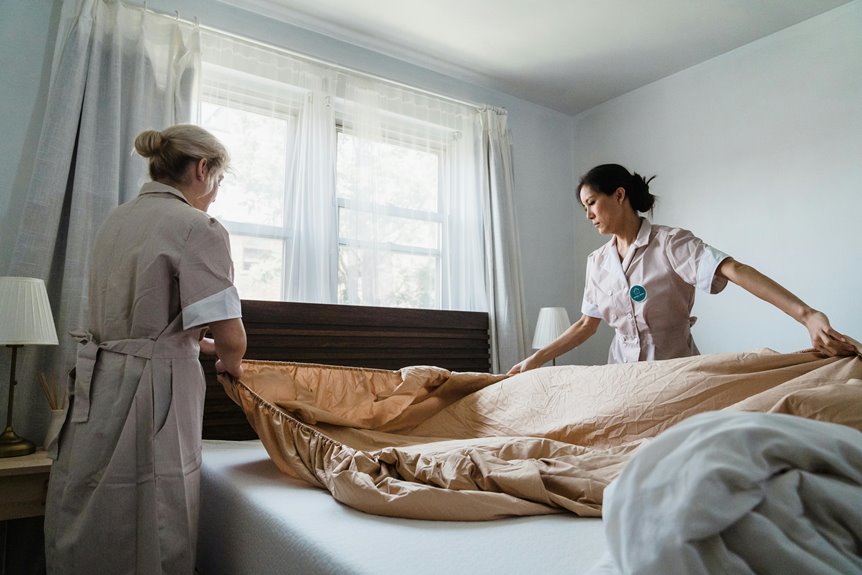
Yes, linen can shrink, especially when exposed to moisture and heat. To minimize shrinkage, wash it in cold water with mild detergent and avoid wringing. Air drying is best, but if you use a dryer, select low heat settings. Keep your linen away from high temperatures during ironing, too. Look for signs of shrinkage, like puckering or fading. To keep your linen looking great, follow these care tips, and you’ll discover more ways to extend its lifespan.
Key Takeaways
- Linen naturally shrinks when exposed to moisture and heat, especially during the first wash.
- To minimize shrinkage, wash linen in cold water and use gentle cycles with mild detergent.
- Air drying is preferred; if using a dryer, select low heat settings to protect the fabric.
- Iron linen while damp on low to medium heat to maintain its integrity and prevent damage.
- Signs of shrinkage include puckering seams, rough texture, and overall fabric contraction.
Understanding Linen Shrinkage
When you first wash your linen, you might notice some shrinkage, which can be surprising if you’re not prepared.
Linen, made from flax fibers, naturally shrinks when exposed to moisture and heat. This initial shrinking usually happens during the first wash, so don’t panic. It’s a normal process that helps your linen settle into its final size.
To minimize shrinkage, always wash your linen in cold water and opt for gentle cycles. Avoid high heat when drying—air drying is a safe option.
If you do use a dryer, keep it on low heat. Remember, understanding how linen behaves during washing will help you keep your items looking great and feeling comfortable for years to come.
Factors Leading to Linen Shrinkage
When it comes to linen shrinkage, heat exposure plays a significant role.
You’ll find that the methods you use for washing and drying can also impact the fabric’s size.
Understanding these factors can help you keep your linen looking its best.
Heat Exposure Effects
Although linen is known for its durability, exposure to excessive heat can lead to unwanted shrinkage, compromising the fabric’s quality.
When you iron or dry linen at high temperatures, the fibers can contract, resulting in a tighter weave and smaller dimensions. It’s essential to be mindful of the heat settings on your appliances.
If you’re using a dryer, opt for a low-heat setting to prevent damage. Additionally, avoid leaving your linen items in direct sunlight for prolonged periods, as UV rays can weaken the fibers and exacerbate shrinkage.
Always pay attention to the care labels and adjust your approach accordingly. By managing heat exposure, you’ll help maintain your linen’s shape and integrity for years to come.
Washing and Drying Methods
Proper washing and drying methods are essential for preventing linen shrinkage. Always wash your linen in cold water using a gentle cycle. Hot water can cause the fibers to contract, leading to unwanted shrinkage. When it comes to detergent, choose a mild option to protect the fabric’s integrity.
After washing, avoid wringing or twisting your linen, as this can distort its shape. Instead, gently press out excess water.
For drying, opt for air drying whenever possible. If you must use a dryer, select a low heat setting and remove the linen while it’s still slightly damp. This method helps maintain its shape and reduces the risk of shrinkage.
With proper care, your linen will stay beautiful and retain its size.
The Impact of Heat on Linen
When it comes to caring for your linen, heat plays a vital role.
High temperatures during washing and drying can lead to unwanted shrinkage and damage.
Understanding linen’s heat sensitivity helps you maintain its quality and longevity.
Heat Sensitivity of Linen
Heat can greatly affect the quality and longevity of your linen items, so understanding its sensitivity is vital. Linen fibers are naturally delicate, and excessive heat can weaken them.
When you expose your linen to high temperatures, whether through ironing or direct sunlight, you risk damaging its structure and causing premature wear. It’s important to keep your linen away from extreme heat sources to maintain its integrity.
If you need to iron your linen, use a low to medium heat setting and always guarantee it’s slightly damp. This approach helps preserve its texture and prevents scorching.
Washing and Drying Effects
Although washing and drying linen can seem straightforward, the process is essential for maintaining its quality. When you wash linen, opt for cold or lukewarm water to prevent shrinking and preserve its natural fibers. Always use a gentle detergent, as harsh chemicals can damage the fabric.
When it comes to drying, air-drying is your best bet. If you must use a dryer, select a low heat setting. High heat can cause significant shrinkage and weaken the fibers over time.
Don’t forget to remove your linen while it’s still slightly damp; this helps reduce wrinkles. Remember, proper washing and drying techniques can keep your linen looking fresh and beautiful for years to come, so take care with each step!
Washing Techniques to Prevent Shrinkage
To keep your linen looking fresh and prevent unwanted shrinkage, you should pay close attention to your washing techniques.
Here are some essential tips to follow:
- Use cold water: Wash your linen in cold water to minimize the risk of shrinkage.
- Gentle cycle: Choose a gentle cycle on your washing machine to reduce agitation.
- Mild detergent: Opt for a mild, liquid detergent that’s effective yet gentle on fibers.
- Avoid bleach: Steer clear of bleach, as it can weaken the fabric and lead to shrinkage.
Drying Methods for Linen Care
When it comes to drying your linen, air drying is a fantastic option that helps preserve its natural fibers.
If you need to use a dryer, stick to low heat settings to avoid damage.
Let’s explore these methods to keep your linen looking its best.
Air Drying Benefits
Air drying your linen not only extends its lifespan but also enhances its natural texture and breathability. By choosing this method, you can experience several benefits:
- Gentle on Fabric: Avoids the harshness of high heat, preventing damage.
- Natural Freshness: Sunlight can help eliminate odors and brighten colors.
- Energy Savings: Reduces your electricity bill by skipping the dryer.
- Eco-Friendly: Minimizes your carbon footprint by using no energy.
Incorporating air drying into your linen care routine will keep your pieces looking and feeling their best.
Plus, it’s a simple way to maintain the integrity of the fabric, ensuring you enjoy your linen for years to come.
Low Heat Options
While air drying is a fantastic option for preserving linen, low heat drying methods can also be effective for maintaining the fabric’s integrity.
If you choose to use a dryer, select the low heat setting to minimize any risk of shrinkage. It’s best to remove your linen while it’s still slightly damp, as this helps reduce creasing and makes ironing easier.
Additionally, consider using dryer balls to help separate the fabric and improve airflow, which can speed up the drying process. Always check the care label for specific instructions, and remember to avoid over-drying.
This way, you’ll keep your linen looking fresh and vibrant without compromising its quality. With proper care, your linen can last for years.
Importance of Pre-Washing Linen
Although it might seem unnecessary, pre-washing linen is essential for guaranteeing its longevity and softness. This step helps remove any excess dyes or finishes that may cause irritation or affect the fabric’s feel. By pre-washing, you also get a better idea of how your linen will react to future washes.
Here are a few reasons why you should always pre-wash your linen:
- Shrinkage Prevention: It minimizes potential shrinkage during subsequent washes.
- Improved Softness: It softens the fabric, making it more comfortable against your skin.
- Colorfastness: It helps set the colors, reducing the risk of fading.
- Dust and Residue Removal: It eliminates any leftover manufacturing residue.
Taking this simple step guarantees your linen stays beautiful and functional for years.
Signs of Linen Shrinkage
Pre-washing linen helps prevent shrinkage, but it’s still important to recognize the signs that shrinkage has occurred.
One of the first signs you might notice is that your linen items feel tighter or less flexible than before. If you find that your tablecloth or bedding doesn’t fit as it once did, that’s a clear indication of shrinkage.
Additionally, check for puckering at the seams or edges; this can signal that the fabric has contracted. You may also observe that the overall texture feels rougher, which can happen as the fibers tighten.
Finally, if you notice any fading or distortion in patterns, it might be time to evaluate your washing and drying methods to prevent further shrinkage.
Care Tips for Maintaining Linen Quality
To keep your linen looking its best, it’s essential to follow a few simple care tips. Proper maintenance guarantees longevity and preserves the fabric’s natural beauty.
Here are some important tips:
- Wash gently: Use a mild detergent and opt for a delicate cycle in cold water to prevent damage.
- Air dry: Instead of using a dryer, hang your linen to dry to avoid shrinkage and maintain its shape.
- Iron while damp: If you need to iron, do it while the fabric is slightly damp to achieve a crisp finish without damaging fibers.
- Store properly: Keep your linen items in a cool, dry place, avoiding direct sunlight to prevent fading.
These practices will help you enjoy your linen for years to come!
Alternatives to Linen Fabrics
While caring for linen is important, you might be considering other fabric options that offer similar benefits. Here are some alternatives you can explore:
| Fabric | Breathability | Durability |
|---|---|---|
| Cotton | High | Moderate |
| Hemp | Very High | High |
| Rayon | Moderate | Low |
| Tencel | High | Moderate |
Cotton is soft and breathable but can wear out faster. Hemp is eco-friendly and incredibly durable. Rayon provides a silky feel but isn’t as strong. Tencel combines sustainability with good breathability, making it a great choice for various uses. By considering these alternatives, you can find the perfect fabric for your needs while enjoying similar qualities to linen.
Choosing the Right Linen Products
When you’re selecting linen products, it’s essential to take into account factors like fabric weight, weave, and intended use to guarantee you make the best choice.
Here’s what to reflect on:
- Fabric Weight: Lighter linen is breathable and great for summer, while heavier linen offers warmth for cooler months.
- Weave Type: Choose between plain, twill, or sateen weaves based on texture and durability.
- Intended Use: Think about whether you need linen for clothing, home décor, or table settings, as this influences your choice.
- Care Requirements: Some linen products require special washing instructions, so check labels before buying.
Frequently Asked Questions
Can Linen Shrink After Multiple Washes?
Yes, linen can shrink after multiple washes, especially if you use hot water or high heat during drying. To minimize shrinkage, wash in cold water and air dry your linen items whenever possible.
Is It Safe to Iron Linen After Washing?
Ironing linen after washing is as safe as a warm hug on a chilly day. Just guarantee it’s slightly damp for easier smoothing, and use the right heat setting to keep your fabric looking crisp.
Can I Machine Wash Linen With Other Fabrics?
You can machine wash linen with other fabrics, but it’s best to separate it from items that might cause friction or pilling. Use a gentle cycle and cold water to preserve its quality and texture.
How Can I Restore Shrunk Linen Items?
If your linen’s shrunk like a deflated balloon, don’t worry! Soak it in a mixture of lukewarm water and baby shampoo, gently stretching it back to shape. Rinse, air dry, and watch it revive beautifully!
Does Linen Shrink More in Hot Water Than Cold?
Yes, linen shrinks more in hot water than cold. When you wash your linen in hot water, the fibers contract considerably, causing noticeable shrinkage. To preserve your items, stick to cold or lukewarm water instead.