
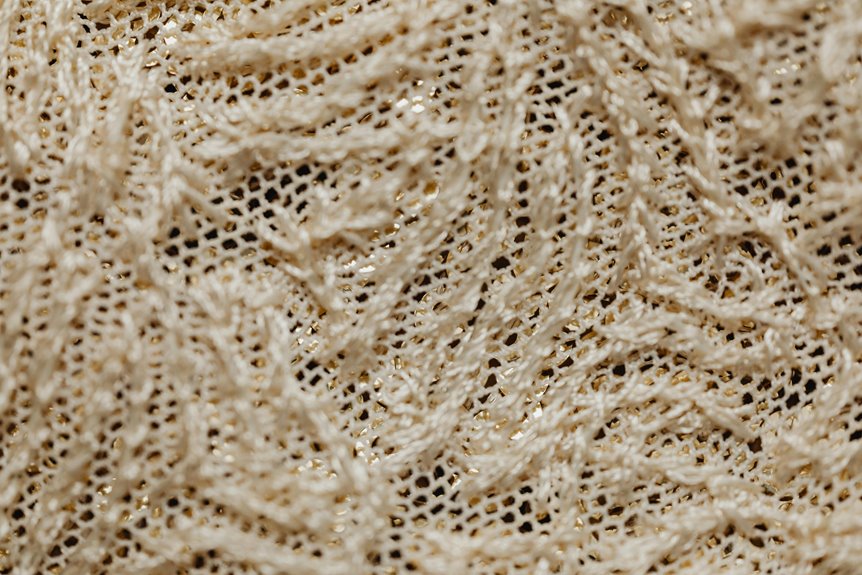
You’ll find guipure lace costly because it’s crafted from premium materials like fine cotton and silk, demanding hours of skilled, hand-stitched labor to connect its intricate motifs. This lace’s detailed designs give it a raised texture and luxurious feel you can’t easily find elsewhere. Its creation involves meticulous craftsmanship passed down through centuries, making each piece unique and durable. Keep exploring, and you’ll discover how history, materials, and artistry blend to make it so special.
Key Takeaways
- Guipure lace is handmade by skilled artisans, requiring hours or days to connect intricate motifs with fine threads.
- Premium materials like fine cotton, silk, and linen enhance durability and refined texture, increasing production costs.
- Complex, layered designs combine floral and geometric patterns, demanding meticulous craftsmanship for depth and dimension.
- The labor-intensive process of creating openwork motifs and connecting bars significantly raises its luxury pricing.
- Its exclusivity and distinctive aesthetic make it highly sought after in high-end fashion, driving up its market value.
The History and Origins of Guipure Lace
Although guipure lace has become a symbol of intricate craftsmanship today, its origins date back several centuries in Europe. You’ll find that this lace first emerged during the Renaissance, particularly in Italy and France.
Back then, artisans developed guipure by connecting motifs with bars or plaits instead of a net background, giving it a bold, raised texture. As you explore its history, you’ll see how guipure evolved from being a luxury reserved for nobility to a widely admired art form.
Materials Used in Guipure Lace Production
You’ll notice that the quality of guipure lace starts with choosing premium fabrics and threads.
The intricate thread quality plays a huge role in shaping the design’s elegance.
Plus, selecting fibers that are both durable and delicate guarantees the lace holds up while maintaining its fine detail.
Premium Fabric Selection
The foundation of exquisite guipure lace lies in the premium fabrics chosen for its creation. When you select high-quality base materials, you guarantee durability and a refined appearance that sets guipure lace apart.
Typically, artisans pick fine cotton, silk, or linen, which provide a smooth, strong canvas for the intricate patterns. These fabrics also allow the lace to maintain its shape and support the dense, raised motifs characteristic of guipure lace.
Intricate Thread Quality
When crafting guipure lace, artisans rely on threads of exceptional quality to bring intricate designs to life. The choice of thread directly impacts the lace’s texture, strength, and visual appeal. You’ll notice that only threads with consistent thickness and smoothness are selected to guarantee flawless patterns and durability.
| Thread Type | Thickness (Denier) | Common Uses |
|---|---|---|
| Cotton | 30-50 | Classic guipure, vintage styles |
| Polyester | 40-60 | Modern, washable lace |
| Rayon | 20-40 | Delicate, glossy finishes |
| Linen | 25-45 | Textured, rustic designs |
Each thread type offers unique qualities, making your guipure lace both beautiful and resilient.
Durable and Delicate Fibers
Choosing the right fibers makes all the difference in guipure lace’s durability and delicate appearance. When you select high-quality fibers like cotton, silk, or linen, you guarantee the lace holds its shape while remaining soft to the touch.
These natural fibers provide strength without compromising the intricate designs that define guipure lace. Synthetic blends, like polyester, can also be used to enhance durability and resistance to wear. However, they might lack the luxurious feel that natural fibers offer.
The Handmade Craftsmanship Behind Guipure Lace
Although guipure lace may look delicate, skilled artisans craft each piece with meticulous care and precision. When you watch them work, you’ll notice every stitch is made by hand, ensuring unmatched quality.
They carefully connect individual motifs with fine threads, creating a sturdy yet elegant fabric. This process demands patience and expertise, often taking hours or even days for a single section. You’ll appreciate how their steady hands and keen eyes maintain consistent tension and spacing throughout.
Because each lace is handmade, no two pieces are exactly alike, adding to its exclusivity. This craftsmanship directly contributes to guipure lace’s high price, reflecting the time, skill, and dedication poured into every inch you see and touch.
Intricate Designs and Patterns Unique to Guipure
You’ll notice Guipure lace stands out because of its complex motifs and handcrafted details that you won’t find anywhere else.
Each pattern is carefully structured to create a unique, openwork design that defines its character.
As you explore these intricate designs, you’ll appreciate the skill and creativity involved in every piece.
Complex Motif Creation
When you examine Guipure lace closely, you’ll notice how its complex motifs stand out through intricate, interconnected patterns that set it apart from other lace types.
Each motif combines floral, geometric, and scroll elements, weaving them together without a backing net. This open structure demands careful planning, as the motifs must balance delicacy with strength.
You’ll see how artisans layer threads to create depth and dimension, giving the lace a rich texture. These designs aren’t random; they follow traditional templates refined over centuries, ensuring every piece maintains harmony and flow.
By mastering this complexity, Guipure lace achieves its signature elegance and durability, which directly influences its higher cost compared to simpler lace varieties.
You can truly appreciate the skill involved just by observing these detailed motifs.
Handcrafted Detailing Techniques
Because Guipure lace relies on the absence of a backing net, artisans must employ specialized handcrafting techniques to connect motifs seamlessly. You’ll notice they use needle looping and buttonhole stitches to bind the lace’s elements without any visible support, creating a delicate yet sturdy fabric. These techniques demand precision and patience, making each piece unique. Here’s a quick look at the handcrafted detailing methods:
| Technique | Purpose | Effect on Lace |
|---|---|---|
| Needle Looping | Connect motifs | Adds strength & flexibility |
| Buttonhole Stitch | Outline shapes | Defines intricate edges |
| Corded Stitch | Reinforce patterns | Enhances texture & depth |
| Bridging Stitches | Link separate motifs | Creates open, airy design |
| Satin Stitch | Fill small sections | Adds smooth, dense accents |
These techniques give Guipure lace its distinctive beauty and durability.
Distinctive Pattern Structures
The hallmark of Guipure lace lies in its distinctive pattern structures, which set it apart from other lace types. When you look closely, you’ll notice how the lace features interconnected motifs linked by bars or plaits rather than a net background.
This open, airy design creates a bold, textured effect that’s both elegant and eye-catching. You’ll find floral and geometric patterns intricately woven, showcasing the artisan’s skill in balancing complexity with harmony.
Each motif is carefully crafted to guarantee structural integrity without sacrificing beauty. Because these patterns demand precision and time, you can appreciate why Guipure lace carries a higher price tag.
When you choose Guipure, you’re investing in lace with truly unique, handcrafted artistry that stands out in any garment or decor.
Time and Labor Intensity in Creating Guipure Lace
Although guipure lace appears delicate and effortless, crafting it demands significant time and meticulous labor. You’ll find that each motif is carefully connected by bars or plaits, requiring skilled hands and patience. The intricate process involves both machine and handwork, emphasizing precision at every step. This time-intensive craftsmanship directly influences the lace’s cost.
| Step | Time Required | Skill Level |
|---|---|---|
| Designing Pattern | 4-6 hours | Expert |
| Thread Preparation | 2-3 hours | Intermediate |
| Lace Stitching | 10-15 hours | Expert |
| Connecting Motifs | 5-7 hours | Expert |
| Finishing Touches | 3-4 hours | Intermediate |
Understanding this effort helps you appreciate why guipure lace is priced as a luxury fabric.
Comparison Between Guipure and Other Types of Lace
Now that you understand the detailed effort behind guipure lace, you might wonder how it stacks up against other lace types.
Unlike delicate Chantilly or airy Alençon lace, guipure is known for its bold, raised patterns connected by bars rather than netting. This structure makes it sturdier and visually striking but also more labor-intensive.
Guipure lace features bold, raised patterns linked by bars, offering sturdiness and visual impact over delicate netting.
While you’ll find that other laces often rely on finer threads and intricate mesh, guipure’s craftsmanship demands creating each motif separately before linking them, boosting production time and costs.
If you’re comparing price tags, guipure often comes at a premium due to this complexity.
The Role of Guipure Lace in High-End Fashion and Couture
Guipure lace plays a pivotal role in high-end fashion and couture, offering designers a unique blend of texture and elegance that can’t be easily replicated.
When you choose guipure lace, you’re selecting a fabric that adds depth and sophistication to any garment. Its intricate patterns and substantial weight allow it to stand out, making it a favorite for statement pieces like bridal gowns and evening wear.
You’ll notice how guipure lace enhances silhouettes, creating visual interest without overwhelming the design. Designers appreciate its versatility and durability, which lets them experiment with bold cuts and embellishments.
Frequently Asked Questions
How Should Guipure Lace Be Cared for and Cleaned?
Did you know 90% of guipure lace damage comes from improper cleaning? You should hand wash it gently in cold water with mild detergent, avoid wringing, and lay it flat to dry to keep it pristine.
Can Guipure Lace Be Machine Washed Safely?
You shouldn’t machine wash guipure lace, as it’s delicate and can get damaged. Instead, hand wash it gently in cold water with mild detergent to keep its intricate patterns intact and maintain its quality over time.
What Are Common Misconceptions About Guipure Lace?
You might think guipure lace is fragile or only for special occasions. But don’t be fooled—it’s surprisingly durable and versatile. Many believe it’s always delicate, yet it can handle everyday wear if you care properly.
How Does Guipure Lace Affect Garment Comfort?
You’ll find guipure lace adds texture and elegance but can feel a bit stiff against your skin. Choosing lined garments or layering helps guarantee comfort while still showcasing its intricate beauty in your outfit.
Are There Synthetic Alternatives That Mimic Guipure Lace?
You can find synthetic alternatives that mimic guipure lace’s intricate patterns and texture. While they’re more affordable and durable, they might not fully replicate the natural feel and elegance of authentic guipure lace.