
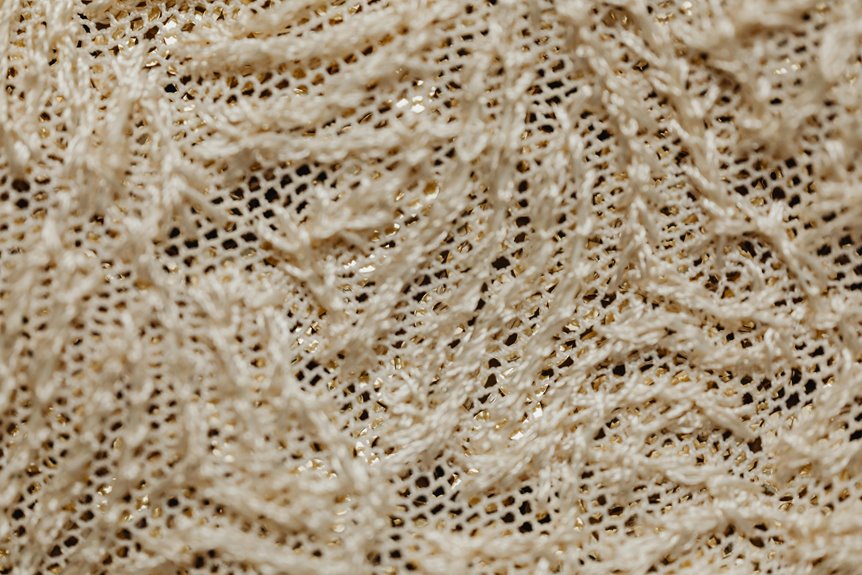
You can spot high-quality guipure lace by examining its raised, well-defined motifs connected with sturdy bars rather than a net. Look for smooth, even threads made of cotton, silk, or fine blends, with no fraying or loose fibers. Check for tight, consistent stitching and balanced, intricate patterns. Also, guarantee the dye is even and colorfast. Trustworthy manufacturers provide transparency and solid reputation. Keep exploring to uncover more tips for confident lace selection.
Key Takeaways
- Examine the lace’s structure for well-defined motifs connected by bars or plaits, ensuring a raised, textured, and durable openwork pattern.
- Assess thread quality by checking for smooth, evenly thick, durable fibers like cotton or silk without fraying or loose strands.
- Evaluate pattern complexity by looking for intricate, symmetrical designs with fine details and strong, subtle connectors between motifs.
- Inspect stitching quality for tight, consistent tension, secure connections, and absence of bulky knots or irregular threads that may cause fraying.
- Research the manufacturer’s reputation, customer reviews, certifications, and transparency to confirm authenticity and craftsmanship.
Understanding Guipure Lace Structure
Guipure lace stands out because of its unique structure, which links motifs with bars or plaits rather than a net background.
When you examine it closely, you’ll see that each design element connects through these thicker threads, creating a raised, textured effect. This openwork pattern not only gives guipure lace its distinctive appearance but also adds durability compared to more delicate laces.
You’ll notice that the motifs—often floral or geometric—are prominent and well-defined, set apart by those connecting bars, which act like bridges.
As you handle the lace, you’ll feel its substantial weight and firmness, a direct result of this construction style.
Understanding this structure helps you appreciate why guipure lace is both elegant and robust, making it a favorite for special garments and decor.
Evaluating Thread Quality and Material
The quality of thread plays an essential role in determining the overall look and feel of lace. When evaluating guipure lace, pay close attention to the thread’s strength and sheen.
High-quality lace typically uses durable threads like cotton, silk, or fine polyester blends, which provide a smooth, consistent finish. Run your fingers over the fabric; it should feel soft yet sturdy, not rough or brittle.
Check for even thickness throughout the threads, as inconsistencies can signal lower-grade material. Also, notice the color—premium threads maintain rich, uniform tones without fading or discoloration.
Avoid lace with loose fibers or visible fraying, which indicate poor thread quality. By focusing on these thread characteristics, you’ll guarantee the guipure lace you choose offers lasting beauty and performance.
Examining Pattern Complexity and Design
When you examine guipure lace, pay close attention to the intricacy of its patterns and how symmetrical and consistent they’re throughout.
High-quality lace often features unique motifs and themes that stand out without looking rushed or uneven. Noticing these details helps you spot craftsmanship that truly elevates the design.
Intricacy of Lace Patterns
Although lace might seem delicate at first glance, its pattern complexity reveals the true skill behind its creation.
When you examine high-quality Guipure lace, you’ll notice intricate designs that demand careful attention. To appreciate its intricacy, focus on:
- Fine Details – Look for tiny loops and twists that form unique shapes, not just large, obvious patterns.
- Layered Motifs – Notice how multiple design elements overlap, adding depth and texture.
- Delicate Connectors – Observe the thin threads linking motifs, which must be strong yet subtle.
These elements showcase the artisan’s expertise. The more complex and refined the pattern, the higher the lace quality.
Pay close attention to these details when selecting your Guipure lace to guarantee you’re getting a truly exceptional piece.
Symmetry and Consistency
Symmetry and consistency play an essential role in judging the quality of Guipure lace. When you examine a piece, look closely at how the patterns mirror each other across the fabric.
High-quality lace will showcase perfectly balanced designs, with each motif aligned precisely and repeating uniformly. You want to avoid lace where patterns appear uneven, distorted, or irregular, as these flaws suggest lower craftsmanship.
Consistent thread tension throughout the lace also guarantees durability and an elegant appearance. By focusing on these elements, you can confidently distinguish superior Guipure lace from inferior alternatives.
Paying attention to symmetry and consistency helps you appreciate the skill involved and guarantees you select lace with both aesthetic appeal and lasting quality.
Unique Motifs and Themes
Several distinct motifs and themes set high-quality Guipure lace apart from ordinary varieties.
When you examine the lace closely, you’ll notice how intricate and thoughtful the patterns are. You’ll want to look for:
- Floral motifs — detailed flowers with delicate petals, often overlapping to create depth.
- Geometric shapes — complex interlocking designs that show precision and skill.
- Nature-inspired themes — vines, leaves, and even abstract forms that flow seamlessly.
These patterns aren’t just decorative; they reveal the artisan’s expertise and the lace’s quality.
When choosing Guipure lace, pay attention to how these motifs connect without loose threads or gaps. The more unique and complex the design, the higher the craftsmanship, ensuring you get a product that stands out for both beauty and durability.
Assessing Stitching and Craftsmanship
When you examine Guipure lace closely, the quality of stitching reveals a lot about its craftsmanship. You should look for tight, even stitches that securely connect motifs without loose threads or gaps.
High-quality Guipure lace features threads that maintain consistent tension, ensuring durability and a refined appearance. Pay attention to how the lace motifs are joined; they should blend seamlessly without bulky knots or uneven overlaps.
Notice if the thread thickness matches throughout, as discrepancies can signal lower quality. Avoid lace where the stitching looks rushed or irregular, as this often leads to fraying or damage over time.
Checking for Consistency and Symmetry
Although Guipure lace often features intricate designs, you should focus on checking for consistency and symmetry to judge its quality accurately. High-quality lace maintains uniform patterns without irregular gaps or uneven motifs.
Focus on consistency and symmetry to accurately assess the quality of intricate Guipure lace designs.
When examining the lace, pay close attention to these three points:
- Pattern repetition – Confirm the design repeats evenly across the fabric without distortion.
- Motif alignment – Check that motifs mirror each other and align perfectly along seams or edges.
- Thread tension – Feel for uniform tension in stitching; loose or tight threads disrupt symmetry.
Identifying Color Fastness and Dye Quality
You’ll want to check for any color bleed by gently rubbing a damp cloth on the lace to see if the dye transfers.
Inspect the dye consistency across different sections to ascertain even coloring without patches or fading.
Finally, consider how well the color will hold up over time to secure the fabric’s longevity.
Testing for Color Bleed
Since color bleed can ruin the delicate beauty of guipure lace, testing for color fastness is essential. You want to make sure the dyes won’t fade or run during cleaning or wear.
Here’s a simple way to test it:
- Dampen a white cotton cloth with water.
- Press the cloth firmly on a hidden section of the lace for about 30 seconds.
- Check if any dye transfers onto the cloth.
If the cloth shows no color, the dye is stable and the lace is high quality.
However, if you see any color bleed, it’s a red flag indicating poor dye quality or insufficient setting.
Always perform this quick test before purchasing to avoid surprises and keep your guipure lace looking flawless.
Dye Consistency Checks
Three key factors help you assess dye consistency in guipure lace: even color distribution, resistance to fading, and uniformity across the fabric. When you inspect the lace under natural light, check for any patches or streaks where the dye appears lighter or darker. Next, gently rub a damp white cloth on the lace to see if any color transfers, revealing poor resistance. Finally, verify the color remains uniform on both the front and back sides.
| Factor | What to Look For |
|---|---|
| Even Color Distribution | No patchy or uneven shading |
| Resistance to Fading | Minimal color transfer when rubbed |
| Uniformity Across Fabric | Same hue and saturation on both sides |
Longevity of Fabric Color
Although dye consistency sets the foundation, the true test of guipure lace quality lies in the longevity of its fabric color.
You want a lace that resists fading, even after multiple washes or prolonged sunlight exposure.
To identify colorfast guipure lace, focus on these key points:
- Wash Test: Rub a damp white cloth over the fabric; high-quality lace won’t transfer color.
- Sunlight Exposure: Check if the lace holds its vibrancy under bright light for hours.
- Color Uniformity: Look for uniform dye saturation without blotches or faded spots.
Comparing Weight and Texture
When you compare guipure lace, paying close attention to its weight and texture reveals much about its quality.
High-quality guipure lace feels substantial without being heavy, indicating dense, well-crafted threads. If it feels too light or flimsy, the lace might be poorly made or use inferior materials.
Run your fingers over the texture; it should be smooth but with a defined, raised pattern that holds its shape. A rough or uneven texture suggests rushed manufacturing or cheaper fibers.
Also, notice how flexible the lace is—good guipure maintains its structure but bends easily without cracking or fraying.
Verifying Manufacturer Reputation and Authenticity
Because guipure lace varies widely in quality, verifying the manufacturer’s reputation and authenticity is essential before making a purchase. You want to guarantee you’re investing in genuine, well-crafted lace.
Start by checking:
- Customer Reviews: Look for detailed feedback on quality and service to gauge reliability.
- Certifications: Verify if the manufacturer holds industry certifications or awards that prove authenticity.
- Transparency: Reliable makers openly share production methods and origin details, which signals trustworthiness.
Frequently Asked Questions
How Should I Store Guipure Lace to Maintain Its Quality?
You should store guipure lace flat in a cool, dry place away from direct sunlight. Don’t fold it tightly; instead, use acid-free tissue paper to prevent creases and protect the intricate patterns from damage over time.
Can Guipure Lace Be Machine Washed Safely?
Think of guipure lace as delicate art; you shouldn’t machine wash it. Instead, hand wash in cold water gently to preserve its intricate beauty and prevent damage. You’ll keep its elegance intact that way.
What Are Common Uses for Guipure Lace in Fashion?
You’ll find guipure lace commonly used in bridal gowns, evening wear, and accessories. It adds texture and elegance to dresses, shawls, and even lingerie, making your outfit stand out with its intricate, raised patterns.
How Does Guipure Lace Differ From Chantilly Lace?
Did you know guipure lace has about 30% thicker threads than Chantilly? You’ll find guipure’s bold, raised patterns contrast with Chantilly’s delicate, fine netting and intricate floral designs, giving each a unique texture and look.
Are There Sustainable Options Available for Guipure Lace?
You can find sustainable guipure lace made from organic cotton or recycled fibers. Look for brands committed to eco-friendly practices and certifications, so you’re sure your lace choice supports the environment without sacrificing quality or beauty.