
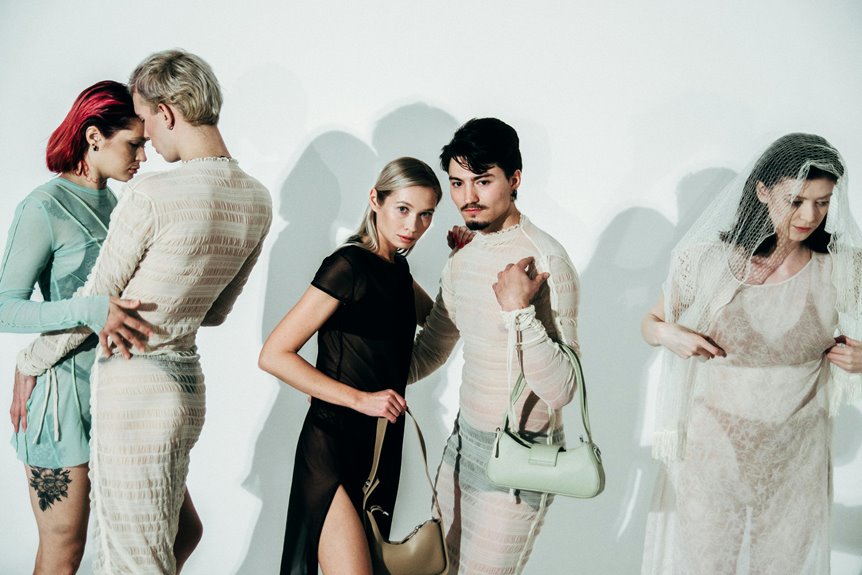
When you choose guipure lace in haute couture, you’re embracing bold textures and intricate patterns that define elegance. Its openwork motifs add depth and structure, shaping silhouettes and elevating designs with timeless sophistication. Designers use it to craft statement pieces blending tradition with modern flair, often highlighting floral or geometric details. Its rich heritage inspires innovative embellishments, making your garment stand out. Discover how this lace transforms collections and pushes fashion’s creative boundaries even further.
Key Takeaways
- Guipure lace adds bold texture and intricate patterns, elevating the elegance and sophistication of haute couture garments.
- Designers use guipure lace to create signature floral and geometric motifs that define garment silhouettes.
- Its openwork structure without a net base allows for unique embellishment techniques highlighting natural lace beauty.
- Guipure lace’s rich heritage inspires modern collections, blending tradition with contemporary design aesthetics.
- Versatility in application enables designers to innovate, integrating guipure lace into diverse styles and materials.
History and Origins of Guipure Lace
Guipure lace has a rich history that dates back to the Renaissance period, when artisans crafted it by linking motifs with bars or plaits instead of a net background.
Guipure lace, rooted in the Renaissance, is distinguished by motifs joined with bars rather than netting.
When you explore its origins, you’ll find that Guipure emerged prominently in regions like Venice and France, gaining popularity for its bold, open patterns.
You’ll notice how this lace style evolved as a symbol of luxury and status, worn by nobility and royals.
As you trace its journey, you’ll see how the techniques were passed down through generations, adapting to new tools and tastes.
Unique Characteristics of Guipure Lace
One of the most striking features you’ll notice is the lace’s distinctive openwork, created by connecting motifs with bars or plaits rather than a mesh background.
This design gives guipure lace a bold, graphic quality that sets it apart from other laces. You’ll also appreciate its substantial texture and weight, which adds depth and dimension to garments.
Guipure lace often showcases intricate floral or geometric patterns, making each piece visually enchanting. Because it lacks a net base, it offers a striking contrast between solid and open areas, enhancing the garment’s elegance.
When you use guipure lace in haute couture, you get a fabric that combines durability with refined beauty, providing designers with endless creative possibilities for standout, sophisticated looks.
Techniques Used in Crafting Guipure Lace
When you explore guipure lace, you’ll notice it’s crafted using both needle and bobbin methods, each offering distinct textures and strength.
You’ll also find that connecting motifs requires skillful techniques to create those open, intricate patterns without a net background.
Understanding these methods helps you appreciate the craftsmanship behind every delicate piece.
Needle and Bobbin Methods
Although crafting guipure lace demands patience and skill, mastering the needle and bobbin methods lets you create its distinctive, intricate patterns.
With the needle method, you’ll use a single needle and thread, carefully stitching and looping to form dense, raised motifs. This technique offers great control over fine details, perfect for delicate designs.
The bobbin method, on the other hand, involves twisting and crossing multiple threads wound on bobbins. You’ll manipulate these threads on a pillow to weave openwork patterns with strong, flowing lines.
Both methods require steady hands and close attention, but each gives you unique texture and depth. By mastering these techniques, you bring guipure lace’s classic elegance to life, forming the foundation for haute couture’s luxurious creations.
Motif Connection Techniques
Since guipure lace is made up of individual motifs, connecting them seamlessly is essential to achieving its signature open, airy look.
You use specific techniques to join these motifs without disrupting the lace’s delicate structure. Here are the main methods:
- Bridging Bars: Thin threads link motifs, creating a web-like effect that maintains openness.
- Needlepoint Joining: You use a needle to stitch motifs together with invisible thread, ensuring durability and flexibility.
- Corded Outlines: Raised cords outline motifs and connect them, adding texture and strength.
Guipure Lace in Iconic Haute Couture Pieces
You’ll notice how signature guipure lace designs transform haute couture pieces with intricate patterns and bold textures.
Designers use unique embellishment techniques to highlight the lace’s natural beauty, adding depth and dimension.
These details don’t just decorate—they shape the silhouette and define the garment’s elegance.
Signature Guipure Lace Designs
When you explore iconic haute couture pieces, you’ll notice how designers use signature guipure lace to create striking textures and patterns that set their work apart.
This lace becomes a hallmark that defines their collections, showcasing craftsmanship and innovation.
You’ll see how they:
- Craft bold floral motifs that add depth and dimension without overwhelming the garment.
- Use geometric patterns to create modern, architectural silhouettes that contrast softness with structure.
- Combine guipure lace with unexpected fabrics, enhancing luxury and visual interest.
Guipure Lace Embellishment Techniques
Guipure lace plays a pivotal role in haute couture embellishment, bringing intricate detail and texture to the forefront of design.
When you work with guipure lace, you’ll notice designers often use appliqué techniques, carefully placing lace motifs onto sheer fabrics to create a floating effect.
Embroidery enhances these pieces further, sometimes combined with beadwork or sequins to add dimension and sparkle.
You’ll also see guipure lace panels sewn strategically to highlight curves or add visual interest without overwhelming the garment.
In iconic haute couture pieces, the lace is hand-stitched with precision, showcasing craftsmanship that machines can’t replicate.
Impact on Couture Silhouettes
The allure of guipure lace lies not only in its intricate patterns but also in how it shapes couture silhouettes. When you wear a guipure lace piece, you notice how the lace adds structure without stiffness, enhancing your natural curves and creating a refined elegance.
Designers rely on guipure lace because it:
- Defines contours with bold, openwork motifs that frame the body.
- Adds dimensional texture, making flat fabrics appear sculpted.
- Balances transparency and opacity, giving your silhouette depth and allure.
Iconic haute couture gowns showcase these effects, turning the lace into a design element that sculpts rather than simply decorates.
You see how guipure lace transforms a garment, making it both architectural and sensual, elevating your look with timeless sophistication.
Modern Interpretations by Contemporary Designers
Although rooted in tradition, modern designers have reinvented guipure lace to fit today’s fashion sensibilities. You’ll notice they play with scale, using oversized motifs or combining lace with unexpected materials like leather or denim. This creates a striking contrast that feels fresh and edgy.
Designers also experiment with color, moving beyond classic whites and creams to bold hues that make a statement. You can see guipure lace integrated into streetwear-inspired silhouettes or minimalistic cuts, showing its versatility.
When you wear such pieces, you’re embracing a rich heritage updated for the modern wardrobe. Contemporary designers don’t just preserve guipure lace’s elegance; they push its boundaries, making it relevant and exciting for today’s fashion-forward audience.
The Role of Guipure Lace in Bridal Fashion
When you choose lace for your wedding gown, you’re often drawn to its intricate beauty and timeless appeal.
Guipure lace stands out because it adds bold, textured patterns without a net background, giving your dress a sophisticated yet modern look.
You’ll find guipure lace is perfect for bridal fashion due to its:
- Durability— it holds up well throughout your big day.
- Versatility— it complements various gown styles, from classic to contemporary.
- Visual impact— its raised motifs create stunning 3D effects that catch the eye.
Using guipure lace, you can craft a wedding dress that balances elegance and statement-making detail, ensuring you feel both unique and timeless as you walk down the aisle.
Combining Guipure Lace With Other Fabrics
If you want to elevate your design, combining guipure lace with other fabrics can create striking contrasts and textures.
Pairing guipure lace with smooth silks or satins highlights its intricate patterns, adding depth to your piece. You can also blend it with lightweight chiffons to introduce softness that complements the lace’s bold structure.
Pair guipure lace with silks, satins, or chiffons to highlight its patterns and add soft, complementary texture.
When integrating guipure lace with heavier materials like velvet, you’ll achieve a luxurious, tactile balance that’s visually engaging.
Don’t hesitate to experiment with layering guipure lace over contrasting colors to make its motifs pop. This mix not only enhances your garment’s aesthetic but also broadens your creative possibilities, allowing you to craft unique, sophisticated looks that stand out in any collection.
Challenges in Working With Guipure Lace
Working with guipure lace demands careful handling because its open patterns and heavy texture can easily snag or distort.
When you incorporate it into designs, you’ll face specific challenges:
- Cutting Precision – You must cut around the motifs carefully to avoid fraying or damaging the lace’s intricate structure.
- Seam Stability – Sewing requires reinforced seams since the lace lacks a solid backing, making it prone to stretching and tearing.
- Support and Lining – You’ll need to add appropriate lining or backing to maintain shape and comfort without compromising the lace’s visual appeal.
Future Trends Involving Guipure Lace in Fashion
As fashion evolves, guipure lace continues to inspire designers who push its boundaries in texture and form. You’ll see more innovative uses, like 3D embellishments and mixed-media applications, blending tradition with modernity. Sustainability also plays a big role—expect eco-friendly fibers paired with guipure to create striking yet responsible pieces.
Here’s a quick glance at upcoming trends you should watch:
| Trend | Description |
|---|---|
| 3D Textures | Raised patterns for tactile appeal |
| Eco-friendly Materials | Organic yarns combined with guipure |
| Digital Fabrication | Laser-cut lace designs for precision |
Embracing these trends lets you stay ahead while honoring guipure lace’s rich heritage.
Frequently Asked Questions
How Should Guipure Lace Be Cared for and Cleaned?
Sure, just toss your guipure lace into the washing machine—said no one ever. You should gently hand wash it in cold water with mild detergent, then air dry flat to keep its delicate beauty intact.
What Are the Price Ranges for Guipure Lace Fabrics?
You’ll find guipure lace prices vary widely, from $20 to over $200 per yard. Factors like quality, complexity, and brand influence cost, so shop carefully to match your budget and project needs.
Can Guipure Lace Be Used in Men’s Fashion?
Absolutely, you can use guipure lace in men’s fashion to add texture and sophistication. Designers often incorporate it in shirts, jackets, or accessories, creating bold, unique looks that challenge traditional menswear styles.
Where Can Designers Source Authentic Guipure Lace?
You can source authentic guipure lace from specialized textile suppliers, artisan workshops in Europe—especially France and Italy—or trusted online marketplaces. Always verify quality and origin to guarantee you’re getting genuine, high-grade lace for your designs.
How Does Guipure Lace Impact Garment Durability?
You’ll find guipure lace adds strength to garments since its dense, interconnected patterns resist tearing better than delicate laces. Its sturdy structure helps your designs last longer, maintaining elegance without compromising durability.