
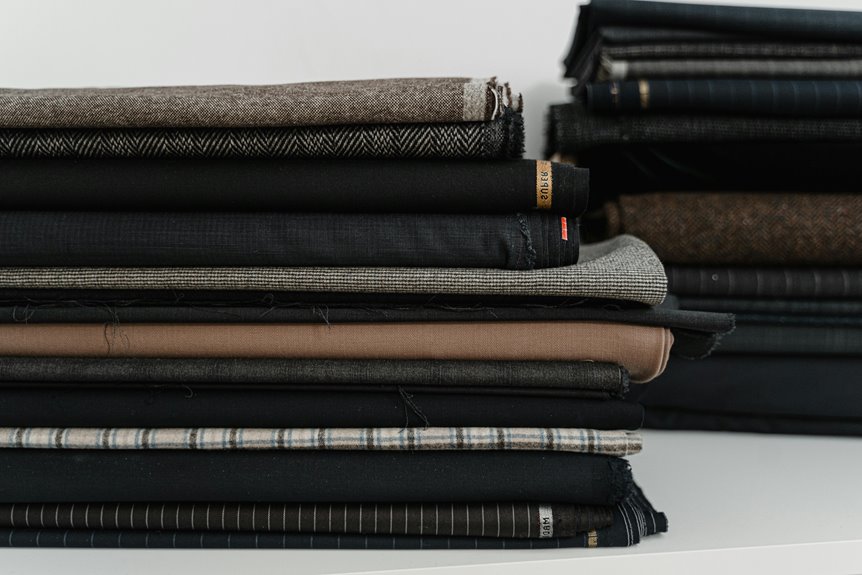
You’ll find herringbone fabric popular for pocketing because it combines style, durability, and comfort effortlessly. Its unique zigzag weave gives your pockets a sharp, sophisticated look while standing up to daily wear and stretching without losing shape. The breathable, soft texture keeps pockets comfortable and moisture-free, and it’s easy to maintain, reducing replacements. Plus, it pairs well with many fabrics and supports sustainability. There’s more to explore about why it’s such a smart choice.
Key Takeaways
- Herringbone’s distinctive zigzag pattern adds stylish texture and sophistication to pocket designs.
- Its tightly woven structure offers exceptional durability and resistance to wear and tear.
- The fabric’s flexibility allows pockets to maintain shape while adapting to movement.
- Natural fibers in herringbone ensure breathability and comfort against the skin.
- Low-maintenance and sustainable, herringbone fabric supports longevity and environmental responsibility.
The Unique Weave Pattern of Herringbone
The distinctive zigzag design of the herringbone weave catches your eye immediately. You’ll notice it forms a broken zigzag pattern resembling fish bones, which is where it gets its name.
This pattern isn’t just for looks—it’s created by alternating the direction of the twill weave, giving the fabric a unique texture and visual appeal. When you run your fingers over herringbone fabric, you feel the subtle ridges that set it apart from plain weaves.
This intricate pattern adds sophistication and depth, making your pockets stand out without overwhelming the garment. You’ll appreciate how the weave’s geometry creates an elegant balance between complexity and simplicity, making it a favored choice for designers seeking both style and subtlety.
Durability and Strength for Everyday Use
You’ll find that herringbone fabric offers exceptional durability and strength, making it ideal for everyday use.
Its tightly woven zigzag pattern reinforces the fabric, helping it resist wear and tear over time.
When you use herringbone for pocketing, you’re choosing a material that stands up to frequent handling, friction, and the weight of items you carry daily.
This resilience means your pockets won’t sag or tear easily, maintaining their shape and function longer than many alternatives.
Plus, the fabric’s robust construction helps prevent stretching and fraying, so your pockets stay intact through repeated washes and daily use.
If you want a reliable pocketing fabric that balances toughness with a refined look, herringbone is a smart choice you can count on.
Flexibility That Supports Pocket Shape
You’ll appreciate how the adaptable weave structure of herringbone pocketing fabric lets your pockets move without losing their shape.
It flexes just enough to handle daily use while maintaining form durability. This balance keeps your pockets looking sharp and functional over time.
Adaptable Weave Structure
When you choose herringbone pocketing fabric, you get a weave structure that bends and stretches just enough to maintain your pocket’s shape without sagging or losing form.
The distinctive zigzag pattern isn’t just for looks; it creates a flexible network of fibers that adapt to movement and pressure.
This adaptability means your pockets won’t feel stiff or restrictive, yet they won’t deform under everyday use.
You can rely on the fabric’s unique interlacing to support various pocket designs, whether curved or straight.
Because the weave adjusts subtly to stress points, it helps your pockets retain their intended shape over time.
In short, herringbone’s adaptable weave gives you a smart balance between flexibility and structure, making it a practical choice for pocketing fabric.
Maintains Form Durability
Although pocket fabrics often face constant movement and pressure, herringbone pocketing fabric maintains its form durability without sacrificing flexibility. When you choose herringbone, you get fabric that flexes just enough to support the pocket’s shape, preventing sagging or deformation over time. This balance guarantees your pockets look sharp and hold up through daily wear.
| Feature | Benefit | Impact on Pocketing Fabric |
|---|---|---|
| Weave Pattern | Interlocking fibers | Provides strength and flexibility |
| Fiber Composition | Often cotton or blends | Enhances durability and softness |
| Elasticity | Moderate stretch | Supports shape retention |
| Abrasion Resistance | High | Resists wear through friction |
| Shape Recovery | Quick | Maintains crisp pocket outline |
This makes herringbone ideal for maintaining pockets that stay functional and attractive.
Aesthetic Appeal and Classic Style
The distinctive zigzag pattern of herringbone pocketing fabric instantly elevates any garment with its timeless charm.
The unique zigzag weave of herringbone fabric adds timeless elegance to every piece.
When you choose herringbone, you add a subtle yet sophisticated texture that complements both casual and formal wear. Its classic style never goes out of fashion, giving your pieces an enduring appeal.
You’ll appreciate how the pattern catches the light differently, creating depth without overwhelming the design.
Whether you’re crafting a jacket or trousers, herringbone pocketing fabric lends an understated elegance that enhances the overall look.
This fabric doesn’t just serve a functional role—it also contributes to the garment’s aesthetic identity.
Compatibility With Various Fabrics
Herringbone pocketing fabric doesn’t just stand out on its own—it works harmoniously with a wide range of other materials.
When you pair it with wool, cotton, or linen, herringbone provides a sturdy yet flexible base that enhances the overall durability of your garment. Its distinctive weave adapts well to both lightweight and heavier fabrics, making it a versatile choice whether you’re crafting a casual jacket or a tailored suit.
You’ll find that herringbone complements synthetic blends too, maintaining structural integrity without adding bulk. This compatibility means you can confidently mix and match fabrics, knowing herringbone will support your design’s form and function.
Choosing herringbone gives you reliable reinforcement that blends seamlessly with various textile options.
Breathability and Comfort Factors
When choosing herringbone pocketing fabric, you’ll want to contemplate how breathable and comfortable it feels against your skin.
Natural fibers offer great moisture-wicking properties that keep you dry, while the fabric’s softness and texture play a big role in overall comfort.
Let’s explore what makes these factors important for your clothing.
Natural Fiber Benefits
Although synthetic fabrics often dominate the market, natural fibers offer unmatched breathability that keeps you comfortable throughout the day.
When you choose herringbone pocketing made from cotton, linen, or wool, you’re selecting materials that allow your skin to breathe naturally. These fibers work with your body, regulating temperature without trapping heat or causing irritation. You’ll notice the softness against your skin, enhancing comfort in every garment.
Plus, natural fibers tend to be more durable, so your pocketing fabric maintains structure and feel over time. By opting for natural fibers in herringbone pocketing, you guarantee that your clothing isn’t just stylish but also feels good to wear, supporting all-day comfort without sacrificing function or quality.
Moisture-Wicking Properties
Because moisture-wicking fabrics draw sweat away from your skin, they keep you feeling dry and comfortable throughout the day.
When you choose herringbone pocketing fabric, you benefit from its breathability, which allows air to circulate freely. This ventilation helps regulate your body temperature, preventing overheating during activity.
The unique weave structure of herringbone enhances moisture management by quickly moving perspiration to the fabric’s surface, where it evaporates faster. You won’t have to worry about sticky or clammy pockets, even in warm weather or intense movement.
This makes herringbone an excellent choice for pocket linings, ensuring your pockets stay fresh and comfortable.
Softness and Texture
Softness plays an essential role in how comfortable your pockets feel throughout the day.
When you choose herringbone fabric, you’re opting for a material that offers a smooth, gentle touch against your skin. Its unique weave creates a subtle texture that adds durability without sacrificing comfort.
This balance means your pockets won’t feel rough or scratchy, even after extended wear. Plus, the natural breathability of herringbone fabric helps keep moisture at bay, ensuring your pockets stay fresh and dry.
You’ll appreciate how this combination of softness and texture enhances everyday comfort, making herringbone a smart choice when you want your pockets to feel as good as they look.
Ease of Maintenance and Longevity
When you choose herringbone pocketing fabric, you’ll appreciate how easy it’s to care for and how well it stands up over time.
This fabric resists wrinkles and maintains its shape, so you won’t have to worry about constant ironing or reshaping. Cleaning is straightforward—most herringbone fabrics can be machine washed or dry cleaned without losing their texture or durability.
Its tight weave also minimizes wear and tear, ensuring your garment pockets stay intact through regular use. By selecting herringbone, you invest in a fabric that doesn’t just look good but lasts longer, reducing the need for frequent replacements.
This combination of low maintenance and long-lasting quality makes herringbone a practical and smart choice for pocketing fabric.
Environmental Benefits of Choosing Herringbone
Although many fabrics contribute to environmental waste, choosing herringbone pocketing fabric helps you reduce your ecological footprint. Herringbone is often made from natural fibers like cotton or wool, which are biodegradable and renewable. By selecting herringbone, you support sustainable farming practices and minimize reliance on synthetic materials that pollute waterways and contribute to microplastic buildup.
Moreover, its durability means you won’t replace your pocketing fabric as often, cutting down on waste. The fabric’s tight weave also reduces the need for frequent washing, saving water and energy.
When you opt for herringbone, you make a conscious choice that benefits both your wardrobe and the planet. It’s a small change with a meaningful environmental impact.
Frequently Asked Questions
Can Herringbone Fabric Be Used for Outdoor Pockets?
You can use herringbone fabric for outdoor pockets, but it’s best if it’s treated for water resistance. Otherwise, it might absorb moisture and wear out faster in rugged outdoor conditions. Choose wisely!
Does Herringbone Fabric Require Special Sewing Techniques?
You don’t need special sewing techniques for herringbone fabric, but using sharp needles and sturdy thread helps. Press seams carefully to maintain the pattern’s alignment, and sew slowly to keep stitches even and precise.
Are There Specific Color Trends for Herringbone Pocketing?
Like a painter’s palette, herringbone pocketing colors shift with seasons. You’ll find classic neutrals and bold jewel tones trending, letting you match or contrast pockets stylishly while keeping your garment’s interior as sharp as its exterior.
How Does Herringbone Compare Cost-Wise to Other Weaves?
You’ll find herringbone pocketing costs a bit more than plain weaves due to its intricate pattern and weaving process. However, its durability and stylish look often justify the slightly higher price compared to simpler fabrics.
Is Herringbone Fabric Resistant to Stains and Spills?
You’ll find herringbone fabric offers moderate resistance to stains and spills due to its tight weave, but it’s not completely waterproof. Quick cleaning helps prevent permanent marks, so act fast if you spill something.