
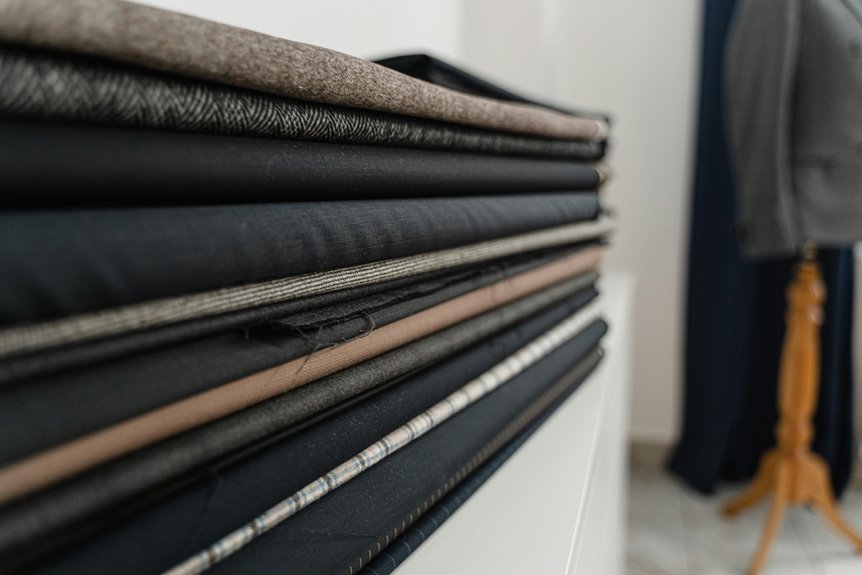
If you’re curious about vintage herringbone military fabrics, you’ll find they blend durability with unique style. This zigzag pattern, rooted in early 19th-century military gear, was prized for strength and comfort in tough conditions. Made from wool, cotton, and later synthetics, these fabrics resist wear while hiding stains. Different armies favored variations for breathability or ruggedness. Keep going, and you’ll uncover craftsmanship details, care tips, and how these historic textiles inspire today’s designs.
Key Takeaways
- Herringbone fabrics gained military prominence in the 19th century for durability and practicality in harsh conditions.
- The distinctive zigzag weave alternates twill directions, enhancing fabric strength and concealment of wear.
- Vintage herringbone often blends wool for warmth and cotton for breathability, with some later incorporating synthetic fibers.
- Military variations include denser weaves for durability and looser weaves for breathability, depending on the force’s operational needs.
- Proper care involves gentle cleaning, flat drying, and careful storage to preserve vintage herringbone’s texture and historical value.
Origins of Herringbone Weave in Military Textiles
Although herringbone patterns have ancient roots, their use in military textiles began in the early 19th century when armies sought durable, practical fabrics for uniforms.
Herringbone weaves became essential in 19th-century military uniforms for durability and practicality.
You’ll find that herringbone weave offered the perfect balance of strength and flexibility, making it ideal for harsh conditions.
When you study vintage military gear, you’ll notice how this weave helped uniforms resist wear and tear while maintaining a neat appearance.
Armies across Europe quickly adopted herringbone fabrics, appreciating their ability to withstand rugged use without sacrificing comfort.
If you handle these textiles, you’ll see the clever arrangement of fibers that provides durability without bulk.
This innovation marked a significant shift toward more functional military clothing, setting a precedent for fabric technology in uniform design.
Characteristics of Herringbone Fabric
You’ll notice the distinctive zigzag pattern that defines herringbone fabric, created by its unique weave.
Depending on the military era and purpose, the material composition can vary from sturdy cotton to wool blends.
This fabric’s durability and textured feel make it ideal for harsh conditions and long-term use.
Weave Pattern Details
When you examine herringbone fabric closely, you’ll notice its distinctive V-shaped weaving pattern that resembles the bones of a fish. This pattern is created by alternating the direction of the twill weave, producing a zigzag effect.
Each “V” is formed by parallel diagonal lines running opposite ways, giving the fabric its unique texture and visual rhythm. The weave’s tightness varies, but it always maintains a balanced, symmetrical appearance.
This structure not only adds visual interest but also enhances durability and flexibility, making it ideal for military use. You’ll also find that the pattern’s subtle texture helps to conceal wear and stains, a practical advantage in harsh conditions.
Understanding these weave details gives you insight into why herringbone remains a classic choice.
Material Composition Variations
Because herringbone fabric serves various military needs, its material composition varies to balance durability, comfort, and functionality.
You’ll find early military herringbone often made from 100% cotton, prized for breathability and ease of dyeing. Later versions sometimes blend cotton with wool or synthetic fibers to improve insulation or moisture resistance.
In warmer climates, lighter cotton fabrics dominate, while colder regions favor blends that add warmth without sacrificing flexibility.
You might also notice differences in thread thickness and twist, which affect how the fabric holds up under stress.
Understanding these variations helps you appreciate how each military force tailored herringbone fabric to their specific operational demands, making it both practical and adaptive throughout history.
Durability and Texture
The variations in material composition directly influence the durability and texture of herringbone fabric.
When you handle vintage military herringbone, you’ll notice how tightly woven cotton or wool blends create a robust texture that resists wear and tear. These fabrics were engineered to endure harsh conditions, so they feel dense yet flexible, allowing for comfort without sacrificing strength.
The distinct zigzag pattern not only adds visual interest but also reinforces the weave, enhancing longevity. Over time, the fabric softens without losing its integrity, giving you a unique tactile experience that modern fabrics rarely achieve.
When choosing or working with herringbone for restoration or collection, consider how its composition impacts both how it feels and how well it holds up under stress.
Early 20th Century Military Use
Military forces in the early 20th century quickly recognized the durability and practicality of herringbone fabrics for uniforms and gear.
When you examine military attire from World War I and II, you’ll notice that herringbone twill (HBT) was a preferred fabric, especially for fatigue uniforms. This fabric’s tight weave resisted wear and tear, making it ideal for harsh battlefield conditions.
You’ll also find that its distinctive zigzag pattern helped to mask stains and dirt, maintaining a cleaner appearance in the field. Many armies, including the U.S. military, adopted herringbone for its balance of comfort and toughness.
As you handle vintage pieces, you’ll appreciate how this fabric combined strength with breathability, meeting soldiers’ needs for reliable, long-lasting clothing during demanding campaigns.
Weaving Techniques Behind Herringbone Patterns
When you look closely at herringbone twill, you’ll notice its distinctive zigzag pattern isn’t just decorative—it’s the result of a specific weaving method.
This pattern emerges from alternating the direction of the twill weave at regular intervals. Instead of weaving in one continuous diagonal, the weaver flips the angle, creating a mirrored chevron effect. You’ll find that each segment runs in the opposite direction, producing that iconic broken zigzag.
This technique not only adds visual interest but also enhances fabric durability and drape. The weaving process requires careful control over the loom’s harnesses to switch the twill’s direction precisely.
Common Fibers and Materials Used
You’ll find that vintage herringbone military fabrics often rely on various wool types for warmth and durability.
Cotton blends also play a key role, offering comfort and breathability in different conditions.
Over time, synthetic fibers were introduced to enhance strength and resistance, changing how these fabrics perform.
Wool Varieties and Uses
Wool comes in several distinct varieties, each offering unique qualities suited for different military applications.
You’ll find coarse wool used in heavy-duty uniforms, prized for durability and weather resistance. Merino wool, softer and finer, was often reserved for cold-weather garments, providing excellent insulation while remaining breathable.
Some military fabrics incorporated virgin wool, ensuring high strength and minimal wear. The herringbone weave combined with wool’s natural elasticity helped uniforms retain shape and resist creasing during rigorous use.
Additionally, military-grade wool was sometimes treated to enhance water repellency, essential for harsh field conditions.
Cotton Blends in Fabrics
Several cotton blends played essential roles in vintage military fabrics, offering a balance of comfort and durability.
When you examine historic herringbone twill, you’ll often find cotton combined with fibers like linen or silk to enhance strength and improve breathability. These blends allowed soldiers to stay comfortable in varying climates without sacrificing fabric resilience.
Cotton’s natural softness made it ideal for base layers, while the added fibers boosted tear resistance and longevity. You’ll notice that these blends also improved moisture management, which was vital during extended wear.
Synthetic Fiber Integration
Although natural fibers dominated early military fabrics, synthetic fibers gradually gained importance for their enhanced durability and performance.
When you examine vintage herringbone fabrics, you’ll notice the introduction of fibers like nylon, polyester, and acrylic. These materials offered resistance to wear, moisture, and mildew, making them ideal for harsh military conditions.
Nylon, in particular, became popular because it provided strength without adding weight. Polyester enhanced wrinkle resistance and color retention, essential for maintaining uniform appearance. Acrylic fibers added warmth and softness while preserving durability.
You’ll find many blends combining natural cotton with these synthetics, balancing comfort and toughness. By integrating synthetic fibers, manufacturers improved fabric lifespan and soldier comfort, marking a significant shift in military textile technology that still influences fabric choices today.
Durability and Functional Benefits in Combat
When you rely on military fabrics in combat, durability becomes non-negotiable. Herringbone twill’s tightly woven pattern provides exceptional strength, resisting tears and abrasions even in harsh environments. This means you can count on your uniform to hold up during intense physical activity and rugged conditions.
The fabric’s texture also helps hide dirt and wear, maintaining a professional appearance in the field. Beyond toughness, herringbone fabric offers breathability and comfort, reducing overheating and irritation during long missions. Its ability to wick moisture keeps you drier, enhancing endurance and focus.
These functional benefits make vintage herringbone military fabrics not just historically significant but practically effective, ensuring you stay protected and comfortable when it matters most.
Variations Across Different Military Forces
The strength and comfort of herringbone twill made it a popular choice among various military forces, but each adapted the fabric to meet their unique needs and environments.
Herringbone twill’s durability and comfort made it a versatile fabric, customized by militaries worldwide to suit their distinct needs.
You’ll notice, for example, that the U.S. Army favored a tighter weave with olive drab coloring, optimizing durability and camouflage in temperate zones.
Meanwhile, the British military often used a slightly looser weave in khaki, enhancing breathability for their colonial campaigns.
The Soviet forces incorporated a coarser herringbone pattern, prioritizing ruggedness and ease of production during wartime shortages.
You’ll also see variations in weight and dye treatments reflecting climate and supply constraints.
Understanding these differences helps you appreciate how herringbone fabric wasn’t just uniform but a tailored solution shaped by each force’s tactical requirements.
Care and Maintenance of Vintage Herringbone Fabrics
To keep your vintage herringbone fabrics in top shape, you’ll want to use gentle cleaning methods that won’t damage the fibers.
Proper storage is just as important—avoid moisture and direct sunlight to prevent deterioration.
Let’s explore the best ways to clean and store these historic textiles.
Cleaning Techniques
Although vintage herringbone fabrics require careful handling, you can preserve their texture and durability by using gentle cleaning methods.
Start by spot-cleaning stains with a mild detergent diluted in cold water, applying it softly with a clean cloth. Avoid harsh scrubbing to prevent fiber damage.
When washing is necessary, hand wash in cold water with a gentle wool or fabric-specific detergent. Never use bleach or strong chemicals.
Rinse thoroughly and gently press out excess water without wringing. Lay the fabric flat to dry in a shaded area, avoiding direct sunlight to prevent fading.
If you choose dry cleaning, make certain the cleaner understands the fabric’s vintage nature.
Regular, cautious cleaning helps maintain the fabric’s character while extending its life.
Storage Recommendations
Since vintage herringbone fabrics are delicate, you’ll want to store them properly to prevent damage and preserve their unique texture. Keep them in a cool, dry place away from direct sunlight to avoid fading. Use breathable cotton bags instead of plastic to prevent moisture buildup. Avoid hanging heavy pieces for long periods, as this can distort the fabric’s shape.
| Storage Tip | Why It Matters | What to Avoid |
|---|---|---|
| Cool, dry location | Prevents mold and mildew | Damp basements or attics |
| Breathable covers | Lets fabric “breathe” | Plastic bags or airtight bins |
| Flat storage | Maintains fabric shape | Hanging heavy garments |
| Avoid sunlight | Prevents color fading | Windowsills or direct light |
Collecting and Preserving Historic Military Textiles
When you start collecting historic military textiles, you’ll quickly realize that preserving their condition requires careful attention and specific techniques.
Handle fabrics with clean hands or gloves to avoid oils and dirt. Store pieces flat in acid-free boxes or wrapped in unbleached cotton to prevent discoloration and damage. Keep textiles away from direct sunlight, high humidity, and pests, which can degrade fibers.
Always handle textiles with clean hands or gloves and store flat in acid-free materials away from sunlight and pests.
Document each item’s origin, condition, and any repairs to maintain provenance and value. When displaying, use UV-protective glass and avoid prolonged exposure to light.
Regularly inspect your collection for signs of mold or insect activity. By following these steps, you’ll protect your historic herringbone military textiles and guarantee they remain vibrant and intact for years to come.
Modern Inspirations Drawn From Herringbone Military Fabric
Countless designers and brands have drawn inspiration from historic herringbone military fabrics to create modern apparel that blends durability with timeless style.
When you wear pieces influenced by these fabrics, you tap into a legacy of strength and craftsmanship.
You’ll find modern collections featuring:
- Jackets with reinforced stitching mimicking military durability
- Casual trousers using herringbone for subtle texture
- Accessories like caps and bags crafted from vintage-inspired fabric
- Sustainable fashion lines reviving herringbone to reduce waste
- Blazers combining classic patterns with contemporary cuts
Frequently Asked Questions
How Does Herringbone Fabric Compare to Other Military Textiles in Cost?
You’ll find herringbone fabric usually costs more than standard military textiles due to its intricate weave and durability. It’s a smart investment if you want quality, but it might stretch your budget compared to simpler fabrics.
Are There Any Notable Designers Who Popularized Herringbone Outside the Military?
While military uniforms made herringbone practical, designers like Ralph Lauren and Vivienne Westwood transformed it into a fashion statement. You’ll notice their work blending rugged textures with refined styles, making herringbone a timeless trend beyond the battlefield.
What Environmental Impacts Are Associated With Producing Vintage Herringbone Fabrics?
You’ll find vintage herringbone fabric production involved water-intensive processes, chemical dyes, and waste from cotton or wool farming. These impact ecosystems, soil health, and contribute to pollution, so choosing sustainable options helps lessen environmental harm.
Can Herringbone Military Fabrics Be Safely Dyed or Altered Today?
You might hesitate, but yes, you can safely dye or alter herringbone military fabrics today—just choose gentle dyes and test small areas first. Their sturdy weave handles changes well if you handle them with care.
How Does Climate Affect the Performance of Herringbone Military Textiles?
You’ll find that herringbone fabrics perform differently depending on climate; in humid areas, they might absorb moisture and feel heavier, while in dry climates, they stay lighter but can become brittle over time if not cared for properly.