
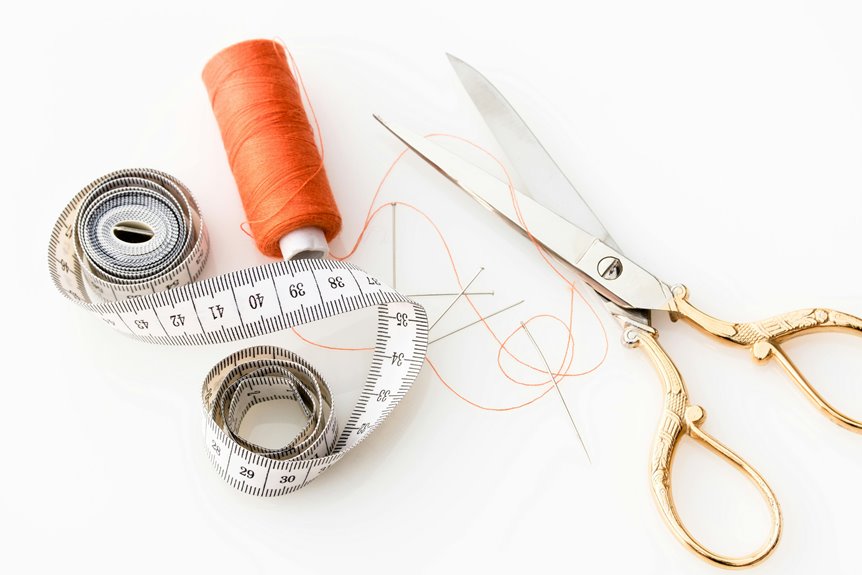
When sewing suede fabric, you should use a sharp leather needle sized 90/14 or 100/16 because its wedge-shaped point easily pierces the dense material without damaging it. Pair this needle with strong polyester or nylon thread, which resists abrasion and holds up well under stress. Avoid ballpoint needles and thin threads to prevent snagging or breaking. With the right needle and thread, you’ll get smooth, durable stitches. If you want to guarantee the best results, there are helpful tips and tools you can explore.
Key Takeaways
- Use sharp leather needles sized 90/14 or 100/16 with a wedge-shaped point for piercing dense suede fabric.
- Choose strong, flexible polyester or nylon thread that resists abrasion and doesn’t break easily.
- Opt for thicker threads like upholstery or topstitching thread to ensure durability on suede.
- Avoid ballpoint or universal needles and overly thin threads to prevent snagging and breakage.
- Test needle and thread on scrap suede before sewing for best stitch quality and fabric protection.
Selecting the Right Needle for Suede
When you sew suede, choosing the right needle is crucial to avoid damaging the fabric.
You’ll want to use a sharp, strong needle specifically designed for leather or heavy fabrics, such as a leather needle or a size 90/14 or 100/16 needle. These needles have a wedge-shaped point that pierces through the dense suede without tearing or causing runs.
Use a sharp leather needle, size 90/14 or 100/16, for clean, precise stitching on dense suede.
Avoid ballpoint or universal needles, as they can snag or puncture the fabric unevenly. Also, consider the thickness of your suede; thicker pieces may require a larger needle size to handle multiple layers smoothly.
Always test your needle on a scrap piece first to verify it doesn’t leave unwanted holes or marks. This careful selection helps maintain the suede’s texture and appearance during sewing.
Choosing the Best Thread Type for Suede
Although selecting the right needle is essential, choosing the best thread type for sewing suede plays an equally important role in ensuring strong, durable seams that complement the fabric’s texture.
You’ll want to use a strong, flexible thread like polyester or nylon because these threads resist abrasion and won’t break easily during stitching.
Cotton thread, while natural, tends to be weaker and less durable for suede’s dense, fibrous surface.
Opt for a thicker thread, such as upholstery or topstitching thread, to provide extra strength and maintain visible, neat seams that suit suede’s rugged look.
Avoid overly thin threads that can snap or get lost in the fabric’s nap.
Matching your thread color to the suede also helps create a seamless, professional finish.
Tips for Preparing Suede Before Sewing
Preparing suede before sewing requires careful attention to clean, condition, and stabilize the fabric. You want the suede to be smooth and manageable to avoid puckering or damage when stitching.
Properly preparing suede ensures it stays smooth and stable to prevent puckering or damage while sewing.
Start by gently brushing the fabric with a suede brush to remove dirt and revive the nap. Next, spot clean any stains with a suede cleaner or mild soap, letting it dry fully.
To maintain softness, apply a conditioner specifically designed for suede. Finally, cut your pieces carefully using sharp scissors or a rotary cutter to prevent fraying.
Here’s a quick checklist:
- Brush suede to restore texture
- Spot clean stains gently
- Condition to keep fabric supple
- Use sharp tools for precise cutting
These steps help guarantee your suede is ready for a flawless sewing process.
Techniques to Avoid Damage When Sewing Suede
To prevent damage while sewing suede, you’ll need to handle the fabric gently and use the right tools. Avoid pressing too hard with your sewing machine foot to prevent marks. Use a slow, steady stitching speed to maintain control and avoid puckering. Always test your stitches on a scrap piece first. Don’t backstitch at the start or end, as it can create holes.
| Technique | Reason |
|---|---|
| Use slow stitching speed | Prevents puckering |
| Avoid backstitching | Stops holes from forming |
| Handle fabric gently | Maintains suede’s texture |
| Test stitches first | Guarantees stitch quality |
Recommended Tools and Accessories for Suede Projects
When working with suede, choosing the right tools can make all the difference in your project’s outcome. Suede is delicate and requires accessories that protect its texture while ensuring clean, precise stitches.
Here are the essentials you’ll want on hand:
- Leather or microtex needles: Designed to pierce tough material without causing damage.
- Heavy-duty polyester thread: Strong and flexible, it withstands wear without breaking.
- Suede or leather pins/clips: Avoid traditional pins; clips prevent leaving permanent holes.
- Non-stick sewing machine foot: Allows smooth fabric feeding without sticking or pulling.
Using these tools helps maintain suede’s soft nap and gives your projects a professional finish.
Don’t skimp on quality—your suede will thank you!
Frequently Asked Questions
Can I Use a Sewing Machine or Should I Sew Suede by Hand?
Sewing suede with a machine is like taming a wild stallion—you can do it, but you need the right tools and patience. You can sew by hand for precision, or use a heavy-duty machine to speed things up.
How Do I Remove Stitch Marks From Suede Fabric?
You can gently rub the stitch marks with a suede brush or a soft cloth. For stubborn marks, try a suede eraser or a small amount of white vinegar on a cloth, then let it air dry naturally.
What Is the Best Way to Store Suede Fabric Before Sewing?
You should store suede fabric in a cool, dry place, away from direct sunlight to prevent fading. Roll it loosely to avoid creases and keep it in breathable fabric bags to maintain its texture before you start sewing.
Can I Dye Suede After Sewing My Project?
Definitely dyeing dyed or dry suede after sewing demands delicate, deliberate decisions. You’ll want to test tiny, tight spots first to guarantee even color coverage without compromising your crafted seams or causing stubborn stains. Proceed prudently!
How Do I Clean Suede After Completing a Sewing Project?
To clean suede after sewing, you’ll want to gently brush it with a suede brush to remove dirt. Avoid water; instead, use a suede cleaner or eraser for stains. Let it air dry naturally to keep it soft.