
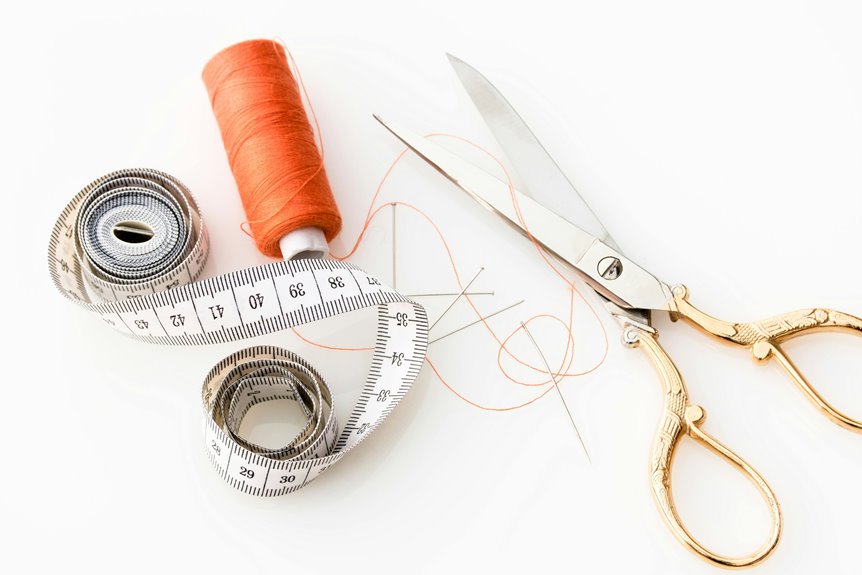
To cut faux suede without it slipping or stretching, start by laying it flat on a clean, stable surface. Use sharp scissors or a rotary cutter to get clean edges and avoid pulling the fabric. Stabilize the fabric with pattern weights or place tissue paper underneath to add friction. Mark your patterns lightly with tailor’s chalk to prevent damaging the nap. Take your time with curves and intricate shapes to keep the fabric intact. Keep going to discover more helpful techniques for precise cutting.
Key Takeaways
- Place tissue paper or a lightweight stabilizer underneath faux suede to increase friction and prevent slipping during cutting.
- Use sharp scissors or a rotary cutter to ensure clean cuts without stretching or tugging the fabric.
- Secure the fabric with pattern weights instead of pins to keep it flat and stable without distortion.
- Cut slowly and steadily along marked lines, avoiding pulling or stretching the fabric while cutting.
- Work on a clean, flat surface with good lighting to maintain fabric position and visibility of cutting guides.
Understanding the Characteristics of Faux Suede
Before you start cutting faux suede fabric, it’s important to understand its unique characteristics. Faux suede is a synthetic material designed to mimic real suede’s soft texture and durability.
Unlike natural suede, it resists water and stains better, but it can still shift or stretch if you’re not careful. You’ll notice it has a nap—a direction in the fabric’s fibers—that affects how light reflects and how the fabric feels. Always identify the nap before cutting to guarantee your pieces look consistent.
Faux suede’s thickness means you’ll need sharp scissors or a rotary cutter for clean edges. Keep in mind, this fabric doesn’t fray much, so raw edges won’t unravel easily, but precise cuts still matter for a polished finish.
Preparing Your Workspace for Cutting Faux Suede
Before you start cutting, make sure your workspace has a flat, clean surface to keep the faux suede smooth and wrinkle-free.
Good lighting is essential so you can see your cutting lines clearly and avoid mistakes.
Setting up this way helps you work efficiently and get precise cuts.
Flat, Clean Surface
A smooth, flat surface is essential when cutting faux suede fabric to guarantee clean, accurate edges. You want to avoid any bumps or unevenness that could cause the fabric to shift or wrinkle, which leads to imprecise cuts.
Before you start, clear your workspace thoroughly to create a stable foundation.
Here’s what to keep in mind for your cutting surface:
- Confirm the table or board is level and solid to prevent any movement during cutting.
- Remove dust, lint, and any debris that might interfere with fabric placement.
- Use a large enough surface so the fabric lies flat without folding or draping over edges.
Proper Lighting Setup
Once your surface is perfectly flat and clear, good lighting helps you see every detail of your faux suede fabric.
Position a bright, even light source above your workspace to eliminate shadows that can distort your view. Natural daylight is ideal, but if that’s not available, use daylight-balanced LED lamps for consistent brightness.
Avoid harsh overhead lights that create glare, as they can make it tricky to distinguish fabric edges. Angle your lighting so it highlights the fabric’s texture without washing out colors or patterns.
Proper lighting guarantees accurate cutting lines and helps prevent mistakes caused by slipping or misaligned marks. By setting up your workspace with the right lighting, you’ll maintain control and precision throughout the cutting process, making your project smoother and more professional-looking.
Essential Tools for Cutting Faux Suede Accurately
To cut faux suede accurately, you’ll need the right tools at hand.
Sharp scissors are essential for clean, precise edges without fraying the fabric.
Pair them with a cutting mat to protect your surfaces and keep your cuts steady.
Sharp Scissors Importance
When you use sharp scissors, you’ll achieve clean, precise cuts on faux suede fabric without fraying or jagged edges. Dull scissors can tug and stretch the material, causing uneven lines and ruining your project.
Keeping your scissors sharp guarantees smooth slicing through the fabric’s dense texture, which helps maintain the fabric’s integrity and shape.
Here’s why sharp scissors are essential:
- They prevent slipping, giving you better control over your cuts.
- They reduce fabric distortion by cutting cleanly instead of pulling.
- They save time and effort, making your cutting process efficient.
Investing in a good pair of fabric scissors dedicated to faux suede will make your crafting experience much easier and your results professional.
Using Cutting Mats
Although sharp scissors are essential, using a cutting mat guarantees you cut faux suede fabric with accuracy and protect your work surface from damage.
A self-healing cutting mat provides a stable, non-slip surface that keeps the fabric in place as you cut, preventing unwanted stretching or shifting. It also helps extend the life of your scissors by providing a smooth cutting surface that won’t dull blades quickly.
Choose a mat with grid lines and measurements to guide straight cuts and maintain consistent sizing. When placing your fabric, smooth it out carefully on the mat to avoid wrinkles.
Using a cutting mat lets you work confidently, ensuring each cut is precise and clean, which is vital when handling tricky materials like faux suede.
Techniques to Prevent Slipping While Cutting
Several simple techniques can help you keep faux suede fabric from slipping while cutting, ensuring clean, accurate edges.
First, you want to create enough friction between the fabric and your work surface. Try these methods to stabilize the fabric as you cut:
- Place a piece of tissue paper or a lightweight stabilizer underneath the fabric to add grip.
- Use pattern weights instead of pins to hold the fabric flat without shifting.
- Cut slowly and steadily with sharp scissors or a rotary cutter to avoid dragging the fabric.
How to Stabilize Faux Suede Fabric Before Cutting
Before you start cutting, you’ll want to stabilize your faux suede fabric to prevent shifting and secure precise cuts.
Begin by pressing the fabric gently with a cool iron using a pressing cloth to avoid damaging the texture. Next, consider applying a temporary fabric stabilizer spray; it adds slight stiffness, reducing stretch and movement without leaving residue.
If you’re working with multiple layers, baste them together by hand or with a long machine stitch. This keeps layers aligned and stable.
Another tip is to lay your fabric on a non-slip surface, like a silicone mat or rubberized cutting mat, which helps keep it from sliding.
Taking these steps secures your fabric stays put, making your cutting process much smoother and more accurate.
Using Weights and Clips to Secure Faux Suede
After stabilizing your faux suede, you’ll want to keep it firmly in place as you cut. Using weights and clips prevents the fabric from shifting or stretching, ensuring clean, accurate cuts.
Place weights evenly around your fabric to hold it flat without distorting the texture. Clips work well along edges, especially on curved or tricky sections, providing extra grip without piercing the material.
Consider these tips to secure faux suede effectively:
Consider these effective tips to keep your faux suede stable and prevent shifting while cutting.
- Use smooth, heavy weights like pattern weights or clean stones to avoid fabric impressions.
- Opt for fabric clips or binder clips instead of pins to prevent holes or snags.
- Position weights and clips away from your cutting line to avoid interference.
This approach helps maintain your fabric’s integrity and improves cutting precision.
Best Practices for Marking Faux Suede Patterns
When you mark patterns on faux suede, choosing the right tools and techniques is essential to avoid damaging the fabric. Use tailor’s chalk or a fabric marking pen that disappears with heat or water, as these won’t leave permanent marks or harm the texture.
Avoid sharp pencils or pins, which can leave indentations or snag the surface. Mark lightly to prevent crushing the nap. Test your chosen marker on a scrap piece first to verify it erases cleanly.
Position your pattern carefully and mark around the edges without pressing too hard. If you need to transfer internal markings, use tailor’s tacks instead of heavy lines.
Following these practices helps keep your faux suede looking pristine and guarantees your cutting and sewing go smoothly.
Tips for Cutting Curves and Intricate Shapes in Faux Suede
How do you handle cutting curves and intricate shapes in faux suede without causing fraying or distortion? The key is to maintain control and use the right tools. Faux suede can slip or stretch if you’re not careful, so slow, deliberate movements work best.
Here’s how to make those detailed cuts easier:
- Use sharp fabric scissors or a rotary cutter for clean, precise edges.
- Stabilize the fabric with lightweight interfacing or spray adhesive to prevent slipping.
- Cut slowly along the marked lines, turning the fabric—not the scissors—to keep curves smooth.
Frequently Asked Questions
Can Faux Suede Be Washed Before Cutting?
About 70% of faux suede fabrics shrink slightly when washed. You can wash it before cutting, but expect minor shrinkage. Always pre-wash gently to avoid stretching, ensuring your final project fits perfectly.
What Adhesives Work Best With Faux Suede?
You’ll find fabric glue or spray adhesives work best with faux suede, providing a strong bond without damaging it. Hot glue can be tricky, so stick to those designed for delicate fabrics for lasting results.
How Do You Repair Cuts or Mistakes in Faux Suede?
Did you know 60% of DIYers fix fabric mistakes themselves? To repair faux suede cuts, you can use fabric glue or iron-on patches, then gently brush the surface to blend the texture and hide the repair seamlessly.
Is Faux Suede Suitable for Outdoor Projects?
You shouldn’t use faux suede for outdoor projects because it’s not very water-resistant or durable against harsh weather. Instead, choose fabrics specifically designed for outdoor use to guarantee your project lasts and stays looking great.
How to Store Faux Suede Fabric to Prevent Damage?
Imagine your faux suede draped like a gentle cloud—store it rolled or hung to avoid creases. Keep it away from direct sunlight and moisture to preserve its soft texture and vibrant color.