
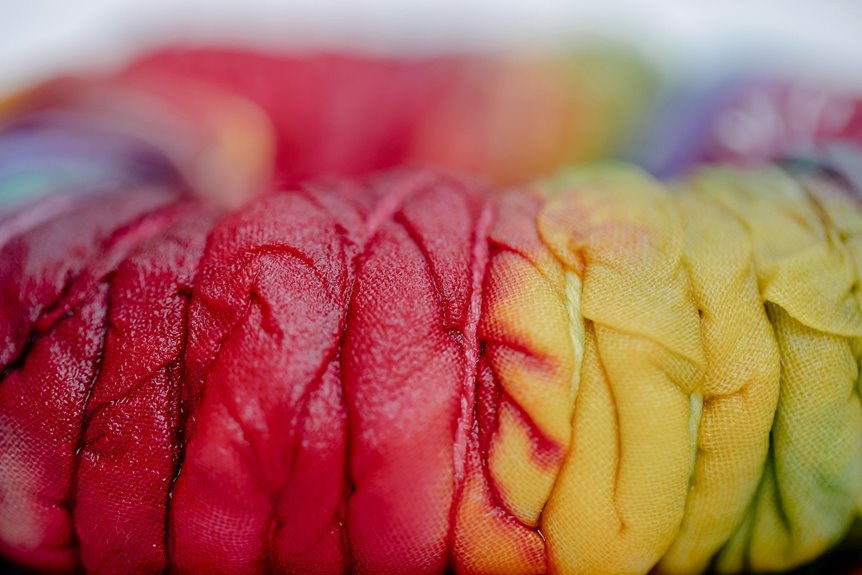
The wet tie-dye technique involves applying dye to a damp fabric, allowing colors to flow and blend smoothly like watercolor. You start by soaking your fabric and wringing out excess water so it’s damp but not dripping. Then, use squeeze bottles or brushes to apply fiber-reactive dyes quickly before the fabric dries. This method creates vibrant, seamless color shifts with less bleeding and softer textures. Keep going to discover how to prepare your fabric perfectly and avoid common mistakes.
Key Takeaways
- Wet tie-dye involves applying dye to fabric that is damp but not dripping for smooth, even color diffusion.
- Using fiber-reactive dyes on natural fibers ensures vibrant, long-lasting colors with chemical bonding.
- Applying dye quickly with squeeze bottles or brushes preserves moisture and enhances color blending.
- Binding fabric with rubber bands or string creates distinct patterns like spirals, bullseyes, or stripes.
- Maintaining fabric moisture while wrapping in plastic helps set colors and achieves soft, watercolor-like effects.
Understanding the Basics of Wet Tie-Dye
Although wet tie-dye might seem complicated at first, you’ll find it’s a straightforward and fun way to create vibrant, flowing patterns on fabric.
The key is starting with a damp piece of clothing or fabric, which helps the dye spread smoothly and blend beautifully. You’ll need to prepare your fabric by soaking it in water and wringing out excess moisture so it’s wet but not dripping.
Then, apply your dye directly onto the damp fabric using squeeze bottles or brushes. Because the fabric is wet, the colors naturally diffuse and mix, creating soft edges and unique effects that dry tie-dye can’t achieve.
Just remember to work quickly to maintain the right moisture level, and you’re set to experiment with endless colorful designs.
Benefits of Using the Wet Tie-Dye Technique
When you use the wet tie-dye technique, you’ll notice colors blend more smoothly for a unique, vibrant look.
It also makes your fabric feel softer and more comfortable to wear.
Plus, this method helps reduce dye bleeding, keeping your design crisp and clean.
Enhanced Color Blending
Because you apply dye to a wet fabric, the colors naturally flow and merge, creating smooth changes that are hard to achieve with dry tie-dye methods. This enhanced blending gives your designs a unique, watercolor-like effect that feels alive and dynamic. You’ll notice how colors bleed gently into one another, producing gradients and subtle overlaps that add depth and vibrancy. This technique invites creativity, letting you experiment with color combinations that pop and harmonize effortlessly.
| Emotion | Description | Result |
|---|---|---|
| Excitement | Watching colors blend freely | Unique, vibrant hues |
| Satisfaction | Seeing smooth changes | Professional look |
| Creativity | Mixing unexpected colors | Endless design options |
| Joy | Crafting your own style | Personal expression |
Softer Fabric Texture
Since the fabric soaks up water before dyeing, you’ll notice a noticeably softer texture once your project is complete. The moisture helps loosen the fibers, allowing the dye to penetrate more deeply and evenly. This process prevents the fabric from feeling stiff or rough after drying.
When you work with wet tie-dye, the fibers relax, which makes the final product more comfortable to wear. Additionally, the softness enhances the overall look by giving your colors a smooth, natural finish. You’ll find that your tie-dye piece feels more like a well-loved, broken-in garment rather than a brand-new, stiff fabric.
This subtle but important benefit makes wet tie-dye ideal for clothing you want to wear often and enjoy for a long time.
Reduced Dye Bleeding
The softer texture you get from wet tie-dye doesn’t just feel better—it also helps control how the dye behaves on the fabric. When you apply dye to damp fabric, the colors stay more in place, reducing unwanted bleeding and blending. This means your patterns come out sharper and more vibrant. You’ll find it easier to achieve clean lines and distinct color separations, making your designs pop.
| Aspect | Dry Tie-Dye | Wet Tie-Dye |
|---|---|---|
| Dye Bleeding | High, colors often mix | Low, colors stay crisp |
| Color Vibrancy | Moderate | Enhanced |
| Pattern Clarity | Blurred edges | Sharp edges |
Using wet tie-dye gives you more control and cleaner results every time.
Materials Needed for Wet Tie-Dye Projects
Gathering the right materials sets you up for success in any wet tie-dye project. You’ll need fiber-reactive dyes, which offer vibrant, long-lasting colors.
Grab squeeze bottles or spray bottles to apply the dye precisely. Choose 100% cotton fabric or garments, as synthetic blends won’t absorb dye well. Have rubber bands or string ready to create patterns by binding sections of your fabric.
Don’t forget plastic gloves to protect your hands from stains and a plastic table cover or garbage bags to keep your workspace clean. Additionally, prepare large plastic bags or plastic wrap to wrap your dyed items while they set.
Finally, keep plenty of water nearby for rinsing and wetting your fabric before dyeing, which is essential for the wet tie-dye technique.
Preparing Fabric for Wet Tie-Dye
Before you start applying dye, make sure your fabric is thoroughly wet but not dripping. This step is essential because wet fabric absorbs colors more evenly, helping you achieve those vibrant, blended effects that make wet tie-dye so unique.
Once damp, you’ll want to wring out any excess water gently to avoid dripping, which can cause unwanted color bleeding.
Next, lay your fabric flat or twist it according to your desired pattern. Secure it tightly with rubber bands or string to maintain the design during dye application.
How to Properly Wet the Fabric
Since even moisture is essential for vibrant colors, you’ll want to wet your fabric thoroughly but carefully.
Start by soaking the fabric in cold water until it’s fully saturated. Avoid using warm or hot water, as it can affect the fabric’s fibers and dye absorption.
Once soaked, gently wring out the excess water so the fabric is damp but not dripping. You want the fabric to hold moisture evenly without puddles forming, as uneven wetness can cause blotchy dye patterns.
Lay the fabric flat or hang it to guarantee it stays evenly damp before applying dye. Properly wetting your fabric sets the stage for brilliant, smooth color shifts that define the wet tie-dye technique.
Choosing the Right Dyes for Vibrant Colors
When you choose dyes for your wet tie-dye project, picking ones with strong pigmentation and good fabric adherence makes all the difference in achieving vibrant colors. Fiber reactive dyes are your best bet because they bond chemically with cotton and other natural fibers, ensuring lasting brightness. Avoid dyes designed for synthetic fabrics, as they may not hold well on natural fibers. Also, consider the dye’s concentration; more concentrated dyes produce richer hues. Pre-mixing colors with care helps prevent muddy results, especially on wet fabric where colors blend more easily.
| Dye Type | Best For |
|---|---|
| Fiber Reactive | Cotton, rayon, linen |
| Acid Dyes | Silk, wool |
| Disperse Dyes | Polyester, nylon |
| All-Purpose Dyes | Blends, synthetic fabrics |
| Natural Dyes | Eco-friendly, subtle hues |
Step-by-Step Guide to Applying Dye on Wet Fabric
Before you start applying dye, make sure your fabric is evenly damp but not soaking wet.
This moisture helps the colors blend smoothly and creates those signature wet tie-dye effects.
Next, use different dye application techniques like squeezing, dripping, or brushing to bring your design to life.
Preparing Fabric Moisture
To get the best results with the wet tie-dye technique, you’ll need to prepare your fabric with just the right amount of moisture. Start with clean, damp fabric to help the dye spread evenly and create vibrant patterns.
Here’s how to get it right:
- Rinse your fabric under cold water until it’s evenly wet but not soaked.
- Wring out excess water gently to avoid dripping.
- Lay the fabric flat or fold it according to your design plan.
- Use a spray bottle to lightly mist areas that start to dry during the process.
- Keep a towel nearby to absorb any excess moisture and maintain control.
This moisture balance guarantees your dye flows smoothly, blending colors beautifully without bleeding too much.
Applying Dye Techniques
Although applying dye to wet fabric can seem tricky at first, you’ll find the process straightforward once you get the hang of it.
Start by placing your damp fabric on a protected surface. Use squeeze bottles or brushes to apply dye directly onto the wet areas. The moisture helps the colors blend smoothly and absorb evenly, giving vibrant results.
Apply colors quickly but carefully, as the wet fabric allows dye to spread more than dry cloth. You can layer colors for interesting effects but avoid oversaturating, which can cause muddiness.
After dye application, wrap the fabric in plastic to keep it moist and let the colors set. This step preserves the wet tie-dye technique’s signature brightness and sharp contrasts you’re aiming for.
Techniques to Create Different Patterns With Wet Tie-Dye
When you master the wet tie-dye technique, you can create a variety of vibrant patterns by manipulating how the fabric absorbs the dye.
The key lies in folding, twisting, and saturating the fabric differently before applying color. Here are some fun pattern techniques to try:
- Spiral: Twist the wet fabric from the center and secure it with rubber bands to form a swirl.
- Bullseye: Pinch the fabric at one point and bind it in sections to create concentric circles.
- Crinkle: Scrunch the fabric randomly for a textured, marbled effect.
- Stripes: Fold the fabric accordion-style and bind tightly for linear patterns.
- Sunburst: Pinch small sections and bind them separately to make bursts of color.
Experiment with these to see how water and dye interact uniquely!
Tips for Achieving Color Blending and Gradients
To get smooth color blending and gradients, start by choosing the right fabric that soaks up dye evenly.
Apply your dye while the material is still wet to help colors merge naturally.
Use gentle techniques like overlapping colors and gradual strokes to create seamless shifts.
Choosing the Right Fabric
Fabric choice plays an essential role in how your wet tie-dye project turns out, especially if you’re aiming for smooth color blending and striking gradients.
Natural fibers absorb dye better, allowing colors to blend seamlessly. When choosing fabric, consider these tips:
- Pick 100% cotton or rayon for vibrant hues and smooth shifts.
- Avoid synthetic fabrics like polyester, which resist dye absorption.
- Choose lightweight fabrics to help colors spread and merge easily.
- Pre-wash your fabric to remove sizing that blocks dye penetration.
- Make sure the fabric is damp but not dripping to control how colors flow.
Applying Dye on Wet Material
Applying dye onto wet material reveals the magic of smooth color changes and soft gradients. When you saturate fabric first, the dye spreads gently, blending colors naturally. To get the best results, apply dye quickly while the fabric is still damp. Use varying pressure to control how much dye soaks in.
Here’s a quick guide to help you master applying dye on wet fabric:
| Step | Tip | Result |
|---|---|---|
| Pre-wet fabric | Spray evenly with water | Dye spreads smoothly |
| Apply dye | Use light pressure | Soft, blended gradients |
| Layer colors | Work fast before drying | Natural color shifts |
Techniques for Smooth Transitions
When you want colors to flow seamlessly into each other, mastering smooth shifts is key. With the wet tie-dye technique, you can create beautiful gradients and blends that look professional and vibrant.
Here’s how to get those smooth changes:
- Apply dye while the fabric is still wet to encourage colors to bleed naturally.
- Use a brush or spray bottle to gently soften the edges between colors.
- Overlap colors slightly to avoid harsh lines and create a gradient effect.
- Work quickly, as wet fabric allows dyes to mix before drying.
- Experiment with color placement, starting from light to dark shades for better blending.
Common Mistakes to Avoid When Wet Tie-Dyeing
Although wet tie-dyeing can create stunning, vibrant patterns, it’s easy to make mistakes that muddy your design or cause colors to bleed excessively. One common error is using too much water; overly saturated fabric prevents colors from setting properly, leading to dull results.
Avoid applying dyes too thickly or overlapping contrasting colors without allowing some drying time—they’ll blend into a muddy mess. Also, don’t skip pre-wetting your fabric evenly, as uneven moisture causes inconsistent dye absorption.
Another pitfall is rushing the process; you need to let the dye sit long enough to fix the colors. Finally, using low-quality dyes or fabric can sabotage your efforts.
Caring for Wet Tie-Dye Finished Products
Since wet tie-dye fabrics are more delicate than regular dyed materials, you’ll need to handle them with extra care to preserve their vibrant colors and patterns.
To keep your wet tie-dye projects looking fresh and bright, follow these tips:
Keep wet tie-dye vibrant by washing gently, air drying, and protecting designs during care.
- Wash in cold water to prevent color bleeding.
- Use mild detergent without bleach or harsh chemicals.
- Turn garments inside out before washing to protect the design.
- Avoid machine drying; air dry flat or hang in shade.
- Iron on low heat if necessary, placing a cloth between the iron and fabric.
Creative Ideas to Experiment With Wet Tie-Dye Designs
Taking good care of your wet tie-dye creations guarantees they stay vibrant, but exploring new design ideas can make your projects even more exciting.
Try combining wet tie-dye with other techniques like stamping or stenciling to add unique patterns. Experiment with different folding methods—accordion pleats, spirals, or crumples—to see how they affect color blending.
You can also play with color placement by applying dye selectively on wet fabric for sharper contrasts or letting colors bleed for softer shifts. Use unconventional tools like brushes or spray bottles to apply dye in creative ways.
Finally, try layering colors in stages, allowing the fabric to partially dry between applications. These ideas will help you push your wet tie-dye skills and create truly one-of-a-kind designs.
Frequently Asked Questions
Can Wet Tie-Dye Be Done on Synthetic Fabrics?
You can try wet tie-dye on synthetic fabrics, but it won’t absorb colors as well as natural fibers. You’ll likely need special dyes designed for synthetics to get vibrant, lasting results.
How Long Does the Wet Tie-Dye Process Take From Start to Finish?
You’ll spend a thrilling eternity—about 6 to 24 hours—waiting for your masterpiece to dry and set. Patience isn’t just a virtue here; it’s your new best friend for vibrant, lasting colors.
Is Wet Tie-Dye Safe for Children’s Clothing?
You’ll find wet tie-dye generally safe for children’s clothing if you use non-toxic, fiber-reactive dyes. Just make sure to follow safety instructions carefully and avoid harmful chemicals to keep kids’ clothes vibrant and safe.
Can You Use Natural Dyes With the Wet Tie-Dye Technique?
Yes, you can use natural dyes with the wet tie-dye technique. Just make sure you prepare the fabric properly and apply the dyes while the fabric’s damp to help the colors absorb evenly and create vibrant patterns.
What Is the Environmental Impact of Wet Tie-Dye Dyes?
You might think wet tie-dye’s vibrant colors mean heavy pollution, but using eco-friendly dyes and minimal water reduces impact. You can create stunning designs while keeping your process sustainable and gentle on the environment.