
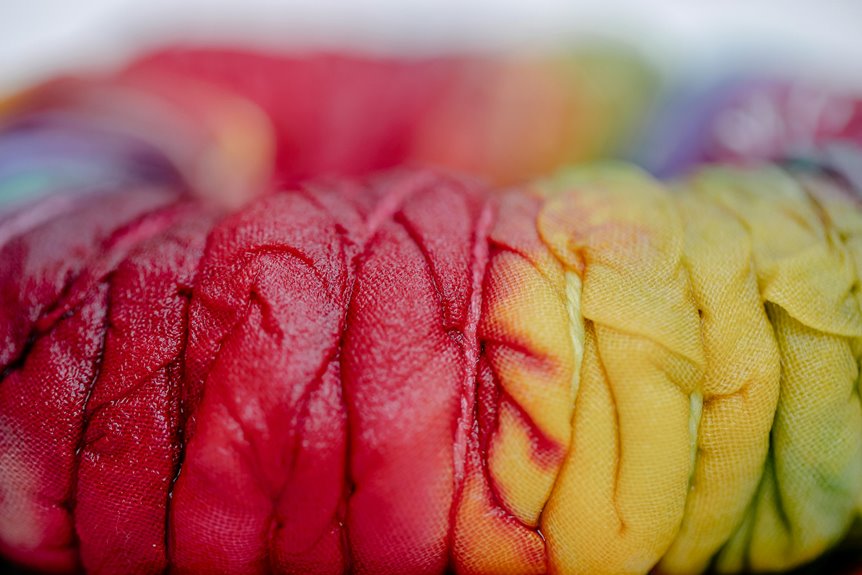
The dry tie-dye technique lets you apply powdered dye directly onto dry, folded fabric, giving you sharp, vivid patterns with precise color placement. You activate the colors by lightly misting or steaming the fabric afterward, which helps avoid the mess of traditional wet dyeing. It’s perfect when you want bold, detailed designs and faster drying times. If you want to explore how to get the best results and avoid common pitfalls, you’ll find useful tips ahead.
Key Takeaways
- Dry tie-dye uses powdered pigments applied to dry, folded fabric for precise color placement and sharp patterns.
- It requires moisture activation through light misting or steaming after dye application.
- Ideal for bold, intense colors with less mess compared to traditional wet tie-dye methods.
- Best used when you want enhanced design clarity, faster drying, and minimal fabric damage.
- Suitable for natural fibers and detailed motifs requiring controlled dye application and vibrant results.
Understanding the Basics of Dry Tie-Dye
Although tie-dye is often associated with wet dyeing methods, dry tie-dye offers a unique twist by using powder pigments instead of liquid dyes.
When you work with dry tie-dye, you start by folding or tying your fabric just like traditional tie-dye. Then, you sprinkle the powdered dye directly onto the fabric’s surface. This method lets you control color placement more precisely because the powders stay put until you activate them.
You’ll need to add moisture afterward—usually by spraying water or steaming—to make the colors develop. Since powders can be more concentrated, you’ll want to wear gloves and work in a well-ventilated area.
Dry tie-dye is perfect when you want bold, intense colors with less mess, and it’s great for experimenting with layering effects.
How Dry Tie-Dye Differs From Traditional Tie-Dye
You’ll notice that dry tie-dye uses a different application method compared to traditional tie-dye, which affects how the colors turn out.
The vibrancy of the hues can vary greatly depending on the technique you choose.
Plus, handling the fabric during the process takes a different approach that changes the final look.
Application Method Differences
When you try dry tie-dye, you’ll notice that the application method changes how the dye interacts with the fabric. Unlike traditional tie-dye, where you saturate wet fabric with dye, dry tie-dye involves applying dye directly onto dry, twisted fabric.
This means you control how much dye touches each area without it spreading uncontrollably. You’ll find it easier to create sharper patterns since the dye doesn’t bleed as much.
Also, you apply the dye more sparingly, often using spray bottles or brushes instead of pouring or soaking. This approach lets you experiment with precision and layering without oversaturating your garment.
Color Vibrancy Impact
Color vibrancy plays an essential role in the appeal of any tie-dye project, and dry tie-dye impacts it differently than traditional methods.
When you use dry tie-dye, the dye tends to sit more on the fabric’s surface, resulting in brighter, more intense colors. Because the fabric isn’t pre-soaked, the dye doesn’t spread or blend as much, so you’ll notice sharper, more defined patterns.
However, this technique might limit how much the colors can penetrate the fibers, meaning the vibrancy could fade faster after washing.
In contrast, traditional tie-dye’s wet fabric absorbs dye more deeply, creating softer, more blended colors that last longer.
If you want bold, eye-catching designs right away, dry tie-dye can deliver vibrancy but may require extra care to maintain it.
Fabric Handling Variations
The way you handle fabric during dry tie-dye impacts the final look just as much as the dye itself.
Unlike traditional tie-dye, where the fabric is usually wet or damp, dry tie-dye requires you to start with completely dry fabric. This changes how you twist, fold, or bind the material because dry fabric resists dye absorption differently.
You’ll notice that the dye tends to sit more on the surface rather than soaking in, so your folds need to be tighter to create crisp patterns. Also, since the fabric isn’t saturated, the dye spreads less, giving you more control over where colors appear.
Materials Needed for Dry Tie-Dye Projects
Gathering the right materials is essential for successful dry tie-dye projects. You’ll need natural fiber fabrics like cotton, linen, or rayon because they absorb dye better and produce vibrant colors.
Choose fiber-reactive dyes designed for use on dry fabrics—they bond well without soaking. Have rubber bands or string handy to create patterns by tightly binding sections of your fabric.
A spray bottle filled with water helps you lightly mist the fabric, controlling dye spread without drenching it. Don’t forget gloves to protect your hands from staining and a plastic-covered workspace to keep surfaces clean.
Finally, prepare some plastic bags or wrap to seal your project while the dye sets. With these essentials, you’re ready to experiment with dry tie-dye’s unique effects.
Step-by-Step Guide to Creating Dry Tie-Dye Patterns
Once you have your materials ready, you can start creating your dry tie-dye patterns step by step.
First, lay your fabric flat and decide on the design you want. Pinch and twist sections of the fabric, then secure each with rubber bands to form tight bundles.
Next, prepare your dye by mixing it with minimal water to keep it dry. Use a brush or sponge to apply the dye directly onto the bound areas, focusing on coverage without soaking the fabric.
Let the dye sit for the recommended time, usually about 20-30 minutes.
Afterward, carefully remove the rubber bands and unfold your fabric to reveal the crisp, distinct patterns.
Finally, let your piece dry completely before using or washing it.
Benefits of Using the Dry Tie-Dye Technique
When you use the dry tie-dye technique, you get sharper color precision that makes your designs pop.
It’s also gentler on your fabric, so you won’t worry about damage.
Plus, your projects dry faster, letting you finish and enjoy your work sooner.
Enhanced Color Precision
Although traditional tie-dye methods can sometimes result in colors bleeding together, the dry tie-dye technique gives you much better control over where each shade lands.
Since the fabric stays dry during application, the dye doesn’t spread unpredictably, letting you place colors exactly where you want. This precision helps you create sharper patterns and more defined designs without worrying about colors mixing in unwanted areas.
You can layer hues confidently, knowing each one will stay crisp and vibrant. This technique is especially useful if you want detailed motifs or specific color separations.
Reduced Fabric Damage
With better control over color placement, you’ll also notice that the dry tie-dye technique treats your fabric more gently.
Since you apply less liquid dye, the fabric doesn’t get oversaturated, reducing stress on the fibers. This means your garments won’t weaken or stretch out as easily, preserving their original texture and shape.
You won’t have to worry about excessive water causing shrinkage or color bleeding, which often happens with traditional wet tie-dye methods. By keeping the fabric drier, you minimize the risk of damage, so your favorite shirts, dresses, or towels stay durable and vibrant longer.
If you want to achieve creative designs without compromising fabric quality, dry tie-dye is definitely a smart choice to protect your textiles.
Faster Drying Time
Because the dry tie-dye technique uses less liquid dye, your fabric dries much faster than with traditional methods. This means you won’t have to wait hours or even a full day for your project to be ready.
Faster drying time lets you complete your tie-dye creations quickly, making it perfect for last-minute gifts or spontaneous craft sessions. Plus, since the fabric isn’t overly saturated, it dries evenly without those damp spots that slow down the process.
You’ll spend less time waiting and more time enjoying your vibrant designs. This efficiency also reduces the risk of mildew or unpleasant odors.
Ideal Fabrics and Designs for Dry Tie-Dye
Choosing the right fabric can make all the difference when you try the dry tie-dye technique. Natural fibers like cotton, linen, and rayon absorb dye more evenly, giving you vibrant, crisp patterns.
Avoid synthetic blends since they don’t take the dye as well, leading to dull or uneven colors. For designs, simple folds and tight binding work best because the reduced water limits dye spread, so intricate patterns mightn’t develop clearly.
Classic spirals, stripes, and bullseyes shine with dry tie-dye, letting you control where the dye lands. You can also experiment with small sections to create bold contrasts.
Keep your designs straightforward to maximize the technique’s strengths and enjoy sharp, vivid results every time.
Troubleshooting Common Dry Tie-Dye Issues
If your dry tie-dye project doesn’t turn out as expected, don’t worry—you can fix common issues with a few simple adjustments.
Sometimes, colors may appear dull or uneven, or patterns mightn’t form clearly. Identifying the problem helps you improve your next creation.
Here are some common issues and solutions:
- Faded colors: Use fabric dye with higher pigment concentration and guarantee even application.
- Uneven patterns: Secure folds tightly and apply dye consistently across sections.
- Color bleeding: Avoid over-saturating fabric; let each color dry slightly before adding another.
- Stiff fabric: Use less dye or add fabric softener during washing to maintain softness.
Frequently Asked Questions
Can Dry Tie-Dye Be Combined With Other Dyeing Techniques?
You can definitely combine dry tie-dye with other dyeing techniques to create unique effects. Just make sure you plan your process carefully to avoid color bleeding and achieve the vibrant, layered look you’re aiming for.
How Long Does Dry Tie-Dye Ink Last on Fabric?
You might think dry tie-dye ink fades quickly, but it actually lasts quite well if you set it properly. With good fabric choice and heat-setting, your design can stay vibrant for years, even through many washes.
Is Dry Tie-Dye Safe for Children to Do?
Yes, dry tie-dye is generally safe for children if you use non-toxic, kid-friendly inks. Make sure they wear protective clothes and work in a well-ventilated area. Always supervise to avoid messes or accidental ingestion.
Can Dry Tie-Dye Be Used on Synthetic Fabrics?
You can use dry tie-dye on some synthetic fabrics, but results vary. Polyester and nylon don’t absorb dyes well, so you might need special dyes or treatments. Always test a small area first to avoid disappointment.
What Are Eco-Friendly Dye Options for Dry Tie-Dye?
Did you know 20% of global water pollution comes from textile dyeing? You can choose eco-friendly dyes like plant-based pigments, low-impact fiber-reactive dyes, or natural indigo to keep your dry tie-dye sustainable and vibrant.