
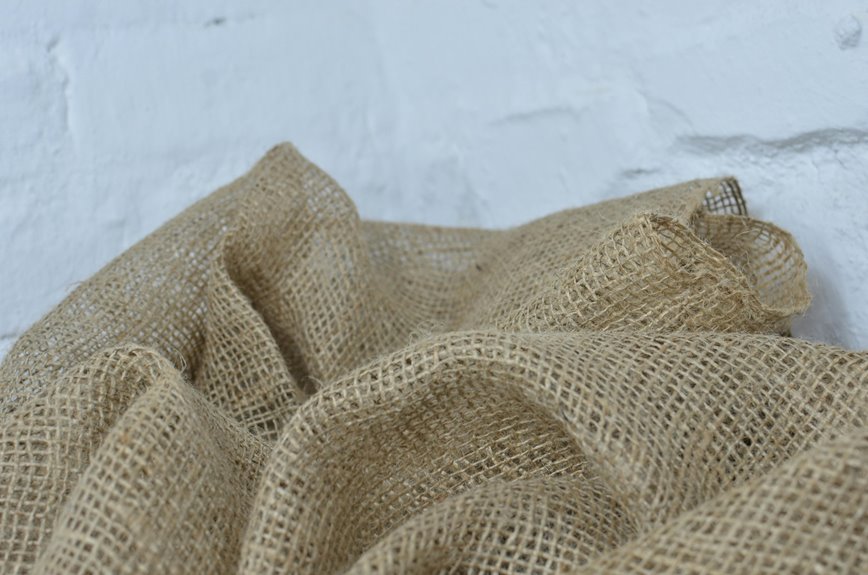
You might hear coarse jute fabric called hessian, burlap, or gunny, depending on where you are and how it’s used. Hessian is tough, often tied to packaging and garden use, named after a German region. Burlap shares that rugged feel but has a distinct loose weave ideal for crafts and decor. Gunny usually means rough sacks for crops, varying by region. Each type serves different needs, and exploring their unique traits can help you pick the best fit.
Key Takeaways
- Coarse jute fabric is commonly called Hessian, Burlap, or Gunny depending on region and specific weave characteristics.
- Hessian is a sturdy jute fabric named after Germany’s Hesse region, used mainly for sacks and garden landscaping.
- Burlap is a loosely woven, coarse jute fabric known for its consistent rustic texture and use in crafts and upholstery.
- Gunny refers to rough, loosely woven jute fabric, often used for agricultural sacks, with regional naming variations.
- These coarse jute fabrics are breathable, biodegradable, and widely used for packaging, home decor, gardening, and agriculture.
Origins and Characteristics of Coarse Jute Fabric
Coarse jute fabric traces its roots to the riverbanks of South Asia, where jute plants thrive in warm, humid climates. When you handle this fabric, you’ll notice its rough texture and sturdy weave.
Jute fibers come from the plant’s long, shiny strands, which are spun into coarse threads. These threads give the fabric its distinctive durability and strength. You’ll find that the coarse jute fabric is breathable and biodegradable, making it an eco-friendly choice.
Its natural golden-brown color varies slightly, depending on the soil and climate where the jute grows. Because of its coarse nature, this fabric is ideal for making sacks, ropes, and mats that require toughness rather than softness.
Understanding these origins helps you appreciate why coarse jute remains a popular, sustainable material.
Understanding the Term Hessian and Its Uses
You might already know hessian as a sturdy fabric made from jute, originally used in sacks and packaging.
It’s still popular today for everything from garden landscaping to rustic home decor.
Let’s explore where hessian comes from and why it’s so widely used.
Origins of Hessian Fabric
Although you might know it simply as Hessian, this fabric has a rich history that dates back centuries, rooted in the practical needs of transporting goods.
Originally, Hessian was made from jute fibers grown mainly in India and Bangladesh. The name “Hessian” likely comes from the German region of Hesse, where soldiers first wore coarse fabric resembling this material in the 18th century.
Traders quickly adopted it for sacks and coverings due to its durability and breathability. You’ll find that Hessian’s coarse weave and natural strength made it perfect for shipping coffee beans, grains, and other bulk items.
Over time, its use spread worldwide, but its core purpose remained tied to protecting and transporting goods efficiently. This long history explains why Hessian remains a popular fabric choice today.
Common Applications of Hessian
Hessian’s durability and breathability have made it a favorite for more than just transporting goods. When you use hessian, you’ll find it’s perfect for gardening—wrapping plant roots or protecting soil.
It’s also popular in home décor; think rustic table runners, lampshades, or wall art that add texture and warmth. If you’re into crafts, hessian offers a natural, rugged canvas for DIY projects.
You might even see it in event settings as decorative sashes or chair covers, lending an earthy vibe. Beyond aesthetics, hessian serves practical roles in erosion control and upholstery padding.
What Is Burlap and How Is It Different?
Burlap is a coarse fabric made from jute fibers, often confused with similar materials like hessian or coarse jute fabric itself.
When you look closely, burlap stands out due to its rough texture and loose weave, making it breathable and durable. Unlike hessian, which sometimes refers to a finer weave or a slightly different fiber blend depending on the region, burlap maintains a consistent natural, rustic appearance.
You’ll find burlap widely used in gardening, upholstery, and crafts because it’s biodegradable and holds up well under stress. If you want a sturdy, natural fabric for practical or decorative purposes, burlap is your go-to choice.
Just remember, while the terms overlap, burlap specifically denotes this coarse, jute-based textile with a distinct texture and utility.
The Meaning of Gunny and Regional Variations
You might hear the term “gunny” used differently depending on where you are.
It generally refers to coarse jute fabric, but regional names and uses can vary quite a bit.
Let’s explore how these variations shape your understanding of gunny.
Gunny Definition Variations
The term “gunny” carries different meanings depending on where you are, often referring to coarse jute fabric used for sacks and bags.
When you hear “gunny,” it usually means a rough, loosely woven textile that’s durable and breathable, perfect for packaging agricultural products.
In some places, gunny specifically implies sacks made from this fabric, while elsewhere, it might describe the fabric itself.
You might also find gunny used in crafts or as upholstery backing.
While the core idea centers on coarse jute, the term’s exact use can shift based on local customs and industries.
Understanding these subtle variations helps you communicate clearly, especially if you work with or buy jute materials across different regions where “gunny” is part of everyday language.
Regional Terms Explained
Since “gunny” takes on different meanings depending on the region, it’s helpful to understand the specific terms people use for coarse jute fabric in various areas.
For example, in India and Bangladesh, “gunny” commonly refers to sacks made from jute or burlap used for storing grains and produce.
Meanwhile, in the UK and parts of Europe, you’ll often hear “hessian” to describe the same material.
In the US, people usually say “burlap,” especially when referring to crafts or gardening.
These regional terms all point to similar coarse fabrics but highlight cultural preferences and uses.
Knowing these variations helps you identify the fabric more accurately and communicate effectively, whether you’re buying, selling, or working with jute materials internationally.
Common Applications of Coarse Jute Fabric Around the World
Millions of people rely on coarse jute fabric daily for its durability and eco-friendliness. You’ll find it in sacks transporting coffee beans, grains, and potatoes worldwide. Its breathability keeps produce fresh while resisting wear and tear.
In home décor, jute’s rustic texture adds charm to rugs, curtains, and wall hangings. Gardeners use it for erosion control and plant protection because it biodegrades naturally.
If you’re into crafts, jute’s coarse weave provides a sturdy base for DIY projects like tote bags or lampshades. Even in upholstery, it reinforces furniture frames.
Its versatility means you can spot it in packaging, agriculture, fashion, and interior design across continents. By choosing jute, you support sustainable practices and reduce plastic reliance in everyday products.
How to Choose the Right Coarse Jute Fabric for Your Needs
How do you pick the right coarse jute fabric for your project? Start by considering the fabric’s weave and thickness—tighter weaves provide more durability, while looser ones allow better breathability.
Think about the intended use: for upholstery or heavy-duty sacks, choose a stronger, thicker burlap or hessian. If you need something decorative or for light wrapping, a finer weave works better.
Check the fabric’s weight and texture to guarantee it suits your comfort and aesthetic needs. Also, consider whether you want untreated natural jute or one treated for water resistance or pest protection.
Finally, measure how much fabric you’ll need accurately to avoid shortages or excess. By focusing on these factors, you’ll confidently select the perfect coarse jute fabric for your needs.
Frequently Asked Questions
How Is Coarse Jute Fabric Recycled or Disposed of Sustainably?
You might think tossing coarse jute fabric is easy, but recycling it sustainably takes effort. You can compost it since it’s biodegradable, or repurpose it into crafts and garden mulch, reducing waste and benefiting the environment.
Can Coarse Jute Fabric Be Dyed or Printed on Easily?
You can dye or print on coarse jute fabric, but it absorbs colors unevenly due to its rough texture. Using fabric paints or natural dyes works best, and pre-washing helps improve color adherence and brightness.
What Are the Environmental Benefits of Using Coarse Jute Fabric?
You know what they say, “Waste not, want not.” Using coarse jute fabric helps you reduce plastic use, supports biodegradable materials, and promotes sustainable farming, so you’re making eco-friendly choices that protect the planet for future generations.
Is Coarse Jute Fabric Suitable for Clothing or Fashion Items?
You can use coarse jute fabric for fashion, but it’s rough and stiff, so it suits accessories or outerwear better than soft clothing. You’ll want to combine it with softer materials for comfort and style.
How Does Coarse Jute Fabric Compare in Cost to Other Natural Fibers?
Think of coarse jute as the humble earth—affordable yet strong. You’ll find it costs less than cotton or silk, making it a practical choice when you want natural fibers without stretching your budget too far.