
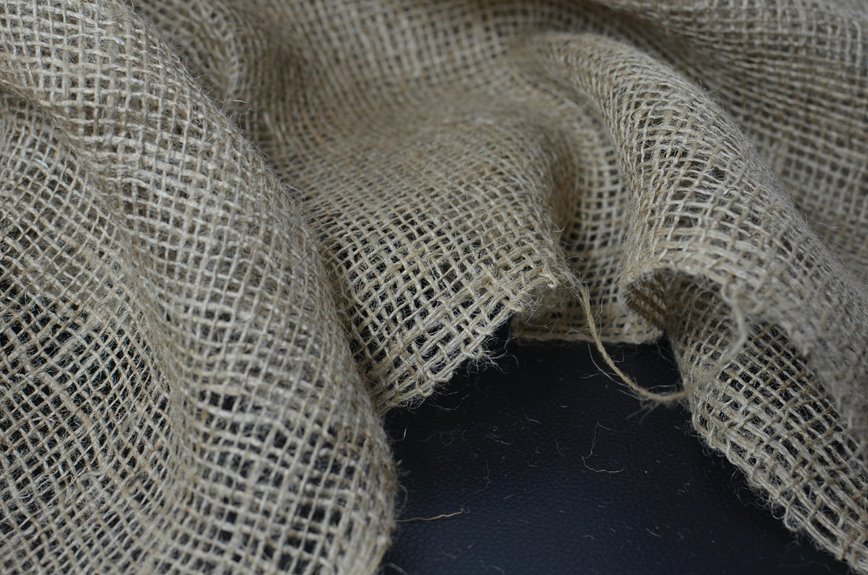
Jute fabric is a strong, natural textile made from the fibers of the jute plant’s stem. You’ll find it durable, breathable, and eco-friendly because it’s fully biodegradable and compostable, breaking down quickly without harming the environment. Its production uses minimal energy and chemicals, making it a sustainable choice for everyday use. Whether for bags or home decor, jute offers rustic charm combined with lasting strength. Keep exploring to uncover how it’s made and why it’s such a wise choice.
Key Takeaways
- Jute fabric is a natural fiber made from the long, soft strands of the jute plant’s stem, known for its coarse texture and strength.
- It is an eco-friendly, biodegradable material that decomposes quickly and enriches soil during decomposition.
- Jute requires minimal energy and chemicals for production, making it a sustainable choice compared to synthetic fabrics.
- The fabric is breathable, durable, and resistant to wear, suitable for bags, rugs, upholstery, and home decor.
- Proper care includes gentle cleaning, avoiding prolonged moisture, and storing in dry, ventilated spaces to maintain fabric quality.
What Is Jute Fabric?
Although you mightn’t realize it, jute fabric is one of the most versatile natural fibers used worldwide. When you touch jute, you’ll notice its coarse texture, which comes from the long, soft strands of the jute plant’s stem.
It’s a strong, breathable fabric that’s naturally biodegradable and eco-friendly, making it a popular choice for sustainable products. You’ll often find jute used in bags, rugs, and upholstery because it holds up well under wear and tear.
Unlike synthetic materials, jute allows air to pass through, helping keep things dry and fresh. When you choose jute fabric, you’re opting for durability and environmental responsibility, all while supporting a fiber that’s been valued for centuries across many cultures.
How Is Jute Fabric Made?
When you start making jute fabric, you first harvest the jute plants by cutting them close to the ground.
Then, you extract the fibers through a process called retting, where the stalks are soaked to loosen the fibers.
Once separated, these fibers are cleaned and spun into threads for weaving.
Jute Plant Harvesting
Harvesting jute plants marks the essential first step in turning raw fibers into the sturdy fabric you’re familiar with.
When it’s time to harvest, you’ll want to focus on these key steps:
- Cutting: You cut the jute stalks close to the ground once they reach maturity, usually after 4-6 months.
- Bundling: After cutting, you bundle the stalks together tightly to keep them organized and ready for the next phase.
- Transporting: Finally, you transport the bundles to a processing site where fiber extraction begins.
Timing is important because harvesting too early or late can affect fiber quality.
Fiber Extraction Process
To transform jute stalks into usable fabric, you start by separating the fibers from the woody core through a process called retting. This involves soaking the harvested stalks in water for about two weeks, allowing natural bacteria to break down the soft tissues.
Once retting is complete, you remove the stalks and strip away the loosened fibers by hand in a process called stripping. Afterward, you wash and dry the fibers thoroughly to guarantee they’re clean and strong.
Finally, you align and bundle the fibers, preparing them for spinning into yarn. This extraction process is labor-intensive but essential for producing the long, strong fibers that make jute fabric durable and eco-friendly.
Understanding this step helps you appreciate jute’s natural qualities and sustainability.
Natural Properties of Jute Fiber
Jute fiber boasts a unique combination of strength, breathability, and biodegradability that makes it stand out among natural textiles. When you choose jute, you’re tapping into these natural properties:
- Durability: Jute fibers are incredibly strong, giving your fabric resistance to wear and tear. This means your jute products last longer, even with daily use.
- Breathability: The fiber’s porous nature allows air to circulate, keeping things fresh and moisture-free, which is perfect for bags and home textiles.
- Biodegradability: Jute naturally breaks down without harming the environment, so when you dispose of it, you’re minimizing waste.
Understanding these properties helps you appreciate why jute fabric is a practical, eco-friendly choice for various applications.
Environmental Benefits of Jute Fabric
You’ll appreciate how jute fabric breaks down naturally, making it fully biodegradable and compostable.
Choosing jute means you’re also helping to reduce your carbon footprint since its production emits fewer greenhouse gases.
Let’s explore how these environmental benefits make jute a smart, eco-friendly choice.
Biodegradability and Compostability
Although natural fibers often break down slowly, jute fabric decomposes quickly when exposed to the right conditions.
When you choose jute, you’re supporting a material that won’t linger in landfills for years.
Here’s why biodegradability and compostability matter:
- Breakdown Speed: Jute decomposes within months, unlike synthetic fabrics that take decades.
- Soil Enrichment: As jute breaks down, it releases nutrients back into the soil, boosting fertility.
- No Toxic Residue: Jute leaves no harmful chemicals, making it safe to compost with your garden waste.
Reduced Carbon Footprint
Beyond its quick decomposition, this fabric plays a significant role in reducing carbon emissions throughout its lifecycle.
When you choose jute fabric, you’re supporting a crop that absorbs large amounts of CO2 during growth, acting as a natural carbon sink. Unlike synthetic fibers, producing jute requires minimal energy and fewer chemicals, cutting down on pollution and fossil fuel consumption.
Additionally, jute cultivation improves soil health and reduces the need for fertilizers, which often contribute to greenhouse gas emissions.
By opting for jute, you help lower the overall carbon footprint associated with textiles.
Common Uses of Jute in Fashion
Jute plays a versatile role in fashion, offering eco-friendly alternatives for various items you use daily.
When you choose jute, you embrace sustainability without sacrificing style.
Choosing jute means opting for eco-friendly fashion that looks great and supports the planet.
Here are three common ways jute appears in fashion:
- Bags and Totes: Durable and biodegradable, jute bags are perfect for your shopping trips and casual outings.
- Footwear: Jute’s natural fibers provide breathable, lightweight options in espadrilles and sandals.
- Accessories: Scarves, hats, and belts made from jute add a rustic, organic touch to your wardrobe.
Jute Fabric in Home Decor
When you bring jute fabric into your home decor, you introduce a natural, warm texture that complements many styles. Jute’s durability and coarse weave make it perfect for rugs, cushions, and lampshades, adding rustic charm and eco-conscious appeal. You’ll find it blends well with both modern and traditional interiors, enhancing comfort while reducing environmental impact. Here’s how jute fabric works in different decor elements:
| Decor Item | Benefits | Style Impact |
|---|---|---|
| Rugs | Durable, non-slip | Earthy, cozy |
| Cushions | Breathable, textured | Natural, inviting |
| Curtains | Light-filtering, sturdy | Soft, rustic |
| Lampshades | Lightweight, heat-resistant | Warm, organic glow |
| Table Runners | Easy to clean, robust | Simple, elegant |
Using jute, you create spaces that feel grounded and eco-friendly.
Comparing Jute to Other Natural Fibers
Although natural fibers share many qualities, you’ll find that jute stands out for its unique combination of strength, texture, and eco-friendliness.
When comparing jute to other fibers like cotton, hemp, and linen, consider these points:
- Durability: Jute is stronger than cotton but less durable than hemp, making it perfect for sturdy items without the heaviness of hemp.
- Texture: Jute’s coarse, rustic feel contrasts with cotton’s softness and linen’s smoothness, giving it a distinctive, natural look.
- Sustainability: Jute grows quickly with minimal pesticides and water, placing it as one of the most eco-friendly fibers compared to water-intensive cotton and slower-growing linen.
Caring for Jute Fabric Products
Since jute fabric is naturally coarse and absorbent, you’ll want to handle it with care to maintain its strength and appearance.
Avoid washing jute products in a washing machine; instead, spot clean them with a damp cloth and mild detergent. Keep jute items away from prolonged moisture to prevent mildew and weakening of fibers.
When drying, air dry jute fabrics flat in a shaded area to avoid direct sunlight, which can cause fading and brittleness. Store your jute products in a dry, well-ventilated space to preserve their natural texture.
If your jute fabric gets wrinkled, use a low-heat iron with a cloth barrier to smooth it. Following these simple steps will help you extend the life of your eco-friendly jute items.
Frequently Asked Questions
Can Jute Fabric Be Dyed Different Colors Easily?
You can dye jute fabric different colors, but it’s a bit tricky. Jute absorbs dye unevenly, so colors might look rustic or faded. Using fabric-specific dyes and proper preparation helps you get better, vibrant results.
Is Jute Fabric Hypoallergenic for Sensitive Skin?
You might find jute fabric gently considerate to your skin, but it’s not entirely hypoallergenic. If you’ve got sensitive skin, you’ll want to test it first, as some fibers can cause mild irritation or discomfort.
What Is the Average Lifespan of Jute Fabric Products?
You can expect jute fabric products to last around 1 to 5 years, depending on use and care. They’re durable but sensitive to moisture and sunlight, so keeping them dry and shaded helps extend their lifespan.
Can Jute Fabric Be Blended With Synthetic Fibers?
They say, “Variety is the spice of life,” and you can blend jute fabric with synthetic fibers to boost durability and flexibility. This combination helps you enjoy both natural texture and enhanced strength in your products.
Are There Any Cultural Significances of Jute Fabric Worldwide?
You’ll find jute holds cultural significance in South Asia, symbolizing tradition and rural life. It’s often used in festivals, ceremonies, and crafts, reflecting heritage and sustainability, connecting communities to their environment and history worldwide.