
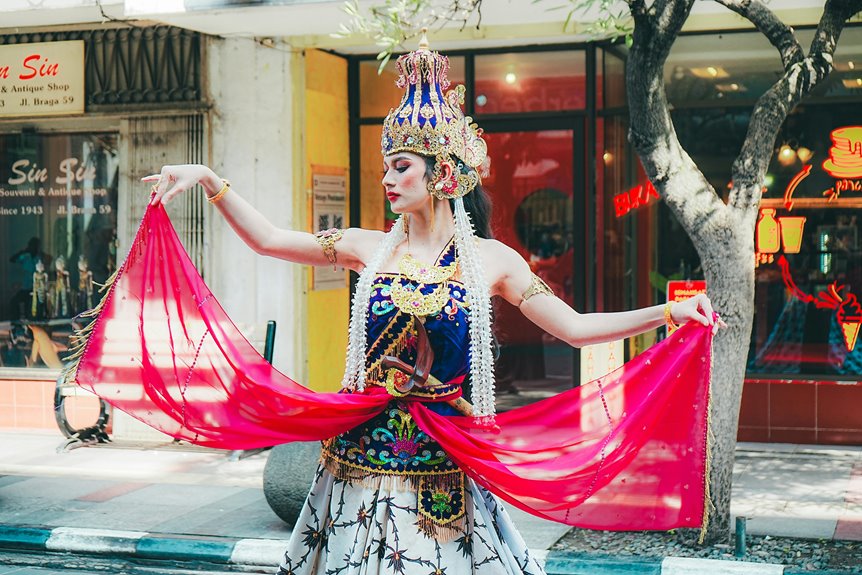
Bali batik fabric is a vibrant cloth made using a traditional wax-resist dyeing technique where melted wax prevents dye from coloring certain areas. You’ll notice intricate patterns like flowers, animals, and geometric shapes, each symbolizing cultural meanings such as strength or purity. This fabric carries a rich history, often linked to spiritual beliefs and ceremonies. It’s also popular in modern fashion. Keep exploring to uncover more about its unique artistry and care tips.
Key Takeaways
- Bali Batik fabric is created using a traditional wax-resist dyeing technique involving hand-drawn wax patterns and multiple dyeing steps.
- The fabric features distinctive motifs like Parang and Kawung, symbolizing strength, purity, and balance.
- It holds deep cultural and historical significance, often used in Balinese rituals and storytelling.
- Bali Batik blends traditional patterns with modern fashion in clothing and accessories.
- Proper care includes gentle hand washing, avoiding sunlight, and low-heat ironing to preserve its vibrant colors.
The Traditional Wax-Resist Dyeing Process
Although it may seem complex, the traditional wax-resist dyeing process is straightforward once you understand its steps.
You start by drawing designs on fabric using hot melted wax, which acts as a barrier to dye. When you dip the cloth into dye, the waxed areas resist color, preserving the fabric’s original hue.
After the fabric dries, you can repeat waxing and dyeing multiple times to create intricate, multi-colored designs. Once you finish dyeing, you remove the wax by boiling or scraping it off, revealing the patterns beneath.
This method requires patience and precision, but it allows you to craft detailed, vibrant textiles. By mastering this process, you connect with a centuries-old tradition that brings Bali Batik fabric to life.
Distinctive Patterns and Symbolism in Bali Batik
Patterns in Bali Batik carry rich meanings that go beyond their visual appeal. When you look closely, you’ll notice motifs like flowers, animals, and geometric shapes, each symbolizing concepts such as fertility, protection, and harmony.
For example, the parang pattern represents strength and courage, while the kawung motif symbolizes purity and balance. These designs aren’t randomly chosen; they reflect the island’s natural environment and spiritual beliefs.
As you wear or use Bali Batik, you’re connecting with a deeper narrative embedded in every pattern. The colors also play a role, with earthy tones often symbolizing nature and life cycles.
Understanding these distinctive patterns lets you appreciate Bali Batik not just as fabric but as a living story woven into every thread.
Historical and Cultural Significance of Bali Batik
When you explore Bali Batik, you uncover a tapestry rich with history and cultural meaning that dates back centuries. This fabric isn’t just cloth; it’s a storytelling medium reflecting Bali’s spiritual beliefs and social customs.
Exploring Bali Batik reveals centuries of history woven into a vibrant cultural tapestry.
Traditionally, Bali Batik played a role in rituals and ceremonies, symbolizing protection, prosperity, and respect for nature. You’ll find that each motif carries significance, often linked to folklore or ancestral wisdom.
Local artisans passed down these techniques through generations, preserving a unique cultural identity. By wearing or displaying Bali Batik, you connect to Bali’s heritage and honor its artisans’ craftsmanship.
Understanding this fabric’s historical and cultural roots deepens your appreciation beyond its beauty, revealing a vibrant narrative woven into every thread.
Modern Uses and Fashion Trends Featuring Bali Batik
How is Bali Batik making waves in today’s fashion scene? You’ll find it on runways, streetwear, and even accessories. Designers blend traditional motifs with modern cuts, creating unique, vibrant pieces that stand out. Whether you’re dressing up for an event or going casual, Bali Batik adds a cultural flair that’s both stylish and meaningful.
Here’s a quick look at popular modern uses:
| Fashion Item | Style Highlight |
|---|---|
| Dresses | Flowing silhouettes, bold prints |
| Shirts & Tops | Mix of traditional & contemporary |
| Accessories | Scarves, bags with intricate patterns |
How to Care for and Preserve Bali Batik Fabric
Caring for your Bali Batik fabric properly guarantees its vibrant colors and intricate designs last for years.
To keep your fabric in top condition, follow these essential care tips:
- Hand Wash Gently: Use cold water and mild detergent to avoid fading and damage.
- Avoid Direct Sunlight: Dry your fabric in the shade to preserve its rich colors.
- Iron Carefully: Set your iron to low heat and place a cloth between the iron and fabric.
- Store Properly: Keep your Bali Batik in a cool, dry place away from direct light and moisture to prevent mildew and discoloration.
Frequently Asked Questions
Where Can I Buy Authentic Bali Batik Fabric?
You can buy authentic Bali batik fabric at local markets in Bali, like Ubud Art Market, or from trusted online stores specializing in Indonesian textiles. Always check reviews to verify the fabric’s genuine quality and craftsmanship.
What Types of Fabric Are Used for Bali Batik?
You probably thought Bali batik was printed on invisible silk, right? Actually, artisans use natural fibers like cotton and silk—perfect for soaking up those vibrant dyes while you strut your stuff in island style.
Is Bali Batik Fabric Environmentally Friendly?
You’ll find that Bali batik fabric can be environmentally friendly, especially when artisans use natural dyes and traditional wax-resist techniques. However, some modern methods might involve chemicals, so it depends on the production process used.
How Long Does It Take to Make Bali Batik?
Picture a slow sunrise painting each batik layer—making Bali batik takes days, sometimes weeks. You’ll patiently apply wax, dye, and repeat, letting tradition and time weave stories into every fabric inch you craft.
Can Bali Batik Fabric Be Used for Upholstery?
You can use Bali Batik fabric for upholstery, but keep in mind it’s often delicate and best suited for decorative pieces or light-use furniture. For heavy use, consider reinforcing or choosing a sturdier fabric option.