
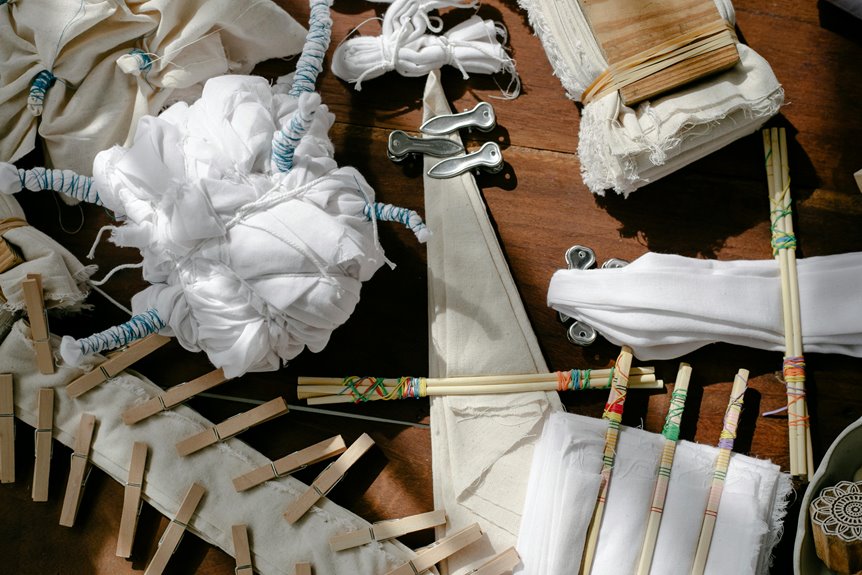
Cotton batik fabric is a vibrant, breathable textile made using a traditional wax-resist dyeing technique. You apply hot wax in intricate patterns that resist the dye, creating unique designs once the wax is removed. Originating from Indonesia, it’s soft, durable, and often features symbolic motifs inspired by nature and culture. Each piece carries rich history and artistic flair. If you want to understand its deeper meanings and versatile uses, there’s much more to discover.
Key Takeaways
- Cotton batik fabric is a textile dyed using a traditional wax-resist technique originating from Indonesia.
- Hot wax is applied to cotton cloth to create patterns that resist dye during fabric coloring.
- The fabric features vibrant colors, detailed motifs, and a unique texture from the hand-crafted process.
- It is breathable, soft, durable, and ideal for clothing or home decor applications.
- Batik patterns often carry cultural symbolism and reflect heritage through floral, geometric, and traditional designs.
History and Origins of Batik
Although many cultures have developed their own batik techniques, the art form originated in Indonesia centuries ago. You’ll find that batik has roots deeply embedded in Javanese tradition, where it was more than just fabric decoration—it held cultural, spiritual, and social significance.
You might be surprised to learn that batik was traditionally reserved for royalty and special ceremonies. As you explore batik’s history, you’ll see how it evolved from hand-drawn designs to more intricate patterns, reflecting local stories and symbolism.
When you wear or work with cotton batik fabric, you’re connecting to a rich heritage that spans generations. Understanding this background helps you appreciate the craftsmanship and meaning behind each unique piece.
The Wax-Resist Dyeing Technique
When you immerse yourself in making cotton batik fabric, the wax-resist dyeing technique plays an essential role in creating its distinctive patterns.
You start by applying hot wax to specific areas of the cotton cloth, using tools like a canting or a stamp. This wax acts as a barrier, preventing dye from penetrating those sections.
Once the wax is in place, you dip the fabric into dye baths. The unwaxed areas absorb the color, while the waxed parts stay untouched, forming intricate designs.
After dyeing, you remove the wax by boiling or scraping, revealing the contrasting patterns beneath.
You can repeat this process multiple times with different colors and wax applications to build complex, layered motifs unique to batik fabric.
Characteristics of Cotton Batik Fabric
Cotton batik fabric stands out for its vibrant colors and detailed patterns that you won’t find in ordinary textiles. When you choose cotton batik, you get a fabric that’s breathable and soft, perfect for comfortable clothing or home decor.
Its durability means it can handle regular wear and washing without losing charm. Plus, the wax-resist process gives each piece a unique texture and slight color variations, adding to its handcrafted appeal.
Durable through wear and washes, each piece boasts unique texture and subtle color variations from the wax-resist process.
Here’s what you can expect from cotton batik fabric:
- Breathability and comfort: Keeps you cool and cozy.
- Durability: Holds up well through washes and daily use.
- Unique texture: Slight imperfections make every piece one-of-a-kind.
You’ll appreciate these traits every time you work with or wear cotton batik.
Common Patterns and Motifs in Batik
The unique texture and vibrant colors of cotton batik come alive through its patterns and motifs, which tell stories and reflect cultural heritage.
When you look closely, you’ll notice common designs like floral elements, geometric shapes, and intricate lines that create rhythm and balance.
You’ll often see motifs inspired by nature, such as leaves, birds, and waves, each carrying distinct symbolism.
Some patterns repeat symmetrically, while others flow organically, giving each fabric a dynamic feel.
You might also find traditional motifs like parang or kawung, which have been passed down through generations.
Recognizing these patterns helps you appreciate the skill and intention behind every piece, making cotton batik not just fabric, but a vibrant expression of artistry.
The Cultural Significance of Batik
Batik carries deep cultural meaning that goes beyond its beautiful patterns. When you wear or use batik, you connect with a rich heritage that reflects identity, tradition, and social values.
It’s more than fabric; it’s a storytelling medium passed down through generations. You’ll notice that batik serves important roles such as:
- Symbolizing social status and community belonging
- Marking significant life events like weddings or ceremonies
- Preserving ancestral myths and local wisdom through motifs
How Cotton Batik Is Made Today
Although traditional methods still influence the process, artisans now blend age-old techniques with modern tools to create cotton batik fabric.
You’ll notice that instead of solely relying on hand-drawn wax patterns, many use stamps or stencils to speed up design application. After applying the wax, the fabric undergoes dyeing, where synthetic dyes often replace natural ones for brighter, longer-lasting colors.
You might also see machines controlling temperature and dye immersion times to guarantee consistent results. Once dyed, the wax is removed by boiling or scraping, revealing intricate patterns.
This fusion of tradition and technology lets you enjoy authentic batik fabrics made more efficiently without losing their cultural richness. You get vibrant, durable cotton batik that honors heritage yet fits today’s demand.
Uses of Cotton Batik Fabric in Fashion and Décor
Once artisans finish crafting cotton batik with their blend of tradition and technology, the fabric finds its way into many stylish and creative uses.
After artisans blend tradition with technology to craft cotton batik, it transforms into vibrant, stylish creations.
You’ll see cotton batik bringing vibrant patterns and cultural richness into fashion and home décor alike. Whether you want to make a statement or add a subtle touch of artistry, cotton batik works beautifully.
You can use cotton batik fabric for:
- Clothing: Flowy dresses, shirts, and scarves that showcase unique designs.
- Accessories: Bags, headwraps, and ties that add color and texture.
- Home Décor: Cushion covers, table runners, and wall hangings to brighten up your space.
Caring for Cotton Batik Fabric
Since cotton batik fabric combines delicate dyes and intricate patterns, you’ll want to handle it with care to preserve its vibrant colors and texture.
Always wash it gently by hand in cold water using a mild detergent. Avoid harsh chemicals and bleach, as they can fade the dyes. If you must use a washing machine, choose a gentle cycle and place the fabric inside a mesh laundry bag.
After washing, don’t wring the fabric; instead, press out excess water and lay it flat or hang it to air dry away from direct sunlight to prevent fading.
When ironing, use a low heat setting and iron the fabric inside out.
With these simple steps, you’ll keep your cotton batik looking beautiful for years.
Frequently Asked Questions
Is Cotton Batik Fabric Eco-Friendly?
You might think cotton batik fabric is the superhero of eco-friendly textiles! It’s mostly natural and biodegradable, but watch out—some dyes and processes can harm the environment. So, always check for sustainable practices before buying!
Can Cotton Batik Fabric Be Used for Upholstery?
You can use cotton batik fabric for upholstery, but keep in mind it’s less durable than heavy-duty fabrics. It works best on low-traffic furniture or decorative cushions to maintain its vibrant patterns and softness.
What Is the Price Range of Cotton Batik Fabric?
You’ll find cotton batik fabric prices typically range from $10 to $30 per yard, depending on quality, design complexity, and origin. Higher-end or handcrafted pieces may cost more, so shop around to match your budget.
How Does Cotton Batik Compare to Silk Batik?
Imagine you’re choosing fabric for summer; cotton batik feels breathable and casual, while silk batik offers a luxurious sheen and softness. You’ll find cotton more durable and affordable, perfect for everyday wear compared to delicate silk.
Where Can I Buy Authentic Cotton Batik Fabric?
You can buy authentic cotton batik fabric from specialty textile shops, online marketplaces like Etsy, or directly from artisans in Indonesia and Malaysia. Make certain to check reviews and certifications to guarantee authenticity before purchasing.