
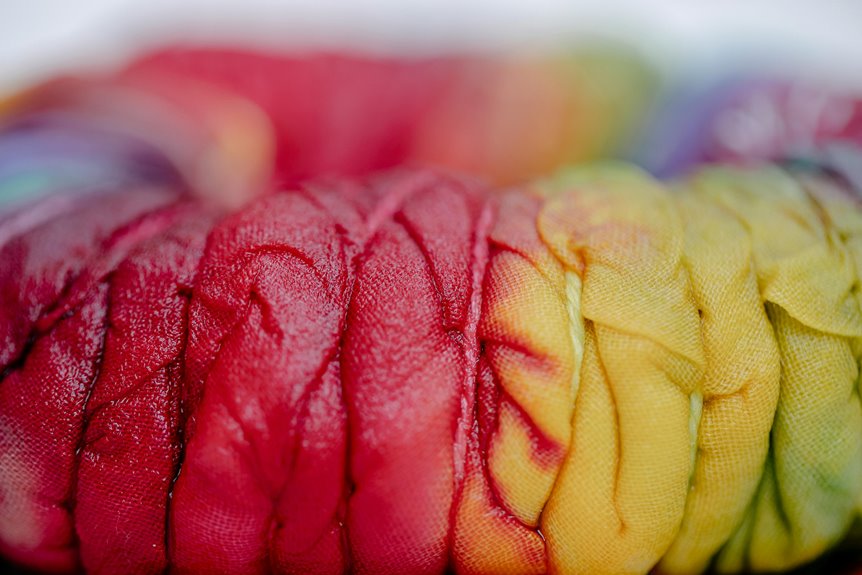
To get saturated, blended colors with wet tie-dye, start by dampening your natural-fiber fabric evenly—not too wet or dry. Use squeeze bottles to apply dye gently on the damp surface, letting colors flow and merge softly for smooth blending. Avoid rushing and over-saturating, which can cause muddied hues. After dyeing, apply a fixative carefully and heat-set for vibrant, lasting results. Stick with these steps, and you’ll create stunning effects that make your projects stand out.
Key Takeaways
- Pre-wet natural fiber fabric evenly with cold water, ensuring it is damp but not dripping, for optimal dye absorption and blending.
- Use squeeze bottles for controlled dye application to create smooth transitions and avoid harsh lines in wet tie-dye patterns.
- Apply dye gently on damp fabric to encourage color spreading and achieve vibrant, soft-edged blends without over-saturation.
- Allow fabric to rest undisturbed after dyeing for at least 24 hours before rinsing to set saturated, blended colors effectively.
- Heat-set dyed fabric at 160°F to 180°F for 6-12 minutes to enhance color vibrancy and longevity without causing bleeding.
Understanding the Basics of Wet Tie-Dye
Wet tie-dye lets you create vibrant, fluid patterns by applying dye to damp fabric. When the fabric is wet, the dye spreads more easily, blending colors seamlessly and producing softer edges.
You’ll notice that the dye moves unpredictably, creating organic, marbled effects you can’t achieve on dry material. To get started, wet your fabric evenly but avoid soaking it completely; it should feel damp, not dripping.
Then, apply your dye in sections or let colors run into each other, depending on your desired look. Remember, the moisture level directly impacts how the dye spreads, so controlling the wetness is key.
Apply dye in sections or blend colors—moisture controls the spread and final effect of your design.
This method gives you greater control over color saturation and blending, making your tie-dye designs truly stand out.
Choosing the Right Fabric for Wet Tie-Dye
The type of fabric you choose can dramatically affect how your colors turn out when you apply dye to damp material. Natural fibers like cotton, rayon, and silk absorb dye better, resulting in vibrant, saturated colors. Synthetic fabrics often repel dye, leading to dull or uneven hues. Consider the fabric’s weight and texture too; lighter, smoother materials blend colors more seamlessly. Here’s a quick guide:
| Fabric Type | Dye Absorption | Color Result |
|---|---|---|
| Cotton | High | Bright, saturated |
| Silk | Moderate-High | Soft, blended hues |
| Polyester | Low | Faded, uneven spots |
Choosing the right fabric sets the foundation for your wet tie-dye project’s success and guarantees your colors pop just as you envision.
Preparing Your Fabric: Pre-Wetting Techniques
Before you apply any dye, you’ll want to thoroughly pre-wet your fabric to guarantee the colors spread evenly and blend smoothly.
Start by soaking your fabric in clean, cold water until it’s fully saturated. This helps the dye flow without creating harsh lines.
After soaking, gently wring out the excess water so the fabric remains damp but not dripping. This balance guarantees ideal absorption and blending.
Here are three quick tips for pre-wetting:
- Use a large basin or bucket for even soaking
- Avoid hot water, as it can shrink or damage the fabric
- Work with fabric that’s damp throughout, not dry or overly wet
Pre-wetting sets the stage for vibrant, seamless color changes in your wet tie-dye project.
Selecting and Mixing Vibrant Dye Colors
Choosing the right dye colors can make or break your tie-dye masterpiece. Start by selecting vibrant, high-quality dyes that blend well on wet fabric. To get saturated, smooth gradations, pick colors next to each other on the color wheel or complementary shades for bold contrasts. When mixing dyes, dilute with water gradually to control intensity and avoid muddy colors. Test small batches before applying to your fabric. Here’s a quick guide to common vibrant dye mixes:
| Primary Color | Mix with | Resulting Shade |
|---|---|---|
| Red | Yellow | Orange |
| Blue | Yellow | Green |
| Red | Blue | Purple |
| Yellow | Purple | Brown |
| Red | Green | Deep Burgundy |
Use this table to experiment and find your perfect color combos!
Effective Tools and Supplies for Wet Tie-Dye
Gathering the right tools and supplies sets you up for success in wet tie-dye projects. You’ll want to prepare carefully to guarantee smooth blending and vibrant results.
First, grab a spray bottle to evenly dampen your fabric before applying dye. Next, use squeeze bottles for controlled dye application, which helps you layer colors without over-saturating.
Don’t forget to protect your workspace with plastic sheets or trays to catch drips and keep your area clean.
Here are three essentials to have on hand:
- Spray bottle for wetting fabric evenly
- Squeeze bottles for precise dye application
- Protective coverings like plastic sheets or trays
Having these ready makes your wet tie-dye process efficient and lets you focus on creating those rich, blended hues.
Step-by-Step Guide to Wet Tie-Dye Application
Start by thoroughly wetting your fabric with a spray bottle to guarantee even dye absorption and smooth color shifts.
Next, lay your fabric flat on a protected surface, ensuring it doesn’t fold or bunch. Prepare your dyes in squeeze bottles, then apply colors directly onto the damp fabric, starting with lighter shades.
Work quickly to blend edges where colors meet, allowing them to flow naturally without over-saturating. After applying all your colors, gently press the fabric with a clean cloth to encourage blending and remove excess dye.
Finally, wrap your fabric loosely in plastic to keep it damp, and let it sit for 6-8 hours or overnight for the colors to set deeply. Rinse with cold water until water runs clear, then dry your masterpiece.
Tips for Achieving Smooth Color Blending
When you want colors to flow seamlessly into one another, controlling the amount of moisture in your fabric is key.
Too much water can cause colors to bleed uncontrollably, while too little won’t allow them to blend smoothly. Start with a damp but not soaking wet fabric to give your dyes the perfect surface to merge.
Balance moisture carefully—too much water makes colors bleed, too little stops smooth blending.
Here are some tips to help you achieve smooth color blending:
- Use a spray bottle to evenly mist the fabric before applying dye.
- Apply colors close to each other and gently press the fabric to encourage natural blending.
- Work quickly, so the dyes stay wet and can mix without sharp lines forming.
Common Mistakes to Avoid in Wet Tie-Dye
Although wet tie-dye can create stunning effects, you’ll run into problems if you don’t avoid some common mistakes. For instance, over-saturating fabric can cause colors to bleed excessively, while under-wetting won’t allow proper blending. Applying colors too quickly or too slowly disrupts smooth shifts. Also, neglecting fabric type affects dye absorption and vibrancy.
| Common Mistake | Result |
|---|---|
| Over-saturating | Colors bleed, lose definition |
| Under-wetting | Patchy, uneven blending |
| Rushing application | Harsh lines, poor mixing |
| Ignoring fabric type | Dull or inconsistent colors |
| Using old dye | Faded or weak colors |
Watch these pitfalls closely to guarantee your wet tie-dye shines with rich, blended hues.
Fixing and Setting Your Wet Tie-Dye Colors
To make sure your wet tie-dye colors stay vibrant, you’ll need to choose the right fixative solutions and apply proper setting methods.
Timing and temperature play a vital role in locking in those colors effectively.
Let’s explore how to get these steps just right for lasting results.
Choosing Fixative Solutions
Because your vibrant wet tie-dye colors can easily fade or bleed, choosing the right fixative solution is crucial to preserving your design.
You want a fixative that locks in color without dulling the brightness or altering the fabric’s feel. Consider these popular options to keep your tie-dye looking fresh:
- Soda ash solution: Prepares the fabric to bond with dye, enhancing colorfastness.
- Vinegar soak: Natural and mild, it helps set colors on cotton and similar fibers.
- Commercial fixatives: Designed specifically for tie-dye, they offer reliable, long-lasting results.
Pick a fixative that matches your fabric type and dye to guarantee vibrant, lasting colors.
Always test a small area first to avoid surprises.
Proper Setting Methods
Once you’ve selected the right fixative solution for your fabric and dye, the next step is to properly set your wet tie-dye colors.
Begin by gently applying the fixative evenly over the dyed areas, ensuring full coverage without disturbing the blending. Use a spray bottle or sponge to avoid oversaturation.
After application, wrap your fabric in plastic to retain moisture, allowing the fixative to work effectively. Keep the fabric undisturbed during this period to prevent color bleeding or uneven setting.
Once the fixative has done its job, rinse the fabric gently under cold water to remove excess dye and fixative, preserving your saturated colors.
Finally, handle the fabric carefully when drying to maintain the vivid blends you’ve created.
Timing and Temperature Guidelines
Selecting the right timing and temperature plays an essential role in fixing and setting your wet tie-dye colors effectively. If you act too soon or wait too long, colors mightn’t set properly, leading to dull or uneven hues.
Temperature also influences how the dye bonds with the fabric fibers—too low, and colors fade; too high, and fabric risks damage.
Keep these guidelines in mind:
- Heat-set your fabric between 160°F to 180°F (70°C to 82°C) for 6-12 minutes to guarantee vibrant colors.
- Allow your dyed fabric to rest for 24 hours before washing to let the dye fully absorb.
- Avoid exposing your fabric to extreme heat immediately after dyeing, as it could cause color bleeding.
Following these tips will help you achieve bright, lasting wet tie-dye results.
Creative Design Ideas for Wet Tie-Dye Projects
When you plunge into wet tie-dye projects, your creativity can flow freely as the damp fabric allows colors to blend and swirl in unique ways.
Try starting with simple spiral designs—apply dye in concentric circles and watch the wet fabric mix colors beautifully. For a bolder look, use crumple techniques, scrunching the fabric before adding dye to create organic, marbled effects.
You can also experiment with ombré fades by applying dye gradually from one edge. Don’t hesitate to combine multiple patterns, like stripes with random splashes, to add depth.
Frequently Asked Questions
Can Wet Tie-Dye Techniques Be Used on Synthetic Fabrics?
You can use wet tie-dye on synthetic fabrics, but colors might not absorb as well as natural fibers. You’ll need special dyes like disperse dyes designed for synthetics to get vibrant, lasting results with blending effects.
How Does Water Temperature Affect Dye Absorption in Wet Tie-Dye?
You’ll find warm water opens fabric fibers, helping dye absorb better and blend smoothly. Cold water slows absorption, creating sharper edges. So, adjusting water temperature controls how vibrant and blended your colors turn out.
What Safety Precautions Are Recommended When Working With Wet Dyes?
You should wear gloves and a mask to avoid skin and respiratory irritation. Work in a well-ventilated area, protect surfaces with plastic, and keep dyes away from children and pets to stay safe while handling wet dyes.
Can Wet Tie-Dye Be Combined With Other Dyeing Methods?
You can definitely combine wet tie-dye with other dyeing methods like ice dyeing or shibori. Just make sure to plan the order carefully, so colors blend well without becoming muddy or over-saturated.
How Long Should Wet Tie-Dyed Items Be Dried for Best Results?
Think of drying your wet tie-dyed item like letting a painting set—give it at least 24 hours to air dry completely. Don’t rush; this helps colors lock in and prevents unwanted smudging or fading.