
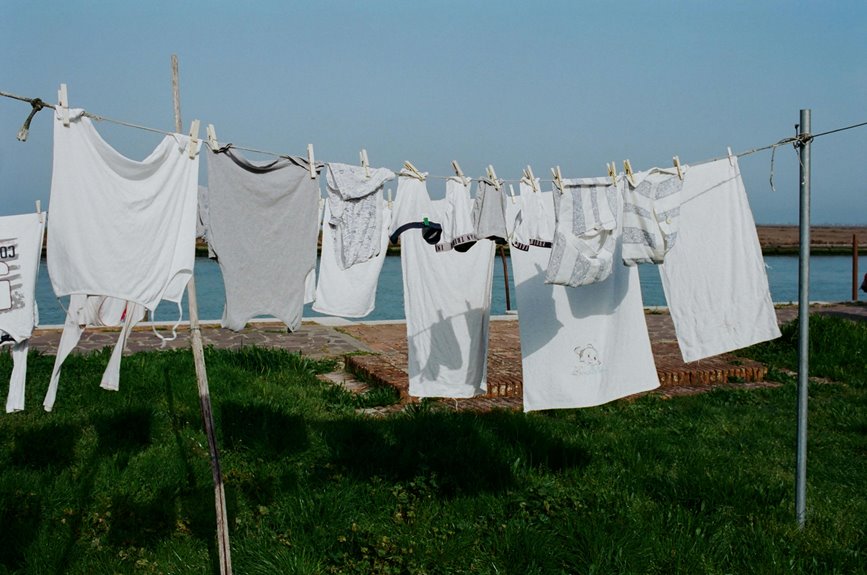
To wash your polyester casement fabric, first check for stains and pre-treat them gently. Use a mild liquid detergent without bleach, and wash on a cold or warm gentle cycle, turning the fabric inside out. Avoid high heat to prevent damage, and air dry or tumble dry low away from direct sunlight. Keep fastenings secured to avoid snags. Follow these simple steps to keep your fabric fresh and durable, and you can explore tips to maintain its quality long-term.
Key Takeaways
- Pre-treat stains, mend tears, remove hardware, and shake off debris before washing polyester casement fabric.
- Use mild liquid detergent, cold or warm water, and a gentle cycle to wash polyester fabric safely.
- Turn fabric inside out and place in a mesh laundry bag to prevent snags and friction during washing.
- Air dry polyester fabric away from direct sunlight or use a low-heat dryer setting to avoid damage.
- Store fabric in a cool, dry place and use low-heat ironing or steaming to maintain its quality post-wash.
Preparing Polyester Casement Fabric for Washing
Before you wash polyester casement fabric, you need to check for any stains or spots that require pre-treatment. Look closely and gently blot any marks with a mild stain remover or a bit of diluted detergent. Avoid rubbing harshly, as it can damage the fabric.
Next, inspect the fabric for loose threads or tears and mend them to prevent further damage during washing. Remove any hardware or detachable parts to keep them safe. Shake the fabric gently to get rid of dust or debris before placing it in the washing machine.
Finally, unzip zippers and fasten buttons to avoid snagging. Taking these steps guarantees your polyester casement fabric is ready for a thorough, safe cleaning without harm.
Choosing the Right Detergent and Washing Method
Selecting the right detergent and washing method is essential to maintaining your polyester fabric’s texture and color.
Choose a mild liquid detergent designed for synthetic fabrics; avoid bleach or harsh chemicals that can damage fibers or fade colors. Powder detergents may leave residues, so liquids work best.
For washing, opt for a gentle cycle with cold or warm water to prevent shrinking and preserve the fabric’s integrity. Avoid high heat settings, as polyester can melt or deform under extreme temperatures.
If you prefer hand washing, use lukewarm water and gently agitate the fabric without scrubbing vigorously.
Proper Washing Techniques for Polyester Casement Fabric
Once you’ve chosen the right detergent and washing cycle, it’s important to handle your polyester casement fabric with care during the wash.
Always turn the fabric inside out to protect the surface and reduce friction. Place it in a mesh laundry bag if possible, to prevent snags or stretching. Use cold or warm water settings—hot water can weaken the fibers.
Avoid overloading your washing machine; this guarantees the fabric moves freely and cleans evenly. Skip bleach or fabric softeners, as they can damage polyester’s fibers and affect its appearance.
After the cycle finishes, promptly remove the fabric to prevent wrinkles and mildew. Following these steps keeps your polyester casement fabric in great condition, maintaining its durability and vibrant look for longer.
Effective Drying Methods to Preserve Fabric Quality
Although polyester is known for its quick-drying properties, you’ll want to use careful drying methods to keep the fabric’s texture and shape intact.
First, avoid high heat; it can cause polyester to shrink or warp. Instead, opt for a low-heat setting if you use a dryer.
Avoid high heat when drying polyester to prevent shrinking or warping; use a low-heat setting instead.
Alternatively, air drying is your best bet to preserve quality—lay the fabric flat on a clean surface or hang it to drip dry, ensuring it’s evenly supported to prevent stretching.
Keep the fabric away from direct sunlight to avoid fading. If you need to speed up drying, use a fan or place the fabric in a well-ventilated area.
Tips for Maintaining Polyester Casement Fabric After Washing
To keep your polyester casement fabric looking its best after washing and drying, you’ll want to follow some simple maintenance steps.
First, avoid exposing the fabric to direct sunlight for extended periods to prevent fading. Store it in a cool, dry place when not in use.
If you notice wrinkles, use a low-heat iron or a steamer to smooth them out, but always check the care label before applying heat.
Regularly dust or vacuum the fabric to keep it free of dirt and debris.
Finally, address stains promptly with appropriate stain removers designed for polyester to avoid permanent marks.
Frequently Asked Questions
Can Polyester Casement Fabric Be Ironed Without Damage?
You can iron polyester casement fabric, but you should use a low heat setting to avoid damage. Don’t apply the iron directly; instead, use a pressing cloth to protect the fabric from melting or scorching.
Is Polyester Casement Fabric Resistant to Mold and Mildew?
You might wonder if polyester casement fabric fights mold and mildew. Good news—it’s naturally resistant, but don’t get careless. If moisture lingers, mold can sneak in, so keep it dry and well-ventilated to stay safe.
How Often Should Polyester Casement Fabric Be Washed?
You should wash polyester casement fabric every few months or whenever it looks dirty. Regular cleaning prevents buildup of dirt and mildew, keeping the fabric fresh and extending its lifespan. Don’t over-wash to avoid wear.
Can Polyester Casement Fabric Be Used Outdoors Year-Round?
You might think polyester casement fabric handles year-round outdoor use, but prolonged exposure to harsh weather can degrade it. Still, with proper care and occasional cleaning, you can keep it looking good through most seasons.
Are There Eco-Friendly Detergents Suitable for Polyester Casement Fabric?
You can use eco-friendly detergents like Seventh Generation or Ecover for polyester casement fabric. They’re biodegradable, gentle, and effective, so you won’t harm the fabric or the environment while keeping it clean and fresh.