
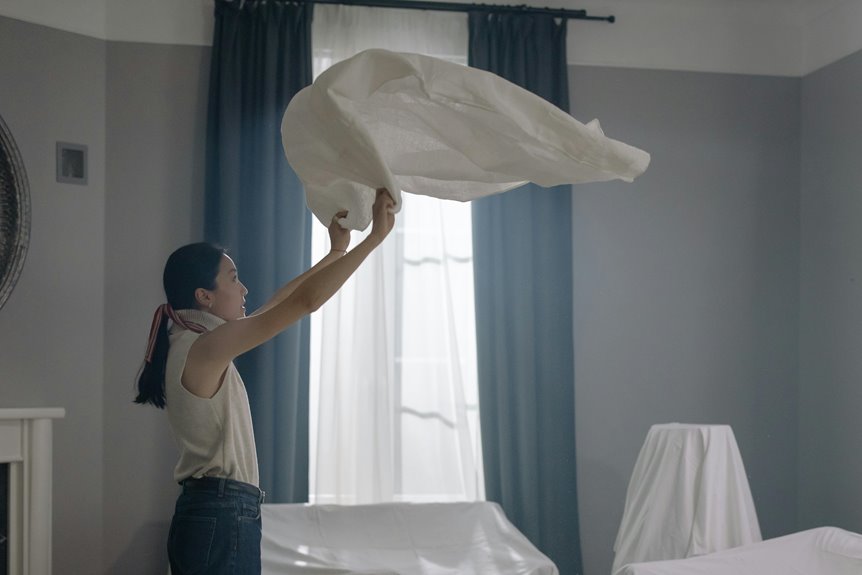
To clean your casement fabric curtains without shrinking them, always check the care label first for specific instructions. Use cold or lukewarm water and avoid harsh detergents or bleach. Hand wash or choose a gentle machine cycle, and skip high heat when drying—air dry or tumble dry low instead. Iron on low heat with a pressing cloth if needed, or steam to ease wrinkles. Follow these tips carefully, and you’ll protect your curtains’ fabric and fit. You can find out even more ways to care for them properly.
Key Takeaways
- Always check the care label for specific washing instructions to prevent shrinkage or fabric damage.
- Use lukewarm or cold water for washing to avoid shrinking the casement fabric.
- Remove hooks and hardware, shake out dust, and vacuum gently before cleaning.
- Air dry curtains flat or hang them to dry naturally, avoiding high heat or tumble drying.
- Iron on low heat with a pressing cloth or use steaming to remove wrinkles without shrinking.
Understanding Casement Fabric and Its Cleaning Needs
Before you start cleaning, it’s important to understand what casement fabric is and how it reacts to different cleaning methods.
Casement fabric is typically a medium-weight material, often made from cotton, polyester, or a blend. It’s designed to be durable yet breathable, which means it can handle gentle cleaning but might shrink or warp if exposed to harsh chemicals or high heat.
You’ll want to avoid overly aggressive scrubbing or soaking, as this can damage the fibers or alter the fabric’s texture. Instead, focus on mild detergents and controlled water temperatures.
Knowing these basics helps you protect your curtains’ appearance and longevity, ensuring they stay fresh without shrinking or losing their shape.
This foundation sets you up for safe, effective cleaning.
Checking the Care Label for Specific Instructions
Although you might feel ready to start cleaning, you should always check the care label on your casement fabric curtains first. This label provides essential instructions specific to your fabric, helping you avoid damaging or shrinking the curtains during cleaning.
Look for symbols indicating whether the curtains are machine washable, require hand washing, or need professional dry cleaning. Pay attention to recommended water temperatures and drying methods. Some fabrics might only tolerate cold water or require air drying to maintain their shape and color.
Ignoring these guidelines can lead to shrinkage, discoloration, or fabric weakening. By following the care label, you guarantee your curtains stay in great condition while cleaning them safely and effectively. Always keep the label handy for reference throughout the cleaning process.
Preparing Your Curtains for Cleaning
Once you’ve checked the care label, start by removing any hooks, rings, or hardware attached to your casement fabric curtains. This prevents damage during cleaning and guarantees you reach all fabric areas.
Next, give your curtains a good shake outdoors to dislodge dust and loose dirt. If possible, use a handheld vacuum with a brush attachment to remove embedded dust gently.
Inspect the curtains for stains or spots and treat those with a mild fabric-safe stain remover, following product instructions carefully.
Lay your curtains flat on a clean surface to spot-test any cleaning solution in an inconspicuous area.
Finally, handle the fabric gently—avoid wringing or twisting—to maintain the fabric’s shape and prevent stretching before you move on to cleaning.
Choosing the Right Cleaning Method
Before you start cleaning, you need to identify the fabric type of your casement curtains to avoid damage.
Next, choose the right water temperature—hot water can shrink some fabrics, while cold water mightn’t remove all stains.
Getting these steps right guarantees your curtains stay fresh without losing their shape or color.
Fabric Type Identification
How do you determine the best way to clean your casement fabric curtains? It all starts with identifying the fabric type. Knowing this helps you avoid damaging or shrinking your curtains.
Check the care label first for fabric details and cleaning instructions. If there’s no label, use these tips:
- Feel the material: Natural fibers like cotton feel soft, synthetics are smoother or shinier.
- Visual clues: Linen has a rougher texture; silk often has a subtle sheen.
- Test a hidden spot: Dab with a damp white cloth to see if color bleeds.
- Consult manufacturer info: Look up your curtain brand or fabric online for specifics.
Once you know the fabric, you can pick a cleaning method that keeps your curtains fresh without shrinking them.
Water Temperature Selection
Why does water temperature matter when cleaning your casement fabric curtains?
Using the right temperature helps prevent shrinking and preserves the fabric’s texture. Hot water can cause natural fibers like cotton or linen to shrink, while cold water is gentler but mightn’t remove tough stains effectively.
Start by checking the care label to see the recommended water temperature. If the label isn’t clear, opt for lukewarm or cold water to be safe.
For delicate fabrics such as silk or wool, cold water is best. When machine washing, choose a gentle cycle with cold or lukewarm water. If hand washing, use water that feels comfortably warm, not hot.
Selecting the right temperature guarantees your curtains stay looking great without damage.
Hand Washing Casement Fabric Curtains Safely
When hand washing your casement fabric curtains, you’ll want to choose a gentle detergent that won’t damage the fibers.
Make sure to use lukewarm water, as hot water can cause shrinking or color fading.
Taking these steps helps keep your curtains looking fresh without risking harm.
Choosing Gentle Detergents
Since casement fabric is delicate, you’ll want to choose a detergent that’s gentle enough to protect the fibers without sacrificing cleaning power.
Avoid harsh chemicals or anything with bleach, as those can weaken or discolor your curtains. Instead, look for detergents labeled “mild” or “for delicate fabrics.”
Here are some tips to help you pick the right one:
- Opt for a liquid detergent, which dissolves better and rinses out more thoroughly.
- Choose a fragrance-free or hypoallergenic formula to prevent irritation.
- Avoid detergents with enzymes, as they may damage natural fibers.
- Test the detergent on a small, hidden area of the curtain before washing to check for any adverse reactions.
Selecting the right detergent guarantees your casement curtains stay clean and vibrant without shrinking.
Proper Water Temperature
Although casement fabric requires gentle care, you can safely hand wash your curtains by using the right water temperature.
Always opt for cold or lukewarm water—hot water can cause the fabric to shrink or lose its shape. Fill a basin with water that feels comfortably warm to your wrist, avoiding anything hotter. This temperature helps dissolve detergent while protecting delicate fibers.
When soaking and rinsing, use the same water temperature to prevent sudden changes that stress the fabric. Avoid using boiling or very hot water, even if stains seem tough; instead, treat them with a gentle detergent and spot-clean if necessary.
Using a Gentle Machine Wash Cycle
Before placing your casement fabric curtains in the washing machine, make sure to select the gentle cycle to protect the delicate fibers. This cycle uses slower agitation and a shorter wash time, reducing the risk of damage or shrinking.
To get the best results, keep these tips in mind:
- Use a mild detergent designed for delicate fabrics.
- Avoid overloading the machine to allow proper cleaning and less friction.
- Place curtains in a mesh laundry bag to prevent tangling.
- Skip heavy spin cycles; a slow spin helps maintain fabric shape.
Drying Techniques to Prevent Shrinkage
When you dry your casement fabric curtains, choosing the right method can prevent unwanted shrinkage and keep them looking their best. Avoid high heat and rapid drying, which can distort the fabric. Instead, opt for air drying or low heat settings.
| Drying Method | Benefit |
|---|---|
| Air Drying | Preserves fabric size |
| Low Heat Tumble | Minimizes shrinkage risk |
| Flat Drying | Maintains fabric shape |
Lay your curtains flat or hang them evenly to dry, ensuring they don’t bunch up. If using a dryer, select a gentle cycle with minimal heat. This cautious approach helps maintain the curtains’ original dimensions and prolongs their lifespan.
Ironing and Steaming Tips for Casement Curtains
Ironing and steaming play essential roles in keeping your casement fabric curtains smooth and wrinkle-free.
To protect the fabric and avoid shrinkage, follow these tips:
- Use a low heat setting on your iron, suited for delicate fabrics, to prevent damage.
- Place a thin cloth or pressing cloth between the iron and the curtain to avoid direct contact.
- Steam your curtains while they hang to relax fibers gently and remove wrinkles without flattening texture.
- Avoid over-ironing; a quick pass is often enough to smooth out creases.
Regular Maintenance to Keep Curtains Fresh Longer
Although regular deep cleaning is important, performing simple maintenance tasks can keep your casement fabric curtains looking fresh much longer.
Start by dusting them weekly with a soft brush or vacuum using a gentle upholstery attachment to remove surface dirt and prevent buildup. Open your curtains daily to let air circulate, which helps reduce moisture and odors.
Spot-clean any stains immediately using a mild detergent and a damp cloth, avoiding harsh scrubbing that can damage fibers. Rotate the curtains occasionally to guarantee even exposure to sunlight and prevent fading.
Finally, avoid smoking or cooking near your curtains to minimize lingering odors. These small steps will extend your curtains’ lifespan and keep them looking vibrant between washes.
Frequently Asked Questions
Can I Use a Fabric Protector Spray on Casement Curtains?
You can use a fabric protector spray on casement curtains, but make sure to test it on a small, hidden area first. This helps avoid discoloration or damage and keeps your curtains looking fresh and protected.
How Often Should Casement Curtains Be Professionally Cleaned?
You should get your casement curtains professionally cleaned every 12 to 18 months. If they’re in a high-traffic area or exposed to sunlight, consider cleaning them more often to keep them looking fresh and vibrant.
Are There Specific Detergents to Avoid for Casement Fabrics?
Think of harsh detergents as storms that can damage delicate sails—you shouldn’t use bleach or strong chemicals on casement fabrics. Instead, choose gentle, mild detergents to keep your curtains vibrant and intact without shrinking or fading.
Can Casement Curtains Be Safely Cleaned With Vinegar?
You can safely clean casement curtains with diluted vinegar, but avoid using it full strength. Test a small area first to guarantee no damage, and always rinse thoroughly to prevent residue or discoloration.
How Do I Remove Stubborn Stains Without Damaging the Fabric?
Remember, “a stitch in time saves nine.” You should gently dab stubborn stains with a mild detergent solution, avoid rubbing harshly, and always test on a hidden spot to prevent fabric damage while effectively lifting stains.