
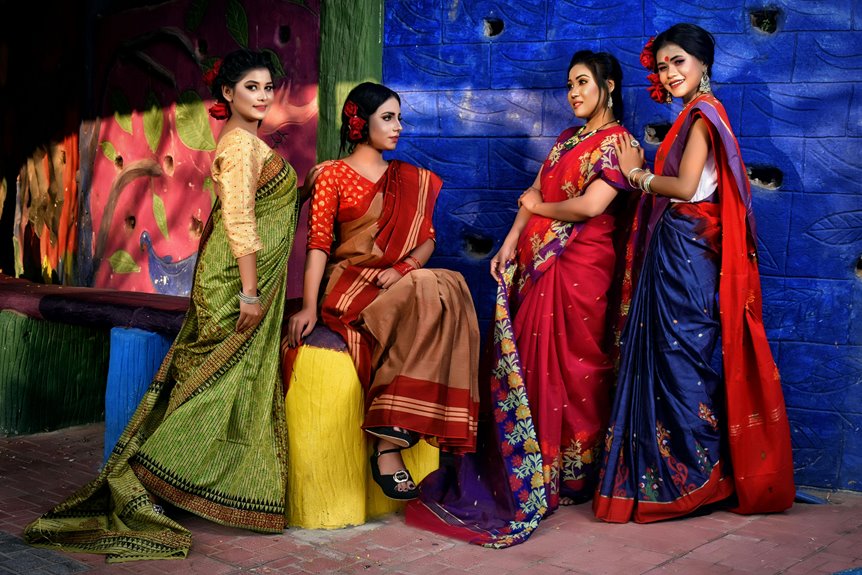
You’ll love Khadi silk sarees for their unique hand-spun texture, breathable comfort, and eco-friendly charm that’s rooted in India’s rich heritage. Look for authentic Khadi marks and subtle irregularities that prove genuine craftsmanship. Whether for weddings or festivals, these sarees blend tradition with elegance effortlessly. Caring for them is simple yet essential to preserve their beauty. Keep exploring to discover how to choose the perfect style, maintain quality, and shop smartly for your ideal Khadi silk saree.
Key Takeaways
- Understand Khadi silk’s handcrafted, eco-friendly fabric with unique texture and subtle luster reflecting traditional weaving techniques.
- Identify genuine Khadi silk sarees by checking KVIC certification, serial numbers, holograms, and verified manufacturer details.
- Explore various types like Varanasi, Bengal, Mysore, Chhattisgarh, and Madhya Pradesh Khadi silk sarees for diverse styles and motifs.
- Prioritize sustainable, breathable comfort and support artisan livelihoods while embracing India’s rich cultural heritage.
- Shop smart by setting budgets, seeking authentic certifications, comparing prices, and considering direct artisan purchases for exclusivity.
History and Origins of Khadi Silk Sarees
Although many people associate khadi primarily with cotton, khadi silk sarees have a rich history that dates back centuries. When you explore their origins, you’ll find that khadi silk combines traditional hand-spinning and weaving techniques with the elegance of silk fibers.
During India’s freedom struggle, khadi became a symbol of self-reliance and resistance, and silk varieties evolved as artisans experimented with luxurious materials. You’ll notice that these sarees were often crafted in rural communities, preserving age-old skills passed down through generations.
What Makes Khadi Silk Sarees Unique
When you choose a khadi silk saree, you’re embracing a fabric that’s both handcrafted and eco-friendly.
What sets khadi silk apart is the meticulous hand-spinning and weaving process, which gives each saree a unique texture and natural sheen. Unlike machine-made fabrics, khadi silk carries the distinct irregularities of handwork, making every piece one of a kind.
You’ll also appreciate the breathable, lightweight feel that’s perfect for all seasons.
Plus, khadi silk supports traditional artisans and sustainable practices, so your saree tells a story beyond its beauty.
This blend of craftsmanship, heritage, and environmental mindfulness makes khadi silk sarees truly special and a meaningful addition to your wardrobe.
Key Features to Look for in Khadi Silk Fabric
Since khadi silk is handcrafted, you’ll want to carefully examine its texture and weave to confirm authenticity.
Genuine khadi silk feels soft yet slightly coarse, with an uneven, natural weave that reveals the artisan’s touch. Look for subtle irregularities—these imperfections confirm it isn’t machine-made. The fabric should breathe well and feel lightweight despite its richness.
Check the sheen; khadi silk exhibits a gentle, muted luster rather than a glossy shine. Also, test the fabric’s strength by gently pulling at a hidden seam—it should resist tearing while remaining flexible.
Finally, verify the dye is even and doesn’t bleed when wet, indicating quality craftsmanship. These key features help you identify true khadi silk fabric and invest wisely in a timeless saree.
Different Types of Khadi Silk Sarees
You’ll find Khadi silk sarees come in various regional styles, each with unique weaving techniques that reflect local traditions.
Understanding these methods helps you appreciate the craftsmanship behind popular design patterns.
Let’s explore what sets these different types apart so you can choose the perfect saree for your wardrobe.
Regional Varieties Explored
Although Khadi silk sarees share a common handwoven heritage, each region adds its own unique touch that reflects local culture and craftsmanship.
When you explore these regional varieties, you’ll find distinct patterns, colors, and textures that make each saree special.
Here are some notable types you might want to contemplate:
- Varanasi Khadi Silk: Known for rich zari work and vibrant hues.
- Bengal Khadi Silk: Features subtle, earthy tones with simple elegance.
- Mysore Khadi Silk: Famous for its smooth texture and gold-thread borders.
- Chhattisgarh Khadi Silk: Displays tribal motifs and natural dye colors.
- Madhya Pradesh Khadi Silk: Boasts bold geometric designs with a rustic charm.
Choosing a saree from these regions lets you celebrate diverse traditions while enjoying authentic craftsmanship.
Weaving Techniques Overview
Exploring the regional varieties gives you a glimpse into the diverse artistry behind Khadi silk sarees, but understanding the weaving techniques reveals how these beautiful textiles come to life.
Khadi silk sarees are crafted using handloom weaving, where skilled artisans interlace silk threads meticulously. Techniques like plain weave offer simplicity and strength, while twill weave introduces diagonal patterns adding texture.
You’ll also find intricate jacquard weaving, which produces elaborate motifs directly into the fabric. Each method influences the saree’s feel and durability.
When choosing your saree, consider the weaving style, as it impacts both aesthetics and comfort. Knowing these techniques empowers you to appreciate the craftsmanship and select a Khadi silk saree that truly resonates with your style and needs.
Popular Design Patterns
When selecting a Khadi silk saree, understanding popular design patterns can help you find one that suits your taste and occasion.
You’ll discover that each pattern carries its own charm and cultural significance, making your choice more meaningful.
Here are five popular types to take into account:
- Checks: Classic and timeless, perfect for casual and formal wear alike.
- Stripes: Sleek and elegant, offering a modern twist to traditional fabric.
- Floral motifs: Delicate and feminine, ideal for festive and celebratory events.
- Geometric designs: Bold and artistic, great for making a statement.
- Temple borders: Traditional and intricate, often chosen for weddings and religious ceremonies.
Knowing these patterns helps you pick a saree that resonates with your personal style and occasion.
Understanding the Weaving and Dyeing Process
Since the beauty of Khadi silk sarees lies in their handcrafted nature, understanding the weaving and dyeing process helps you appreciate the skill involved.
First, the silk threads are hand-spun on a traditional spinning wheel, or charkha, which gives the fabric its unique texture.
Next, skilled weavers use handlooms to carefully interlace these threads, creating intricate patterns without any machinery.
When it comes to dyeing, natural dyes extracted from plants, minerals, and flowers are often used to give Khadi silk its vibrant yet earthy hues.
You’ll notice that the colors tend to be rich but subtle, thanks to this organic process.
This entire method reflects a commitment to sustainability and craftsmanship, making each saree truly one-of-a-kind.
How to Identify Genuine Khadi Silk Sarees
You’ll want to start by feeling the fabric texture to verify it’s soft yet sturdy, a hallmark of genuine Khadi silk.
Next, check the weave pattern for irregularities that indicate handloom craftsmanship.
Finally, look for authentic labels and certifications that guarantee the saree’s origin and quality.
Fabric Texture Inspection
Although Khadi silk sarees may look similar at first glance, feeling the fabric’s texture can reveal their true authenticity. When you run your fingers over genuine Khadi silk, you’ll notice a unique texture that sets it apart from machine-made or blended fabrics.
Here’s what to check:
- Softness: Genuine Khadi silk feels smooth but has a slight coarse touch due to hand-spun yarns.
- Weight: It’s lightweight yet sturdy, balancing delicacy with durability.
- Irregularities: Look for minor inconsistencies in the weave, indicating hand craftsmanship.
- Breathability: Khadi silk feels airy and allows your skin to breathe comfortably.
- Luster: It shines subtly, without the overly glossy finish of synthetic silks.
Trust your sense of touch—it’s the best tool to identify authentic Khadi silk.
Weave Pattern Authenticity
After feeling the fabric’s texture, your attention should turn to the weave pattern, a key indicator of genuine Khadi silk sarees. Authentic Khadi silk features irregular yet tight weaving, reflecting hand-spun yarns and skilled craftsmanship. Look closely for slight variations, which signal handloom authenticity rather than machine precision.
| Feature | Genuine Khadi Silk | Imitation |
|---|---|---|
| Weave Tightness | Tight but irregular | Uniform and perfect |
| Yarn Thickness | Varies slightly | Consistent thickness |
| Pattern Symmetry | Slight asymmetry | Perfect symmetry |
Label and Certification
One of the easiest ways to confirm the authenticity of a Khadi silk saree is by checking its label and certification.
Genuine Khadi silk sarees carry official marks that guarantee you of their origin and quality. When you shop, look for these key indicators:
- The Khadi Mark by the Khadi and Village Industries Commission (KVIC)
- A unique serial number on the certification label
- Details about the fabric composition and origin
- Hologram or watermark for added authenticity
- Clear manufacturer or weaver information
These labels protect you from counterfeit products and support the artisans behind this traditional craft.
Always ask the seller for certification documentation before making a purchase to ascertain you’re investing in a true Khadi silk saree.
Benefits of Wearing Khadi Silk Sarees
Wearing Khadi silk sarees offers several unique benefits that make them a valuable addition to your wardrobe.
First, you’ll appreciate their breathability and comfort, thanks to the natural fibers and handwoven texture, which keep you cool even in warm weather.
Choosing Khadi silk also means supporting sustainable, eco-friendly fashion since these sarees are made using traditional, chemical-free processes.
Opt for Khadi silk to embrace eco-friendly fashion crafted through traditional, chemical-free methods.
When you wear one, you’re embracing India’s rich heritage and craftsmanship, making your outfit stand out with authenticity and timeless elegance.
Furthermore, Khadi silk sarees are durable and age beautifully, so they offer long-term value.
Finally, every time you wear a Khadi silk saree, you contribute directly to the livelihoods of skilled artisans, helping preserve this exquisite craft for future generations.
Styling Tips for Khadi Silk Sarees
How can you elevate your look with a Khadi silk saree? Start by embracing its natural texture and vibrant colors to make a statement.
Pair it with minimalistic accessories to let the saree shine. Choose a blouse design that complements your body shape and the saree’s pattern.
Don’t forget to style your hair in a way that balances the traditional feel with modern elegance. Finally, pick the right footwear to enhance your overall grace.
- Opt for delicate gold or silver jewelry to add subtle elegance.
- Experiment with draping styles to highlight the saree’s unique weave.
- Use a contrasting blouse to create visual interest.
- Style your hair in a neat bun or soft waves for a polished look.
- Select comfortable yet chic footwear like embellished sandals or heels.
Occasions Perfect for Khadi Silk Sarees
Khadi silk sarees fit perfectly into a variety of special occasions, thanks to their elegant texture and timeless appeal. Whether you’re attending a wedding or a festive celebration, these sarees add a touch of sophistication. You can also wear them to formal events or religious ceremonies, making them versatile additions to your wardrobe.
| Occasion | Why Khadi Silk Works |
|---|---|
| Weddings | Rich texture complements festive vibes |
| Festivals | Traditional yet stylish for cultural events |
| Formal Events | Elegant and subtle for professional settings |
| Religious Ceremonies | Respectful fabric enhancing spiritual aura |
Choosing a khadi silk saree for these events guarantees you look graceful and feel comfortable throughout.
Caring and Maintaining Your Khadi Silk Saree
Taking proper care of your silk saree guarantees it stays beautiful for years to come.
To preserve your Khadi silk saree’s natural texture and vibrant colors, handle it gently and follow simple maintenance tips. Always store it in a cool, dry place, preferably wrapped in a muslin cloth to allow airflow and prevent moisture damage. Avoid direct sunlight, which can fade the fabric.
Handle your Khadi silk saree gently, store it in muslin away from sunlight to maintain its texture and vibrant colors.
When cleaning, opt for dry cleaning or a mild hand wash with cold water. Iron your saree on a low setting, placing a cloth between the iron and the fabric.
- Store in a breathable muslin cloth, away from sunlight
- Choose dry cleaning or gentle hand wash only
- Avoid harsh detergents and bleach
- Iron on low heat with protective cloth
- Keep away from perfumes and deodorants to prevent stains
Where to Buy Authentic Khadi Silk Sarees
Where can you find genuine Khadi silk sarees that showcase traditional craftsmanship and quality?
Start by exploring Khadi Emporiums and government-run stores, which often guarantee authenticity. You can also visit reputable boutiques specializing in handwoven textiles.
When shopping online, choose well-known platforms that verify their artisans and provide detailed product descriptions.
Attending local craft fairs or exhibitions offers a chance to meet weavers directly, ensuring the saree’s origin.
Always look for certification tags or labels that confirm the Khadi mark.
Avoid deals that seem too good to be true, as they might compromise on quality or authenticity.
Budgeting and Pricing Guide for Khadi Silk Sarees
When shopping for Khadi silk sarees, it helps to know the typical price range and what factors affect the cost.
You’ll find that material quality, craftsmanship, and design intricacy all play a role in pricing.
With a clear budget and smart tips, you can snag a beautiful saree without overspending.
Price Range Overview
How much you should budget for a Khadi silk saree depends on factors like fabric quality, craftsmanship, and design complexity.
Generally, these sarees range from affordable to premium prices, catering to different budgets. You can expect prices to vary based on:
- Basic Khadi silk sarees starting around $50 to $100
- Mid-range options with intricate patterns priced between $100 to $250
- Premium handwoven sarees costing $250 to $500 or more
- Limited edition or designer Khadi silk sarees exceeding $500
- Seasonal discounts and festival offers that can lower costs
Factors Influencing Costs
Because several elements affect the price of Khadi silk sarees, understanding these factors helps you make a well-informed purchase.
First, the quality of silk plays a big role—pure, hand-spun silk costs more than blended or machine-made fabric.
Next, the intricacy of the weaving and design impacts the price; detailed patterns and handwoven textures demand higher prices due to the labor involved.
Additionally, the dyeing technique and colorfastness affect cost, as natural dyes require more effort and materials.
The reputation of the artisan or brand also influences pricing, with established names charging a premium.
Finally, regional variations and availability can cause price differences.
Keeping these factors in mind guarantees you evaluate each saree’s value beyond just its price tag.
Budget-Friendly Purchase Tips
Finding a quality Khadi silk saree within your budget doesn’t have to be overwhelming. You just need a smart approach to balance quality and cost.
Start by comparing prices from different sellers to spot the best deals. Keep an eye out for seasonal sales or festive discounts that can save you a lot. Don’t hesitate to negotiate prices, especially when buying directly from artisans or local markets.
Also, consider starting with simpler designs; they often cost less but still showcase the fabric’s charm. Finally, verify the authenticity to avoid overspending on imitations.
- Set a clear budget before shopping
- Explore online and offline stores for variety
- Look for sales and discount events
- Prioritize genuine Khadi certification
- Choose simpler, elegant designs to save money
This way, you’ll get a beautiful saree without breaking the bank.
Frequently Asked Questions
Can Khadi Silk Sarees Be Customized With Modern Designs?
You can absolutely customize Khadi silk sarees with modern designs. Many artisans blend traditional techniques with contemporary patterns, letting you create a unique, stylish saree that reflects both heritage and current fashion trends effortlessly.
Are Khadi Silk Sarees Eco-Friendly Compared to Other Silks?
Did you know Khadi silk production uses 60% less water than conventional silk? You’ll find Khadi silk sarees eco-friendly since they’re handwoven, use natural dyes, and promote sustainable, low-impact textile practices.
How Long Does It Take to Hand-Weave a Khadi Silk Saree?
It takes you about 10 to 15 days to hand-weave a Khadi silk saree. The intricate process demands patience and skill, making each saree unique and a true labor of love.
Can Khadi Silk Sarees Be Dyed in Vibrant Contemporary Colors?
Yes, you can dye khadi silk sarees in vibrant contemporary colors. The natural fibers absorb dyes beautifully, letting you enjoy rich, modern hues while preserving the fabric’s traditional texture and handwoven charm.
Are There Regional Variations in Khadi Silk Saree Patterns?
Yes, you’ll find fascinating regional variations in Khadi silk saree patterns. Different districts display distinct designs, colors, and motifs, showcasing cultural creativity and craftsmanship. Exploring these styles lets you appreciate India’s rich textile traditions beautifully.