
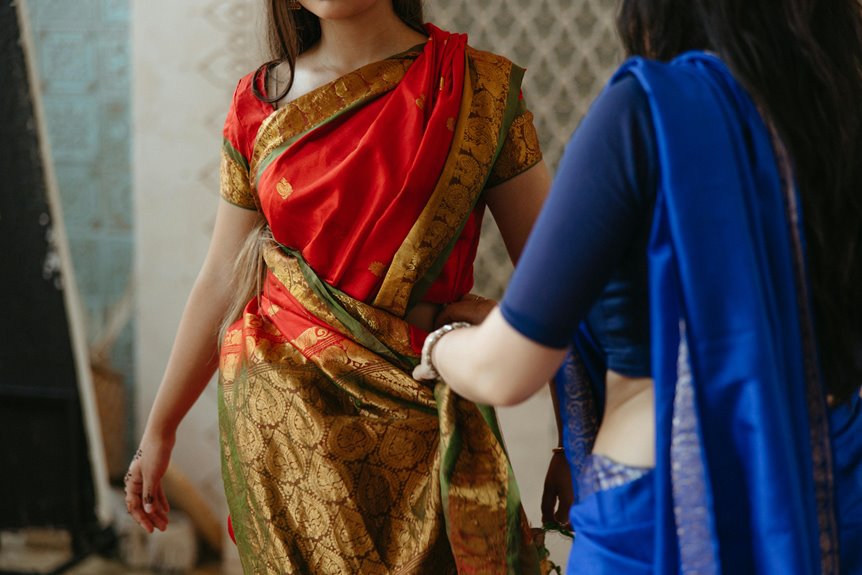
You’ll appreciate Ponduru Khadi sarees for their unmatched softness, durability, and deep connection to Andhra Pradesh’s handloom heritage. Crafted by skilled artisans using handspun cotton on wooden looms, these sarees showcase a unique texture and timeless elegance. Made sustainably with natural fibers, they honor tradition while adapting to modern tastes. If you want to understand how these exquisite sarees blend culture, craftsmanship, and innovation, there’s much more to discover about their fascinating journey.
Key Takeaways
- Ponduru Khadi sarees originate from Andhra Pradesh, symbolizing self-reliance and cultural pride during India’s freedom movement.
- These sarees are handwoven with soft, hand-spun cotton, known for their lightweight texture and exquisite sheen.
- Skilled artisans use manual looms to create tight, uniform weaves, ensuring durability and the fabric’s unique texture.
- The craft relies on community support and generational knowledge to sustain traditional weaving techniques and livelihoods.
- Innovations include blending traditional styles with modern designs and sustainable practices to appeal to global and younger markets.
Historical Origins of Ponduru Khadi
Although Ponduru Khadi has gained popularity in recent years, its origins date back several centuries.
When you explore its history, you’ll find that this handloom fabric emerged in Ponduru, a village in Andhra Pradesh, known for skilled weavers who passed down their craft through generations.
You’ll appreciate how the tradition began as a way for local communities to produce their own clothing using cotton grown nearby.
Over time, Ponduru Khadi became more than just fabric—it represented self-reliance and cultural pride, especially during India’s freedom movement, where handspun cloth symbolized resistance.
Distinctive Features of Ponduru Khadi Sarees
The unique texture and craftsmanship of Ponduru Khadi sarees set them apart from other handwoven fabrics.
Ponduru Khadi sarees stand out with their distinct texture and exceptional craftsmanship.
When you wear one, you’ll immediately notice the lightness and softness that make it comfortable in any season. These sarees boast an exquisite sheen, reflecting the careful attention artisans give to each thread.
Their natural off-white or cream base often features subtle patterns or thin colored borders, giving you a timeless elegance without overwhelming design. You’ll appreciate the breathability and durability, perfect for daily wear or special occasions.
The minimalistic charm makes Ponduru Khadi sarees versatile, easily pairing with both traditional and contemporary accessories.
Once you experience their understated beauty and quality, you’ll understand why these sarees hold a special place in Andhra’s handloom heritage.
Traditional Weaving Techniques and Materials
When you explore how Ponduru Khadi sarees are made, you’ll find that traditional weaving techniques and natural materials play an essential role in their distinct quality.
The process starts with hand-spun cotton yarn, which is softer and stronger than machine-made alternatives. You’ll notice the use of simple, manual looms that allow artisans to create fine, airy fabrics with unmatched precision.
Each thread is carefully dyed using natural dyes, preserving the fabric’s purity and eco-friendliness. The weaving style emphasizes tight, uniform weaves that give the saree its characteristic texture and durability.
- Hand-spun cotton yarn from local fields
- Manual pit looms operated by skilled hands
- Natural vegetable-based dyes for coloring
- Tight, consistent weaving patterns for strength
- Minimal use of synthetic materials for authenticity
The Role of Artisans and Their Communities
You’ll see that the artisans’ skills shape every Ponduru Khadi saree with unmatched precision.
Their tight-knit communities provide essential support that keeps this craft alive.
Together, they preserve cultural traditions that have been passed down for generations.
Artisan Skills and Techniques
Countless hours of dedication shape each Ponduru Khadi saree, as skilled artisans weave their heritage into every thread.
You’ll see their mastery in the hand-spun cotton yarns, the precise shuttle movements, and the unique textures that bring these sarees to life.
These artisans combine age-old techniques with patience, ensuring each piece reflects authenticity and quality.
When you explore their craft, you’ll notice:
- Hand spinning of cotton fibers for softness and durability
- Traditional pit loom weaving for intricate patterns
- Natural dyeing methods preserving eco-friendliness
- Fine weaving techniques creating lightweight fabric
- Detailed finishing touches enhancing elegance
Community Support Systems
Although the artisans craft each Ponduru Khadi saree with skill, their communities play an equally essential role in preserving this tradition.
You’ll find that families often work together, passing down knowledge from generation to generation, creating a tight-knit support network. The community shares resources, from raw materials to tools, ensuring everyone can maintain quality and meet demand.
Local markets and fairs provide platforms where you can directly connect with artisans, boosting their livelihoods and encouraging continued craftsmanship. You’ll notice that festivals and gatherings celebrate their work, fostering pride and motivation.
Without this collective effort, the intricate art of Ponduru Khadi weaving would struggle to survive. So, when you appreciate a saree, remember the community behind it, sustaining a living heritage.
Cultural Preservation Efforts
The strong community support systems you’ve seen play a major part in preserving Ponduru Khadi sarees beyond just daily production.
Artisans and their communities actively safeguard these traditions by passing down skills, sharing knowledge, and maintaining cultural pride. You’ll find they organize workshops, collaborate with designers, and advocate for their craft’s recognition. Their passion keeps the legacy alive and relevant.
Here’s what they do to preserve this heritage:
- Teach younger generations weaving techniques
- Host local festivals celebrating Ponduru Khadi
- Promote eco-friendly, natural dyeing methods
- Partner with government and NGOs for support
- Use storytelling to highlight saree’s cultural significance
Challenges Facing Ponduru Khadi Handloom Industry
You’re facing tough market competition that pushes Ponduru Khadi sarees to the edge.
Limited resources and a shortage of skilled artisans make it even harder to keep traditions alive.
Let’s look at how these challenges impact the industry’s future.
Market Competition Pressures
When you explore the Ponduru Khadi handloom industry, you’ll notice it faces intense market competition from both machine-made textiles and cheaper mass-produced fabrics.
These alternatives flood the market, making it tough for traditional weavers to compete on price and speed. You’ll find that consumers often opt for quick, affordable options, overlooking the time-honored craftsmanship behind Ponduru Khadi sarees.
Additionally, limited marketing and branding efforts reduce the sarees’ visibility, further challenging sales. Here are some key pressures you should be aware of:
- Mass production undercuts handloom pricing
- Lack of widespread brand recognition
- Consumer preference for trendy, fast-fashion fabrics
- Inadequate online presence and digital marketing
- Difficulty in reaching urban and international markets
These factors create a challenging environment for Ponduru Khadi artisans to sustain their craft competitively.
Resource and Skill Shortages
Although Ponduru Khadi sarees boast exceptional craftsmanship, the industry struggles with shortages of both raw materials and skilled artisans.
You’ll find that sourcing high-quality cotton and natural dyes has become increasingly difficult due to supply chain disruptions and rising costs. Without these essential materials, the delicate texture and durability of Ponduru Khadi suffer.
At the same time, fewer young people are learning the intricate weaving techniques that define these sarees, leading to a decline in skilled artisans.
If you want this tradition to thrive, supporting training programs and sustainable sourcing is vital. Otherwise, the unique artistry behind Ponduru Khadi could fade away, leaving behind a mere shadow of its former glory.
Your role in valuing and preserving these skills matters more than ever.
Modern Adaptations and Market Demand
As consumer tastes evolve, Ponduru Khadi sarees have embraced modern adaptations to stay relevant in today’s fashion landscape.
You’ll find these sarees now blend traditional craftsmanship with contemporary designs, appealing to younger generations and global markets alike. Designers experiment with colors, patterns, and fabric blends without compromising the saree’s authentic texture. This evolution has boosted demand, making Ponduru Khadi a sought-after choice for both casual and formal wear.
You can expect:
- Sleek, minimalist designs alongside classic motifs
- Introduction of pastel and vibrant color palettes
- Lightweight versions for everyday comfort
- Collaborations with fashion influencers and brands
- Customized options catering to personal style preferences
These changes help Ponduru Khadi sarees remain timeless yet trendy, ensuring you always find something that suits your modern wardrobe.
Preserving the Legacy Through Sustainable Practices
Alongside embracing modern styles, Ponduru Khadi sarees stay true to their roots by championing sustainable practices.
When you choose these sarees, you support hand-spun cotton, a natural fiber that requires minimal water and no harmful chemicals. Artisans use traditional spinning wheels and wooden looms, reducing energy consumption compared to mechanized production.
By buying Ponduru Khadi, you help preserve eco-friendly techniques and provide fair wages to weavers, encouraging ethical craftsmanship. You also contribute to reducing textile waste since these sarees are durable and timeless.
Embracing these sustainable practices guarantees the legacy of Ponduru Khadi thrives while protecting the environment.
Frequently Asked Questions
How Do Ponduru Khadi Sarees Compare in Price to Other Handlooms?
You’ll find Ponduru Khadi sarees usually cost a bit more than other handlooms because of their unique texture and craftsmanship. Their durability and fine quality justify the slightly higher price, making them a valuable investment.
Can Ponduru Khadi Sarees Be Customized or Tailored?
Think of Ponduru Khadi sarees like a blank canvas; you can customize them to your taste. Many weavers happily tailor these sarees, ensuring your unique style and fit shine just right for every occasion.
What Care Instructions Are Recommended for Ponduru Khadi Sarees?
You should hand wash your saree gently in cold water with mild detergent. Avoid wringing or twisting, and dry it in shade to maintain its texture and color. Iron it on low heat for best results.
Are Ponduru Khadi Sarees Suitable for All Weather Conditions?
You’ll find Ponduru Khadi sarees breathable and comfortable, making them great for warm weather. However, they’re not ideal for heavy rain or extreme cold, so you’ll want to wear them thoughtfully depending on the season.
Where Can Authentic Ponduru Khadi Sarees Be Purchased Internationally?
You might think authentic Ponduru Khadi sarees are hard to find internationally, but you can buy them from trusted online stores specializing in Indian handlooms or visit cultural fairs and boutiques offering genuine handcrafted textiles worldwide.