
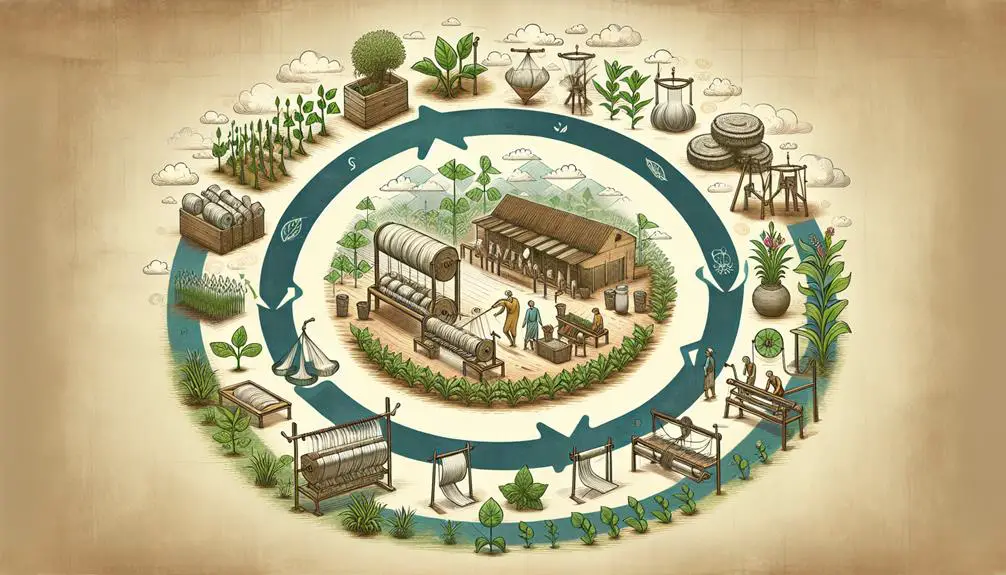
Did you know that the textile industry accounts for about 10% of global carbon emissions? When you think about eco-friendly fabrics, it's essential to understand each stage of their lifecycle, from raw material sourcing to end-of-life disposal. You'll see how choices like organic cotton and bamboo, low-impact dyes, and energy-efficient production can greatly reduce environmental impact. But what happens once these fabrics are no longer wearable? Exploring this aspect might alter how you approach sustainable fashion.
Key Takeaways
- Eco-friendly fabrics often start with sustainably sourced materials like organic cotton, hemp, and bamboo.
- Sustainable production methods, including fair trade and low-impact dyes, minimize environmental impact.
- Fabrics are designed for durability, reducing the need for frequent replacements and extending their lifecycle.
- Recycling and upcycling processes transform discarded fabrics into new products, supporting a circular economy.
- Responsible disposal, through recycling programs or donations, ensures minimal landfill impact and promotes sustainable end-of-life options.
Raw Material Sourcing
When sourcing raw materials for eco-friendly fabrics, it's important to prioritize sustainability and environmental impact. You'll want to focus on materials that are harvested using ethical practices, ensuring minimal harm to ecosystems and local communities.
For instance, choosing organic cotton over conventional cotton can greatly reduce water consumption and pesticide use, which directly lessens the environmental footprint.
Consider bamboo, another excellent choice. However, not all bamboo is created equal. Opt for bamboo sourced from sustainably managed forests where ethical practices are enforced. This helps preserve biodiversity and guarantees that the farming methods are responsible.
On the other hand, hemp grows quickly and requires less water than many other crops, making it a strong contender in sustainability.
Recycled materials also offer a fantastic way to reduce environmental impact. By repurposing discarded fabrics or plastic bottles, you contribute to lowering waste and conserving resources. This not only lessens landfill overflow but also cuts down on the demand for virgin materials.
In essence, your goal should be to select raw materials that support ethical practices and minimize environmental impact. This conscientious approach sets the foundation for truly sustainable and eco-friendly fabrics.
Sustainable Production Methods
You'll find that sustainable production methods play an essential role in creating eco-friendly fabrics.
By using organic materials, low-impact dyes, and energy-efficient processes, you can greatly reduce environmental harm.
These practices not only conserve resources but also guarantee the final product is truly sustainable.
Organic Material Sourcing
How do sustainable production methods revolutionize the sourcing of organic materials for eco-friendly fabrics?
First, by prioritizing ethical farming practices, you dramatically reduce the environmental impact of fabric production. These methods guarantee that the soil remains fertile and the local ecosystem thrives.
Next, fair trade partnerships create a win-win situation. Farmers receive fair compensation for their labor, which encourages them to invest in sustainable agriculture practices.
Visualize the process:
- Soil Enrichment: Instead of using harmful chemicals, natural compost and crop rotation maintain the soil nutrient-rich.
- Water Conservation: Drip irrigation and rainwater harvesting minimize water use and prevent wastage.
- Biodiversity: Planting a variety of crops supports a balanced ecosystem and reduces pests naturally.
- Community Empowerment: Fair trade guarantees that local communities benefit economically, fostering a culture of sustainability.
Low-Impact Dyes
In the world of sustainable fabrics, low-impact dyes play an important role by notably reducing the environmental footprint of the textile industry. When you choose low-impact dyes, you're opting for dyeing techniques that minimize the release of harmful chemicals into water systems. These dyes are designed to bond more effectively with fibers, which not only improves colorfastness but also curtails the amount of dye needed. This reduction in dye usage directly translates to lower water consumption, making the process much more eco-friendly.
You might wonder how these dyes compare to conventional ones. Traditional dyes often require large quantities of water for rinsing and fixing the colors, contributing noticeably to environmental degradation. Low-impact dyes, however, are engineered to require less water, thereby alleviating the strain on our precious water resources. By adopting these sustainable dyeing techniques, you're not just reducing the environmental impact but also ensuring that the vibrant colors of your fabrics last longer and remain vivid over time.
Moreover, when you support brands that use low-impact dyes, you're advocating for a more responsible textile industry. Your informed choices can drive demand for sustainable practices, pushing the industry towards a greener future.
Energy-Efficient Processes
Through innovative techniques and modern technology, energy-efficient processes in textile production notably diminish the environmental impact of fabric manufacturing.
By leveraging renewable energy and focusing on waste reduction, you can notably enhance the sustainability of your textile operations.
Here's how you can achieve this:
- Solar Power Integration: Implement solar panels to harness renewable energy, reducing reliance on non-renewable energy sources and cutting down greenhouse gas emissions.
- Heat Recovery Systems: Utilize heat recovery systems to capture and reuse heat generated during production, minimizing energy waste and lowering overall energy consumption.
- Water Recycling: Adopt advanced water recycling technologies to treat and reuse wastewater within the production cycle, contributing to substantial waste reduction.
- Energy-Efficient Machinery: Invest in modern, energy-efficient machinery designed to operate with less energy while maintaining high production quality and efficiency.
Eco-Friendly Dyeing Processes
Eco-conscious dyeing processes minimize environmental impact while guaranteeing vibrant, long-lasting colors. When you choose water conservation techniques, you decrease the extensive water usage typical in traditional dyeing methods. By utilizing low-water or even waterless dyeing technologies, you contribute to preserving this essential resource.
Organic pigments offer an exceptional alternative to synthetic dyes. Derived from minerals, plants, and even insects, these pigments aren't only biodegradable but also non-toxic. Plant-based colors, for example, utilize materials like indigo, madder root, and turmeric, providing a diverse palette without the harmful chemicals. These dyes also tend to be more skin-friendly, reducing the risk of allergies or irritations.
Moreover, focusing on compostable options ensures that the dyeing process aligns with ecological principles. Unlike conventional dyes that often introduce persistent pollutants into waterways, biodegradable dyes break down naturally, minimizing environmental contamination.
Fabric Durability and Use
When you choose eco-friendly fabrics, you're not just thinking about the environment; you're also considering how long the material will last.
These fabrics can offer impressive strength over time, standing up to daily wear and tear.
You'll find that durability is a key factor in making sustainable choices practical.
Strength Over Time
In evaluating fabric durability, you'll find that eco-friendly materials often outperform traditional fabrics, offering both longevity and sustainability. The longevity benefits of these fabrics mean they last longer, reducing the need for frequent replacements and thereby lowering the environmental impact.
When you choose eco-friendly fabrics, you're not just thinking about durability but also about how your choices affect the planet.
Consider the durability of different eco-friendly fabrics:
- Organic Cotton: This fabric isn't only soft and breathable but also impressively durable, withstanding numerous washes and wears.
- Hemp: Known for its strength, hemp fabric becomes softer and more comfortable with each wash while maintaining its structure.
- Recycled Polyester: Made from recycled plastic bottles, this fabric is resilient and resistant to shrinking and stretching.
- Tencel: Produced from sustainably sourced wood pulp, Tencel is both strong and gentle on the skin, enduring heavy use without losing its quality.
Wear and Tear
You'll often find that sustainable fabrics hold up impressively well under daily wear and tear, maintaining their quality and appearance over time. These fabrics, crafted from sustainable materials like organic cotton, hemp, and recycled fibers, are designed with durability in mind. Their inherent strength contributes significantly to fabric longevity, ensuring that your clothing and home textiles remain functional and attractive for years.
When signs of wear do appear, repair options are plentiful and often straightforward. Simple techniques like patching, darning, or even professional mending can extend the life of your eco-friendly garments. Embracing these repair options not only preserves the fabric but also aligns with the sustainable ethos by reducing waste.
You'll also appreciate that many eco-friendly fabrics are designed to withstand frequent washing without losing their integrity. This resistance to shrinkage, fading, and pilling means you can enjoy your favorite items longer, minimizing the need for frequent replacements. With the right care, including gentle washing and air drying, these fabrics can offer impressive longevity.
Essentially, investing in eco-friendly fabrics is a commitment to quality, sustainability, and enduring style.
Recycling and Upcycling
Recycling and upcycling transform discarded fabrics into valuable resources, reducing waste and conserving natural materials. By engaging in creative repurposing, you breathe new life into old textiles, contributing to sustainable fashion. This not only lowers textile waste but also supports a circular economy where materials are continually reused, reducing the need for new resources.
Imagine taking a worn-out pair of jeans and turning them into something new and stylish. Here's how you can do it:
- Denim Bags: Convert old jeans into durable, fashionable tote bags.
- Patchwork Quilts: Use fabric scraps to create unique, cozy quilts.
- Decorative Pillows: Transform fabric remnants into chic, custom pillows.
- Accessory Pouches: Craft small pouches for organizing everyday items.
End-of-Life Disposal
When your eco-friendly fabrics finally reach the end of their lifecycle, it's important to dispose of them responsibly to minimize environmental impact. The first consideration should be the landfill impact. By reducing the amount of waste sent to landfills, you help mitigate harmful environmental effects.
Instead, explore recycling options. Many communities offer textile recycling programs where fabrics can be repurposed into new products, thereby extending their utility.
If recycling isn't available, consider the fabric's biodegradability. Natural fibers like organic cotton, hemp, and bamboo can break down more easily in composting environments. Composting solutions for these materials involve cutting them into smaller pieces to accelerate decomposition. However, be cautious with blended fabrics or those treated with chemicals, as they may not compost efficiently or could even contaminate the compost.
Another viable approach is donation. Many organizations accept old textiles for upcycling or redistribution, ensuring they serve another purpose rather than ending up as waste.
Frequently Asked Questions
What Are the Economic Benefits of Using Eco-Friendly Fabrics?
You'll find that using eco-friendly fabrics offers cost savings through reduced waste and energy efficiency. Plus, there's rising market demand for sustainable products, allowing you to tap into a lucrative, environmentally-conscious consumer base.
How Do Eco-Friendly Fabrics Impact Human Health?
Eco-friendly fabrics positively impact your health by reducing exposure to harmful chemicals. They support sustainable fashion, resulting in a lower environmental impact, which ultimately contributes to cleaner air and water, benefiting everyone's well-being.
Are There Certifications to Identify Genuine Eco-Friendly Fabrics?
Yes, there are certification standards like GOTS and OEKO-TEX that help you identify genuine eco-friendly fabrics. These certifications are essential for greenwashing detection, ensuring you purchase truly sustainable and health-conscious textile products.
How Can Consumers Verify the Sustainability Claims of a Fabric?
Sure, verifying the sustainability claims of a fabric is as easy as detecting greenwashing! You'll need to dig deep into supply chain transparency, scrutinize certifications, and question everything. Because who doesn't love a good challenge, right?
What Are the Latest Innovations in Eco-Friendly Fabric Technology?
You're looking at innovations in sustainable fibers and biodegradable textiles. Companies are developing fabrics from algae, pineapple leaves, and recycled plastics, ensuring you get eco-friendly options without compromising quality or performance.