
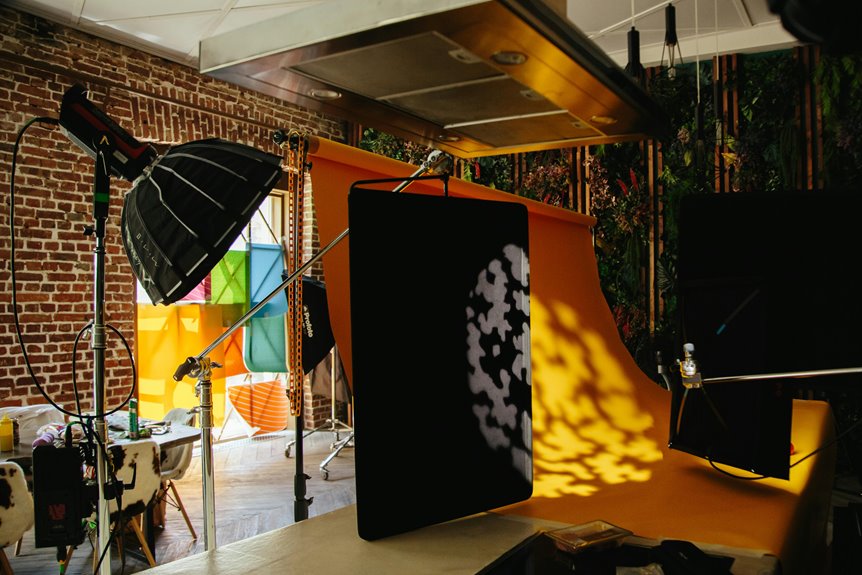
If you want smooth, wrinkle-resistant backdrops that brighten your shots, nonwoven fabric is your go-to—it’s lightweight, durable, and easy to clean. Muslin, on the other hand, offers soft texture and natural warmth, ideal for diffused lighting and a cozy vibe, though it wrinkles easily and needs careful washing. Both have their strengths depending on your style and needs. Keep exploring to find which backdrop suits your photography best.
Key Takeaways
- Nonwoven backdrops have a smooth, uniform surface, while muslin offers a soft, textured, woven appearance for artistic depth.
- Muslin diffuses light for softer, natural tones; nonwoven reflects more light, creating brighter images with sharper color contrasts.
- Nonwoven is lightweight, wrinkle-resistant, and easy to clean; muslin is breathable but prone to wrinkles and requires careful washing.
- Muslin is more durable long-term with proper care, while nonwoven is strong but may show damage sooner with frequent use.
- Nonwoven suits quick setups and short-term use; muslin is ideal for diffused lighting and adding organic texture to photos.
What Is Nonwoven Fabric?
Nonwoven fabric is a type of material made by bonding fibers together without weaving or knitting. When you use nonwoven fabric, you benefit from a smooth, uniform surface that’s often lightweight and durable.
Nonwoven fabric offers a smooth, uniform surface that’s lightweight, durable, and made without weaving or knitting.
It’s created through various processes like heat, chemical, or mechanical bonding, which give it unique properties compared to traditional fabrics. You’ll find nonwoven materials resist wrinkling, making them easy to handle and maintain.
For photography backdrops, this means you can quickly set up and pack away without worrying about creases. Plus, nonwoven fabrics often offer good color retention, ensuring your backdrop looks vibrant in photos.
If you want a hassle-free, affordable backdrop that holds up well under frequent use, nonwoven fabric is a solid choice.
What Is Muslin Fabric?
Muslin fabric is a lightweight, plain-woven cotton cloth that photographers often choose for its natural texture and versatility.
When you work with muslin, you’ll notice it drapes smoothly and holds dye well, making it ideal for various background colors. It’s breathable and easy to handle, which helps you set up quickly during shoots.
Unlike synthetic materials, muslin is made entirely from cotton, so it feels soft and organic to the touch. You can wash and reuse it multiple times without losing quality, which makes it a practical investment.
Whether you plan to paint on it or leave it plain, muslin adapts well to your creative needs, giving you a reliable and durable backdrop option for your photography projects.
Texture and Appearance Differences
While muslin offers a soft, natural texture that photographers appreciate, you might wonder how its feel and look compare to other backdrop materials.
Muslin has a woven, slightly textured surface that creates subtle depth and a cozy, organic vibe in your shots. It drapes well, producing gentle folds that add dimension without distracting from your subject.
On the other hand, nonwoven backdrops usually have a smooth, matte finish with a more uniform appearance. They lack the tactile grain muslin provides but offer a clean, consistent background that minimizes surface irregularities.
If you want a backdrop that feels more natural and artistic, muslin’s texture will appeal to you. But if you prefer sleek, even backgrounds with little visual noise, nonwoven might be your go-to choice.
Durability and Longevity Comparison
You’ll want to evaluate how each backdrop holds up over time, especially when it comes to material strength and resistance to wear and tear.
Nonwoven backdrops tend to be more durable but might show signs of damage sooner under heavy use.
Muslin, while softer, often lasts longer with proper care despite being more prone to wrinkles.
Material Strength Analysis
When choosing a backdrop, understanding the durability and longevity of the material is essential.
Nonwoven backdrops are made from synthetic fibers bonded together, giving them a consistent strength that resists tearing under normal handling. You’ll find they maintain shape well over time, making them ideal for frequent use.
Muslin backdrops, woven from cotton fibers, offer a natural strength but can weaken if not cared for properly. While muslin is more flexible, it’s prone to stretching and may degrade faster with repeated washing.
If you need a backdrop that holds up well to regular setups and cleanings, nonwoven often outperforms muslin in material strength. However, muslin’s strength can still serve you well if you handle it gently and avoid excessive stress.
Wear and Tear Resistance
Because backdrops undergo frequent handling and setup, their resistance to wear and tear directly impacts their lifespan.
When you choose between nonwoven and muslin backdrops, consider how each holds up over time. Nonwoven backdrops resist tears and creases better due to their synthetic fibers, so they maintain a smooth surface even after repeated use.
Muslin, made from cotton, is more prone to fraying and developing wrinkles, which can affect your shots and require extra care. However, muslin’s durability improves with proper washing and ironing.
If you need a backdrop that stays pristine with minimal effort, nonwoven is your best bet. But if you’re willing to invest time in maintenance, muslin can still last long and offer a classic look.
Ease of Cleaning and Maintenance
Although both nonwoven and muslin backdrops serve well in photography, they differ greatly in how easy they’re to clean and maintain.
Nonwoven backdrops are generally low-maintenance—you can often wipe them down with a damp cloth to remove dust or minor stains. They dry quickly and don’t require special care, making them ideal if you want a hassle-free option.
Nonwoven backdrops offer an easy-clean surface that dries fast, perfect for hassle-free photography setups.
Muslin backdrops, on the other hand, need more attention. Since they’re fabric, you’ll have to wash them carefully, often by hand or on a gentle cycle, to avoid shrinking or damage. They can wrinkle easily, so you’ll spend extra time ironing or steaming before shoots.
If you don’t mind the extra upkeep, muslin offers a classic look, but nonwoven saves you time when it comes to cleaning and maintenance.
Color Options and Customization
Beyond cleaning and upkeep, you’ll want to contemplate the color options and customization possibilities each backdrop material offers.
Nonwoven backdrops usually come in a wide range of vibrant, consistent colors because they’re manufactured with synthetic fibers. You can easily find bold shades that stay true over time, making them perfect if you need reliable, uniform backgrounds.
Muslin, on the other hand, offers a more natural, textured look with softer hues. It’s often favored for custom hand-painted designs or dyeing since the cotton fabric absorbs color well. If you want to create unique, artistic backdrops, muslin gives you more flexibility.
Ultimately, your choice depends on whether you prioritize bright, durable colors or customizable, textured aesthetics for your photography projects.
Weight and Portability Considerations
When you’re on the move for a shoot, the weight and portability of your backdrop can make a big difference in your setup ease.
Nonwoven backdrops tend to be lighter and less bulky, making them easier to carry and quick to set up, especially if you’re traveling or working on location. They often fold or roll compactly, fitting comfortably into your gear bag.
Nonwoven backdrops are lightweight, compact, and ideal for quick setups on the go or location shoots.
Muslin backdrops, on the other hand, are usually heavier and bulkier due to their thicker fabric. While they’re durable, they can be cumbersome to transport and may require a larger carrying case.
If you prioritize mobility and fast setups, nonwoven might be your best bet. But if weight isn’t a big concern, muslin offers a classic feel with its sturdier fabric texture.
Impact on Lighting and Color Reflection
You’ll notice that nonwoven and muslin backdrops handle light differently, affecting your photos’ overall mood.
Understanding how each material absorbs light, shifts color temperature, and reflects or diffuses light can help you control your shots better.
Let’s explore how these factors influence your lighting setup and color results.
Light Absorption Characteristics
Although both nonwoven and muslin backdrops serve as popular choices in photography, their light absorption characteristics differ greatly, affecting how they interact with lighting and color.
Nonwoven backdrops tend to reflect more light due to their smooth surfaces, giving you brighter and more vibrant images. Muslin, with its textured fabric, absorbs more light, which can reduce glare but also soften color intensity.
Consider these differences when choosing your backdrop:
- Nonwoven offers high reflectivity, enhancing brightness
- Muslin absorbs light, minimizing harsh reflections
- Nonwoven’s smooth finish can create sharper color contrasts
- Muslin’s texture diffuses light, producing a muted, natural look
Understanding these traits helps you control mood and clarity in your photos.
Color Temperature Effects
Color temperature plays an essential role in how backdrops reflect and influence lighting in your photos. Nonwoven and muslin backdrops react differently to various color temperatures, affecting the mood and tone of your shots. Nonwoven tends to maintain color accuracy under cooler lights, while muslin can add warmth due to its textured surface. Understanding these effects helps you choose the right backdrop to complement your lighting setup.
| Color Temperature (K) | Backdrop Effect |
|---|---|
| 3200 (Warm) | Muslin enhances warmth |
| 4500 (Neutral) | Both maintain balanced tones |
| 5600 (Daylight) | Nonwoven preserves true colors |
| 6500+ (Cool) | Nonwoven reduces color shift |
Choose accordingly to match your desired photo atmosphere.
Reflectivity and Diffusion
Understanding how reflectivity and diffusion affect your backdrop can dramatically improve the lighting and color balance in your photos.
Nonwoven backdrops tend to have a smoother surface, reflecting more light and creating sharper highlights. Muslin backdrops, with their textured fabric, diffuse light more effectively, producing softer shadows and more even color tones. This difference can impact the mood and clarity of your images.
Consider these points when choosing your backdrop:
- Nonwoven reflects light, enhancing brightness but risking glare
- Muslin diffuses light, reducing harsh shadows
- Reflectivity influences color saturation and contrast
- Diffusion helps achieve a natural, subtle lighting effect
Cost Differences Between Nonwoven and Muslin
When shopping for photography backdrops, you’ll notice that nonwoven and muslin differ considerably in price. Nonwoven backdrops tend to be more affordable upfront because they’re mass-produced from synthetic fibers, keeping costs low.
Muslin, made from natural cotton or cotton blends, often comes with a higher price tag due to its durability, texture, and handcrafted nature. However, muslin’s sturdiness means it lasts longer with proper care, potentially saving you money over time.
Nonwoven fabrics might wear out faster and show wrinkles easily, which can add replacement costs. So, if budget is your main concern, nonwoven looks appealing.
But if you want a backdrop that offers long-term value and quality, investing in muslin makes sense despite the higher initial cost.
Best Uses for Nonwoven Backdrops
While muslin offers durability for long-term use, nonwoven backdrops excel in specific scenarios where affordability and convenience matter more.
Nonwoven backdrops shine when affordability and ease of use take priority over long-term durability.
If you want a hassle-free option that doesn’t require ironing or special care, nonwoven materials are your go-to. They work great when you need:
- Quick setup and teardown for fast-paced shoots
- Lightweight, easy-to-carry backdrops for on-location photography
- Disposable or short-term use to avoid maintenance worries
- Budget-friendly options for beginners or experimental projects
Best Uses for Muslin Backdrops
When choosing muslin backdrops, you’ll want to contemplate the lighting conditions to make the most of their natural texture and appearance.
They’re great if you need something lightweight and easy to carry, but keep in mind the maintenance required to keep them looking sharp.
Let’s explore how these factors influence muslin’s best uses in photography.
Ideal Lighting Conditions
Because muslin backdrops absorb light rather than reflect it, they work best in softer, diffused lighting conditions.
You’ll want to avoid harsh, direct light that can cause uneven shadows or highlight imperfections in the fabric. Instead, aim for lighting setups that enhance the backdrop’s subtle tones and create a natural, even look.
Consider these tips for ideal lighting with muslin:
- Use softboxes or umbrellas to diffuse your light sources.
- Position lights at angles to avoid flat lighting.
- Incorporate natural window light filtered through sheer curtains.
- Avoid intense spotlights that create glare or hotspots.
Texture and Appearance
Muslin backdrops offer a unique texture that adds depth and character to your photos, especially under soft, diffused lighting.
When you use muslin, you get a slightly wrinkled, natural fabric look that creates subtle variations in tone and shadow. This texture can make your images feel warm and organic, perfect for portrait and lifestyle photography.
Unlike smooth nonwoven backdrops, muslin’s woven surface reflects light differently, giving your shots a tactile quality that draws viewers in. You’ll find muslin ideal when you want a classic, timeless aesthetic or need a versatile background that complements a range of subjects.
Its textured appearance helps you avoid overly flat or sterile images, making your photos more visually engaging and rich in detail.
Portability and Maintenance
Although nonwoven backdrops tend to be lighter and easier to handle, you’ll find muslin backdrops offer excellent portability due to their soft, foldable fabric.
You can easily fold muslin into a compact size, making it ideal for on-location shoots where space is limited. Plus, muslin is durable and forgiving when it comes to wrinkles, so you don’t have to stress about perfect storage.
When it comes to maintenance, you can wash muslin backdrops gently, keeping them fresh for repeated use.
Here’s why muslin works well for you:
- Folds compactly for easy transport
- Resists tearing and wear during handling
- Can be machine or hand washed
- Wrinkles add character or can be steamed out
This versatility makes muslin a practical choice for photographers on the move.
How to Choose the Right Backdrop Material for Your Photography Needs
When selecting a backdrop material, what factors should you prioritize to best suit your photography style? Consider texture, durability, and ease of maintenance first. Nonwoven backdrops offer smooth surfaces and are easy to clean, perfect for product shots. Muslin provides a textured, natural look ideal for portraits but requires more care.
| Factor | Nonwoven | Muslin |
|---|---|---|
| Texture | Smooth, uniform | Textured, natural |
| Durability | Tear-resistant, long-lasting | Prone to wrinkles, less durable |
| Maintenance | Easy to clean | Requires gentle washing |
| Portability | Lightweight, foldable | Bulkier, needs careful folding |
Match your backdrop to your shooting environment and subject to enhance your final images effectively.
Frequently Asked Questions
Can Nonwoven Backdrops Be Used Outdoors in Windy Conditions?
You can use nonwoven backdrops outdoors, but they’re lightweight and may flap in strong winds. To keep them steady, you’ll need clamps or weights. Consider the weather carefully before setting up your shoot.
Are Muslin Backdrops Safe for Use With Food Photography?
You can safely use muslin backdrops for food photography since they’re natural, breathable, and won’t off-gas harmful chemicals. Just make sure to keep them clean and stain-free to maintain a hygienic shooting environment.
Do Nonwoven Backdrops Produce Any Static Electricity?
Did you know 70% of synthetic fabrics can generate static? Nonwoven backdrops might produce some static electricity, especially in dry environments, but you can easily reduce it with anti-static sprays or humidifiers during your shoots.
Can Muslin Backdrops Be Easily Dyed at Home?
You can easily dye muslin backdrops at home since they’re made from natural cotton fibers. Just use fabric dye, follow the instructions, and you’ll customize your backdrop’s color without much hassle or special equipment.
Are Nonwoven Backdrops Environmentally Friendly or Recyclable?
You’ll find nonwoven backdrops often aren’t eco-friendly since they’re usually made from synthetic fibers. They’re not easily recyclable either, so if you care about the environment, you might want to contemplate other options.