
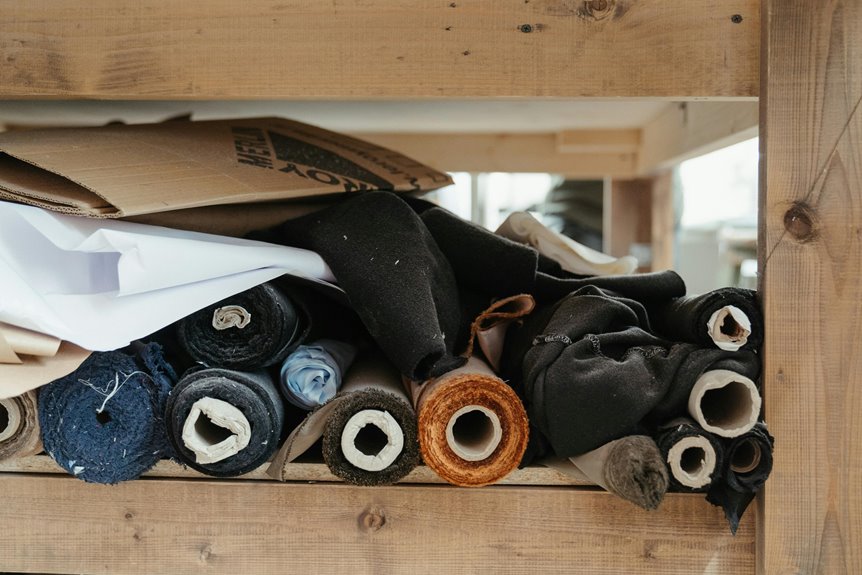
To properly store and handle nonwoven fabric rolls, keep them in a clean, dry, well-ventilated area at 15°C–25°C with about 50% humidity. Always roll and unroll smoothly with consistent tension to avoid wrinkles and tears. Use protective covers to prevent dust and moisture, and store rolls off the ground on racks or pallets. Handle rolls carefully during transport, securing them to avoid damage. Follow these basics, and you’ll find even more ways to maintain fabric quality.
Key Takeaways
- Store nonwoven fabric rolls in a clean, dry, well-ventilated area with temperatures between 15°C and 25°C and 50% humidity.
- Roll and unroll fabric with consistent tension, aligned edges, and smooth pulling to prevent wrinkles and damage.
- Use protective covers and moisture barriers to shield rolls from dust, moisture, and contamination during storage and transport.
- Secure rolls properly during transportation using straps or nets and handle with equipment appropriate for their size and weight.
- Regularly inspect rolls for moisture, mold, physical damage, and maintain stable environmental conditions to preserve fabric quality.
Understanding the Properties of Nonwoven Fabrics
Nonwoven fabrics combine strength, flexibility, and breathability, making them unique materials to handle. When you work with these fabrics, you’ll notice they don’t have a traditional weave, which gives them their distinctive texture and performance.
Nonwoven fabrics blend strength, flexibility, and breathability, offering a unique texture without a traditional weave.
You’ll find they resist tearing and maintain shape under stress, but they can be sensitive to sharp objects and excessive stretching. Because of their porous nature, they allow airflow, which helps prevent moisture buildup.
You should also recognize that nonwoven fabrics can vary widely in thickness, weight, and finish, depending on their intended use. Knowing these properties helps you handle the rolls carefully, avoiding damage and ensuring their longevity before use.
Understanding these traits sets the foundation for proper storage and handling practices.
Ideal Environmental Conditions for Storage
Although these fabric rolls are durable, you’ll need to store them in a controlled environment to maintain their quality.
Keep the storage area clean, dry, and well-ventilated to prevent moisture buildup, which can cause mold or mildew. Aim for a temperature between 15°C and 25°C (59°F to 77°F) and maintain relative humidity around 50% to avoid fabric distortion or degradation.
Avoid exposing the rolls to direct sunlight or strong artificial light, as UV rays can weaken fibers and fade colors over time.
Also, store rolls away from chemicals, solvents, or fumes that might damage the fabric.
Proper Techniques for Rolling and Unrolling
When rolling and unrolling nonwoven fabric, make sure you align the edges neatly to prevent wrinkles and damage.
Keep the tension consistent to avoid stretching or distorting the material.
Always use protective covers to shield the fabric from dust and moisture during handling.
Align Edges Neatly
Properly aligning the edges of fabric rolls takes just a few careful steps but makes a big difference in maintaining their shape and usability.
When you roll or unroll nonwoven fabric, keep the edges straight and parallel to avoid uneven layers. Use your hands to gently guide the fabric edges as you roll, preventing overlaps or folds. If the edges start to misalign, pause and adjust them immediately before continuing.
When unrolling, pull the fabric smoothly and evenly, ensuring the edges don’t shift or wrinkle. This careful handling reduces stress on the fabric and avoids creating creases or weak spots.
Maintain Consistent Tension
To keep your nonwoven fabric rolls in top condition, you need to maintain consistent tension while rolling and unrolling. This prevents wrinkles, stretching, or damage to the fabric’s structure.
When you apply even tension, the roll stays tight and uniform, making storage easier and prolonging the material’s lifespan. Here’s how to do it right:
- Use a roller or spindle to control fabric movement smoothly.
- Avoid forcing the fabric; let it roll naturally with steady pressure.
- Check tension frequently and adjust as needed to prevent slack or over-tightening.
Use Protective Covers
Three key steps help you protect nonwoven fabric rolls during rolling and unrolling: using protective covers, handling the fabric gently, and ensuring a clean workspace.
Using protective covers shields the fabric from dust, moisture, and physical damage. Always wrap your rolls tightly in plastic or fabric sleeves designed for storage. This prevents contaminants from settling on the surface and helps maintain fabric integrity.
When rolling or unrolling, keep the cover in place as much as possible to minimize exposure. Avoid dragging the fabric against rough surfaces, which can cause snags or tears.
Preventing Contamination and Moisture Exposure
You’ll want to keep your nonwoven fabric rolls in a clean storage area to avoid contamination.
Using moisture barriers is essential to protect them from humidity and dampness.
Always handle the rolls carefully to maintain their quality and prevent damage.
Clean Storage Environment
Maintaining a clean storage environment plays an essential role in protecting nonwoven fabric rolls from contamination and moisture damage.
To keep your fabric rolls in ideal condition, you need to control dust, dirt, and airborne particles that can settle on the fabric surface. Regularly clean the storage area and guarantee proper ventilation to reduce humidity levels.
Additionally, keep the floor and shelving free from debris and spills. Here are key steps to follow:
- Store rolls off the ground using pallets or racks to avoid dirt and moisture contact.
- Limit access to storage areas to prevent unnecessary exposure to contaminants.
- Use clean, dry cloth covers or protective wraps to shield fabric rolls from dust buildup.
Moisture Barrier Usage
Controlling moisture is just as important as keeping your storage area clean when it comes to preserving nonwoven fabric rolls. Using moisture barriers prevents water vapor from seeping in and damaging the fabric’s integrity. Always wrap rolls in polyethylene film or use specialized moisture-resistant covers. Store rolls off the ground and avoid direct contact with concrete or damp surfaces.
| Barrier Type | Purpose | Best Practice |
|---|---|---|
| Polyethylene Film | Moisture protection | Wrap tightly, seal edges |
| Desiccant Packs | Absorb residual moisture | Place inside packaging |
| Vapor Barrier Bags | Prevent vapor ingress | Use in high humidity areas |
| Pallets | Elevate rolls | Keep rolls off damp floors |
Implement these steps to maintain fabric quality and prevent contamination.
Proper Handling Techniques
Although nonwoven fabric rolls are designed to be durable, improper handling can easily introduce contamination or moisture damage.
To keep your rolls clean and dry, always handle them with care. Avoid touching the fabric surface directly with bare hands, as oils and dirt can transfer. When moving rolls, use clean gloves and equipment designed for delicate materials. Keep the rolls covered and off damp floors to prevent moisture absorption.
Here are key handling tips:
- Use clean gloves to prevent contamination
- Transport rolls with appropriate equipment to avoid damage
- Store rolls on pallets or racks, away from moisture sources
Safe Transportation and Handling Practices
When transporting nonwoven fabric rolls, you’ll want to secure them properly to prevent damage from shifting or impact. Use straps or nets to hold the rolls firmly in place. Always lift rolls with equipment designed for their weight and size, avoiding dragging or dropping. Keep rolls covered to protect against moisture and dirt during transit.
| Practice | Benefit |
|---|---|
| Use padded lifting tools | Prevents tears and dents |
| Secure with straps/nets | Stops movement and abrasion |
| Cover rolls during transit | Shields from moisture/dust |
| Avoid stacking heavy loads | Maintains fabric integrity |
Routine Inspection and Maintenance Guidelines
Routine inspection plays an essential role in keeping your nonwoven fabric rolls in top condition. By regularly checking your rolls, you can spot issues early and prevent damage.
Make it a habit to inspect both the packaging and the fabric itself to maintain quality and extend shelf life.
Focus on these key tasks during your inspection:
- Check for signs of moisture, mold, or mildew on the rolls and storage area.
- Look for physical damage such as tears, dents, or compression marks on the fabric.
- Verify that storage conditions, including temperature and humidity, remain within recommended ranges.
Routine maintenance also means cleaning storage spaces and adjusting environmental controls as needed.
Staying proactive guarantees your nonwoven fabric stays ready for use without unexpected setbacks.
Frequently Asked Questions
Can Nonwoven Fabric Rolls Be Recycled After Use?
Did you know over 60% of nonwoven fabrics can be recycled? You can recycle nonwoven fabric rolls after use, but it depends on the material type and local recycling facilities. Always check guidelines before recycling.
What Are Common Applications for Different Types of Nonwoven Fabrics?
You’ll find spunbond nonwovens used in medical gowns, while meltblown types are perfect for filtration. Needle-punched fabrics suit geotextiles, and hydroentangled nonwovens work well in wipes and hygiene products.
How Do Additives Affect the Durability of Nonwoven Fabrics?
Additives improve your nonwoven fabric’s durability by enhancing properties like strength, UV resistance, and moisture repellency. They help your fabric last longer and perform better under stress, making it more reliable for various applications.
Are There Eco-Friendly Alternatives to Traditional Nonwoven Fabrics?
You can use eco-friendly alternatives like biodegradable nonwovens made from natural fibers such as bamboo, hemp, or organic cotton. These options reduce environmental impact and decompose faster than traditional synthetic fabrics, helping you stay sustainable.
What Are the Cost Differences Between Nonwoven and Woven Fabrics?
Think of nonwoven fabrics as the budget-friendly sneakers of textiles—they’re generally cheaper than woven fabrics since they require less labor and time to produce. You’ll find nonwoven options cost 20-50% less, depending on material and quality.