
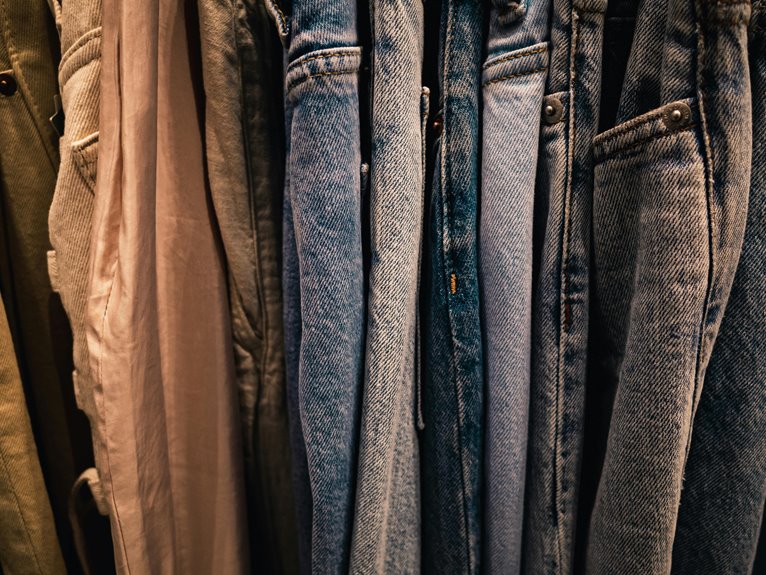
If you want denim that ages uniquely, raw denim is unwashed, stiff, and develops personal fades with wear. Selvedge denim, made on traditional shuttle looms, features a durable, finished edge that resists fraying and usually feels smoother. While raw denim can be more affordable, selvedge offers greater longevity and a premium look. You’ll appreciate how both styles differ in texture, care, and style once you explore their fabric, wear, and maintenance details more closely.
Key Takeaways
- Raw denim is unwashed and untreated, stiff and dark, developing unique fades over time, while selvedge denim features a tightly woven, self-finished edge.
- Selvedge denim is woven on traditional shuttle looms, offering greater durability and a smoother texture compared to raw denim’s variable loom origins.
- The selvedge edge prevents fraying and adds longevity, whereas raw denim edges are unfinished and more prone to wear without proper care.
- Selvedge denim generally costs more due to premium weaving techniques, while raw denim ranges from affordable to high-end options.
- Styling selvedge with rolled cuffs showcases its edge for polished looks; raw denim suits rugged styles paired with boots and layered tops.
What Is Raw Denim?
Raw denim refers to denim fabric that hasn’t been washed or treated after being dyed. When you buy raw denim jeans, you’re getting a pair that’s stiff, dark, and rigid.
Since it’s unwashed, the fabric retains its original indigo dye, which allows it to develop unique fades and creases as you wear it over time. You’ll notice the jeans soften and conform to your body’s shape, creating a personalized fit.
Keep in mind, raw denim requires a break-in period, so don’t expect instant comfort. Also, avoid washing them too often at first; doing so preserves the deep color and enhances the natural aging process.
If you want denim that tells your story through wear, raw denim is a great choice.
What Defines Selvedge Denim?
Selvedge denim stands out because of its tightly woven edge that prevents fraying, giving the fabric a clean, finished look.
When you look closely, you’ll notice a narrow strip along the inside seam, often featuring a colored thread like red or blue. This edge signals authenticity and craftsmanship.
Unlike other denim, selvedge is made on traditional shuttle looms, which produce this self-finished edge.
Selvedge denim’s self-finished edge comes from weaving on traditional shuttle looms, ensuring durability and craftsmanship.
When you buy selvedge denim, you’re getting a product that’s durable, less prone to unraveling, and often considered higher quality.
This defining feature isn’t just about aesthetics; it impacts the jean’s longevity and feel.
Recognizing selvedge denim by its edge helps you appreciate the care and tradition behind your jeans.
Fabric and Weaving Techniques Explained
Although denim might look simple at first glance, the fabric’s quality and durability heavily depend on how it’s woven. When you choose selvedge denim, you’re getting fabric crafted on traditional shuttle looms, which weave the edges tightly to prevent unraveling. This technique produces a clean, finished edge that’s both strong and distinctive.
Raw denim, on the other hand, refers to fabric that hasn’t been washed or treated after weaving, regardless of the loom type used. You’ll find raw denim made on both shuttle and projectile looms, but only selvedge denim comes from shuttle looms.
These weaving differences affect the texture and longevity of your jeans, so understanding the fabric’s construction helps you pick denim that matches your style and wear preferences perfectly.
Visual and Textural Differences
You’ll notice raw denim often has a deeper, richer color compared to selvedge denim’s subtle shade contrasts.
The fabric edges on selvedge denim are tightly woven and finished, giving it a clean, distinctive look.
When you touch them, raw denim feels stiffer, while selvedge denim tends to be smoother and more refined in texture.
Color and Shade Contrast
When comparing raw and selvedge denim, you’ll notice distinct differences in color and shade that affect both their appearance and texture.
Raw denim typically starts as a deep, uniform indigo, offering a dark, rich tone that fades uniquely with wear.
Selvedge denim, often raw, tends to have sharper contrasts due to its tighter weave and premium dye quality. This contrast becomes more apparent as you wear and wash them.
Here’s what you should know:
- Raw denim’s color darkens with time, showing personalized fading.
- Selvedge denim displays crisper, more defined color shifts.
- The indigo in selvedge denim often feels richer and more vibrant.
- Raw denim’s shade shifts unevenly, creating a textured look.
- Selvedge denim maintains sharper contrasts between dark and light areas.
Fabric Edge Characteristics
Because fabric edges reveal much about denim quality, examining the characteristics of raw and selvedge denim edges helps you understand their visual and textural differences.
When you look at selvedge denim, you’ll notice a tightly woven edge with clean, finished lines, often featuring a colored thread—usually red or blue—running along the outer seams. This edge prevents fraying and gives a crisp, defined look.
In contrast, raw denim typically has a cut edge that’s unfinished and prone to fraying, lacking that distinct colored thread. Visually, selvedge edges appear more polished and deliberate, while raw denim edges feel rougher and more natural.
Recognizing these differences allows you to appreciate the craftsmanship behind selvedge denim and the utilitarian nature of raw denim edges.
Texture and Feel Variations
Although raw and selvedge denim may look similar at first glance, their textures and overall feel differ greatly.
When you touch raw denim, you’ll notice it feels stiff and rigid because it’s unwashed and untreated.
Selvedge denim, often made on traditional shuttle looms, has a tighter weave and a smoother edge, which affects its texture.
As you wear them, raw denim softens uniquely, while selvedge denim tends to maintain a firm yet refined feel.
Here’s what you can expect:
- Raw denim feels stiff and rough initially
- Selvedge denim offers a denser, smoother weave
- Raw denim softens and molds to your body over time
- Selvedge denim usually has a cleaner edge and finish
- Both develop unique fades but differ in tactile experience
Durability and Wear Over Time
You’ll notice raw denim holds up differently compared to selvedge over time.
Understanding how each fades and ages can help you choose the right pair for your lifestyle.
Let’s explore which lasts longer and how their wear patterns develop.
Longevity Comparison
When you choose between raw and selvedge denim, understanding their durability can help you get the most wear from your jeans. Both types are known for lasting a long time, but selvedge denim often edges out raw denim in longevity due to its tighter weave and reinforced edges.
Raw denim, while durable, may show early signs of wear if not cared for properly. Your daily habits also affect how long either lasts.
Consider these points for longevity:
- Selvedge denim resists fraying thanks to its self-finished edges
- Raw denim can stretch and lose shape without proper care
- Frequent washing reduces denim lifespan, especially raw
- Selvedge often uses higher-quality cotton, boosting durability
- Repairs on selvedge denim tend to hold better over time
Choosing selvedge can mean jeans that truly stand the test of time.
Fading and Aging
Since both raw and selvedge denim develop unique fades over time, understanding how each ages can help you appreciate their character and durability.
Raw denim fades based on your body’s natural movements, creating personalized wear patterns that tell your story. You’ll notice creases and whiskers forming in high-stress areas, adding depth and texture.
Selvedge denim, often made from higher-quality cotton and tighter weaving, tends to age more evenly but still shows distinct fades along the edges due to its self-finished fabric.
Both types improve with wear, but selvedge’s durability means it usually resists fraying longer.
If you’re after authentic, evolving jeans, raw denim offers a more dramatic transformation, while selvedge gives you refined, lasting character.
Either way, patience rewards you with truly unique denim over time.
Styling and Fashion Considerations
Although raw and selvedge denim share a rugged aesthetic, their styling possibilities differ considerably, allowing you to tailor your look based on personal taste and occasion.
Raw denim’s stiff texture and deep indigo shade work great for bold, casual outfits, while selvedge denim’s clean edges and refined finish suit both casual and smart-casual settings.
When styling, consider how each type complements your wardrobe staples.
Here are some styling tips to keep in mind:
- Roll up selvedge cuffs to showcase the signature edge.
- Pair raw denim with chunky boots for a tough, streetwear vibe.
- Use selvedge jeans with crisp shirts for a polished look.
- Combine raw denim with layered tops for a rugged feel.
- Accessorize selvedge denim with leather belts or watches for added sophistication.
Care and Maintenance Tips
Because raw and selvedge denim require special care to maintain their unique qualities, you should handle washing and storage thoughtfully.
Avoid frequent washing; instead, spot clean stains and air your jeans to preserve color and fabric integrity. When you do wash them, turn your jeans inside out and use cold water with mild detergent to reduce fading and shrinkage.
Skip the dryer—hang them to dry naturally. For storage, fold your jeans neatly or hang them by the waistband to prevent creases and maintain shape.
Finally, avoid harsh chemicals or bleach, as they can damage the fibers. By following these simple care steps, you’ll keep your raw and selvedge denim looking sharp and durable for years to come.
Price Points and Brand Availability
When you shop for raw and selvedge denim, you’ll notice a wide range of price points that reflect differences in craftsmanship, materials, and brand reputation.
Raw denim often comes at a lower price, making it accessible if you want quality without splurging. Selvedge denim usually costs more due to its premium weaving techniques and limited production.
Depending on your budget and style, you can find various brands catering to both types.
Here’s what to evaluate when exploring price and availability:
- Raw denim ranges from affordable entry-level brands to high-end labels
- Selvedge denim is often limited to niche or heritage brands with higher prices
- Some brands offer both types, letting you compare quality firsthand
- Imported selvedge denim tends to cost more than domestically produced options
- Sales and secondhand markets can provide good deals on premium denim
Frequently Asked Questions
Can Raw or Selvedge Denim Shrink After Washing?
Think of your denim as a sponge—yes, both raw and selvedge denim can shrink after washing. You’ll want to wash them carefully to avoid unexpected size changes and keep your jeans fitting just right.
Are There Environmental Impacts in Producing Raw vs. Selvedge Denim?
You’ll find both raw and selvedge denim production impacts the environment, mainly due to water use and chemicals. However, selvedge denim often involves more traditional, resource-intensive methods, so it might have a slightly higher environmental footprint.
How Do Raw and Selvedge Denim Perform in Extreme Weather?
You might think denim struggles in extreme weather, but it actually adapts well. Raw denim stiffens in cold, offering insulation, while selvedge’s tight weave resists wind and moisture, keeping you comfortable despite harsh conditions.
Can Raw Denim Be Combined With Non-Selvedge Denim in Outfits?
You can definitely mix raw denim with non-selvedge denim in your outfits. Just balance textures and washes to keep your look cohesive. Don’t be afraid to experiment and create a style that feels uniquely yours.
Is There a Difference in Breathability Between Raw and Selvedge Denim?
You might notice a subtle difference in airiness between denim types. Raw denim, being unwashed, feels a bit stiffer, while selvedge often offers a slightly smoother, more breathable experience due to its weaving style.