
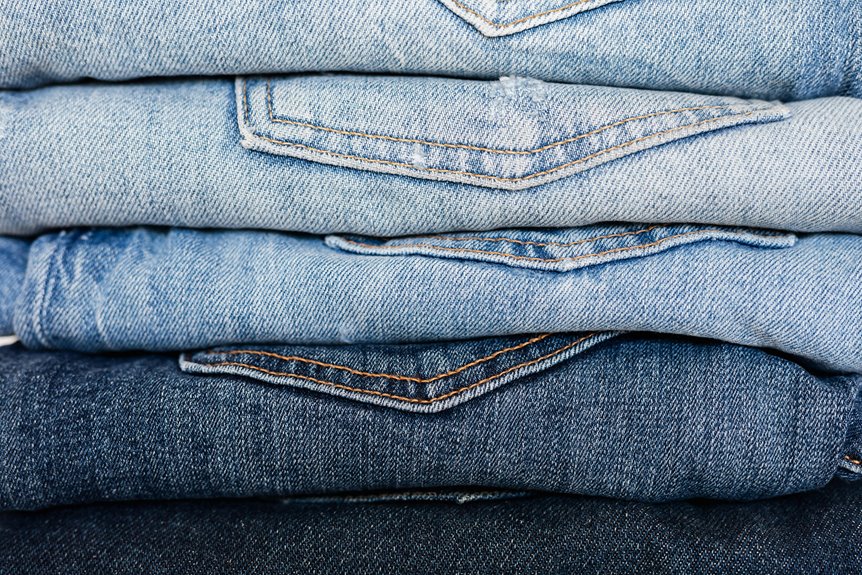
You’ll find selvedge denim worth the investment if you value durability, unique style, and craftsmanship. Its high-quality fabric and traditional weaving process mean it lasts longer and develops a personalized fade, unlike mass-produced jeans. While the price is higher, you save over time by avoiding frequent replacements. Selvedge also offers a tailored fit and premium feel, but it demands proper care to maintain its appeal. Keep exploring to understand why it’s a favorite among denim enthusiasts.
Key Takeaways
- Selvedge denim features superior craftsmanship with durable, tightly woven edges made on traditional shuttle looms, ensuring exceptional quality and longevity.
- Higher upfront costs reflect premium materials, meticulous production, and limited batch sizes compared to mass-produced regular jeans.
- Long-term savings arise from enhanced durability, fewer replacements, and unique fading that adds personalized character over time.
- Proper care, including gentle washing and air drying, preserves indigo dye and fabric integrity, maximizing lifespan and aesthetic appeal.
- Investing in selvedge denim suits those valuing craftsmanship, durability, and timeless style, making it a justified wardrobe staple despite the higher price.
Understanding Selvedge Denim: What Makes It Unique
Selvedge denim stands out because of its unique weaving process and edge finish. When you look closely, you’ll notice the clean, tightly bound edges that prevent fraying—this is the hallmark of selvedge fabric.
Unlike regular denim, which often uses wider, mass-produced looms, selvedge denim is woven on traditional shuttle looms, creating a denser, more durable fabric. You’ll appreciate the subtle differences in texture and weight, which give selvedge denim a distinct feel and longer lifespan.
The fabric’s narrow width means you often see a colored line on the inside seam, a signature detail denim enthusiasts love. This craftsmanship and attention to detail set selvedge denim apart, making it a favorite for those who value quality and style in their jeans.
The Manufacturing Process Behind Selvedge Jeans
To truly appreciate what sets selvedge jeans apart, you need to look at how they’re made. Unlike regular denim, selvedge is woven on vintage shuttle looms, creating a tightly woven edge that prevents unraveling.
This process produces a denser, more durable fabric with a clean, finished edge. You’ll notice this edge as the colorful stripe along the outseam of the jeans. The weaving is slower and more labor-intensive, but it results in exceptional quality.
Denser fabric with a colorful stripe edge, crafted slowly for unmatched durability and quality.
After weaving, the denim is cut carefully to preserve the selvedge edge. Skilled artisans then stitch the jeans with precision, often using chain stitching that adds durability and character.
This traditional manufacturing process is why selvedge denim stands out regarding craftsmanship and longevity.
Comparing the Cost of Selvedge Denim to Regular Jeans
You’ll notice selvedge denim usually comes with a higher price tag than regular jeans, but there’s more behind that number than just the label.
Factors like production methods and material quality drive the cost, but you might save money in the long run thanks to durability and timeless style.
Let’s break down what influences the price and whether it’s worth the investment for you.
Price Differences Explained
Three main factors drive the price gap between selvedge denim and regular jeans: materials, craftsmanship, and production methods.
Selvedge denim uses high-quality, often Japanese, cotton, which costs more than the mass-produced cotton in standard jeans. You’ll notice the craftsmanship is more meticulous—each pair is carefully woven on old shuttle looms, creating the signature edge that prevents fraying. This slower, manual process demands skilled labor, increasing costs.
Production methods also differ; selvedge jeans are typically made in smaller batches, limiting economies of scale and pushing prices higher. In contrast, regular jeans rely on quicker, automated processes and cheaper materials, making them more affordable.
Understanding these factors helps you see why selvedge denim commands a premium price compared to regular jeans.
Long-Term Cost Benefits
While selvedge denim comes with a higher upfront cost due to its quality materials and craftsmanship, it offers long-term savings that regular jeans often can’t match.
You won’t need to replace selvedge jeans as frequently because they’re built to last, resisting wear and tear better over time. This durability means fewer purchases, saving you money in the long run.
Plus, selvedge denim often ages beautifully, developing unique fades that keep them stylish for years.
Regular jeans, on the other hand, might wear out quickly, forcing you to spend more repeatedly.
When you consider how often you’d replace cheaper jeans, investing in selvedge denim becomes more cost-effective, proving that spending more upfront can actually save you money down the road.
Factors Influencing Price
Because selvedge denim undergoes a more intricate production process, its price often exceeds that of regular jeans.
When you compare the two, several factors directly influence the cost difference:
- Production Method: Selvedge denim is woven on traditional shuttle looms, which are slower but create a tighter, denser fabric.
- Material Quality: Higher-grade cotton and dyes are typically used, contributing to durability and rich color.
- Labor and Craftsmanship: The attention to detail and hand-finished elements push the price up.
You might find regular jeans cheaper because they’re mass-produced on faster machines with less expensive materials.
Understanding these factors helps you see why selvedge denim commands a premium and whether that investment fits your style and budget.
Fabric Quality and Longevity: How Durable Are Selvedge Jeans?
You’ll notice that selvedge jeans use tightly woven, high-quality cotton, which plays a big role in their durability.
This material composition helps them resist wear and tear better than many regular jeans.
Understanding these factors will show you why selvedge denim often lasts longer.
Material Composition Impact
When you choose selvedge denim, you’re investing in fabric crafted with precision and durability in mind. The material composition plays an essential role in how these jeans hold up over time. Typically made from 100% long-staple cotton, selvedge denim offers a tight weave that resists stretching and tearing. Some blends include a small percentage of elastane for added comfort without compromising strength.
Here’s what you should know about the material’s impact:
- Fiber Quality: Long-staple cotton fibers increase durability and softness as you wear them in.
- Weave Density: Higher thread counts mean tougher fabric that ages beautifully.
- Natural Fibers: They allow breathability and reduce wear-related issues like pilling.
Understanding these factors helps you appreciate why selvedge denim lasts longer and feels better with time.
Wear and Tear Resistance
The high-quality material composition of selvedge denim directly influences its resistance to wear and tear. When you choose selvedge jeans, you’re getting tightly woven fabric with durable edges that prevent fraying. This means your jeans hold up better over time, especially in high-stress areas like knees and thighs. Plus, the slow weaving process creates a denser fabric, enhancing longevity.
| Feature | Selvedge Denim | Regular Denim |
|---|---|---|
| Weaving Quality | Tight, dense weave | Looser weave |
| Edge Durability | Fray-resistant selvedge | Frays easily |
| Longevity | High, ages well | Moderate, wears faster |
The Fit and Feel: Comfort Differences Between Selvedge and Standard Denim
Although selvedge denim often feels stiffer at first, it molds to your body over time, offering a personalized fit that standard denim rarely achieves.
This break-in period might require some patience, but the comfort payoff is worth it. Unlike mass-produced denim, selvedge’s tighter weave and higher quality cotton adapt uniquely to your movements.
Here’s what you’ll notice with selvedge denim:
- Gradual softening that matches your body shape
- Enhanced breathability due to natural fibers
- Durable structure that maintains fit without sagging
In contrast, standard denim often feels softer immediately but can stretch out unevenly.
If you want jeans that truly conform to you, selvedge delivers a comfort experience that improves with wear.
Style and Aesthetic Appeal of Selvedge Denim
Anyone who appreciates timeless fashion knows selvedge denim stands out for its unique style and craftsmanship.
When you wear selvedge jeans, you immediately notice the clean, finished edges inside the cuffs—those narrow, tightly woven bands are a hallmark of quality. Rolling up your jeans to reveal this detail adds a subtle yet unmistakable touch of authenticity and sophistication.
The fabric’s rich indigo hue deepens with wear, creating personalized fading patterns that tell your story over time. Unlike mass-produced denim, selvedge offers character and individuality.
If you want your jeans to make a statement without shouting, selvedge denim delivers understated elegance. It’s a perfect choice for those who value classic style with a modern edge, combining durability with timeless aesthetic appeal.
Caring for Selvedge Jeans to Maximize Their Lifespan
Wearing selvedge denim means your jeans develop a unique character over time, but to keep them looking their best, you need to care for them properly.
Treating your selvedge jeans with care preserves their quality and enhances their fade patterns. Here’s how you can maximize their lifespan:
- Wash sparingly: Limit washing to preserve the indigo dye and fabric integrity. Spot clean when possible.
- Cold water and gentle cycle: When washing is necessary, turn jeans inside out and use cold water on a gentle cycle to prevent fading and shrinkage.
- Air dry: Avoid the dryer; hang your jeans to air dry to maintain shape and prevent damage to the fibers.
Following these simple steps will help your selvedge denim age gracefully and stay durable for years.
Is the Investment in Selvedge Denim Justified?
How do you know if selvedge denim is worth the higher price tag? It comes down to what you value in your jeans.
Selvedge denim offers superior durability, unique fading, and a premium feel that mass-produced denim often lacks. If you appreciate craftsmanship and want jeans that improve with age, this investment pays off.
However, if you’re after budget-friendly options or fast fashion trends, selvedge mightn’t be the best fit. Remember, these jeans require care and patience to develop their character, so you should be ready for that commitment.
Ultimately, if you see your jeans as a long-term wardrobe staple rather than disposable wear, investing in selvedge denim is justified and rewarding.
Frequently Asked Questions
Can Selvedge Denim Be Ethically Sourced?
You can find selvedge denim that’s ethically sourced by choosing brands transparent about their labor practices and sustainable materials. Look for certifications and company values to guarantee your jeans support fair wages and eco-friendly production.
How Do Seasonal Trends Affect Selvedge Denim Popularity?
You’ll notice seasonal trends can boost selvedge denim’s popularity, especially in cooler months when heavier fabrics are sought. However, its timeless appeal keeps you interested year-round, regardless of fleeting fashion cycles and trends.
Are There Environmental Benefits to Choosing Selvedge Denim?
Sure, you’ll save the planet by buying selvedge denim—because nothing screams eco-warrior like jeans that took a year and a half to make! Seriously, it’s more sustainable thanks to durability and less waste, so go green stylishly.
What Are Common Misconceptions About Selvedge Denim?
You might think selvedge denim always costs more or lasts longer, but that’s not always true. People often assume it’s only stylish or exclusive, ignoring that quality and value depend on the brand and fabric, not just selvedge.
How Does Selvedge Denim Perform in Different Climates?
You’ll find selvedge denim breathes well in warm climates but can feel stiff initially. In cooler weather, it provides good insulation. Over time, it softens and adapts, making it versatile across different environments.