
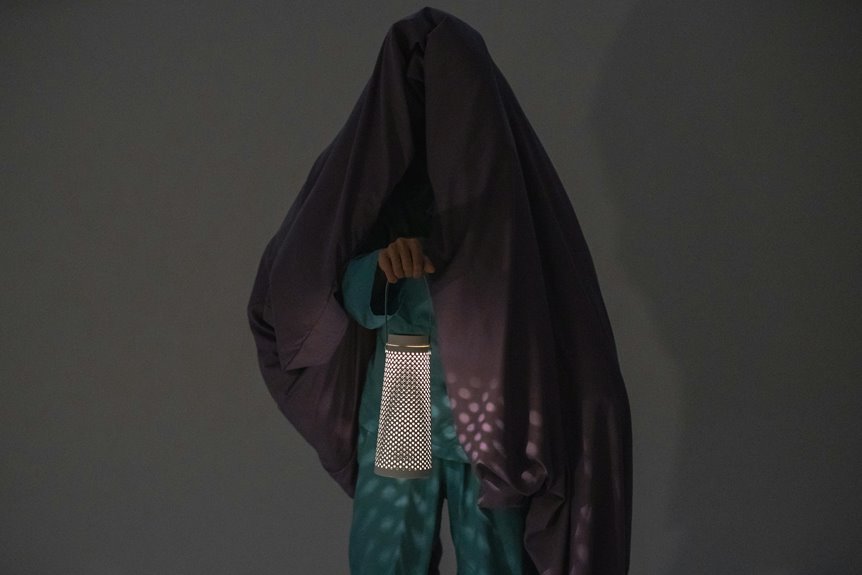
You might think a Kevlar fabric cloak gives you mythical invincibility like ancient gods, but in reality, it offers lightweight, flexible protection against handgun rounds and blunt force, not total bulletproof armor. Kevlar resists stabbing and absorbs impact, yet it has limits like vulnerability to high-velocity bullets and environmental wear. If you want to understand how this modern shield blends science and legend—and where its true strengths and weaknesses lie—you’re on the right track.
Key Takeaways
- Kevlar cloaks draw inspiration from ancient mythological protective garments symbolizing invisibility and defense.
- Modern Kevlar fabric offers lightweight, flexible protection with high tensile strength and heat resistance for tactical use.
- Kevlar cloaks enhance mobility and stealth while providing defense against handgun rounds, stabbing attacks, and blunt force.
- Kevlar is not fully bulletproof; it requires composite layering and has limitations against high-velocity rifle bullets and sharp weapons.
- Innovations like nanotechnology coatings and smart textiles improve durability, comfort, and adaptive protective capabilities in Kevlar cloaks.
Origins of the Kevlar Fabric Cloak in Mythology
Although Kevlar fabric is a modern invention, the idea of a protective cloak has deep roots in mythology. You’ll find stories across cultures where heroes and gods wear garments that shield them from harm.
Think of the Greek gods’ invisible cloaks or the Norse god Thor’s magical mantle—these cloaks granted invincibility or defense against weapons. When you imagine a Kevlar fabric cloak today, you’re tapping into that ancient symbol of protection and power.
Greek gods’ invisible cloaks and Thor’s mantle symbolize timeless protection, echoed today in Kevlar’s strength and power.
These myths show how people have long desired armor that’s light, flexible, and nearly impenetrable. While those cloaks were magical, today’s Kevlar fabric cloaks fulfill similar roles in reality, offering protection without the need for enchantment.
You’re witnessing an age-old concept transformed by technology.
The Science Behind Kevlar Material
When you hold Kevlar fabric, you’re feeling the result of advanced polymer science designed for extreme strength and durability. Kevlar is a synthetic fiber made from poly-paraphenylene terephthalamide, engineered to resist impact and wear.
Here’s what makes it special:
- Molecular Structure: Kevlar’s tightly woven polymer chains create strong hydrogen bonds, giving it incredible tensile strength.
- Lightweight: Despite its toughness, Kevlar remains lightweight, making it practical for wearable protection.
- Heat Resistance: It resists high temperatures without melting or degrading, maintaining integrity under stress.
- Flexibility: Unlike metals, Kevlar bends without breaking, allowing for versatile tactical applications.
Understanding these scientific properties helps you appreciate why Kevlar is more than just a fabric—it’s a technological breakthrough in personal defense.
Historical Uses of Protective Fabrics
Kevlar’s advanced fibers build on centuries of innovation in protective fabrics.
You might find it fascinating that long before Kevlar, people used materials like leather, chainmail, and woven flax to shield themselves in battle. These early fabrics combined durability with flexibility, allowing warriors to stay protected without sacrificing movement.
Long before Kevlar, warriors relied on leather, chainmail, and woven flax for flexible, durable protection in battle.
In medieval times, chainmail offered crucial defense against blades, while quilted fabrics absorbed impact from blunt weapons. Even in ancient Egypt, linen was layered to create basic armor.
As you explore these historical uses, you see how each era pushed the boundaries of fabric technology to enhance protection. Understanding this evolution helps you appreciate how modern materials like Kevlar have become game-changers in personal defense, building on a rich legacy of protective innovation.
Comparing Mythical Powers to Kevlar’s Actual Properties
While cloaks in myths often grant invisibility or invincibility, the Kevlar fabric cloak delivers real, measurable protection you can rely on. You won’t vanish or become untouchable, but Kevlar stops bullets and cuts with proven effectiveness.
Here’s how Kevlar’s actual properties stack up against mythical cloak powers:
- Bullet Resistance: Kevlar fibers absorb and disperse impact energy, preventing penetration.
- Cut and Slash Protection: Its tightly woven structure resists sharp objects, unlike magical shields.
- Lightweight Durability: You get strong defense without heavy armor’s burden.
- Heat Resistance: Kevlar withstands high temperatures, offering protection in fire hazards.
Unlike myths, Kevlar’s benefits are scientifically tested and consistently reliable, giving you real-world safety instead of fantasy.
How Kevlar Cloaks Are Manufactured Today
You’ll find that modern Kevlar cloaks start with advanced weaving techniques to maximize strength and flexibility.
Then, protective coatings are carefully applied to enhance durability and resistance to harsh conditions.
Let’s explore how these processes come together to create effective tactical gear.
Kevlar Weaving Techniques
Today, manufacturers use advanced weaving techniques to turn Kevlar fibers into durable, flexible fabric suitable for tactical cloaks.
You’ll find these methods optimize strength and comfort, essential for modern tactical needs. Here’s how Kevlar weaving works:
- Fiber Alignment: Fibers are aligned tightly to maximize tensile strength.
- Weave Patterns: Techniques like plain, twill, or basket weaves balance flexibility and durability.
- Layering: Multiple layers of woven fabric are combined to enhance protection without sacrificing mobility.
- Precision Tensioning: Automated looms maintain consistent tension, ensuring uniform fabric quality.
Protective Coating Applications
Because Kevlar fabric alone can’t repel water or resist abrasion effectively, manufacturers apply specialized protective coatings to enhance its performance. These coatings improve durability, weather resistance, and comfort without adding bulk. You’ll find coatings like polyurethane, silicone, and fluoropolymers commonly used. Each provides unique benefits depending on the cloak’s intended environment.
Here’s a quick comparison:
| Coating Type | Key Benefit | Typical Use Case |
|---|---|---|
| Polyurethane | Water resistance | Wet environments |
| Silicone | Flexibility | Extreme temperatures |
| Fluoropolymers | Chemical resistance | Hazardous conditions |
| Hybrid blends | Balanced features | Multi-threat scenarios |
Tactical Advantages of Kevlar Cloaks
You’ll appreciate how Kevlar cloaks offer lightweight ballistic protection without weighing you down.
This means you can move quickly and quietly, maintaining your mobility and stealth on the field.
Let’s explore how these advantages make Kevlar cloaks a game-changer in tactical scenarios.
Lightweight Ballistic Protection
While traditional armor often sacrifices mobility for protection, Kevlar fabric cloaks offer a rare combination of lightweight design and ballistic resistance. When you wear one, you get essential defense without added bulk.
Here’s why lightweight ballistic protection matters:
- You stay agile, able to react quickly in dynamic situations.
- You reduce fatigue, which helps maintain focus during extended missions.
- You get reliable protection against shrapnel and low-velocity projectiles.
- You can layer the cloak with other gear without feeling weighed down.
This balance lets you prioritize safety without compromising your operational effectiveness.
Kevlar cloaks redefine what protective gear can do, making them a smart choice when you need dependable ballistic defense without the burden of heavy armor.
Enhanced Mobility and Stealth
Anyone moving through challenging environments knows that staying light and quiet is key to success.
Kevlar fabric cloaks give you enhanced mobility without sacrificing protection. Unlike bulky armor, Kevlar’s flexibility lets you move swiftly, navigate tight spaces, and react quickly to threats.
The cloak’s lightweight nature reduces fatigue, helping you stay alert longer. Plus, Kevlar’s sound-dampening qualities keep your movements stealthy, minimizing noise that could give away your position.
When you combine these features, you gain a tactical edge—being harder to detect while maintaining defense.
Real-World Applications in Military and Law Enforcement
Although Kevlar fabric cloaks might seem like futuristic gear, they’re already proving invaluable in military and law enforcement operations. You’ll find these cloaks enhancing protection without sacrificing mobility, allowing you to stay agile in high-risk situations.
Here’s how Kevlar cloaks are used in the field:
- Personal Protection: Officers and soldiers wear them to reduce injury from shrapnel and bullets.
- Stealth Missions: The fabric’s lightweight and flexible nature keeps you silent and undetected.
- Riot Control: Kevlar cloaks shield you from blunt force and thrown objects during crowd management.
- Search and Rescue: They provide safety when maneuvering through dangerous environments with unknown threats.
Limitations and Misconceptions About Kevlar Protection
You might think Kevlar can stop everything, but it has clear protection limits you need to understand.
Some common myths exaggerate its capabilities, which can put you at risk if you rely on it blindly.
Let’s clear up what Kevlar can and can’t do in real-world situations.
Kevlar’s Protection Boundaries
Kevlar doesn’t offer unlimited protection, and it’s important to understand where its strengths end.
While it resists many threats, you shouldn’t rely on Kevlar for everything. Here’s what you need to keep in mind:
- Kevlar resists many handgun rounds but struggles against high-velocity rifle bullets.
- It’s effective against stabbing attacks, but certain edged weapons can penetrate with enough force.
- Kevlar’s protection can degrade when exposed to UV light, moisture, or chemicals over time.
- The fabric is strong but not bulletproof alone—you’ll need composite layers or hard plates for full protection.
Knowing these boundaries helps you choose the right gear and avoid overestimating Kevlar’s capabilities in critical situations.
Common Kevlar Myths
While many believe Kevlar offers unbeatable protection, several myths about its capabilities can lead to dangerous misunderstandings.
You might think Kevlar stops every bullet, but it’s not foolproof—you need to know its limits. Kevlar doesn’t protect well against sharp blades or high-velocity rifle rounds without additional layers or materials.
Also, it’s not indestructible; heat, moisture, and wear degrade its strength over time. Don’t assume a Kevlar cloak makes you invincible; it’s designed mainly to reduce injury severity, not guarantee survival in every scenario.
Understanding these facts helps you set realistic expectations and use Kevlar gear wisely. Avoid relying solely on myth—know what Kevlar can and can’t do to stay truly protected.
Innovations Enhancing Kevlar Cloak Performance
As technology advances, manufacturers have introduced cutting-edge treatments and weaving techniques that dramatically boost the strength and flexibility of Kevlar cloaks.
You’ll notice these innovations make the cloaks lighter, more durable, and comfortable for extended wear.
Here are key enhancements you should know about:
- Hybrid Weaves: Combining Kevlar with other fibers to increase tear resistance without adding bulk.
- Nanotechnology Coatings: Applying protective layers to repel water, oil, and dirt, keeping the fabric functional in harsh environments.
- 3D Weaving: Creating multi-dimensional structures that improve impact absorption and flexibility.
- Thermal Regulation: Integrating materials that help regulate body temperature, enhancing comfort during tactical operations.
These advances guarantee your Kevlar cloak performs reliably in real-world scenarios, far beyond old myths.
Future Trends in Protective Fabric Technology
The enhancements in weaving and coating technologies set the stage for even more groundbreaking developments in protective fabrics.
You’ll see smart textiles that adapt to environmental threats, offering dynamic protection without added bulk.
Nanotechnology will allow fibers to self-repair minor damages, extending the lifespan of your Kevlar gear.
Expect integration of sensors that monitor impact forces and alert you to potential injuries in real-time.
Lightweight hybrid composites combining Kevlar with graphene or carbon nanotubes will boost strength while improving flexibility.
Sustainability will also play a bigger role, with recyclable materials and eco-friendly production methods becoming standard.
These future trends mean your protective fabrics won’t just shield you—they’ll actively enhance your safety and comfort in ways previously unimaginable.
Frequently Asked Questions
Can Kevlar Fabric Cloaks Be Dyed or Customized in Color?
You can dye Kevlar fabric, but it’s tricky since it resists most dyes. Instead, you’ll likely customize cloaks using special coatings or colored fibers during manufacturing to get the colors and patterns you want.
How Do Kevlar Cloaks Compare in Weight to Traditional Fabrics?
You’ll find Kevlar cloaks are heavier than traditional fabrics because of their dense, protective fibers. However, they offer superior durability and ballistic resistance, making the extra weight worthwhile for tactical or safety purposes.
Are Kevlar Cloaks Comfortable for All-Day Wear?
You might find Kevlar cloaks less comfortable for all-day wear because they’re heavier and less flexible than regular fabrics. However, newer designs improve breathability and fit, making them more wearable during extended use.
What Care and Maintenance Do Kevlar Cloaks Require?
You won’t need a lifetime to care for your Kevlar cloak! Just avoid harsh chemicals, gently spot clean with mild soap, and air dry it. Regular inspections guarantee it stays as tough as a superhero’s armor.
Can Kevlar Fabric Cloaks Be Integrated With Other Protective Gear?
You can definitely integrate Kevlar fabric cloaks with other protective gear. They’re designed to complement armor, helmets, and tactical vests, enhancing overall protection without sacrificing mobility or comfort during critical missions or activities.