
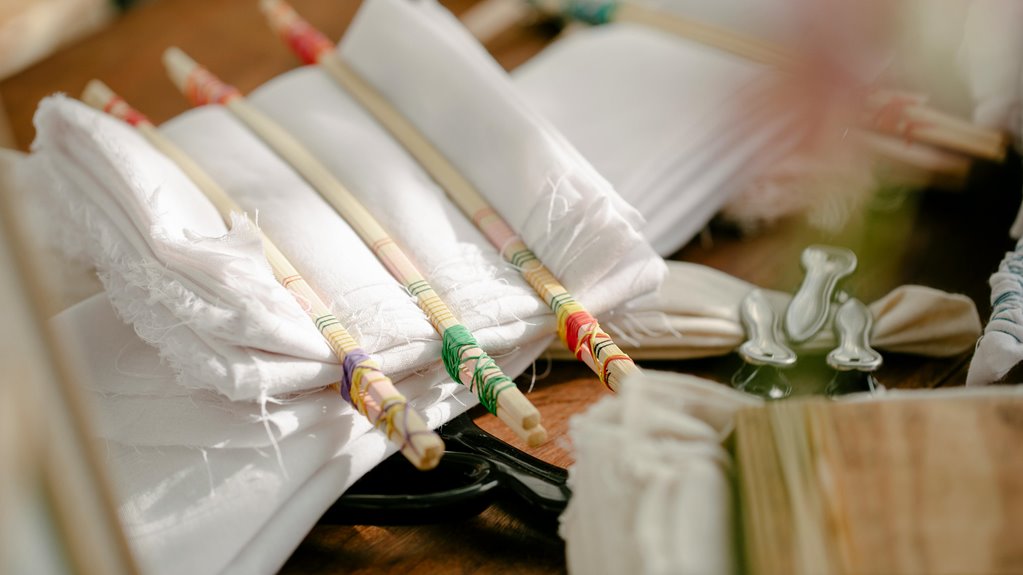
If you want to create striking geometric patterns, Itajime Shibori is a centuries-old Japanese fold and clamp dyeing technique to try. You fold the fabric precisely, secure it tightly between wooden shapes or clamps, then dip it in dye to resist color where clamped. Natural fibers like cotton or silk work best for crisp designs. Mastering folding methods and clamp pressure helps you achieve balanced, symmetrical patterns. Keep exploring, and you’ll discover tips for consistent results and creative uses.
Key Takeaways
- Itajime Shibori is a traditional Japanese dyeing method using folded fabric clamped between shaped blocks for geometric patterns.
- Pre-wash natural fiber fabrics like cotton or silk, then fold precisely using half, quarter, accordion, or triangle folds for symmetrical designs.
- Secure fabric folds tightly with smooth wooden clamps or blocks to resist dye and create crisp, balanced patterns.
- Use dark or multiple dye colors, dipping fabric steadily to ensure even saturation and avoid bleeding for sharp contrast.
- Mastering fold consistency, clamp pressure, and dye timing is crucial to achieving vibrant, symmetrical Itajime Shibori designs.
Origins and Cultural Significance of Itajime Shibori
Although Itajime Shibori originated centuries ago in Japan, its unique folding and clamping techniques still captivate artisans and enthusiasts today.
When you explore this craft, you tap into a tradition deeply rooted in Japanese culture, where fabric dyeing served both practical and artistic purposes. You’ll find that Itajime’s geometric patterns reflect the precision and balance valued in Japanese aesthetics.
As you fold and clamp your fabric, you’re not just creating art; you’re participating in a centuries-old ritual that honors craftsmanship and patience. This method was often used to decorate kimono fabrics, symbolizing status and personal expression.
Essential Materials and Tools for Itajime Dyeing
To get started with Itajime Shibori, you’ll need to choose the right fabric, like cotton or silk, that absorbs dye well.
You’ll also use folding tools such as wooden blocks or clamps to create the signature patterns.
Finally, selecting the proper dye type will guarantee your designs come out vibrant and lasting.
Fabric Choices
Choosing the right fabric is essential for achieving vibrant and lasting results in Itajime Shibori dyeing. Natural fibers like cotton, silk, linen, and hemp soak up dye better than synthetic materials, giving you richer colors and sharper patterns.
Cotton is a popular choice because it’s affordable and easy to work with, while silk offers a luxurious sheen and smooth texture. Linen and hemp provide a rustic, textured finish that adds character to your designs.
Make sure your fabric is pre-washed to remove sizing or finishes that might resist the dye. Avoid tightly woven or synthetic fabrics since they won’t absorb dye evenly.
Selecting a fabric with a medium weight helps it hold folds and clamps securely, ensuring crisp, well-defined patterns for your Itajime Shibori projects.
Folding Tools
Once you’ve selected the perfect fabric, the next step is gathering the right folding tools to shape your Itajime Shibori patterns.
You’ll need flat boards or wooden blocks to clamp your folded fabric between. These boards come in various sizes, so pick ones that fit your design scale.
You’ll also want strong clamps or heavy-duty clips to press the fabric tightly, ensuring the dye doesn’t seep into folded sections.
A smooth, clean surface for folding is essential, so use a table or board that’s easy to work on. Some artists use rulers or straight edges to help create precise folds.
Having these basic tools ready lets you control the shapes and resist areas effectively, setting the stage for striking geometric patterns in your dyeing process.
Dye Types
Several dye options work well for Itajime Shibori, each bringing unique effects to your fabric.
Fiber-reactive dyes are popular because they bond chemically with natural fibers, giving you vibrant, long-lasting colors. If you want softer hues or work on synthetic fabrics, acid dyes are a great choice, especially for silk or wool.
For a more traditional approach, natural dyes extracted from plants or minerals provide earthy tones and subtle variations, perfect for an organic look. You’ll also find vat dyes useful when aiming for deep, rich colors like indigo, which is historically linked to Shibori.
Choose your dye based on fabric type, desired colorfastness, and the effect you want to achieve. Remember, proper preparation and mixing are essential to get consistent, beautiful results.
Preparing Fabric for the Fold and Clamp Technique
Before you start folding and clamping, choose fabric that absorbs dye well, like cotton or silk.
Make sure to pre-wash and dry your fabric to remove any sizing or impurities.
Then, mark your folding patterns carefully to achieve the designs you want.
Selecting Suitable Fabric Types
Choosing the right fabric is essential when preparing for the Itajime Shibori fold and clamp technique. The fabric’s ability to absorb dye and hold crisp folds directly impacts your final design.
Here’s what you should consider:
- Natural fibers like cotton, linen, and silk work best because they absorb dye evenly.
- Medium-weight fabrics offer the perfect balance for folding and clamping without tearing or slipping.
- Avoid synthetic blends since they resist dye and may result in uneven patterns.
- Choose fabrics with a smooth surface for clearer, sharper patterns.
Pre-washing and Drying Steps
Two key steps—pre-washing and drying—prepare your fabric to absorb dye evenly and hold sharp folds during the Itajime Shibori process.
Start by washing your fabric in warm water with a mild detergent to remove any sizing, oils, or residues that could block dye absorption. Rinse thoroughly to avoid soap buildup, which might cause uneven coloring.
After washing, avoid wringing the fabric; instead, gently squeeze out excess water. Then, let your fabric air dry completely.
Drying guarantees the fabric regains its natural texture, making it easier to fold precisely and clamp tightly. Skipping these steps risks dull colors and blurred patterns, so take this preparation seriously to achieve crisp, vibrant results in your fold and clamp dyeing.
Marking and Folding Patterns
Once your fabric is clean and dry, you’re ready to start marking and folding patterns for the Itajime Shibori technique. This step is essential for creating sharp, geometric designs.
Begin by choosing your pattern and marking it lightly on the fabric with a washable pencil or fabric marker. Then, fold the fabric carefully along these lines.
Follow these steps to prepare your fabric:
- Select a simple geometric pattern to start.
- Use a ruler to mark precise lines on the fabric.
- Fold the fabric accordion-style or into triangles, depending on your design.
- Secure the folds tightly to guarantee crisp dye lines.
Taking time here sets the foundation for stunning, symmetrical Itajime patterns.
Step-by-Step Guide to Folding Fabrics in Itajime Shibori
Before you start dyeing, you’ll need to fold your fabric carefully to create the signature geometric patterns of Itajime Shibori.
Begin by laying your fabric flat and smoothing out wrinkles. Fold it in half lengthwise, then fold it again widthwise to form a smaller rectangle or square.
Next, fold the fabric accordion-style, creating even pleats about an inch wide. You can also fold it into triangles by folding the fabric diagonally, then folding the resulting triangle repeatedly until compact.
Make certain each fold is sharp and even to guarantee crisp patterns. Keep your folds tight, as loose fabric won’t resist dye effectively.
Once folded, your fabric is ready for clamping, which will preserve these shapes during the dyeing process.
Selecting and Using Clamps and Wooden Shapes
Choosing the right clamps and wooden shapes plays an essential role in achieving the distinct patterns of Itajime Shibori. You’ll want to select tools that firmly press your folded fabric to resist dye in specific areas, creating those signature geometric designs.
Here’s how to choose and use them effectively:
- Pick durable wooden shapes like squares, triangles, or circles to form the base pattern.
- Use strong clamps or wedges to hold the shapes tightly against the fabric.
- Ensure the wood is smooth to avoid damaging the fabric during clamping.
- Match the size of clamps to your fabric folds so pressure is even and consistent.
Dyeing Process and Color Considerations
After securing your fabric with the right clamps and wooden shapes, you’ll move on to the dyeing process, where color choices and application techniques bring your design to life. Choose colors that contrast well to highlight the folded patterns. Remember, darker dyes create bold imprints, while lighter shades offer subtle effects. Dip your fabric steadily to guarantee even saturation, and avoid over-dyeing to keep crisp lines.
| Color Type | Effect on Fabric | Tips |
|---|---|---|
| Dark | Bold, sharp lines | Use for strong contrast |
| Light | Soft, muted look | Layer for depth |
| Multiple | Vibrant, varied | Apply in stages to blend |
Techniques for Creating Symmetrical Patterns
To create symmetrical patterns in Itajime Shibori, you’ll need to master specific folding techniques that control how the dye reaches the fabric.
Choosing the right clamps is essential since they affect the pressure and design outcome.
Understanding pattern symmetry principles will help you predict the final look before you start dyeing.
Folding Methods Explained
While mastering itajime shibori, you’ll find that folding plays an essential role in shaping the symmetrical patterns that define this dyeing technique.
How you fold your fabric directly influences the final design’s complexity and balance. Here are four key folding methods to experiment with:
- Half Fold – Fold the fabric in half to create simple, bold mirror images.
- Quarter Fold – Fold in half twice to generate intricate, repeating motifs.
- Accordion Fold – Fold back and forth like a fan for evenly spaced patterns.
- Triangle Fold – Fold diagonally to produce dynamic, angular designs.
Each fold compresses the fabric differently, controlling how dye penetrates and where it resists.
Clamp Selection Tips
Because clamps determine how tightly your fabric is compressed, choosing the right ones is essential for achieving crisp, symmetrical patterns in itajime shibori.
Opt for clamps that apply even pressure across the fabric to prevent dye bleed and maintain sharp lines. Wooden clamps or flat boards with strong clips work well, as they hold folded fabric firmly without slipping.
Avoid clamps with uneven edges or those that can damage delicate fibers. When selecting clamps, consider their size relative to your folded fabric—too large, and the pressure may be uneven; too small, and they won’t hold securely.
Test different clamp types to see which produces the cleanest patterns with your specific fabric and folding method. Consistent pressure leads to better pattern definition every time.
Pattern Symmetry Principles
Selecting the right clamps sets the stage for achieving symmetry in your itajime shibori designs.
Symmetry comes from precise folding and consistent clamping, ensuring dye resists evenly. To create balanced patterns, you need to master these principles:
- Fold your fabric evenly—mirror each side carefully to align patterns.
- Use clamps that apply uniform pressure to prevent dye bleeding.
- Plan your folds according to the desired symmetry type: reflection, rotation, or translation.
- Test small fabric pieces first to observe how folds and clamps influence pattern repetition.
Tips for Achieving Consistent Results
To achieve consistent results with Itajime Shibori dyeing, you’ll need to control several key factors throughout the process.
Start by folding your fabric precisely and securing it firmly with clamps or wooden shapes to guarantee the dye resists evenly. Use the same folding pattern and clamp pressure every time to maintain repeatable designs.
Prepare your dye bath with consistent concentration and temperature, as variations can affect color intensity. Always submerge the fabric for the same duration to avoid uneven dyeing.
Rinse and dry the fabric under similar conditions to prevent color bleeding or distortion.
Finally, keep detailed notes of your methods and materials so you can replicate successful results and refine your technique over time. Consistency comes from careful attention to every step.
Common Mistakes and How to Avoid Them
Even the most experienced artists can run into challenges with Itajime Shibori dyeing if they overlook key details.
Mastering Itajime Shibori requires attention to detail to avoid common dyeing challenges.
To help you avoid common pitfalls, keep these tips in mind:
- Improper folding: Make sure your fabric is folded evenly to create consistent patterns.
- Loose clamps: Tighten clamps firmly to prevent dye from seeping in unwanted areas.
- Over or under dyeing: Monitor dye time carefully; too short results in faint patterns, too long causes bleeding.
- Using the wrong fabric: Choose natural fibers like cotton or silk for better dye absorption and clearer designs.
Creative Applications and Modern Interpretations of Itajime Shibori
Mastering the basics of Itajime Shibori sets the stage for exploring its creative possibilities. You can experiment with unconventional materials for clamps, like textured wood or metal, to create unique patterns.
Don’t hesitate to combine Itajime with other Shibori techniques, layering effects for depth and complexity. Modern designers incorporate Itajime into fashion, home décor, and even art installations, pushing traditional boundaries.
You might also play with color by using multiple dye baths or resist agents, adding bold contrasts or subtle gradients. Digital tools help you visualize patterns before dyeing, making the process more precise.
Frequently Asked Questions
How Do I Safely Dispose of Leftover Dye Chemicals?
You shouldn’t pour leftover dye chemicals down the drain. Instead, check local regulations for hazardous waste disposal, store them safely in labeled containers, and take them to a designated collection site to protect the environment and yourself.
Can Itajime Shibori Be Done on Synthetic Fabrics?
You can try Itajime Shibori on synthetic fabrics, but results vary since synthetics don’t absorb dye like natural fibers. You’ll want to use dyes formulated for synthetics and experiment to get the best effect.
What Is the Best Way to Wash Itajime Shibori Fabrics After Dyeing?
You’ll love scrubbing that vibrant fabric—just kidding! Gently rinse it in cold water until the water runs clear, then air dry away from direct sunlight to keep those colors popping and your masterpiece intact.
How Long Does the Dye Typically Take to Set in Itajime Shibori?
You’ll usually need to let the dye set for about 30 minutes to an hour, depending on the fabric and dye type. To guarantee vibrant colors, keep it damp and avoid rushing the process.
Are There Any Environmental Concerns With the Dyes Used in Itajime Shibori?
You know, “one man’s trash is another man’s treasure.” You should watch out for synthetic dyes—they can harm waterways. Opt for natural, eco-friendly dyes to keep your craft both beautiful and environmentally safe.