
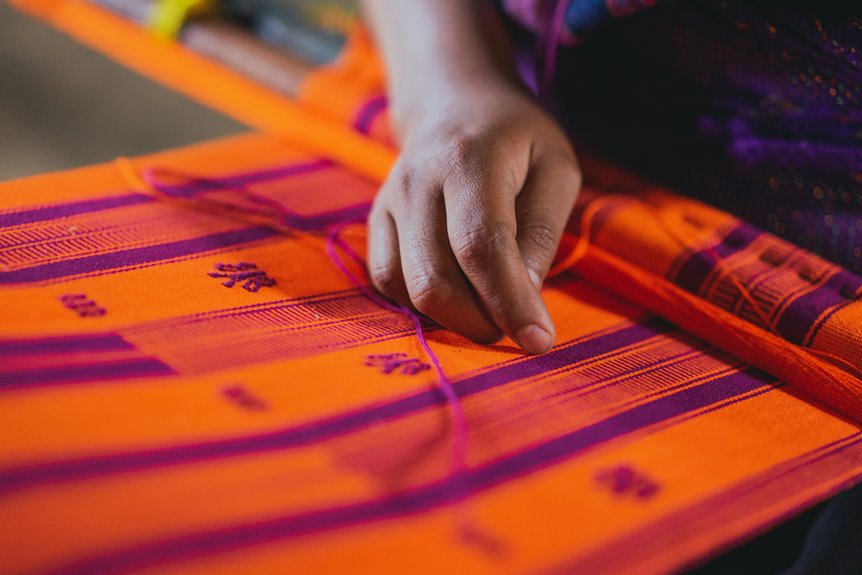
Kumo Shibori is a traditional Japanese resist dyeing technique where you fold fabric into tight pleats and bind them to create intricate spiderweb-like patterns. Using natural fabrics like silk or cotton, you’ll carefully pleat, align, and tightly bind with thread before dyeing. This method requires precision and patience to achieve clear designs and vibrant contrasts. By mastering these steps, you can explore how different patterns and color blends bring this centuries-old art to life and discover ways to preserve your work.
Key Takeaways
- Kumo Shibori is a traditional Japanese resist dyeing technique involving precise pleating and binding of fabric to create spider web-like patterns.
- The process starts by folding fabric into tight, even pleats, typically in an accordion style for consistent pattern foundation.
- Strong thread or thin cords are tightly wrapped around the pleated fabric to resist dye penetration, forming intricate designs.
- Patterns often include geometric shapes and nature-inspired motifs, achieved through careful pleating, binding, and dye application.
- Proper care involves gentle hand washing, avoiding wringing, drying in shade, and storing in breathable materials to preserve the pleats and colors.
Origins and Cultural Significance of Kumo Shibori
Although you might be familiar with shibori as a general dyeing method, Kumo Shibori stands out for its intricate patterns and deep cultural roots.
Originating in Japan during the Edo period, Kumo Shibori reflects centuries of craftsmanship and artistic expression. The technique’s name, “Kumo,” means spider, hinting at the web-like designs created by carefully pleating and binding fabric.
When you practice Kumo Shibori, you’re connecting with a tradition that symbolizes patience, precision, and harmony with nature. This art form was often used to decorate kimonos, indicating status and taste.
Materials and Tools Needed for Kumo Shibori
Mastering Kumo Shibori requires a few essential materials and tools that help you create its signature spiderweb patterns.
First, you’ll need a piece of natural fabric like silk or cotton, as these absorb dye best. Next, gather strong thread or thin cord to bind the fabric tightly; nylon or polyester threads work well because they resist dye penetration.
Start with natural fabrics like silk or cotton and bind tightly using nylon or polyester threads for best dye results.
You’ll also want a set of fine needles or small pins to secure pleats and folds. Additionally, a pair of sharp scissors will help you trim threads cleanly.
Prepare a dye bath with your chosen colors and have rubber gloves ready to protect your hands.
Finally, a flat surface or board will assist you in folding and binding efficiently, ensuring crisp, detailed designs.
Step-by-Step Guide to the Pleating Process
Start by folding your fabric into tight, even pleats that form the foundation of the Kumo Shibori pattern. Lay your fabric flat, then pinch and fold it accordion-style, making certain each pleat aligns neatly.
Use a ruler or your fingers to maintain consistent widths for uniform dye patterns. After pleating, compress the folds firmly to keep them stable. Next, smooth out any wrinkles or uneven sections to guarantee the dye penetrates correctly.
Work slowly and methodically, checking that the pleats stay tight throughout. By carefully preparing your fabric this way, you set the stage for the distinct radiating designs characteristic of Kumo Shibori.
This precise pleating is key—you’ll see how this pattern emerges after dyeing, thanks to your careful folding.
Techniques for Binding and Securing Fabric
Secure your pleated fabric tightly to preserve the intricate folds that create Kumo Shibori’s signature patterns.
Begin by aligning your pleats carefully, then use strong thread or cotton cords to bind the fabric at regular intervals. Wrap the binding material firmly around each pleated section, knotting securely to prevent slipping during dyeing.
You can also use small clamps or wooden blocks to maintain tension on the fabric. Avoid overly tight bindings that might distort the pleats or damage the fibers.
Consistency is key—ensure each binding is equally tight to achieve uniform resist patterns.
Choosing the Right Dye for Kumo Shibori
When selecting dye for Kumo Shibori, you’ll want to choose one that highlights the delicate patterns created by your bindings. Fiber-reactive dyes work best, as they bond well with cotton and natural fibers, ensuring vibrant, long-lasting colors.
Avoid dyes that bleed excessively, which can blur your crisp designs. Consider the intensity of the color; lighter shades reveal subtle gradations, while deeper hues create bold contrasts.
You’ll also want to test your dye on fabric scraps to see how it interacts with your specific material and binding tension. Finally, opt for dyes that are easy to work with and wash out cleanly to maintain the integrity of your resist areas.
Choosing the right dye will make your Kumo Shibori patterns truly stand out.
Common Patterns and Designs in Kumo Shibori
You’ll find that classic Kumo motifs form the foundation of many beautiful designs in Kumo Shibori.
Geometric patterns add structure and variety, while nature-inspired themes bring organic elegance to your work.
Let’s explore how these patterns shape your creative possibilities.
Classic Kumo Motifs
Patterns define the essence of Kumo Shibori, and classic motifs showcase the art’s timeless appeal.
When you explore these traditional designs, you’ll find they connect you directly to centuries of craftsmanship. Each motif carries meaning and reflects nature’s beauty through exquisite pleating and binding.
You’ll often encounter these classic Kumo patterns:
- Spider Web: Radiating lines resembling a web’s delicate structure.
- Tortoise Shell: Interlocking hexagonal shapes symbolizing longevity.
- Peony: Rounded floral shapes with soft, flowing curves.
- Dragonfly Wings: Thin, elongated patterns with subtle veining.
- Clouds: Swirling, circular formations that evoke movement.
Geometric Pattern Variations
Beyond the classic motifs, Kumo Shibori embraces a variety of geometric pattern variations that bring a fresh dimension to this traditional art.
You’ll find patterns like concentric circles, overlapping grids, and diamond shapes created by folding and binding fabric strategically. These designs rely on precise pleating and tight binding to control how dye penetrates the cloth, resulting in sharp, repeating shapes.
You can experiment with different folding angles or bind placements to achieve unique effects, from crisp linear patterns to more dynamic, tessellated forms.
By mastering these geometric variations, you’ll add versatility to your Kumo Shibori work, moving beyond familiar swirls and rings into bold, abstract arrangements that highlight the interplay of symmetry and contrast.
This approach keeps the technique vibrant and visually striking.
Nature-Inspired Designs
Although Kumo Shibori often emphasizes geometric precision, it also draws deep inspiration from nature’s organic forms.
When you create nature-inspired designs, you tap into patterns that mimic leaves, waves, and more, giving your fabric a lively, natural feel. These designs break away from strict lines and introduce flowing, dynamic shapes.
Here are common nature-inspired patterns you can explore in Kumo Shibori:
- Leaf veins and fern fronds
- Rippled water and gentle waves
- Blossoms and floral motifs
- Tree bark textures
- Cloud formations and swirling wind
Tips for Achieving Symmetry and Precision
When you focus on maintaining consistent tension and precise folding, you’ll find it much easier to create symmetrical designs in the Kumo Shibori technique.
Start by carefully measuring and marking your fabric before folding to guarantee even pleats. Use tools like rulers or fabric clips to keep folds aligned.
Apply uniform tension when binding to avoid uneven resist patterns. Work slowly and methodically, checking your progress frequently.
Symmetry often depends on repeating exact folds on each side, so practice the folding sequence until it feels natural.
Also, make certain your bindings are tight but not overly so, to prevent fabric distortion.
Combining Kumo Shibori With Other Resist Methods
If you want to expand the creative possibilities of Kumo Shibori, combining it with other resist methods can add depth and complexity to your designs.
By layering techniques, you create unique textures and patterns that stand out. Here are some ideas to try:
- Use it alongside Arashi Shibori for diagonal pleats mixed with circular patterns.
- Combine with Itajime Shibori to incorporate geometric shapes.
- Add stencil resist to highlight specific areas with crisp designs.
- Apply wax resist for sharper, more detailed motifs.
- Blend with tie-dye techniques to introduce vibrant color shifts.
Experimenting with these combinations enables you to push the boundaries of traditional Kumo Shibori and develop your own signature style.
Contemporary Artists Reviving Kumo Shibori
Exploring combinations of Kumo Shibori with other resist methods opens up new creative avenues, but the technique’s revival owes much to contemporary artists who are reinterpreting its traditional forms. You’ll find modern artisans blending classic pleating with innovative dye patterns, pushing boundaries while honoring heritage. These artists often exhibit in galleries, teach workshops, and use social media to share their evolving styles. Their work inspires you to experiment with Kumo Shibori in fresh ways.
| Artist Name | Style Focus | Contribution |
|---|---|---|
| Aiko Tanaka | Geometric patterns | Modernized binding techniques |
| Kenji Mori | Layered textures | Combining Kumo with shibori |
| Maya Fujimoto | Color gradients | Experimenting with indigo |
| Taro Suzuki | Nature-inspired | Organic pleating methods |
| Hana Yamada | Mixed media | Integrating Kumo with print |
Care and Preservation of Kumo Shibori Textiles
Because Kumo Shibori textiles involve delicate folds and intricate dye patterns, you’ll need to handle them with care to maintain their beauty.
Kumo Shibori textiles require gentle handling to preserve their delicate folds and intricate dye patterns.
To preserve your Kumo Shibori pieces, follow these essential tips:
- Always hand wash gently in cold water with mild detergent.
- Avoid wringing or twisting to prevent distortion of pleats.
- Dry flat in shade to protect colors from fading.
- Store in breathable cotton or muslin bags, away from direct sunlight.
- Iron on low heat with a cloth barrier if necessary, avoiding direct contact with the fabric.
Frequently Asked Questions
Can Kumo Shibori Be Done on Synthetic Fabrics?
You can do kumo shibori on synthetic fabrics, but results might differ from natural fibers. Synthetic materials may resist dye differently, so you’ll need to experiment with dye types and techniques to achieve the best patterns and colors.
How Long Does the Dyeing Process Typically Take?
The dyeing process usually takes about 30 minutes to an hour, depending on the fabric and dye type. You’ll want to monitor the color intensity and adjust time to achieve the perfect shade.
Is Kumo Shibori Suitable for Beginners?
You’ll find kumo shibori quite suitable as a beginner because it involves simple pleating and binding steps. With patience and practice, you can create beautiful patterns without needing advanced skills or complicated tools.
What Are the Environmental Impacts of Kumo Shibori Dyes?
You might find that the dyes used can vary in environmental impact. Natural dyes are eco-friendly, while synthetic ones may release harmful chemicals. Choosing sustainable, plant-based dyes helps you reduce pollution and protect ecosystems.
Can Kumo Shibori Patterns Be Digitally Replicated?
You might think you can perfectly replicate kumo shibori patterns digitally, but the subtle textures and organic variations defy exact reproduction. Digital tools simulate the look, yet can’t capture its unique handcrafted essence fully.