
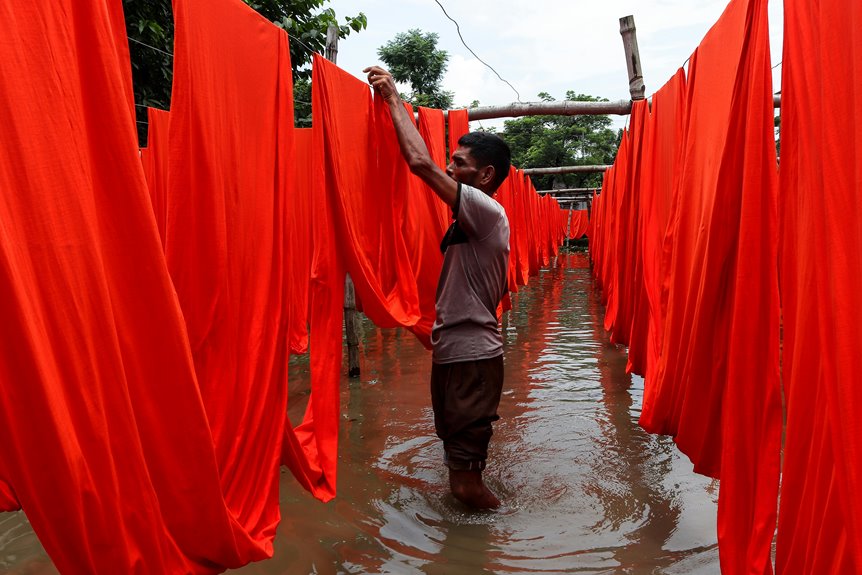
To source high-quality cotton fabric from Bangladesh, start by defining your specific fabric needs, such as weight and fiber content. Research suppliers with strong reputations and verified certifications like OEKO-TEX or GOTS to guarantee quality and ethical standards. Request fabric samples to assess texture and color consistency before negotiating pricing and payment terms. Consider efficient shipping options and compliance with international regulations. Building strong supplier relationships secures better deals and reliability—explore these steps further to optimize your sourcing process.
Key Takeaways
- Define fabric requirements including fiber content, weight, and certifications to match your product’s quality and compliance needs.
- Research and vet Bangladeshi suppliers based on reputation, production capacity, and compliance with international standards.
- Verify supplier credentials and certifications such as OEKO-TEX, GOTS, or ISO to ensure ethical and quality fabric sourcing.
- Request and assess fabric samples carefully for texture, color consistency, and durability before finalizing orders and negotiating terms.
- Plan shipping logistics using cost-effective freight options and maintain clear communication to build long-term supplier relationships.
Understanding Bangladesh’s Cotton Fabric Industry
Bangladesh’s cotton fabric industry plays an essential role in the global textile market. When you explore this industry, you’ll find it’s driven by skilled artisans and modern manufacturing techniques.
The country benefits from an abundant supply of raw cotton, enabling consistent production of quality fabrics. You’ll notice that Bangladesh balances traditional craftsmanship with advanced technology, ensuring fabrics meet international standards.
The industry’s infrastructure supports large-scale orders and quick turnaround times, which can be a major advantage for your sourcing needs. Plus, the government actively promotes textile exports, offering incentives that help keep costs competitive.
Identifying Your Fabric Requirements
How do you determine the exact fabric qualities that suit your project? Start by defining your end product’s purpose—whether it’s apparel, home textiles, or industrial use.
Consider the fabric’s weight, texture, and weave to match comfort, durability, and appearance needs. Decide on fiber content specifics like 100% cotton or cotton blends based on breathability and strength requirements.
Don’t forget colorfastness and shrinkage factors, especially if your design demands vibrant hues or precise sizing. Assess any certifications you need, such as organic or fair-trade labels, to align with your brand values.
Researching Potential Suppliers
Before you commit to a supplier, you need to thoroughly research their reputation, production capabilities, and compliance with quality standards.
Start by exploring online directories and trade platforms focused on Bangladesh’s textile sector. Look for suppliers with solid experience producing cotton fabric similar to your requirements. Check reviews and feedback from previous buyers to gauge reliability and consistency.
Evaluate their production scale to ascertain they can meet your order volume and deadlines. Consider their technological capabilities and quality control processes to avoid issues down the line.
Also, assess how responsive and transparent they’re during initial communications. This groundwork helps you shortlist suppliers who align with your needs, minimizing risks and setting the stage for a successful partnership focused on high-quality cotton fabric sourcing.
Verifying Supplier Credentials and Certifications
Why does verifying supplier credentials and certifications matter so much when sourcing cotton fabric?
Because these credentials confirm the supplier’s legitimacy and commitment to quality standards. When you check certifications like OEKO-TEX, GOTS, or ISO, you guarantee the fabric meets safety, environmental, and ethical requirements. This protects your brand from substandard materials and reputational risks.
Additionally, verifying credentials helps you avoid fraud and unreliable suppliers, saving time and money. Always ask for official documentation and independently verify them through certifying bodies. Don’t rely solely on claims or websites.
Requesting Fabric Samples for Quality Assessment
When sourcing cotton fabric from Bangladesh, you’ll want to request samples directly from suppliers to check the material firsthand.
Pay close attention to the fabric’s texture to guarantee it meets your quality standards.
Also, analyze the color consistency across samples to avoid any surprises in your final product.
Sample Request Process
Although sourcing from Bangladesh offers access to exceptional cotton fabric, you’ll want to request samples to evaluate quality firsthand.
Start by identifying reliable suppliers and clearly communicate your fabric specifications—such as thread count, weave, and weight.
Reach out via email or supplier platforms, specifying the quantity and types of samples you need. Expect some suppliers to charge a nominal fee or require shipping costs upfront.
Once you receive samples, inspect them promptly to ascertain they match your requirements. Keep communication open for any questions or adjustments.
Remember, requesting samples early helps you avoid costly mistakes and builds trust with your supplier.
Evaluating Fabric Texture
Once you receive your cotton fabric samples from Bangladesh, the next step is evaluating their texture to confirm they meet your standards.
Start by feeling the fabric—check for softness, smoothness, and any irregularities. Run your fingers along the weave to gauge tightness and uniformity, which indicate durability.
Stretch the fabric gently to test its elasticity and recovery. Pay attention to weight and thickness, as these affect the fabric’s suitability for your intended use.
Don’t hesitate to compare multiple samples side by side to identify subtle differences. If possible, perform a pinch test to check for pilling potential.
Analyzing Color Consistency
How can you guarantee your cotton fabric from Bangladesh maintains consistent color throughout your order? Start by requesting fabric samples before finalizing any deal.
These samples let you assess color accuracy and verify it matches your design specifications. When you receive the samples, compare them under natural light to avoid misleading hues caused by artificial lighting.
Also, check for colorfastness by washing a small sample to see if the dye bleeds or fades. Communicate clearly with your supplier about your color standards and ask about their dyeing processes to reduce variations.
Regularly requesting samples for large orders helps catch inconsistencies early, saving you from costly mistakes. This hands-on approach verifies your final product meets your expectations perfectly.
Assessing Fabric Quality and Specifications
You’ll want to check the thread count carefully, as it directly affects the fabric’s durability and feel.
Next, analyze the fabric weight to guarantee it matches your intended use and quality standards.
Finally, examine the weave and finish, since they impact texture and overall appearance.
Thread Count Importance
Although many factors influence fabric quality, thread count remains one of the most critical specifications you should evaluate when sourcing cotton from Bangladesh.
Thread count measures the number of threads woven per square inch of fabric—both horizontally (weft) and vertically (warp). A higher thread count generally means a denser, smoother, and more durable fabric, which often translates into better comfort and longevity.
However, don’t assume higher thread count always equals superior quality; the type of cotton and weaving technique also matter.
When you assess thread count, balance it with your intended use—lighter counts suit breathable summer fabrics, while tighter weaves provide strength for heavier applications.
Fabric Weight Analysis
Thread count gives you insight into fabric density, but fabric weight reveals a different aspect of quality that’s just as important.
Fabric weight, measured in grams per square meter (GSM) or ounces per square yard, indicates the heaviness and thickness of the cotton fabric. When sourcing from Bangladesh, understanding fabric weight helps you match the material to your product’s purpose—lighter weights suit summer wear, while heavier weights are better for durable items like denim or upholstery.
You should request precise fabric weight specifications from suppliers to guarantee consistency.
Pay attention to variations, as inconsistent weight can affect drape and durability. Knowing fabric weight alongside thread count offers a fuller picture of quality, helping you make informed sourcing decisions.
This way, you assure the fabric meets your performance and feel expectations without guesswork.
Weave and Finish
Examine the weave and finish carefully to determine the true quality of cotton fabric from Bangladesh. The weave affects durability, texture, and appearance, so check for tightness and uniformity. A consistent weave means the fabric will hold up well over time.
Next, evaluate the finish—the surface treatment that enhances feel and look. A quality finish should feel smooth without residue or stiffness. Avoid fabrics with uneven dye or rough patches, as these indicate poor finishing.
Also, consider finishes like mercerization, which improve strength and luster. When sourcing, ask suppliers for detailed specifications on weave type and finishing processes to guarantee you get fabric that meets your standards.
Your attention to these details ensures you source superior cotton fabric that performs beautifully.
Negotiating Pricing and Payment Terms
When you negotiate pricing and payment terms, you set the foundation for a successful partnership with your cotton fabric supplier. Be clear about your budget, order volume, and payment preferences to find common ground. Don’t hesitate to ask for discounts on bulk orders or flexible payment schedules. Clarify penalties or fees for late payments upfront to avoid surprises. Here’s a simple comparison to guide your negotiation:
| Pricing Aspect | Negotiation Tip | Common Terms |
|---|---|---|
| Unit Price | Request bulk discounts | $2.00 – $2.50 per yard |
| Payment Schedule | Propose staged payments | 30% upfront, 70% on delivery |
| Penalties | Clarify late fees | 2% per month late fee |
Use this table to stay organized and negotiate confidently.
Understanding Shipping and Logistics Options
Since reliable shipping and logistics play an essential role in sourcing cotton fabric from Bangladesh, you need to understand your options to secure timely and cost-effective delivery.
You can choose between sea freight, air freight, and courier services, each varying in speed and cost. Sea freight is economical for large shipments but takes longer, while air freight is faster but more expensive, ideal for urgent orders or smaller quantities.
Consider working with experienced freight forwarders who handle customs clearance and documentation, reducing your workload and minimizing delays.
Also, evaluate port facilities and transit times from major Bangladeshi ports like Chittagong and Mongla.
Ensuring Compliance With International Standards
You need to understand global textile regulations to guarantee your cotton fabric meets international standards.
Check for key certifications that verify cotton quality and sustainability.
Also, make certain your imports and exports comply with all relevant rules to avoid delays or penalties.
Understanding Global Textile Regulations
Although maneuvering through global textile regulations can seem complex, understanding these standards is vital for sourcing high-quality cotton fabric from Bangladesh.
You need to familiarize yourself with key regulations like REACH in Europe or the CPSIA in the U.S., which set limits on harmful chemicals and guarantee product safety. Knowing these rules helps you avoid costly delays or rejections at customs.
Additionally, staying updated on labeling requirements and import restrictions protects your brand reputation and customer trust. By actively guaranteeing your suppliers comply with these international laws, you can confidently deliver fabrics that meet global market demands.
Don’t overlook the importance of documentation and traceability, as they’re essential for proving compliance during inspections and audits.
Certifications for Cotton Quality
Steering through global textile regulations sets the stage for understanding the certifications that validate cotton quality from Bangladesh.
When sourcing cotton fabric, you’ll want to look for internationally recognized certifications like OEKO-TEX Standard 100, which guarantees textiles are free from harmful substances.
Another key certification is GOTS (Global Organic Textile Standard), confirming organic production and environmental compliance.
Additionally, BCI (Better Cotton Initiative) promotes sustainable cotton farming practices, supporting both quality and ethical sourcing.
These certifications not only assure the cotton fabric meets safety and environmental standards but also enhance your brand’s credibility.
By insisting on certified suppliers, you guarantee your products comply with global quality benchmarks, helping you build trust with customers and partners worldwide.
Certifications act as your assurance for top-tier cotton fabric from Bangladesh.
Import and Export Compliance
When importing cotton fabric from Bangladesh, guaranteeing compliance with international import and export regulations is essential to avoid delays and penalties.
You need to familiarize yourself with customs documentation, tariff classifications, and import restrictions specific to both Bangladesh and your country. Make sure your supplier provides accurate certificates of origin and quality certifications that meet global standards like OEKO-TEX or GOTS.
Additionally, you must adhere to trade agreements and environmental regulations to maintain smooth operations. Working closely with reliable freight forwarders and customs brokers can help you navigate complex procedures efficiently.
Building Long-Term Relationships With Suppliers
Since reliable supply chains are essential, you’ll want to focus on building long-term relationships with your cotton fabric suppliers in Bangladesh.
Start by communicating clearly and regularly—transparency helps prevent misunderstandings. Show respect for their expertise and cultural norms, which fosters trust and cooperation. Consistently place orders and pay on time to demonstrate your commitment.
Visit suppliers when possible to strengthen personal connections and better understand their operations. Be open to feedback and willing to negotiate fairly, ensuring mutual benefits.
Long-term partnerships often lead to better pricing, priority production, and improved quality control. By investing in these relationships, you create a stable foundation that supports your business growth and helps you navigate challenges more smoothly in the competitive textile market.
Utilizing Trade Shows and Online Marketplaces
Building strong supplier relationships lays a solid groundwork, but expanding your sourcing options can boost your access to high-quality cotton fabric from Bangladesh.
Trade shows like Dhaka International Textile & Garment Machinery Exhibition offer a hands-on way to meet multiple suppliers, compare fabric samples, and negotiate deals directly. You’ll get insights into the latest fabric innovations and production capabilities.
Meanwhile, online marketplaces such as Alibaba, Fibre2Fashion, and Bangladeshi textile portals provide a convenient way to browse numerous suppliers, check certifications, and read reviews. Use these platforms to request samples and verify quality before committing.
Combining trade shows’ personal interaction with online marketplaces’ broad reach maximizes your chances of finding reliable suppliers and accessing top-quality cotton fabric efficiently and cost-effectively.
Frequently Asked Questions
What Are the Common Defects to Avoid in Cotton Fabric?
You’ll want to avoid defects like uneven dye, holes, slubs, and weak yarns. Also, watch for color bleeding, fabric shrinkage, and poor weaving, as these flaws can affect the durability and appearance of your cotton fabric.
How Does Bangladesh’S Climate Affect Cotton Fabric Quality?
You’ll find Bangladesh’s warm, humid climate boosts cotton’s fiber strength and softness, but excessive moisture can cause mold or mildew. So, you’ve got to guarantee proper drying and storage to maintain fabric quality.
Can I Customize Fabric Designs With Bangladeshi Suppliers?
Yes, you can customize fabric designs with Bangladeshi suppliers. They’re experienced in working with clients to create unique patterns, colors, and textures, ensuring your fabric meets specific design requirements and stands out in the market.
What Is the Typical Lead Time for Bulk Cotton Orders?
Ever wondered how long it takes to get your hands on bulk cotton orders? Typically, you’ll wait 3 to 6 weeks, depending on quantity and customization. You’ll want to plan ahead to avoid delays.
Are There Eco-Friendly Cotton Options Available in Bangladesh?
Yes, you can find eco-friendly cotton options in Bangladesh, like organic and Fair Trade cotton. Many suppliers focus on sustainable practices, so you’ll want to ask about certifications to guarantee the cotton meets your environmental standards.