
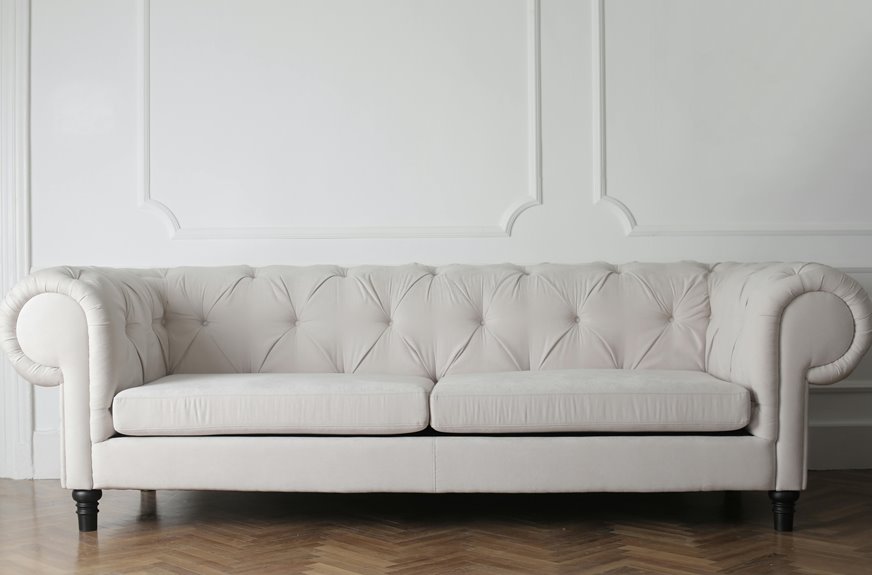
To restore your old leather sofa, first check for damage like cracks or tears and clean it gently using the right method for your leather type. Repair any scratches or holes with a leather repair kit, then apply a good leather conditioner to soften and nourish the material. Regular maintenance, like dusting and avoiding direct sunlight, will keep it looking fresh. If you want to bring your sofa back to life with expert tips, keep exploring these simple steps.
Key Takeaways
- Inspect the sofa for structural damage, leather cracks, tears, and stitching issues before starting restoration.
- Clean the leather gently using appropriate cleaners based on the leather type, then air dry naturally.
- Repair minor cracks and scratches with a leather repair kit and use backing fabric plus adhesive for tears.
- Apply a high-quality leather conditioner evenly and allow absorption to restore softness and prevent brittleness.
- Maintain the sofa by regular dusting, avoiding direct sunlight, cleaning spills promptly, and conditioning every 6-12 months.
Assessing the Condition of Your Leather Sofa
How do you know if your leather sofa is worth restoring? Start by examining the overall structure. Check for broken frames or sagging cushions—major damage may cost more to fix than replace.
Next, inspect the leather surface closely. Look for cracks, tears, or deep stains. Minor scratches and faded color are usually fixable, but extensive damage might be a red flag.
Inspect leather carefully; minor scratches fade, but cracks and deep stains may signal costly damage.
Also, feel the leather; if it’s stiff or brittle, it may be too dried out to restore well. Don’t forget to check the seams and stitching for loose threads or rips.
Finally, consider the sofa’s sentimental or monetary value. If you love its style or it’s a quality piece, investing in restoration makes sense. Otherwise, it might be better to look for a new one.
Cleaning Techniques for Different Types of Leather
Since leather comes in various types, each requires a tailored cleaning approach to avoid damage.
For aniline leather, which is soft and porous, use a damp microfiber cloth with a mild soap solution. Avoid harsh chemicals that can strip its natural oils.
Semi-aniline leather is more durable; clean it with a gentle leather cleaner and a soft cloth, then wipe away residue with a damp cloth.
For pigmented or protected leather, you can use a slightly stronger cleaner but still avoid abrasive scrubbing. Always test your cleaner on a hidden spot first.
After cleaning, dry the leather with a soft towel and allow it to air dry naturally.
These steps will guarantee your sofa’s leather stays clean without losing its texture or finish.
Repairing Cracks, Tears, and Scratches
Address cracks, tears, and scratches promptly to prevent further damage to your leather sofa. Start by cleaning the affected area gently. Use a leather repair kit for small cracks and scratches—these kits often include filler compounds and colorants. For tears, apply a backing fabric beneath the damaged area, then use a leather adhesive to bond the tear. Always match the color carefully to blend repairs seamlessly.
| Damage Type | Recommended Repair Method |
|---|---|
| Small Cracks | Leather filler and colorant |
| Scratches | Leather repair kit |
| Tears | Backing fabric and adhesive |
| Deep Damage | Professional repair advised |
Taking immediate action helps maintain your sofa’s appearance and prevents worsening damage.
Conditioning and Nourishing the Leather
After fixing cracks, tears, and scratches, your leather sofa still needs regular care to stay supple and prevent drying out.
Conditioning your leather restores essential oils lost over time, keeping it soft and flexible. Choose a high-quality leather conditioner designed for your sofa’s finish.
Apply a small amount evenly using a soft cloth, working it gently into the leather with circular motions. Let it absorb for at least 20 minutes before buffing off any excess with a clean, dry cloth.
Avoid over-conditioning, which can cause buildup or attract dirt. Regular conditioning, every 6 to 12 months, will nourish the leather, protect against wear, and extend your sofa’s life.
Proper care guarantees your restored sofa maintains its rich texture and vibrant look.
Tips for Maintaining Your Restored Leather Sofa
Maintaining your restored leather sofa requires a few simple but consistent habits to keep it looking its best.
Regularly dust it with a soft cloth to prevent dirt buildup. Avoid placing your sofa in direct sunlight or near heat sources, as these can dry out and fade the leather.
Use a leather conditioner every 6 to 12 months to keep the leather supple and prevent cracks. Clean spills immediately with a damp cloth, but never soak the leather.
Rotate cushions regularly to guarantee even wear and maintain shape. Finally, avoid harsh chemicals or abrasive cleaners that can damage the finish.
Frequently Asked Questions
Can I Restore a Leather Sofa With Color Fading?
You can breathe new life into your leather sofa’s fading colors, like painting a sunset back into the sky. With the right dye and care, you’ll revive its vibrancy and make it shine again.
What Tools Do I Need for Leather Restoration?
You’ll need a soft cloth, leather cleaner, conditioner, repair kit, sponge, and leather dye. Also, keep a small brush handy for detailed work. These tools help you clean, repair, and restore your leather effectively.
Is It Safe to Use Homemade Cleaning Solutions?
You want safe, effective cleaning, but you don’t want damage or discoloration. Homemade solutions can work, but they might harm leather if too harsh. Always test first, use mild ingredients, and avoid soaking the leather.
How Long Does the Restoration Process Usually Take?
The restoration process usually takes between a few hours to a couple of days, depending on the sofa’s condition. You’ll spend time cleaning, conditioning, and drying, so be patient and let each step fully absorb.
Can I Restore Vegan or Faux Leather the Same Way?
You can restore vegan or faux leather, but you won’t use the same products as real leather. Focus on gentle cleaners and conditioners made for synthetic materials to avoid damage and keep it looking fresh and smooth.