
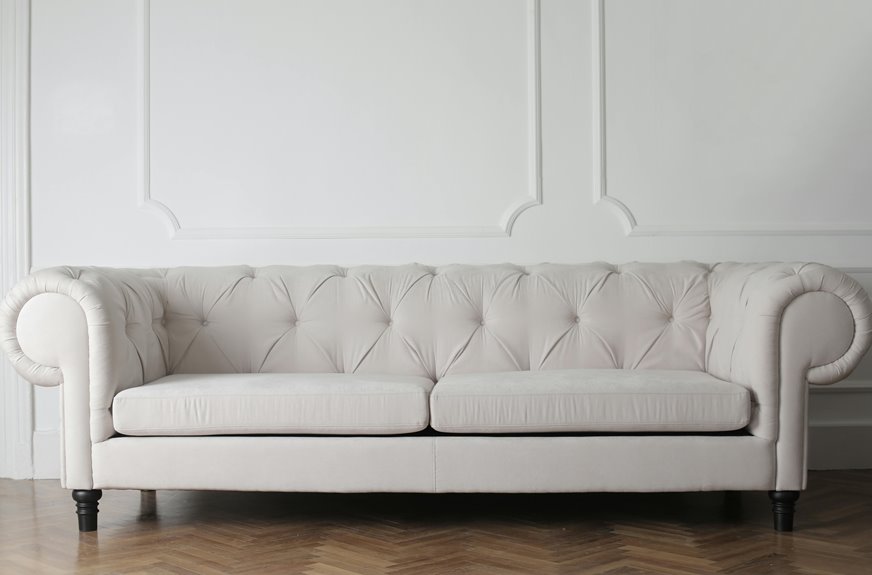
To repair worn and cracked leather sofa seats, first identify the damage type and gather a leather repair kit. Clean the area gently with a leather-safe cleaner, then condition it to soften the leather. For minor cracks, apply filler smoothly; for deeper tears, use adhesive and patches. Once dry, dye the area to match your sofa’s color and seal with a leather finish. Taking these steps carefully restores both durability and appearance. Keep exploring to guarantee a flawless restoration process.
Key Takeaways
- Inspect the leather for cracks, tears, and wear to determine repair needs and gather necessary tools and materials.
- Clean the sofa with a pH-balanced leather cleaner and allow it to dry thoroughly before repair.
- Use leather repair adhesive and filler to mend cracks or tears, smoothing and blending the area carefully.
- Apply matching leather dye in thin layers, letting each coat dry fully to ensure even color.
- Seal the repair with a leather finish and maintain the sofa with regular cleaning and conditioning.
Identifying the Type and Extent of Leather Damage
Before you begin any repairs, you need to identify the type and extent of the damage on your leather sofa seats.
Take a close look for common issues like scratches, cracks, tears, or fading. Run your hand gently over the surface to feel for stiffness or rough patches that might indicate drying or cracking.
Note whether the damage is superficial, affecting only the surface, or deeper, where the leather’s structure is compromised. Small scratches might only need minor touch-ups, but deep cracks or holes require more extensive work.
Also, check if the damage is isolated or spread across several areas. Understanding exactly what you’re dealing with helps you plan the right repair approach and avoid wasting time or materials on ineffective fixes.
Gathering Necessary Tools and Materials
To repair your leather sofa seats effectively, you’ll need a handful of essential tools and materials.
Having everything ready beforehand saves time and guarantees a smoother repair process. Here’s what you should gather:
- Leather repair kit – Includes patches, adhesive, and color compounds tailored for leather.
- Fine sandpaper or leather prep pad – Helps smooth damaged areas before applying repair compounds.
- Soft cloths and sponges – For applying solutions and cleaning around the repair site.
- Leather conditioner – Restores suppleness after repairs and helps blend the fixed spot with surrounding leather.
With these tools and materials on hand, you’ll be well-prepared to tackle cracks and wear, restoring your sofa’s appearance effectively.
Cleaning the Leather Surface Thoroughly
Before you start repairing, make sure to clean your leather sofa properly by choosing a cleaner that’s safe for leather.
Use gentle techniques like a soft cloth and avoid harsh scrubbing to prevent damage.
This careful cleaning will prepare the surface for a smooth repair.
Choosing the Right Cleaner
Although it might seem simple, choosing the right cleaner is vital for preserving your leather sofa’s appearance and durability.
Using harsh chemicals or unsuitable products can cause more damage, so you need to be selective. Here’s how to pick the best cleaner:
- Opt for pH-balanced cleaners specifically designed for leather.
- Avoid ammonia, bleach, or alcohol-based cleaners, which dry out leather.
- Look for products with natural ingredients like lanolin or beeswax to nourish the leather.
- Test the cleaner on a hidden area first to verify it doesn’t discolor or harm the surface.
Gentle Cleaning Techniques
Since leather is delicate, you’ll want to clean it gently to avoid damaging the surface.
Start by dusting off loose dirt with a soft, dry cloth. Then, dampen a microfiber cloth with a mild leather cleaner or a mixture of water and a small amount of gentle soap. Wring out excess moisture to prevent soaking the leather.
Wipe the sofa in small sections using circular motions, avoiding harsh scrubbing. After cleaning, use a dry cloth to remove any leftover moisture.
Be sure to test your cleaner on a hidden area first to verify it won’t discolor or harm the leather. Taking these gentle steps helps keep your sofa’s surface clean without causing further wear or cracks.
Conditioning the Leather Before Repair
Before you start repairing, you’ll want to choose the right conditioner to nourish your leather.
Make sure the surface is clean so the conditioner absorbs properly.
Then, apply it evenly to keep the leather soft and ready for repair.
Choosing the Right Conditioner
When you’re preparing to repair your leather sofa seats, choosing the right conditioner plays a crucial role in ensuring the leather stays supple and ready for restoration.
You want a product that nourishes without leaving residue or causing discoloration. Here’s how to pick the best one:
- Identify your leather type – Different leathers (aniline, semi-aniline, pigmented) require specific conditioners.
- Look for natural oils – Ingredients like mink oil or lanolin deeply moisturize without damaging fibers.
- Avoid silicone-based products – They can trap dirt and make future repairs harder.
- Test on a hidden spot – Always check for color change or adverse reactions before full application.
Choosing wisely sets the foundation for a smooth, long-lasting repair on your leather sofa seats.
Cleaning Before Conditioning
Choosing the right conditioner prepares your leather sofa seats for repair, but applying it on dirty leather can trap grime and reduce its effectiveness.
Before conditioning, start by vacuuming the sofa to remove loose dirt and dust from crevices. Next, use a damp, soft cloth with a mild leather cleaner or a mix of water and gentle soap to wipe down the surface. Avoid soaking the leather—too much moisture can damage it.
Focus on areas with visible dirt or oils, but be careful not to scrub harshly, as this can worsen cracks. Once cleaned, let the leather dry naturally in a well-ventilated space.
This thorough cleaning step guarantees the conditioner penetrates properly, setting a solid foundation for the repair process ahead.
Applying Conditioner Evenly
Applying conditioner evenly is crucial to restoring your leather sofa’s suppleness and preparing it for repair. Uneven application can lead to patchy color and inconsistent texture, making repairs more noticeable.
To apply conditioner properly, follow these steps:
- Use a soft, clean cloth to avoid scratching the leather.
- Pour a small amount of conditioner onto the cloth, not directly on the sofa.
- Apply the conditioner in circular motions, covering the entire surface evenly.
- Let the leather absorb the conditioner for 15-20 minutes, then buff gently with a dry cloth.
This method guarantees your leather stays nourished and ready for any patching or filling, extending your sofa’s life and enhancing its appearance.
Repairing Minor Cracks and Surface Wear
Although minor cracks and surface wear may seem insignificant, addressing them early prevents further damage and keeps your leather sofa looking fresh. Start by cleaning the area gently with a leather cleaner. Then, apply a leather filler or conditioner to soften and smooth the surface. Lightly buff the treated area with a soft cloth to blend it in. Regular maintenance helps prolong the sofa’s life.
| Step | Action |
|---|---|
| 1 | Clean with a leather cleaner |
| 2 | Apply leather filler or conditioner |
| 3 | Smooth with a soft cloth |
| 4 | Allow to dry completely |
| 5 | Buff gently to blend finish |
Follow these steps to maintain your sofa’s appearance and avoid worsening damage.
Fixing Deep Cracks and Tears in Leather
When you encounter deep cracks or tears in your leather sofa, quick and careful repair is essential to prevent further damage. Start by cleaning the area with a leather cleaner to remove dirt and oils.
Promptly addressing deep cracks or tears in leather sofas is crucial to avoid worsening damage.
Then, follow these steps:
- Trim any loose fibers around the tear carefully.
- Apply a leather repair adhesive beneath the crack or tear, pressing the edges together.
- Place a backing fabric under the leather if the tear is large, to support the repair.
- Allow the adhesive to dry completely before gently sanding the surface smooth.
These steps help restore the sofa’s structure and prevent the damage from worsening.
After the repair dries, you can move on to color restoration to blend the fix seamlessly.
Applying Leather Dye to Restore Color
Since repaired leather often loses its original color, you’ll want to use leather dye to restore a uniform appearance.
First, clean the area thoroughly with a leather prep solution to remove oils and dirt, ensuring better dye adherence. Choose a dye color that matches your sofa closely.
Apply the dye with a sponge or soft cloth in thin, even layers, working it gently into the leather. Allow each layer to dry completely before applying the next to build up color gradually.
Avoid oversaturating the leather, which can cause streaks or unevenness. After you achieve the desired shade, let the dyed area dry fully under room temperature.
This step revives your sofa’s look, blending repaired spots seamlessly with the original leather.
Sealing and Protecting the Repaired Areas
After restoring the color with leather dye, you’ll want to seal and protect the repaired areas to guarantee durability and prevent future damage.
Sealing locks in the dye and adds a protective layer against wear, moisture, and dirt. Here’s how to do it effectively:
- Choose a high-quality leather sealant or finish designed for your sofa type.
- Apply the sealant evenly with a soft cloth or sponge, avoiding thick layers.
- Let the sealant dry completely, usually 24 hours, before using the sofa.
- For added protection, consider applying a leather conditioner regularly to maintain softness and flexibility.
Frequently Asked Questions
How Often Should I Clean My Leather Sofa to Prevent Damage?
You should clean your leather sofa every 3 to 6 months to prevent damage. Regular dusting and wiping with a damp cloth keeps dirt away, while conditioning every 6 to 12 months maintains its softness and durability.
Can I Use Household Items Instead of Professional Leather Repair Kits?
You absolutely can try using household items, but beware—they might make your sofa look like a wild abstract painting! For lasting, professional results, leather repair kits are your best bet. Don’t risk turning beauty into chaos!
What Type of Leather Is Most Durable for Sofa Seats?
You’ll find full-grain leather most durable for sofa seats because it’s thicker and ages beautifully. It resists wear and develops a unique patina over time, making it a smart, long-lasting choice for your furniture.
Is It Safe to Repair Leather Sofa Seats Myself Without Professional Help?
Think of your sofa as a trusted old friend—you can handle small scrapes yourself, but deep cracks might need a pro’s touch. You’re safe with simple fixes, but don’t risk worsening damage by going solo on major repairs.
How Long Does a Typical Leather Sofa Repair Last Before Needing Touch-Ups?
A typical leather sofa repair lasts about 1 to 3 years before needing touch-ups. How long depends on usage, care, and environment. You can extend its life by regularly cleaning and conditioning the leather.