
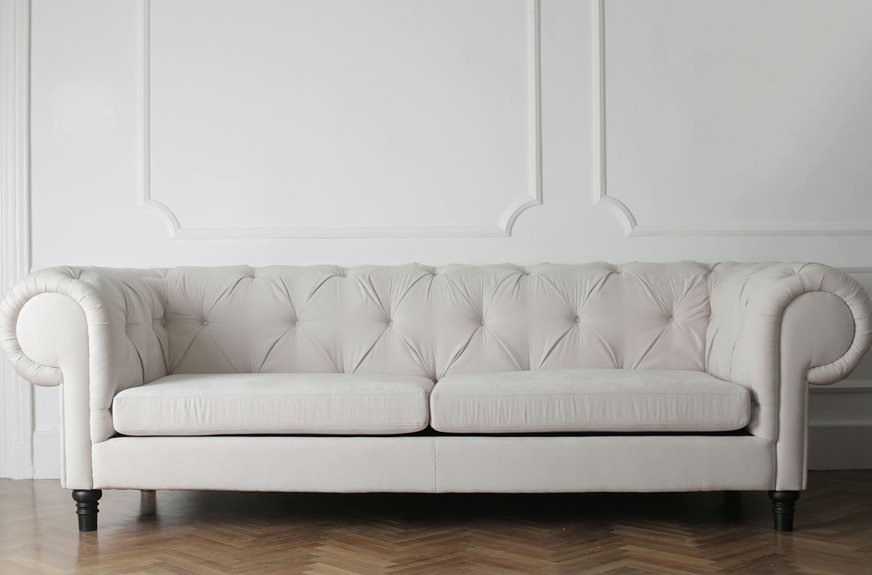
To refurbish your vintage leather sofa, start by thoroughly inspecting it for damage and gathering leather cleaner, filler, conditioner, and dye. Clean the leather gently with a specialized cleaner, then repair any scratches or cracks using filler and matching dye. Condition the leather to restore softness and apply a protective finish to shield it from wear. Let it dry well before use. Keep following for detailed tips on maintaining and enhancing that classic look.
Key Takeaways
- Inspect the sofa thoroughly for cracks, tears, stains, and structural issues before starting refurbishment.
- Clean the leather with a specialized cleaner using gentle, circular motions and test on a hidden spot first.
- Repair scratches and cracks with leather filler, match dye carefully, and blend for a seamless finish.
- Condition the leather using a high-quality conditioner to restore suppleness and apply a protective finish evenly.
- Allow the sofa to dry in a well-ventilated area away from sunlight, then perform a final inspection and touch-ups.
Assessing the Condition of Your Leather Sofa
Before you begin restoring your vintage leather sofa, you need to carefully assess its condition.
Start by inspecting the leather for cracks, tears, or deep scratches. Check if the color has faded or if there are stains that won’t come off easily.
Don’t forget to examine the seams and stitching for any loose threads or damage. Sit on the sofa to test the frame and cushions; they should feel sturdy and supportive, not saggy.
Also, look underneath for signs of mold, pests, or structural problems. Taking detailed notes about these issues helps you prioritize repairs.
This thorough assessment guarantees you know exactly what needs attention, making your refurbishment process smoother and more effective.
Gathering Necessary Tools and Materials
Before you start refurbishing, make sure you have all the essential cleaning supplies like leather cleaner and soft cloths.
You’ll also need repair tools such as leather filler and a conditioner to restore softness.
Having the right materials on hand will make the process smoother and more effective.
Essential Cleaning Supplies
You’ll need a handful of essential cleaning supplies to properly care for your vintage leather sofa.
Start with a soft microfiber cloth to gently remove dust and dirt without scratching the leather. A mild leather cleaner is vital; avoid harsh chemicals that can damage the finish. You can find specialized leather cleaning solutions or make a gentle mix of water and a few drops of mild dish soap.
Keep a small bucket or bowl handy for mixing your cleaning solution. Additionally, have a soft-bristled brush available to reach crevices and seams where dirt collects.
Finally, keep some clean, dry towels nearby to wipe off excess moisture and guarantee the leather dries evenly. With these supplies ready, you’re set to clean your sofa safely and effectively.
Repair and Conditioning Tools
Repairing and conditioning your vintage leather sofa requires specific tools and materials to restore its beauty and durability.
First, you’ll need a leather repair kit, which typically includes filler compounds, adhesive, and color matching dyes to fix cracks and tears seamlessly.
Second, invest in a good leather conditioner to nourish the leather and prevent it from drying out or cracking further.
Third, keep a set of soft cloths and sponges handy for applying products gently without damaging the leather surface.
These tools will help you tackle repairs and maintain the sofa’s supple texture effectively.
Gathering these essentials before you start will guarantee your refurbishing process goes smoothly and yields professional-looking results.
Cleaning the Leather Thoroughly
You’ll want to pick a cleaner designed specifically for leather to avoid damage.
Always test it on a hidden spot first to make sure it won’t discolor or harm the material.
Then, use gentle, circular motions with a soft cloth to clean the sofa without scrubbing too hard.
Choosing the Right Cleaner
Selecting the right cleaner is essential for preserving the leather’s integrity while removing dirt and grime. You want a product that’s gentle yet effective, avoiding harsh chemicals that can dry out or damage the leather.
Here’s what to take into account:
- pH-balanced formula: Choose a cleaner designed specifically for leather with a neutral or slightly acidic pH to protect the surface.
- Natural ingredients: Opt for cleaners with natural oils or mild detergents that nourish rather than strip the leather.
- No alcohol or solvents: Avoid products containing alcohol, ammonia, or harsh solvents as they can cause cracking or fading.
Testing on Hidden Areas
Before applying any cleaner to your vintage leather sofa, test it on a hidden spot like the underside or inside seam. This helps you see how the leather reacts without risking visible damage.
Dab a small amount of the cleaner onto the area, then wait 24 hours to check for discoloration, fading, or texture changes. If the leather remains intact and unchanged, you can proceed with confidence.
If you notice any negative effects, try a different cleaner formulated for vintage leather or consider consulting a professional. Testing guarantees your restoration efforts protect the sofa’s character and longevity.
Skipping this step could lead to costly mistakes, so take the time to be cautious and thorough before moving on to the full cleaning process.
Gentle Cleaning Techniques
Two key principles guide gentle cleaning of your vintage leather sofa: using mild products and avoiding excess moisture.
Start by choosing a gentle leather cleaner or a mix of mild soap with distilled water. Avoid harsh chemicals that can strip natural oils.
Next, dampen a soft cloth lightly—never soak it—to prevent water damage.
Follow these steps:
- Wipe the surface gently in circular motions to lift dirt.
- Use a second dry cloth to remove any excess moisture immediately.
- Let the sofa air dry naturally, away from direct sunlight or heat sources.
Repairing Scratches and Cracks
Minor scratches and cracks can quickly detract from your vintage leather sofa‘s charm, but you can restore its smooth surface with the right approach.
Start by cleaning the damaged area with a soft cloth and mild leather cleaner to remove dirt.
Next, gently rub a leather repair compound or filler into cracks using a palette knife or your finger, smoothing it evenly. Allow it to dry completely according to the product’s instructions.
For scratches, apply a matching leather dye or colorant with a small brush, blending carefully to match the surrounding leather.
Finish by lightly buffing the area with a soft cloth to even out the repair. Taking these steps will help your sofa look near flawless again without causing further damage.
Conditioning the Leather to Restore Softness
Once you’ve repaired scratches and cracks, conditioning the leather is essential to restore its softness and prevent future damage.
Start by choosing a high-quality leather conditioner suited for vintage pieces. Apply it evenly with a soft cloth, working it gently into the leather in circular motions. Allow the conditioner to absorb fully before using the sofa again.
Follow these steps to condition your sofa effectively:
- Test the conditioner on a hidden area to check for color or texture changes.
- Use a clean, lint-free cloth to avoid embedding dirt.
- Condition the leather every 6 to 12 months to maintain suppleness and prevent drying out.
Regular conditioning keeps your vintage sofa comfortable and extends its life.
Recoloring and Dyeing the Leather
Recoloring and dyeing the leather can dramatically refresh your vintage sofa’s appearance, especially if the original color has faded or worn unevenly.
Begin by cleaning the surface thoroughly to remove oils and dirt. Choose a leather dye that matches your sofa’s shade or opt for a new color if you want a bold change.
Apply the dye evenly using a sponge or soft cloth, working in thin layers to avoid streaks. Allow each coat to dry fully before adding another. Pay close attention to seams and creases for consistent coverage.
Applying a Protective Finish
After you’ve achieved the perfect color on your leather sofa, applying a protective finish is crucial to preserve your work and extend the leather’s lifespan.
This step shields the leather from spills, stains, and everyday wear while maintaining its flexibility and shine.
Here’s how to apply the finish effectively:
- Choose the right product: Use a leather sealant or conditioner designed specifically for dyed leather.
- Apply evenly: Use a soft cloth or sponge to spread the finish evenly, avoiding excess buildup.
- Allow to dry: Let the finish dry completely, typically for 24 hours, before using the sofa to guarantee maximum protection.
Frequently Asked Questions
Can I Refurbish a Leather Sofa Without Professional Help?
You can definitely refurbish a leather sofa yourself if you’re patient and careful. Just clean, condition, and repair minor damages with proper products. Avoid harsh chemicals, and test anything on a hidden spot first to prevent mistakes.
How Often Should I Refurbish a Vintage Leather Sofa?
You should refurbish your vintage leather sofa every 1 to 3 years, depending on use and wear. Regular cleaning and conditioning help maintain its look, but deeper restoration is needed when cracks or fading appear.
What Are the Best Brands of Leather Dye?
You’ll want to try brands like Fiebing’s, Angelus, and Tandy Leather. They offer high-quality leather dyes that soak in well, last long, and come in many colors, making your project look professional and vibrant.
Can I Use Household Items to Clean Leather?
You could clean leather with household items, but beware—it’s like trying to tame a wild beast! Mild soap and water work gently, but avoid harsh chemicals. Always test a hidden spot before diving in fully.
How Do I Prevent Future Damage to Leather Sofas?
You should keep your leather sofa away from direct sunlight and heat sources to avoid drying out. Regularly condition it with leather cream, clean spills immediately, and avoid sharp objects to prevent scratches and cracks.