
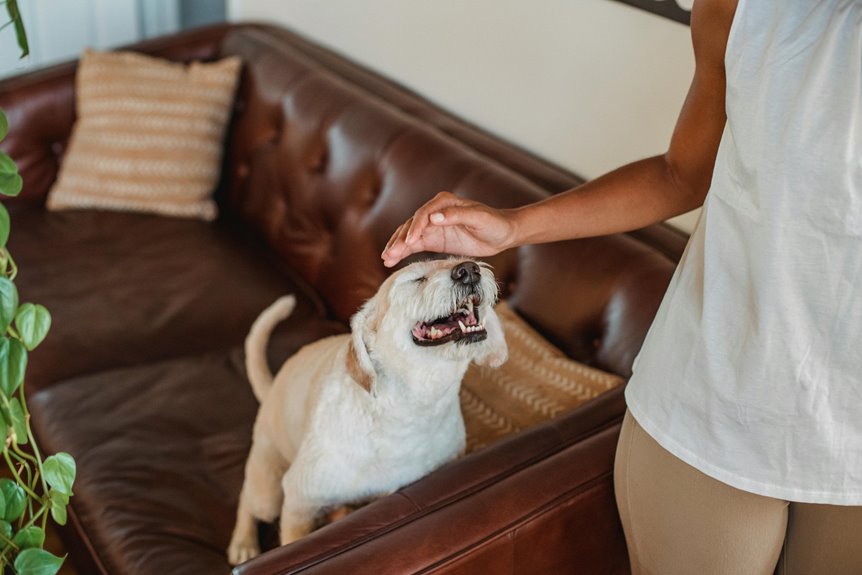
To care for your leather sofa, first know its type to choose the right cleaning products. Dust it regularly with a soft cloth and wipe spills gently without soaking. Condition it every 6 to 12 months to keep the leather supple and prevent cracks. Avoid placing it in direct sunlight or near heat, and rotate cushions to guarantee even wear. Follow these steps, and you’ll find easy ways to keep your sofa looking great for years to come.
Key Takeaways
- Dust your leather sofa regularly with a soft, dry cloth to prevent dirt buildup and maintain its appearance.
- Clean spills immediately by blotting gently with a dry cloth; use a damp cloth only for water-based stains.
- Condition your leather sofa every 6 to 12 months using a suitable leather conditioner to keep it supple and prevent cracking.
- Keep the sofa away from direct sunlight and heat sources to avoid fading and drying out the leather.
- Rotate cushions regularly and avoid sharp objects to ensure even wear and prevent scratches or punctures.
Understanding Different Types of Leather Sofas
Before you can properly care for a leather sofa, you need to understand the different types of leather it might be made from.
Full-grain leather is the highest quality; it’s durable and develops a beautiful patina over time. Top-grain leather is slightly sanded for a smooth finish but remains strong.
Corrected-grain leather has been buffed and treated to remove imperfections, making it more uniform but less breathable. Bonded leather, made from leather scraps bonded together, is the least durable and requires gentler care.
Knowing your sofa’s leather type helps you choose the right cleaning products and methods, preventing damage. Take a moment to check your sofa’s label or manufacturer info—you’ll save yourself trouble by tailoring your care routine to its specific leather type.
Daily Cleaning and Maintenance Tips
Knowing the type of leather your sofa is made from sets the stage for effective daily care.
Start by dusting it regularly with a soft, dry cloth to prevent dirt buildup. Avoid using harsh chemicals or household cleaners—they can damage the leather’s finish. Instead, use a slightly damp cloth for light cleaning, but never soak the leather.
Keep your sofa away from direct sunlight and heat sources to prevent fading and cracking. If spills occur, blot immediately with a clean, dry cloth; don’t rub, as this can spread the stain.
Rotate cushions regularly to guarantee even wear. Finally, avoid sharp objects or pets that might scratch the surface.
Following these daily habits will keep your leather sofa looking fresh and inviting for years.
How to Properly Condition Your Leather Sofa
Since leather naturally loses moisture over time, you’ll need to condition your sofa regularly to keep it soft and supple.
Start by choosing a leather conditioner specifically designed for your sofa type. Test it on a hidden spot first to avoid discoloration.
Apply a small amount with a soft cloth, rubbing it in gently using circular motions. Don’t over-saturate; less is more.
Allow the conditioner to absorb fully, usually for a few hours, before using the sofa again. Conditioning every 6 to 12 months helps prevent cracks and extends your sofa’s life.
Avoid using household oils or waxes, as they can damage the leather.
With proper conditioning, your sofa will stay comfortable and retain its rich appearance for years.
Dealing With Stains and Spills Effectively
When spills happen, acting quickly can make all the difference in protecting your leather sofa.
First, gently blot the spill with a clean, dry cloth—never rub, as this can spread the stain or damage the leather.
For water-based spills, use a slightly damp cloth to wipe the area, then dry it immediately.
If you encounter oily or greasy stains, sprinkle a small amount of talcum powder or cornstarch onto the spot, let it sit for a few hours to absorb the oil, then brush it off carefully.
Always test any cleaning method on a hidden area first to verify it won’t discolor or damage the leather.
Prompt, gentle care helps maintain your sofa’s appearance and prevents stains from setting in permanently.
Protecting Your Leather Sofa From Damage and Wear
Taking quick action on stains is just one part of keeping your leather sofa looking great.
To protect it from damage and wear, you need to be proactive. Here’s how you can do that:
- Keep it out of direct sunlight. Sunlight fades and dries leather, causing cracks over time.
- Avoid sharp objects. Pets’ claws or sharp accessories can scratch and puncture the leather.
- Use a leather conditioner regularly. Conditioning keeps the leather supple and prevents it from drying out and cracking.
Frequently Asked Questions
Can Leather Sofas Be Reupholstered or Customized?
You can definitely reupholster or customize leather sofas. Whether you want to change the color, texture, or style, professionals can help transform your sofa to fit your taste perfectly. Just be sure to choose quality leather.
What Is the Average Lifespan of a Leather Sofa?
Coincidentally, your leather sofa can last 10 to 15 years or more if you care for it properly. You’ll find its durability rewarding, especially since quality leather ages beautifully and grows more comfortable over time.
Are Leather Sofas Environmentally Friendly?
Leather sofas have pros and cons environmentally. You’ll find they last long, reducing waste, but leather production involves resource use and chemicals. Choosing responsibly sourced leather helps you minimize environmental impact effectively.
How Does Humidity Affect Leather Sofas?
You might think humidity only causes discomfort, but it actually affects leather sofas too. High humidity can make leather swell and promote mold, while low humidity dries it out, causing cracks. So, keep moisture balanced!
Can Pets Damage Leather Sofas Beyond Repair?
Yes, pets can damage leather sofas beyond repair if their claws scratch deeply or they chew the leather. You should trim nails, use covers, and train pets to prevent irreversible damage.