
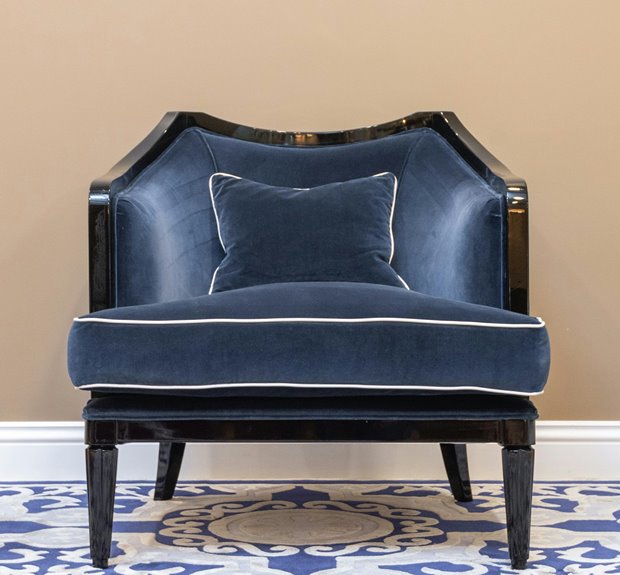
To get scuff marks off your suede fabric chair, gently brush the area with a soft suede brush to lift dirt and restore the nap. For light scuffs, use a suede eraser or cleaning block by rubbing softly. If stains are oily, sprinkle cornstarch or talcum powder to absorb grease, let it sit, then brush off. Avoid harsh cleaning agents to protect the delicate fabric. Keep on for tips on drying, fluffing, and preventing future scuffs.
Key Takeaways
- Use a suede eraser or cleaning block to gently lift scuff marks without damaging the fabric.
- Brush the scuffed area lightly in one direction with a soft suede brush to restore the nap.
- Apply a solution of equal parts white vinegar and water with a cloth, then let it dry before brushing.
- For oily scuffs, sprinkle cornstarch or talcum powder, leave for 6-12 hours, then brush off gently.
- Regularly brush and apply protective suede spray to prevent future scuffs and maintain fabric quality.
Understanding Suede Fabric and Its Sensitivity
Although suede fabric looks elegant and feels soft, it’s also quite delicate and sensitive to scuff marks and stains. You’ll find that its unique texture, made from the underside of animal hides, makes it prone to damage if you’re not careful.
When you touch or rub suede roughly, its nap—the tiny fibers—can easily flatten or become discolored. This sensitivity means you need to handle suede chairs gently and avoid harsh cleaning agents or abrasive tools.
Instead, you should use specialized brushes and mild solutions designed specifically for suede. Understanding these characteristics helps you protect your furniture better and choose appropriate methods to clean and maintain it without causing further damage or dullness.
Identifying Different Types of Scuff Marks on Suede
How can you tell one scuff mark from another on your suede chair? First, look closely at the mark’s appearance. Some scuffs are light and powdery, caused by surface dirt or dust, while others look darker or oily, signaling deeper stains or grease.
Distinguish scuff marks by their look—light and powdery for dirt, dark and oily for deeper stains.
You might also notice raised fibers, which happen when the suede’s nap has been flattened or rubbed the wrong way. These raised areas feel different to the touch—rough instead of soft.
Another type is color transfer, where pigment from shoes or bags leaves a visible stain. Recognizing whether a mark is simply dirt, a texture change, or a stubborn stain helps you decide the best cleaning approach.
Identifying the exact type prevents damage and guarantees effective restoration of your suede chair.
Essential Tools and Materials for Cleaning Suede Chairs
Cleaning suede chairs requires the right tools and materials to avoid damaging the delicate fabric. If you want to restore your chair’s beauty without causing harm, you’ll need to prepare carefully.
Here are three essential items:
- Suede eraser or cleaning block – Perfect for gently lifting scuff marks without abrasion.
- Soft, clean cloths – Use these for blotting and applying cleaning solutions delicately.
- Specialized suede cleaner – A gentle formula designed specifically to clean without saturating or staining your chair.
Having these at hand gives you confidence and control, helping you tackle scuffs effectively.
Avoid harsh cleaners or rough materials—they can ruin suede’s texture.
With the right tools, you’ll protect your chair and keep it looking fresh and elegant.
Using a Suede Brush to Remove Surface Scuffs
One effective way to lift surface scuffs on your suede chair is by using a suede brush. This specialized brush has soft bristles designed to gently restore the nap without damaging the fabric.
Start by brushing the scuffed area lightly in one direction to loosen dirt and raise the fibers. Then, switch to short, gentle strokes back and forth to blend the scuff with the surrounding suede.
Begin by brushing gently in one direction, then use short strokes to blend scuffs seamlessly.
Avoid pressing too hard, as this can flatten the nap or create shiny spots. After brushing, you’ll notice the texture and color of the suede improving, making scuff marks less visible.
Regular use of a suede brush keeps your chair looking fresh and helps prevent dirt buildup that can worsen scuffs over time.
Applying a White Eraser for Light Scuff Removal
Choose a clean, white eraser to avoid staining your suede chair.
Gently rub the scuff marks in one direction to lift them without damaging the fabric.
After erasing, brush the area lightly to restore the nap and keep your suede looking fresh.
Choosing the Right Eraser
A white eraser can be your best tool for gently lifting light scuff marks from suede fabric chairs.
When choosing the right eraser, consider these key points to protect your chair and restore its look:
- Softness: Opt for a soft, white vinyl eraser. It won’t damage the delicate suede fibers like colored or hard erasers might.
- Cleanliness: Make sure the eraser is clean and free of debris. A dirty eraser could leave unwanted stains or worsen the marks.
- Size and Shape: Pick an eraser small enough to target scuff marks precisely but large enough to handle multiple areas without breaking apart.
Selecting the right eraser helps you approach scuff removal confidently, ensuring your suede chair stays beautiful and intact.
Gentle Erasing Technique
Although it might seem simple, applying a white eraser to your suede chair requires a gentle touch to avoid damaging the fabric. Use light, consistent strokes and avoid pressing too hard. Move in one direction to lift the scuff without roughening the nap. Here’s a quick guide to follow:
| Step | Action | Tip |
|---|---|---|
| 1 | Choose a clean white eraser | Avoid colored erasers |
| 2 | Gently rub scuff marks | Use soft, even pressure |
| 3 | Brush off eraser crumbs | Use a suede brush afterward |
Post-Erasing Fabric Care
Once you’ve carefully rubbed away scuff marks with a white eraser, it’s important to restore the suede’s texture and appearance. This step guarantees your chair looks fresh and prevents damage.
Here’s what you should do next:
- Brush Gently: Use a soft suede brush to lift the nap, bringing back that soft, velvety feel.
- Apply Suede Protector: Lightly spray a suede protector to guard against future stains and scuffs.
- Let It Air Dry: Allow the chair to dry naturally in a well-ventilated area, avoiding direct sunlight that can fade the fabric.
Treating Stubborn Scuff Marks With Vinegar Solution
When scuff marks refuse to budge with gentle brushing, you’ll want to try a vinegar solution to lift the stains without damaging your suede fabric chairs.
Mix equal parts white vinegar and water in a small bowl. Dip a clean, soft cloth into the solution, wring out excess liquid, and gently dab the scuffed area. Avoid soaking the fabric, as too much moisture can harm suede.
Let the vinegar solution sit for a few minutes to break down the stain. Then, use a suede brush or a dry cloth to lift the fibers and restore the nap.
Repeat this process if necessary, but always test a hidden spot first to guarantee the solution won’t discolor your chair.
This method is effective for stubborn marks while keeping your suede safe.
How to Use Cornstarch or Talcum Powder for Oil Stains
When you spot an oil stain on your suede chair, sprinkle cornstarch or talcum powder generously over the area to absorb the grease.
Let the powder sit for several hours, or even overnight, to soak up the oil effectively.
Once it’s dry, gently brush away the powder to reveal a cleaner surface without damaging the fabric.
Powder Application Method
Two common powders—cornstarch and talcum powder—work wonders on oil stains in suede fabric chairs.
Here’s how to apply them effectively:
- Sprinkle Generously: Cover the oil stain with a thick layer of powder. Don’t be shy—make sure the stain is fully coated. This helps absorb the oil deeply.
- Let It Sit: Give it at least a few hours, or ideally overnight. This waiting period lets the powder soak up the oil without rubbing it deeper into the fabric.
- Brush Off Gently: Use a soft brush to remove the powder carefully. Avoid harsh scrubbing to prevent damaging the suede’s texture.
Absorbing Oil Effectively
Although oil stains can seem stubborn on suede fabric chairs, you can effectively absorb them using cornstarch or talcum powder. First, sprinkle a generous amount of powder directly onto the oily spot. Let it sit for several hours or overnight to draw out the oil. Then, gently brush off the powder with a soft suede brush or cloth. Avoid rubbing hard to prevent damage.
| Step | Action |
|---|---|
| 1 | Sprinkle cornstarch or talcum powder |
| 2 | Let it sit for 6-12 hours |
| 3 | Gently brush off powder |
| 4 | Repeat if necessary |
This method helps lift oil without soaking the suede, preserving its texture and appearance.
Powder Removal Techniques
A small amount of cornstarch or talcum powder can work wonders in lifting oil stains from suede fabric chairs.
To tackle those stubborn marks, follow these steps:
- Sprinkle Generously: Cover the stained area with a thick layer of powder. This absorbs the oil without damaging the suede.
- Let It Sit: Wait at least an hour, or overnight if possible. The longer the powder rests, the more oil it soaks up.
- Brush Gently: Use a soft-bristled brush to remove the powder carefully. Avoid scrubbing hard to keep the suede’s texture intact.
Drying and Fluffing the Suede After Cleaning
Once you’ve removed the scuff marks and cleaned the suede, you’ll need to dry the fabric thoroughly to prevent water stains or damage.
Start by gently blotting the area with a clean, dry cloth to soak up excess moisture. Avoid rubbing, as this can harm the nap.
Let the suede air dry naturally in a well-ventilated room, away from direct heat or sunlight, which can cause fading or stiffness.
Once dry, use a suede brush or a soft toothbrush to gently fluff the nap, restoring its texture and appearance.
Brush in one direction to lift the fibers evenly. This step refreshes the suede, making it look smooth and even again after cleaning.
Don’t rush this process; patience guarantees the best results.
Preventative Tips to Avoid Future Scuff Marks on Suede
To keep your suede chair looking fresh, you should brush it regularly with a suede brush to prevent dirt buildup and maintain its texture.
Applying a protective suede spray can also shield the fabric from scuffs and stains.
These simple steps help you avoid future marks and extend the life of your suede.
Regular Suede Brushing
Although scuff marks can seem stubborn, you can greatly reduce their appearance by regularly brushing your suede chairs. This simple habit keeps the fabric looking fresh and prevents dirt from settling into the fibers.
Here’s how to make the most of your brushing routine:
- Brush gently with a soft suede brush to lift the nap and restore texture without damaging the fabric.
- Brush in one direction to maintain a uniform look and avoid creating uneven patches.
- Schedule brushing sessions weekly to catch scuffs early and keep your chairs looking their best.
Protective Suede Spray
Spraying your suede chairs with a protective suede spray creates a barrier that repels dirt, water, and scuff marks before they settle in.
You’ll want to apply the spray evenly, holding the can about six to eight inches away from the fabric. Make sure to do this in a well-ventilated area and allow the chair to dry completely before using it.
Reapply the spray every few months, especially if your chairs get frequent use. This simple step greatly reduces the risk of stains and scuff marks, keeping your suede looking fresh longer.
When to Seek Professional Cleaning for Suede Furniture
If scuff marks on your suede chair won’t come off with gentle cleaning or if stains have set deeply, it’s time to contemplate professional cleaning.
You want your suede furniture to look its best, but some damage needs expert care.
Consider calling in professionals when:
- The stain covers a large area – DIY attempts might spread it or damage the fabric.
- The mark is greasy or oily – These stains penetrate deeply and require special solvents.
- You notice fabric discoloration or texture changes – This indicates damage that home methods can worsen.
Frequently Asked Questions
Can I Use a Hairdryer to Dry Suede Chairs After Cleaning?
Sure, you can blast your suede chair with a hairdryer—if you want it crispy and ruined. Instead, let it air dry naturally; patience preserves that soft texture you’re really after. Don’t rush suede’s delicate charm!
Is It Safe to Use Commercial Suede Cleaners on Vintage Suede?
You shouldn’t use commercial suede cleaners on vintage suede without testing first. They might damage the delicate fabric. Instead, try a gentle, specialized cleaner or consult a professional to preserve your chair’s vintage quality safely.
How Often Should Suede Chairs Be Professionally Cleaned?
You don’t want to clean suede chairs professionally every day—that’d be a full-time job! Ideally, have them cleaned once a year to keep them looking fresh without risking damage or excessive wear from over-cleaning.
Can Pet Hair Be Removed From Suede Fabric Effectively?
You can remove pet hair from suede fabric effectively by using a soft brush or a lint roller. Gently brush in one direction to lift the hair without damaging the material, and avoid using water or harsh cleaners.
Are Suede Fabric Chairs Suitable for Outdoor Use?
You shouldn’t use suede fabric chairs outdoors because suede isn’t water-resistant and can easily get damaged by moisture, dirt, and sunlight. If you want outdoor furniture, choose materials designed to withstand weather conditions instead.