
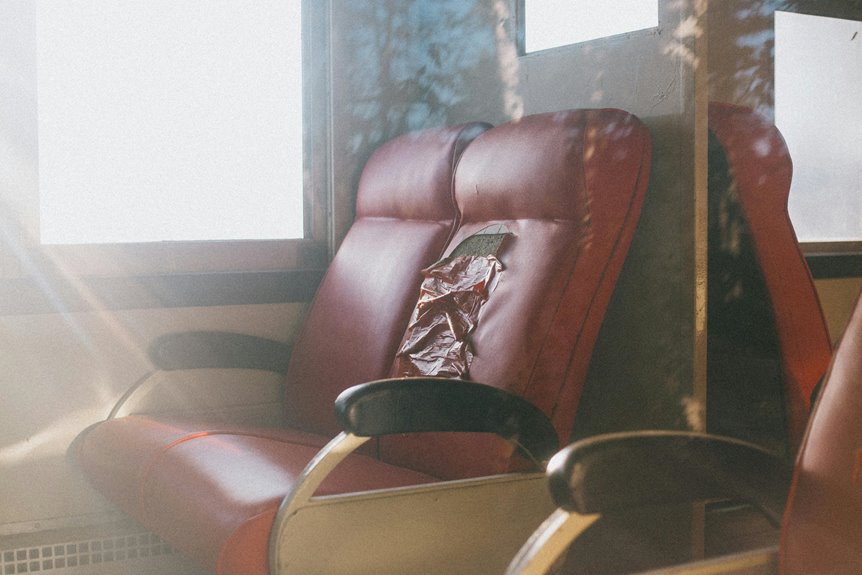
To fix sun-damaged or discolored leather furniture, start by cleaning it gently with a leather-specific cleaner. Then, condition the leather to restore moisture and prevent dryness. For faded spots, apply leather dye carefully, matching the original color. Repair any cracks using a leather filler and smooth it out. Finally, protect your leather with UV-blocking products and keep it out of direct sunlight. If you want to fully restore and maintain your leather’s beauty, there’s more helpful advice to explore.
Key Takeaways
- Assess sun damage by comparing sun-exposed and shaded areas, checking for fading, dryness, cracks, or peeling on your leather furniture.
- Clean the leather gently using a pH-balanced, leather-specific cleaner and a soft cloth, testing first on a hidden spot.
- Repair damaged spots by sanding lightly, applying leather filler, and matching dye to restore color evenly and seal afterward.
- Condition the leather with a quality leather conditioner using circular motions, focusing on dry areas to restore suppleness and prevent further damage.
- Protect leather from future sun damage with UV-blocking curtains and conditioners containing UV protection to maintain color and texture.
Assessing the Extent of Sun Damage on Leather
How can you tell if your leather furniture has suffered sun damage? Look for fading or discoloration, especially on surfaces exposed to direct sunlight.
Identify sun damage on leather by checking for fading or discoloration on sunlit areas.
The leather might appear dry, cracked, or brittle to the touch. Run your hand over the surface; if it feels rough or stiff, that’s a sign of damage.
Check seams and edges, as these areas often show wear first. You may also notice peeling or flaking in severe cases.
Compare shaded and sun-exposed areas to see the difference clearly. Identifying these signs early helps you decide how extensive the damage is and what kind of repair your furniture needs.
This assessment is vital before you move on to fixing the problem effectively.
Gathering Supplies and Tools Needed for Repair
To repair sun-damaged leather furniture effectively, you’ll need a handful of essential supplies and tools.
Start by gathering a leather conditioner or restorer to nourish and rejuvenate the dried-out leather. You’ll also want leather dye or colorant that matches your furniture’s shade to address discoloration. A soft cloth or sponge will help you apply these products evenly.
Additionally, keep a sponge or soft-bristled brush ready for gentle work. For minor cracks or scratches, a leather repair kit with filler compounds is vital.
Don’t forget a pair of gloves to protect your hands and some masking tape to cover areas you don’t want to treat. Having these items ready will make the repair process smoother and more effective.
Cleaning the Leather Surface Properly
Before you start fixing your sun-damaged leather, pick cleaning products that are gentle and made specifically for leather.
Use soft cloths and light motions to avoid further damage while cleaning.
Once cleaned, make sure to dry and condition the leather properly to restore its suppleness.
Choosing Suitable Cleaning Products
Although many cleaning products claim to restore leather, you’ll want to choose those specifically formulated for sun-damaged surfaces to avoid further harm.
Look for pH-balanced cleaners designed for leather, as harsh chemicals can strip natural oils and worsen discoloration. Avoid products with alcohol, ammonia, or bleach, which can dry out and crack the leather further.
Opt for gentle, moisturizing formulas that help replenish lost oils and maintain flexibility. Always check product labels for suitability on your leather type, whether it’s aniline, semi-aniline, or pigmented.
Testing any cleaner on a hidden spot first guarantees no adverse reactions. Choosing the right product sets a solid foundation for restoring your furniture’s appearance without causing additional damage.
Gentle Cleaning Techniques
When you clean sun-damaged leather, you’ll want to use gentle techniques that protect its delicate surface. Start by dusting with a soft cloth to remove loose dirt. Use a mild soap solution and a damp sponge for stubborn spots, avoiding soaking the leather. Always test any cleaner in an inconspicuous area first. Clean in small sections with circular motions, then wipe off excess moisture immediately.
| Step | Method | Tip |
|---|---|---|
| Dusting | Soft microfiber | Prevent scratches |
| Spot Cleaning | Mild soap + sponge | Avoid soaking leather |
| Testing | Hidden area | Check for discoloration |
| Wiping | Damp cloth | Remove residue promptly |
Drying and Conditioning Methods
After carefully cleaning your leather with gentle methods, you’ll want to dry it properly to prevent damage and prepare it for conditioning.
Use a soft, dry cloth to blot away excess moisture—don’t rub, as this can harm the leather’s surface. Let the leather air-dry naturally in a well-ventilated space, away from direct sunlight and heat sources, which can cause further drying and cracking.
Once dry, apply a high-quality leather conditioner evenly using a clean, soft cloth. Work it in with gentle circular motions to restore moisture, flexibility, and shine. Allow the conditioner to absorb fully before using the furniture.
Regularly conditioning your leather helps protect it from future sun damage and keeps it looking supple and vibrant.
Applying Leather Conditioner to Restore Moisture
Because sun exposure dries out leather, applying a high-quality leather conditioner is essential to restore its moisture and suppleness.
First, make sure the leather is clean and dry. Apply a small amount of conditioner to a soft cloth, then gently rub it into the leather using circular motions. Focus on areas that feel particularly dry or stiff.
Clean and dry leather, then gently apply conditioner with circular motions, targeting dry or stiff spots.
Let the conditioner absorb for at least 30 minutes, allowing it to penetrate the leather fibers. If needed, apply a second layer for deeper hydration. Avoid over-saturating the leather, as too much conditioner can cause buildup.
Regular conditioning every few months helps maintain your furniture’s softness and prevents future cracking. This simple step will bring life back to your sun-damaged leather without altering its color or texture.
Using Leather Dye to Revive Faded Areas
To bring faded leather back to life, you’ll want to start by choosing the right dye that matches your furniture’s color.
Next, prepare the leather surface by cleaning and lightly sanding it to guarantee the dye adheres properly.
Finally, apply the dye evenly and seal it to protect your work and keep the color vibrant.
Choosing the Right Dye
When you’re ready to restore your sun-damaged leather, choosing the right dye is crucial for achieving a natural and lasting finish. Look for dyes specifically formulated for leather to guarantee proper absorption and flexibility. Consider the type of leather—aniline, semi-aniline, or pigmented—as this affects dye compatibility and final appearance. Matching the color closely to your original leather helps avoid uneven patches.
Here’s a quick guide to help you select the right dye:
| Leather Type | Recommended Dye |
|---|---|
| Aniline | Transparent or semi-transparent |
| Semi-aniline | Semi-transparent or pigmented |
| Pigmented | Pigmented or opaque |
Picking the right dye protects your investment and brings your furniture back to life beautifully.
Preparing Leather Surface
Before applying dye, you need to thoroughly clean and prep the leather surface to secure even absorption and a smooth finish.
Start by wiping down the leather with a damp cloth to remove dust and dirt. Then, use a leather cleaner or a mild soap solution to eliminate oils and grime. Avoid harsh chemicals that can damage the leather.
After cleaning, let the leather dry completely. Next, gently sand the faded areas with fine-grit sandpaper or a leather prep pad to remove any rough patches and open the leather’s pores. This helps the dye penetrate evenly.
Finally, wipe away any sanding residue with a clean cloth. Proper preparation secures the dye bonds well, giving your leather furniture a refreshed, uniform look.
Applying and Sealing Dye
Although applying dye requires patience and care, you’ll find it rewarding to see your leather regain its rich color.
Start by choosing a dye that matches your leather’s original shade. Use a sponge or a soft cloth to apply the dye evenly, working in thin layers to prevent streaks. Let each layer dry completely before adding another.
Avoid over-saturating the leather, as this can cause blotches or damage. Once the color looks consistent and vibrant, seal the dye with a leather finish or sealant to protect it from future fading and wear.
Apply the sealant evenly and allow it to cure as per the product instructions. This step locks in color and restores your furniture’s appearance for years to come.
Repairing Cracks and Scratches in the Leather
Cracks and scratches can quickly make your leather furniture look worn and neglected, but you don’t have to replace it to restore its beauty.
Start by cleaning the damaged areas thoroughly with a leather cleaner to remove dirt and oils.
Once dry, gently sand the cracked or scratched spots with fine-grit sandpaper to smooth rough edges.
Next, apply a leather filler using a palette knife, pressing it into the cracks and scratches.
Let the filler dry completely, then lightly sand again for an even surface.
Afterward, match and apply leather dye to blend the repaired spots with the rest of the furniture.
Finish by sealing the area with a leather conditioner or finish to protect the repair and keep your furniture looking refreshed.
Protecting Leather From Future Sun Damage
Once you’ve repaired the visible damage, it’s important to focus on preventing new sun-related issues.
Start by positioning your leather furniture away from direct sunlight, which accelerates fading and drying. Use window treatments like UV-blocking curtains or blinds to reduce sun exposure.
Applying a leather conditioner with UV protection will create a protective barrier, keeping your leather supple and less prone to damage.
Rotate cushions regularly to guarantee even wear and fading. Avoid placing your leather pieces near heat sources, as heat compounds sun damage.
Taking these steps helps maintain your furniture’s appearance and durability, saving you time and money on future repairs. Protecting your leather now means it’ll stay beautiful longer, resisting the harsh effects of the sun.
Tips for Maintaining Leather Furniture Longevity
To keep your leather furniture looking great for years, you’ll need to establish a regular care routine. Clean spills immediately, dust weekly, and condition your leather every 6-12 months to prevent drying and cracking. Avoid placing furniture in direct sunlight or near heat sources. Use a soft cloth and mild cleaner designed for leather to maintain its natural oils without damage.
| Care Tip | Why It Matters |
|---|---|
| Clean spills fast | Prevents stains and discoloration |
| Condition regularly | Keeps leather supple and soft |
| Avoid direct sun | Reduces fading and drying |
Stick to these tips, and your leather furniture will stay beautiful and durable for a long time.
Frequently Asked Questions
Can Sun Damage on Leather Cause Health Issues?
You might wonder if sun-damaged leather poses health risks. While the leather itself won’t harm you, prolonged exposure to sun-damaged furniture can release dust or allergens, which could irritate your skin or respiratory system.
Is It Safe to Use Household Oils on Leather?
You shouldn’t use household oils on leather since they can clog pores or cause discoloration. Instead, use products made specifically for leather care to keep it safe, nourished, and looking its best without damage.
How Long Does Leather Dye Take to Dry Completely?
You might worry leather dye feels sticky forever, but it usually dries in about 20 to 30 minutes. Just remember, for the dye to fully set and cure, give it at least 24 hours before use.
Can Leather Furniture Be Repaired Professionally After Severe Sun Damage?
Yes, you can have leather furniture professionally repaired after severe sun damage. Experts can restore color, fix cracks, and recondition the leather, making it look much better. Just expect some costs and time for quality results.
Does Temperature Affect the Effectiveness of Leather Conditioners?
You want your leather to absorb, you want your conditioner to spread, and you want the treatment to last. Temperature affects all three—too cold or too hot, it won’t work well, so keep it moderate for best results.