
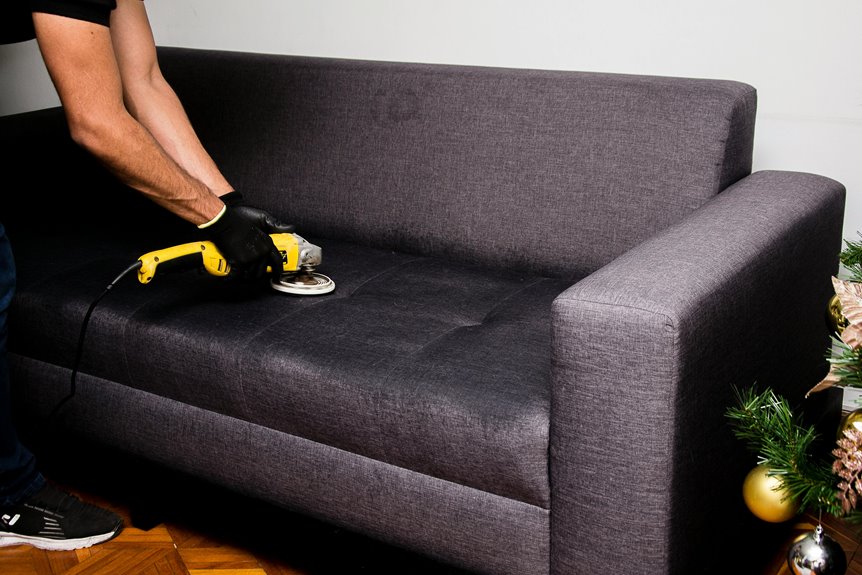
To clean and care for your herringbone fabric sofa, regularly vacuum with a soft brush to remove dust and rotate cushions weekly to maintain shape. Blot spills immediately with a clean cloth—never rub—to avoid damage. Use mild soap and cold water for spot cleaning, and consider steam cleaning for deep refreshment. Keep it out of direct sunlight to prevent fading. With the right care, your sofa will stay vibrant and durable. Explore deeper methods to keep it perfect longer.
Key Takeaways
- Rotate and fluff cushions weekly to maintain shape and even wear on your herringbone fabric sofa.
- Immediately blot spills with a clean, dry cloth; avoid rubbing to protect the fabric’s weave.
- Vacuum regularly using a soft brush attachment, following the fabric’s V-shaped pattern to remove dust and debris.
- Spot clean stains with mild soap and cold water, testing a small area first and allowing to air dry thoroughly.
- Schedule professional cleaning for deep stains, fraying, or persistent odors to preserve the sofa’s texture and longevity.
Understanding Herringbone Fabric and Its Characteristics
Herringbone fabric features a distinctive V-shaped weaving pattern that resembles the bones of a herring fish. When you look closely, you’ll notice the zigzag design formed by the twill weave, which gives the fabric its unique texture and durability.
This pattern isn’t just for style—it also adds strength, making herringbone sturdy and resistant to wear. You’ll find it commonly used in upholstery, including sofas, because it balances elegance with practicality.
The fabric often consists of wool, cotton, or blends, which influence how you should care for it. Since herringbone’s texture can trap dust and dirt, you’ll want to be mindful of cleaning methods that protect its fibers and maintain the pattern’s crisp appearance over time.
Regular Maintenance Tips for Herringbone Sofas
The unique weave and texture of this fabric mean you’ll want to take special care when cleaning and maintaining your sofa.
The fabric’s distinctive weave calls for gentle, attentive care to preserve your sofa’s beauty.
To keep your herringbone sofa looking fresh and vibrant, follow these regular maintenance tips:
- Rotate and fluff the cushions weekly to guarantee even wear and maintain their shape.
- Address spills immediately by blotting with a clean, dry cloth—never rub, as this can damage the fabric.
- Keep your sofa out of direct sunlight to prevent fading and avoid placing it near heat sources that can dry out the fibers.
How to Vacuum Your Herringbone Fabric Sofa Correctly
Vacuuming your sofa’s fabric with care can extend its life and keep it looking pristine.
Start by attaching a soft brush or upholstery tool to your vacuum to avoid damaging the delicate herringbone weave. Gently vacuum in the direction of the fabric’s pattern to remove dust and debris without disturbing the texture. Pay special attention to crevices and seams where dirt accumulates.
Avoid using a high-powered vacuum setting, as it might pull threads or distort the fabric. For cushions, vacuum both sides and under them to capture hidden dirt.
Regular vacuuming, ideally once a week, prevents buildup and keeps your herringbone fabric fresh. Always check the manufacturer’s care instructions before vacuuming to verify you’re using the safest method.
Spot Cleaning Techniques for Common Stains
Although stains can feel frustrating, treating them promptly will help prevent permanent damage to your sofa’s fabric. When you spot a stain, act quickly to keep it from setting in.
- Blot, don’t rub: Use a clean, white cloth to gently blot the stain, absorbing as much liquid as possible without spreading it.
- Use cold water: Dampen a cloth with cold water and blot the stain again to loosen particles. Avoid hot water, which can set stains.
- Apply mild soap solution: Mix a small amount of gentle soap with water, then lightly dab the stain with the solution. Blot with a clean damp cloth to rinse, and let it air dry.
These steps help you manage common stains without damaging your herringbone fabric.
Using Fabric Cleaners Safely on Herringbone Material
When spot cleaning doesn’t fully remove a stain, you might consider using a fabric cleaner designed for upholstery.
First, always check the sofa’s care label to verify the cleaner is safe for herringbone fabric. Test the cleaner on an inconspicuous area to avoid discoloration or damage.
Apply the cleaner sparingly with a soft cloth, gently blotting the stain rather than rubbing it, which can distort the weave. Avoid soaking the fabric, as excess moisture can weaken the fibers and cause mildew.
After treating the spot, use a clean, damp cloth to remove any residue, then let the sofa air dry completely.
Using fabric cleaners cautiously helps preserve your herringbone sofa’s texture and appearance without risking damage.
Deep Cleaning Methods for Herringbone Sofas
When your herringbone sofa needs more than just surface cleaning, spot cleaning can target tough stains without harming the fabric.
You’ll also want to contemplate steam cleaning, which refreshes deeply while preserving the weave’s texture.
Let’s explore how these methods can keep your sofa looking its best.
Spot Cleaning Techniques
A careful approach to spot cleaning can restore your herringbone sofa’s fabric without causing damage. When you notice a stain, act quickly to prevent it from setting.
First, blot the area gently with a clean, white cloth to absorb excess liquid. Avoid rubbing, which can spread the stain or damage the fibers.
Next, prepare a mild cleaning solution by mixing a few drops of gentle detergent with water. Test this on a hidden spot to verify it won’t discolor the fabric.
Finally, apply the solution sparingly using a soft cloth, dabbing the stain gently. Rinse by blotting with a damp cloth and allow the area to air dry.
- Blot spills immediately with a white cloth.
- Use a mild detergent solution for stain removal.
- Dab gently and air dry to protect fabric texture.
Steam Cleaning Benefits
Although spot cleaning handles minor stains well, steam cleaning offers a deeper, more thorough way to refresh your herringbone sofa. It penetrates fabric fibers, loosening dirt, dust, and allergens that regular cleaning can miss.
Using steam also sanitizes your sofa by killing bacteria and dust mites without harsh chemicals, making it safer for your family and pets. Plus, steam dries quickly, reducing the risk of mold and mildew buildup.
When you steam clean, you preserve the texture and vibrant pattern of your herringbone fabric, keeping it looking sharp and fresh longer. Just make sure to test a small area first and follow your sofa’s care instructions to avoid damage.
Steam cleaning is a smart, eco-friendly method to maintain your sofa’s beauty and hygiene.
Preventing Damage While Cleaning Your Sofa
When cleaning your herringbone sofa, use gentle methods to protect the fabric’s texture and color.
Avoid harsh chemicals that can cause fading or damage.
Taking these precautions helps keep your sofa looking fresh and durable.
Use Gentle Cleaning Methods
Since herringbone fabric is delicate, you’ll want to choose cleaning methods that protect its texture and color. Harsh scrubbing or aggressive tools can damage the weave and fade the fabric.
Instead, focus on gentle techniques to keep your sofa looking fresh without risking harm.
Here’s how you can clean your sofa gently:
- Vacuum with a soft brush attachment to remove dust and debris without roughening the fabric.
- Blot spills immediately with a clean, damp cloth—avoid rubbing to prevent spreading stains.
- Use mild soap diluted in water applied with a soft sponge for spot cleaning, then air dry naturally.
These gentle methods preserve the elegant herringbone pattern and extend your sofa’s life.
Avoid Harsh Chemicals
Because harsh chemicals can strip color and weaken fibers, you should steer clear of them when cleaning your herringbone sofa. Instead, opt for mild, fabric-safe cleaners or homemade solutions like diluted vinegar or gentle soap. Avoid bleach, ammonia, or strong solvents that can damage the weave and fade the fabric. Always test any cleaner on a hidden area first.
| Harsh Chemicals to Avoid | Safer Alternatives |
|---|---|
| Bleach | Mild dish soap |
| Ammonia | White vinegar solution |
| Strong solvents | Water and gentle detergent |
When to Call Professional Upholstery Cleaners
You should call professional upholstery cleaners if stains on your herringbone sofa won’t come out with regular cleaning or if the fabric feels worn and delicate.
Professionals have the right tools and expertise to handle tough spots without damaging the intricate weave. Also, if you notice a persistent odor or mold growth, it’s time to seek expert help.
Here are three signs you need a professional:
- Deep-set stains that resist home treatments.
- Fraying or thinning fabric that requires gentle care.
- Musty smells indicating hidden moisture or mildew.
Don’t wait until the damage worsens. Calling a professional guarantees your sofa stays beautiful and lasts longer.
Tips for Protecting Your Herringbone Sofa From Future Stains
Although spills and stains can happen unexpectedly, taking proactive steps can greatly reduce the risk of damage to your herringbone sofa.
First, consider applying a fabric protector spray designed for upholstery; it creates a barrier against liquids and dirt.
Regularly vacuum your sofa to remove dust and debris that can wear down fibers.
Use arm covers or throws in high-traffic areas to shield the fabric from oils and grime.
Encourage family and guests to avoid eating or drinking on the sofa to minimize accidents.
Quickly blot any spills with a clean cloth to prevent them from setting.
Finally, rotate cushions regularly to guarantee even wear and maintain your sofa’s appearance.
These simple habits will keep your herringbone fabric looking fresh and stain-free longer.
Frequently Asked Questions
Can Herringbone Fabric Fade in Direct Sunlight?
Yes, herringbone fabric can fade in direct sunlight over time. You’ll want to keep your sofa out of harsh sunlight or use curtains to protect it, preserving its color and texture longer.
Is Herringbone Fabric Suitable for Outdoor Furniture?
Like a delicate garden party dress, herringbone fabric isn’t built for outdoor adventures. You shouldn’t use it for outdoor furniture since it lacks weather resistance and fades quickly under sun and rain. Keep it cozy indoors!
How Durable Is Herringbone Fabric Compared to Other Weaves?
You’ll find herringbone fabric quite durable due to its tight weave, often lasting longer than plain weaves. It resists wear well, making it ideal for furniture that sees regular use, but it’s not as tough as twill.
Can Pets Damage Herringbone Fabric Sofas Easily?
Think of your herringbone sofa as a castle—pets are playful knights. They might scratch or shed, testing its strength. While herringbone’s weave holds well, you’ll need to guard it with regular care and gentle cleaning.
Are There Eco-Friendly Cleaning Products for Herringbone Fabric?
Yes, you can use eco-friendly cleaners like vinegar and water, or plant-based fabric sprays. They’re gentle on herringbone fabric and safe for your home, helping you keep your sofa fresh without harsh chemicals.