
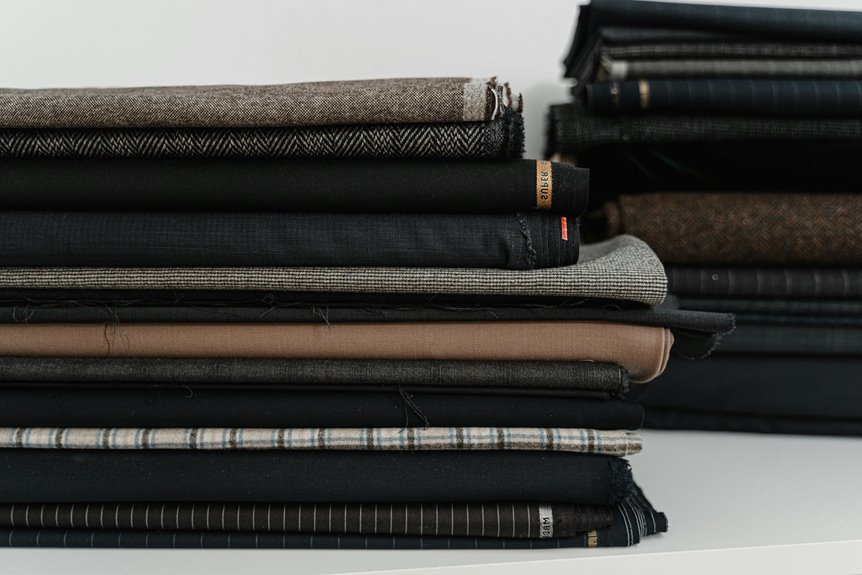
If you’re choosing herringbone tweed, know Harris Tweed is handwoven in Scotland’s Outer Hebrides using pure virgin wool, prized for its tradition and legal authenticity, while Donegal tweed stands out with colorful flecks and a rustic texture. Both offer durability and warmth, perfect for outerwear and tailored pieces. Consider weight and pattern size to match your project’s needs, and prepare for specific care and sewing techniques. Exploring further will reveal how to pick and handle these classic fabrics confidently.
Key Takeaways
- Herringbone tweed features a distinctive V-shaped weave, offering durability, warmth, and a classic textured look ideal for outerwear and suits.
- Harris Tweed is handwoven in Scotland’s Outer Hebrides with pure virgin wool and carries the Orb trademark, ensuring authenticity and heritage.
- Donegal Tweed is known for its colorful flecks and rustic texture, providing a unique, vibrant appearance and natural water resistance.
- Choose a herringbone tweed pattern size and texture based on desired subtlety or boldness, considering weave tightness and multicolor threads.
- Maintain tweed by regular brushing, spot cleaning, air drying, and professional dry cleaning to preserve fabric quality and longevity.
What Is Herringbone Tweed Fabric?
Herringbone tweed fabric combines durability and style with its distinctive V-shaped weaving pattern. When you look closely, you’ll notice the zigzag design, resembling the bones of a herring fish, which gives the fabric its name.
Made from sturdy wool, this fabric is perfect for outerwear and suits that need both warmth and resilience. You’ll appreciate how the tight weave repels wind and moisture, making it practical for chilly weather.
Crafted from robust wool, herringbone tweed offers warmth, durability, and natural resistance to wind and moisture.
The texture feels slightly rough but softens over time, adding character to your garments. Plus, the subtle pattern adds visual interest without overwhelming your outfit.
When you choose herringbone tweed, you’re opting for a fabric that balances tradition with everyday functionality, ensuring your clothes last and look great.
The History and Heritage of Harris Tweed
While herringbone tweed offers timeless style and durability, exploring Harris Tweed reveals a rich story woven into every thread.
When you choose Harris Tweed, you connect with a fabric steeped in tradition, crafted exclusively in the Outer Hebrides of Scotland. The cloth has been handwoven by islanders for centuries, using pure virgin wool dyed with natural colors.
It gained legal protection in 1993 through the Harris Tweed Act, ensuring authenticity and preserving its heritage. Each piece carries the Orb trademark, a symbol of genuine craftsmanship and regional pride.
Characteristics of Donegal Tweed
Donegal tweed stands out for its vibrant speckled appearance, which comes from the colorful flecks woven into the fabric. When you choose Donegal tweed, you’ll notice that these tiny, multicolored bits—often in reds, greens, and blues—add depth and character to the otherwise earthy wool base.
The fabric is typically handwoven, giving it a rustic yet refined texture that’s both durable and breathable. You’ll find that Donegal tweed’s irregular patterning makes each piece unique, perfect if you want something that feels authentic and full of personality.
Plus, it’s naturally water-resistant and ages beautifully, making it ideal for outerwear and tailored garments. This tweed offers a blend of tradition and versatility that’s hard to match.
Comparing Herringbone Weaves: Patterns and Textures
If you appreciate the unique character of Donegal tweed, you’ll find herringbone weaves offer a different kind of visual and tactile appeal.
Herringbone patterns create a zigzag effect that adds sophistication and depth to your fabric choice.
When comparing herringbone weaves, consider these key features:
- Pattern Scale – Smaller herringbone patterns create a subtle texture, while larger ones make a bold statement.
- Thread Variation – Tweeds with multicolored threads give a richer, more complex look compared to solid-colored yarns.
- Texture Feel – Some herringbone fabrics feel smoother due to tighter weaving, while others have a rougher, rustic touch.
Understanding these differences helps you select the perfect herringbone tweed to match your style and project needs.
Choosing the Right Weight for Your Tweed Project
You’ll want to pick the right weight of tweed based on your project’s purpose and the season you’ll wear it in.
Light tweeds work great for spring and fall, while heavier options keep you warm in winter.
Understanding these differences helps you choose fabric that suits both style and comfort.
Light Vs Heavy Tweeds
When selecting herringbone tweed fabric, understanding the difference between light and heavy weights can make a big impact on your project’s success.
Light tweeds offer flexibility and breathability, making them ideal for tailored garments that require ease of movement. Heavy tweeds provide durability and warmth, perfect for outerwear or structured pieces.
Consider these points when choosing between light and heavy tweeds:
- Purpose: Decide if your project needs warmth or lightweight comfort.
- Drape: Light tweeds drape softly; heavy tweeds hold shape firmly.
- Layering: Light tweeds work well for layering; heavy tweeds often serve as standalone pieces.
Seasonal Weight Considerations
Choosing between light and heavy tweeds sets the foundation for matching your fabric to the season.
If you want a versatile jacket for spring or fall, opt for a medium-weight herringbone tweed that balances warmth and breathability. For colder months, heavier tweeds provide insulation and durability, perfect for layering.
On the other hand, light tweeds suit milder weather or indoor events, keeping you comfortable without overheating.
Keep your project’s purpose in mind—whether it’s for daily wear or special occasions—as weight affects drape and feel.
Also, consider how often you’ll wear the garment; heavier tweeds last longer but may feel stiff initially.
Color Variations and Dye Techniques in Tweed
Color plays an essential role in the appeal of herringbone tweed fabric, influencing both its style and versatility.
Color is key to the charm and adaptability of herringbone tweed fabric.
When choosing tweed, you’ll notice a rich palette achieved through various dye techniques that highlight the fabric’s texture and pattern.
Here are three key points about color variations and dyeing in tweed:
- Natural Dyeing: Traditional methods use natural dyes from plants and minerals, giving tweed earthy, muted tones that age beautifully.
- Blended Fibers: Different colored wool fibers are mixed before weaving, creating depth and subtle color shifts within the herringbone pattern.
- Overdyeing: Some tweeds undergo overdyeing to enhance vibrancy or add a vintage look without masking the herringbone’s distinctive weave.
Understanding these techniques helps you pick tweed that matches your style and functional needs.
How to Identify Authentic Harris Tweed
Although many fabrics claim to capture the essence of traditional tweed, authentic Harris Tweed stands apart with strict standards and unique markers.
To identify genuine Harris Tweed, look for the official Harris Tweed Orb label—a legal guarantee that the fabric is handwoven by islanders at their homes in the Outer Hebrides of Scotland.
The cloth should feel sturdy yet soft, with a distinctive herringbone or check pattern rich in natural, earthy tones.
Inspect the weave closely; authentic Harris Tweed is tightly woven from pure virgin wool dyed using traditional methods.
Avoid imitations that lack the Orb certification or feel synthetic.
Best Uses for Herringbone Tweed in Fashion and Home Decor
Once you’ve recognized authentic Harris Tweed, you can appreciate how versatile herringbone tweed fabric truly is.
Whether you want to elevate your wardrobe or add character to your living space, herringbone tweed fits beautifully. Here are the best uses to contemplate:
- Fashion Staples: Look for herringbone tweed in jackets, blazers, and skirts. Its durability and classic pattern make it perfect for timeless pieces that work year-round.
- Accessories: Hats, scarves, and bags crafted from herringbone tweed add texture and warmth, giving any outfit a refined, rustic charm.
- Home Decor: Use tweed upholstery, cushions, or throws to introduce cozy sophistication into your living room or study, blending rustic with elegant effortlessly.
With herringbone tweed, you get enduring style that adapts seamlessly from fashion to home.
Caring for and Maintaining Your Tweed Fabric
Since tweed fabric is known for its durability and texture, proper care guarantees it stays looking sharp and lasts for years.
Tweed’s durability and texture shine brightest when cared for with gentle, attentive maintenance.
You should always brush your tweed gently with a soft garment brush after wearing it to remove dirt and prevent fibers from matting. When it comes to cleaning, avoid frequent washing—opt for spot cleaning or professional dry cleaning instead to maintain the fabric’s integrity.
Always air out your tweed between wears to keep it fresh and prevent odors. Store your tweed garments in a cool, dry place, using padded hangers to maintain shape and avoid creases.
Finally, handle your tweed with care, as excessive friction or rough treatment can damage the intricate weave and texture you love.
Where to Buy Quality Harris and Donegal Tweed
Taking good care of your tweed guarantees it stays in top condition, but finding the right fabric to begin with is just as important.
When searching for quality Harris and Donegal tweed, focus on reputable sources that honor traditional craftsmanship.
Here are three trusted places to buy authentic tweed:
- Official Harris Tweed Authority – Purchase directly or find certified retailers to verify genuine fabric.
- Specialty Fabric Stores – Look for shops specializing in Irish or Scottish textiles, often stocking Donegal and Harris tweeds.
- Online Artisans and Weavers – Many skilled producers sell authentic tweed through dedicated websites, offering a wide range of patterns and weights.
Choosing quality sources guarantees your fabric’s authenticity and durability, setting you up for success in any project.
Tips for Working With Tweed Fabric in Sewing and Crafting
Before you start sewing, make sure to properly prepare your tweed by pre-washing and pressing it to avoid shrinkage.
Use sharp needles and sturdy thread to handle the fabric’s thickness, and consider reinforcing seams for durability.
Finally, finish edges carefully to prevent fraying and keep your project looking polished.
Preparing Tweed for Sewing
Although herringbone tweed is a durable and textured fabric, you’ll want to handle it carefully to guarantee smooth sewing and crafting. Proper preparation makes all the difference in achieving a professional finish, so take these steps before you start:
- Pre-wash or Steam: Depending on the tweed, pre-wash it gently or use a steam iron to relax the fibers and prevent future shrinkage.
- Press, Don’t Iron: Use a pressing cloth and gently press the fabric to avoid flattening the texture or causing shine.
- Cut with Precision: Tweed’s weave can shift, so cut carefully on a flat surface, aligning the herringbone pattern to maintain consistency.
Preparing tweed well guarantees your project looks sharp and lasts longer.
Stitching and Finishing Techniques
A successful project with herringbone tweed depends heavily on your stitching and finishing techniques. Since tweed is thick and textured, use a heavy-duty needle and strong thread to prevent breakage.
When stitching, go slow to guarantee even, secure seams, and consider using a longer stitch length to avoid puckering. Press seams gently with a pressing cloth to maintain fabric integrity and prevent shine.
For finishing, trim seam allowances carefully and use pinking shears or a serger to reduce fraying. Hand-basting before machine stitching can help keep layers aligned, especially with bulky tweed.
Finally, reinforce stress points with extra stitching. By following these tips, you’ll create durable, polished garments that showcase tweed’s unique character effectively.
Frequently Asked Questions
Can Herringbone Tweed Fabric Be Recycled or Is It Eco-Friendly?
You can recycle herringbone tweed fabric, especially if it’s wool, which is biodegradable and eco-friendly. However, recycling depends on local facilities, so checking your area’s textile recycling options helps you reduce environmental impact effectively.
What Are Common Allergens Associated With Tweed Fabric?
When it comes to allergens in tweed, you’ll want to watch out for lanolin from wool, which can cause irritation. Dust mites and chemicals used in dyeing might also trigger allergies, so always check labels carefully.
How Does Herringbone Tweed Fabric Perform in Extreme Weather?
You’ll find herringbone tweed performs well in extreme weather because it’s thick, durable, and insulates against cold. However, it’s not waterproof, so you’ll want extra protection in heavy rain or snow.
Are There Synthetic Alternatives to Traditional Herringbone Tweed?
Like a chameleon adapting to its surroundings, synthetic herringbone tweeds mimic traditional wool’s look and feel. You’ll find polyester or nylon blends offering durability and water resistance, perfect if you want tweed without the natural fibers.
What Is the Average Cost Range for Custom Herringbone Tweed Garments?
You can expect custom herringbone tweed garments to cost anywhere from $300 to $800, depending on fabric quality and tailoring. High-end options might go beyond that, but this range covers most bespoke pieces comfortably.