
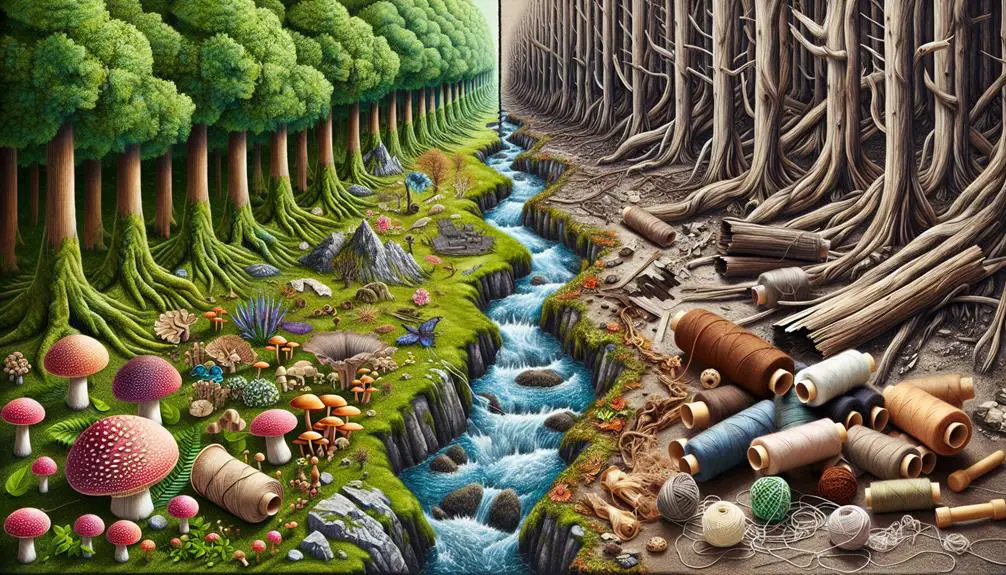
When you choose fabrics, you might not immediately consider their environmental impact, but it's an essential aspect. Cotton, for instance, demands a lot of water and pesticides, posing significant environmental challenges. On the other hand, synthetic fibers release microplastics into our oceans, contributing to pollution. Have you ever thought about how your fabric choices affect animal welfare or soil health? Sustainable options like hemp and bamboo require minimal water and pesticides. So, how can you make more informed, eco-friendly choices in fashion? Let's explore the implications and benefits of different fabric materials further.
Key Takeaways
- Cotton farming uses extensive water and pesticides, significantly straining local resources and impacting the environment.
- Synthetic fibers release microplastics during washing and persist in landfills for centuries, exacerbating pollution.
- Sustainable wool production emphasizes humane animal treatment and land regeneration, minimizing environmental harm.
- Hemp fabric requires minimal water and pesticides, enriches the soil, and offers a sustainable alternative to conventional textiles.
- Bamboo textiles are biodegradable, antibacterial, and require fewer resources than cotton, making them an eco-friendly choice.
Cotton's Environmental Footprint
When considering cotton's environmental footprint, you need to understand its significant water consumption and pesticide use. Cotton, while a natural fiber, demands vast amounts of water from planting to processing. To put it in perspective, producing a single cotton T-shirt can require over 2,700 liters of water. This extensive water consumption often strains local water resources, particularly in regions where water scarcity is already a pressing issue.
Moreover, cotton cultivation is heavily reliant on pesticides. Conventional cotton farming uses more pesticides than any other single crop, accounting for 16% of the world's insecticide use. These chemicals can wreak havoc on ecosystems, leading to soil degradation, water contamination, and harm to non-target species, including beneficial insects and wildlife.
Runoff from cotton fields can carry these toxic substances into rivers and lakes, further impacting aquatic life and potentially entering human water supplies.
Synthetic Fibers and Pollution
Synthetic fibers, such as polyester and nylon, contribute substantially to environmental pollution. When you wash synthetic fabrics, tiny plastic particles, known as microplastics, are released into the water system. These microplastics are incredibly difficult to filter out and eventually make their way into oceans, contributing notably to plastic pollution. Marine life ingests these particles, causing harm and potentially entering the human food chain.
Moreover, producing synthetic fibers involves energy-intensive processes that rely heavily on fossil fuels. This not only depletes non-renewable resources but also releases noteworthy greenhouse gases, exacerbating climate change. You might think that synthetic fabrics are easier to manage because they're durable, but their waste management poses a serious issue. Unlike natural fibers, synthetic ones don't biodegrade. Instead, they persist in landfills for hundreds of years.
Addressing the environmental impact of synthetic fibers requires a multifaceted approach. Recycling programs can play a role, but they're often limited by the quality and type of the synthetic material.
You can make a difference by choosing clothing made from recycled synthetic fibers or by supporting brands that prioritize sustainable practices. Ultimately, being mindful of your fabric choices can notably reduce your environmental footprint.
Wool and Animal Welfare
While synthetic fibers pose environmental challenges, it's important to also consider the ethical implications of natural fibers like wool, particularly concerning animal welfare. When evaluating wool, you must look beyond its eco-friendly credentials and explore how it's sourced.
Sheep farming can be sustainable, but this largely depends on the practices employed. Sustainable farming practices guarantee that the land is regenerated and that the sheep are treated humanely.
Animal welfare is paramount in the wool industry. Ethical wool production involves proper care, nutrition, and living conditions for the sheep. You need to be conscious of practices like mulesing, which is used to prevent flystrike but can cause significant distress to the animals.
Opting for wool from certified humane farms can make a substantial difference. Certifications such as the Responsible Wool Standard (RWS) guarantee that sheep are treated ethically, and that the farming practices are sustainable.
The Impact of Silk
When you think about silk, consider its production methods and the environmental resources it consumes.
Traditional silk farming can be resource-intensive and raise ethical concerns.
Thankfully, there are ethical silk alternatives that you can explore to make more sustainable choices.
Silk Production Methods
Silk production, involving the cultivation of silkworms and harvesting their cocoons, has significant environmental impacts. As you explore silk farming, you'll find that traditional methods often rely on intensive labor and resources.
The process starts with mulberry tree cultivation, as silkworms feed exclusively on these leaves. Maintaining these trees requires water, land, and sometimes chemical pesticides, which can harm local ecosystems.
However, sustainable practices in silk farming are emerging as a solution to mitigate these effects. By adopting organic farming methods, you can reduce or eliminate the need for harmful chemicals. Additionally, integrating crop rotation and polyculture can improve soil health and biodiversity.
Farmers are also exploring ethical sericulture, where silkworms are allowed to emerge naturally from their cocoons, hence avoiding the mass killing of pupae.
Environmental Resource Consumption
As we consider sustainable practices in silk farming, it's important to examine the broader environmental resource consumption associated with silk production. You need to understand that silk farming, or sericulture, isn't just about raising silkworms; it also involves substantial inputs of water and energy.
Water conservation is a major concern. Mulberry trees, the primary food source for silkworms, require significant irrigation. This high water demand can strain local water resources, especially in regions already facing scarcity. You should be aware that optimizing irrigation techniques and choosing drought-resistant mulberry varieties can make a difference, but the overall water footprint remains considerable.
Energy efficiency is another critical factor. The process of reeling silk from cocoons and then weaving it into fabric is energy-intensive. You're looking at a significant consumption of electricity and fuel, often derived from non-renewable sources. Implementing energy-efficient machinery and exploring renewable energy options can mitigate some of this impact, yet the energy demands of silk production are inherently high.
Ethical Silk Alternatives
Exploring ethical silk alternatives can greatly reduce the environmental and ethical issues associated with traditional silk production. Conventional silk involves boiling silkworms alive to harvest their cocoons, a practice that raises significant animal rights concerns. By choosing cruelty-free fabrics, you can support more humane and sustainable options.
One excellent ethical silk alternative is peace silk, also known as Ahimsa silk. This method allows silkworms to complete their lifecycle and emerge naturally from their cocoons, ensuring no harm is done. Another sustainable option is Eri silk, which involves a similar humane process and is renowned for its durability and luxurious texture.
Plant-based fibers like Tencel and bamboo offer additional ethical silk alternatives. Tencel is derived from sustainably sourced wood pulp and processed using a closed-loop system, minimizing waste and environmental impact. Bamboo fabric, on the other hand, is known for its breathability and biodegradability, making it an eco-friendly choice.
When selecting fabrics, consciously opting for ethical silk alternatives allows you to contribute to a more sustainable and compassionate fashion industry. By making informed decisions, you can master the art of eco-conscious fashion without sacrificing style or comfort.
Benefits of Hemp Fabrics
Hemp fabrics offer numerous environmental benefits, making them a sustainable choice for eco-conscious consumers. When you choose hemp, you're investing in a fabric that stands out in the landscape of sustainable fashion.
One of the primary hemp benefits is its minimal environmental footprint. Hemp grows rapidly, requiring less water and fewer pesticides than conventional crops like cotton. This makes it an ideal option among your eco-friendly fabric choices.
Additionally, eco-friendly hemp fabrics are highly durable. They withstand wear and tear better than many other textiles, ensuring your clothes last longer and reducing the need for frequent replacements. This durability translates into less waste and a lower environmental impact over time.
Hemp also enriches the soil, thanks to its deep root system. This not only prevents soil erosion but also helps in phytoremediation, which removes toxins from the ground. When you opt for hemp fabrics, you're not just choosing a product; you're supporting a cycle of environmental restoration.
Moreover, hemp fabrics are naturally resistant to mold and ultraviolet light, enhancing their longevity. By integrating hemp into your wardrobe, you're making a conscientious decision that benefits both you and the planet.
Sustainable Bamboo Textiles
When considering sustainable bamboo textiles, you'll find a range of benefits like softness and biodegradability.
Comparing bamboo to cotton, bamboo often requires less water and fewer pesticides.
Eco-friendly production practices can further enhance bamboo's environmental advantages.
Benefits of Bamboo
Bamboo textiles offer a sustainable alternative to traditional fabrics, combining eco-friendliness with durability. When you choose bamboo, you're opting for a material that grows quickly and doesn't require chemical fertilizers or pesticides. This translates to a lower environmental impact compared to other textile sources.
The bamboo benefits extend beyond just its growth; the plant's natural antibacterial properties mean fewer chemicals are needed during processing, resulting in eco friendly textiles that are safer for both you and the planet.
You'll also appreciate bamboo's soft texture, which rivals that of more luxurious fabrics. It's naturally moisture-wicking and breathable, making it perfect for activewear and everyday clothing. Plus, bamboo textiles are highly durable, ensuring your garments last longer and reducing the need for frequent replacements.
This longevity is a key factor in minimizing textile waste and promoting sustainable consumption. Incorporating bamboo into your wardrobe isn't just a trend—it's a thoughtful choice for anyone committed to environmental stewardship.
Bamboo Vs. Cotton
Comparing bamboo to cotton reveals notable differences in sustainability and environmental impact. When you look at bamboo sustainability, it's clear that bamboo grows rapidly, requires minimal water, and doesn't need pesticides. This makes it a highly renewable resource.
In contrast, cotton farming demands extensive water and pesticide use, contributing to soil degradation and water pollution. Your fabric choices hold substantial environmental implications. Bamboo's growth process is more eco-friendly because it absorbs more carbon dioxide and releases more oxygen than cotton.
This ability to sequester carbon helps mitigate climate change. Cotton, however, is notorious for its high environmental footprint. The water-intensive nature of cotton farming depletes valuable water resources and often leads to the contamination of nearby water bodies with harmful chemicals.
Furthermore, bamboo's resilience and rapid growth reduce the pressure on land resources, whereas cotton farming typically involves significant land use and soil depletion. Understanding these distinctions empowers you to make more sustainable fabric choices.
Eco-Friendly Production Practices
Exploring eco-friendly production practices reveals how bamboo textiles can be even more sustainable. You can start by focusing on sustainable manufacturing techniques that minimize environmental impact. Bamboo, as a renewable material, naturally grows quickly without the need for pesticides or fertilizers. By choosing bamboo, you're already making an eco-conscious production choice.
Next, consider ethical sourcing. Verify that the bamboo is harvested responsibly, maintaining the integrity of the local ecosystems and supporting fair labor practices. When bamboo is sourced ethically, it not only benefits the environment but also the communities involved in its cultivation and processing.
In terms of production, employing mechanical rather than chemical processes can significantly enhance the sustainability of bamboo textiles. Mechanical processing uses fewer chemicals, which reduces water pollution and energy consumption. This transformation from raw bamboo to fabric can be achieved with eco-friendly methods that prioritize the planet.
Innovations in Eco-Friendly Fabrics
Harnessing cutting-edge technology, the textile industry is embracing eco-friendly fabrics that drastically reduce environmental footprints. One of the most groundbreaking advancements is recycled polyester. This innovative textile repurposes plastic waste into high-quality fibers, offering you a stylish yet sustainable choice. With recycled polyester, you don't have to sacrifice performance or aesthetics for sustainability.
Plant-based fibers are also revolutionizing sustainable fashion. Materials like organic cotton, hemp, and bamboo not only biodegrade more easily but also require less water and fewer pesticides compared to conventional crops. When you opt for plant-based fibers, you contribute to a reduction in both water consumption and soil degradation.
Moreover, innovations aren't limited to natural materials. Lab-grown fabrics and bioengineered textiles are making waves. These materials are designed to mimic the properties of traditional textiles while being produced in controlled, eco-friendly environments. By choosing these forward-thinking options, you're supporting a circular economy that minimizes waste and promotes recycling.
In the quest for mastery, understanding and adopting these innovative, eco-friendly fabrics allows you to make informed, impactful choices. Your decisions in fabric selection can drive the industry toward a more sustainable future.
Frequently Asked Questions
How Can Consumers Identify Sustainable Fabric Certifications?
You can't overlook eco-friendly certifications when making sustainable fabric choices. Boost your consumer awareness by researching labels like GOTS and OEKO-TEX, ensuring ethical sourcing. It's the juxtaposition of responsibility and fashion that defines mastery.
What Are the Pros and Cons of Recycled Fabrics?
You'll love that recycled fabrics often lower energy consumption and carbon footprint. However, they can sometimes be less durable and require more processing. Weigh these pros and cons when deciding if they're right for you.
How Does Fabric Dyeing Affect the Environment?
Fabric dyeing creates vibrant colors but also causes water pollution and increases carbon emissions. You might love the hues, but the environmental cost is high. Choosing eco-friendly dyes can reduce these negative impacts greatly.
What Role Do Microplastics Play in Fabric Pollution?
You might wonder how microplastics in oceans contribute to fabric pollution. By choosing sustainable fabrics and supporting fabric pollution solutions, you can help reduce this environmental threat and protect marine ecosystems.
How Can Upcycling Clothing Reduce Environmental Impact?
Upcycling clothing through thrift shopping and DIY projects promotes circular fashion and sustainability. You reduce waste and conserve resources by reusing materials, making a significant impact on lowering the fashion industry's environmental footprint.