
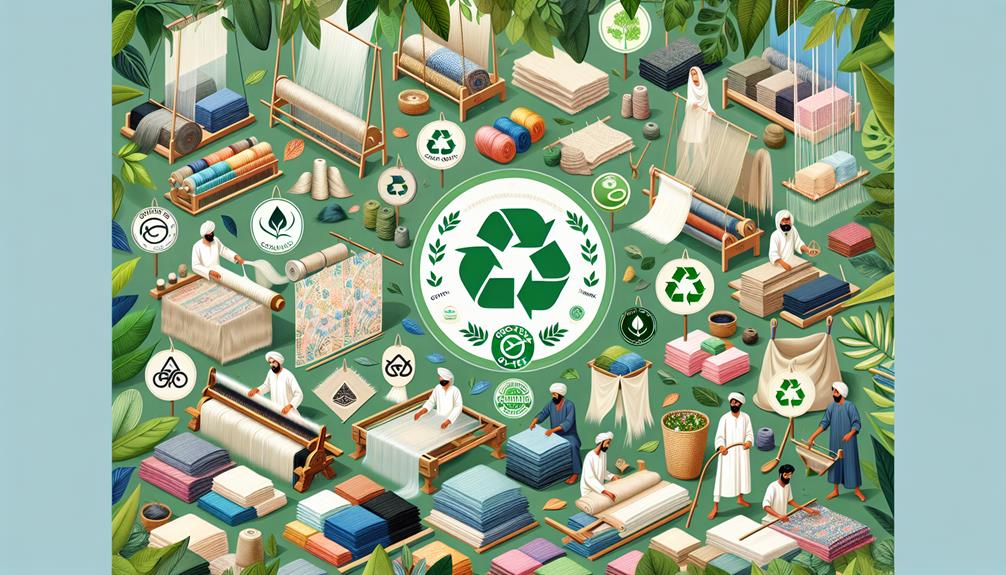
You might not know that the certification landscape for sustainable textiles is incredibly diverse, each with its own focus and criteria. As you navigate through labels like GOTS, OEKO-TEX, and Fair Trade, you'll find that they don't just cover organic materials but also ethical labor practices and safe manufacturing processes. These certifications aim to provide transparency, but understanding their nuances can be quite complex. Curious about how these standards affect your choices and the industry at large? Let's explore what each certification entails and why they matter.
Key Takeaways
- Global Organic Textile Standard (GOTS) certifies organic fibers and evaluates the entire textile supply chain for sustainability.
- OEKO-TEX Standard 100 ensures textiles are free from over 100 harmful substances and emphasizes sustainable production.
- Fair Trade Certified guarantees ethical production standards, fair wages, and safe working conditions in the textile industry.
- Bluesign® System sets standards for chemical use, resource efficiency, and safe textile production for the environment, workers, and consumers.
- Cradle to Cradle Certified focuses on material health, product circularity, and social fairness throughout the product lifecycle.
Global Organic Textile Standard (GOTS)
The Global Organic Textile Standard (GOTS) is the world's leading certification for organic fibers, ensuring eco-friendly and socially responsible textile production. If you're aiming for mastery in sustainable textiles, understanding GOTS is essential.
This certification rigorously evaluates the entire textile supply chain, from organic fiber sourcing to sustainable manufacturing processes. When a product is GOTS-certified, you can be confident the fibers originate from organic farms that avoid harmful pesticides and synthetic fertilizers, promoting soil health and biodiversity.
It's not just about the fibers, though. GOTS also sets stringent criteria for the processing stages, ensuring sustainable manufacturing processes. This means reduced chemical use, water conservation, and responsible waste management.
OEKO-TEX Standard 100
After understanding GOTS, let's explore OEKO-TEX Standard 100, another key certification ensuring textiles are free from harmful substances. When you see this label, you can trust that every component of the product, from threads to zippers, has been tested for harmful chemicals and is safe for human use. This rigorous testing fosters textile safety and boosts consumer confidence.
OEKO-TEX Standard 100 isn't just about the end product; it also emphasizes sustainable production and supply chain transparency. To earn this certification, manufacturers must meet strict criteria, which involve:
- Testing for over 100 harmful substances: These include known carcinogens, heavy metals, and allergenic dyes.
- Annual site inspections: Ensuring ongoing compliance with OEKO-TEX standards.
- Transparent processes: Providing detailed documentation of materials and production methods.
Fair Trade Certified
When you see a Fair Trade Certified label, you know the textile meets strict ethical production standards. This certification guarantees that workers are paid fairly and work in safe conditions.
It also empowers textile workers by promoting sustainable livelihoods and community development.
Ethical Production Standards
Embracing Fair Trade Certified standards guarantees that your textile products support ethical labor practices and fair wages. By prioritizing worker rights and sustainability, you're making a conscious choice to improve the lives of those who create your fabrics. These standards guarantee that workers receive fair compensation and work in safe, humane conditions, which fosters a more sustainable industry.
To achieve this, Fair Trade Certified standards provide transparency throughout the supply chain. You'll know exactly where your materials come from and how they're produced. This visibility assures that every step, from raw material sourcing to finished product, adheres to rigorous ethical guidelines.
Here's what embracing Fair Trade Certified standards means for your business:
- Enhanced Worker Rights: Assuring fair wages, safe working conditions, and the right to unionize.
- Sustainability Practices: Promoting environmental stewardship and sustainable farming methods.
- Supply Chain Transparency: Gaining insights into every stage of production, ensuring ethical practices are followed.
Empowering Textile Workers
How does Fair Trade Certification empower textile workers to achieve better livelihoods and work conditions?
By ensuring that workers receive fair wages, Fair Trade Certification promotes worker empowerment and sustainable practices. When you choose Fair Trade Certified textiles, you're supporting a system that respects labor rights and prioritizes eco-friendly production.
Fair Trade Certification demands that textile companies adhere to strict standards for fair wages, safe working conditions, and the right to unionize. This not only boosts workers' financial stability but also enhances their overall quality of life. You'll find that these fair practices extend beyond just wages; they include access to education and healthcare, fostering a more resilient and empowered workforce.
Moreover, eco-friendly production is a cornerstone of Fair Trade Certification. Companies must implement sustainable practices that minimize environmental impact. This means using organic materials, reducing waste, and conserving water and energy. When textile workers are part of a system that values both their well-being and the planet, they're more motivated and engaged.
In essence, by supporting Fair Trade Certified textiles, you're contributing to a cycle of empowerment and sustainability, ensuring that both workers and the environment benefit.
Bluesign® System
The Bluesign® System guarantees that textile production is safe for the environment, workers, and consumers by setting rigorous standards for chemical use and resource efficiency. Embracing Bluesign® means you're aligning with cutting-edge sustainability practices and staying ahead of textile industry trends. This certification scrutinizes every step of the supply chain, ensuring that harmful substances are eliminated from the beginning and that resources are used responsibly.
When you're evaluating a product with the Bluesign® label, you're assured of:
- Resource Efficiency: Optimizing the use of water, energy, and raw materials to minimize waste and environmental impact.
- Chemical Management: Only using safe chemicals, verified through strict criteria, to protect both workers and the end-users from hazardous exposure.
- Consumer Safety: Guaranteeing that final textile products are free from harmful substances, ensuring safer, higher-quality items for consumers.
Cradle to Cradle Certified
When you look at Cradle to Cradle Certified, you'll find that the certification process emphasizes material health, product circularity, and social fairness.
The criteria assess environmental impacts throughout the product's lifecycle, ensuring sustainability at every stage.
This certification helps you choose textiles that are safer for people and the planet.
Certification Process Overview
Achieving Cradle to Cradle Certification involves a rigorous evaluation of your product's sustainability across several critical categories. To start, you'll need a clear overview of the process, which provides significant benefits by demonstrating your dedication to eco-friendly practices.
The certification process requires you to meet specific requirements designed to assess your product's lifecycle thoroughly.
- Material Health: Evaluate the chemicals used in your product to make sure they're safe for humans and the environment.
- Product Circularity: Design your product for a continuous lifecycle, emphasizing recycling and reuse.
- Water and Soil Stewardship: Implement strategies to protect water resources and soil health during production.
Meeting these requirements isn't just about ticking boxes. It's about embedding sustainability into the core of your operations. You'll gather detailed data on your materials, work with accredited assessors, and submit your findings for review.
This certification not only sets you apart in the competitive textile market but also aligns your business with growing consumer demand for sustainable products.
Environmental Impact Criteria
Evaluating your textile's environmental impact involves examining key criteria laid out by the Cradle to Cradle Certified program. First, focus on sustainable sourcing. This involves validating that raw materials are renewable, responsibly harvested, and ethically produced. You'll need to trace your supply chain meticulously to verify that every component meets stringent sustainability standards. This not only preserves ecosystems but also promotes fair labor practices.
Next, consider the carbon footprint of your textile production. Cradle to Cradle certification requires you to measure and minimize greenhouse gas emissions at every stage—from raw material extraction to manufacturing and distribution. You'll need to implement energy-efficient processes, adopt renewable energy sources, and explore innovative ways to offset any unavoidable emissions.
Also, pay attention to water stewardship. Sustainable textiles should minimize water use and guarantee wastewater is treated to remove harmful substances before it's released back into the environment.
Lastly, assess the end-of-life impact of your textiles. Are they designed for recycling or safe composting? Cradle to Cradle emphasizes a circular economy, where products are either fully reusable or biodegradable, reducing waste and environmental harm.
Better Cotton Initiative (BCI)
The Better Cotton Initiative (BCI) frequently sets the standard for sustainable cotton production worldwide. If you're looking to master sustainable textiles, understanding BCI is essential. The initiative promotes sustainable farming practices and supply chain transparency, guaranteeing that cotton is produced with minimal environmental impact and maximum efficiency. BCI's rigorous standards help you trace cotton from farm to product, giving you confidence in its sustainability.
BCI also prioritizes social responsibility and industry collaboration. They work with farmers to improve working conditions and ensure fair labor practices, which enhances the overall well-being of cotton-growing communities. By collaborating with various stakeholders in the textile industry, BCI drives widespread adoption of sustainable practices.
Here's what BCI focuses on:
- Sustainable farming practices: BCI trains farmers in methods that use less water and chemicals, preserving soil health and biodiversity.
- Supply chain transparency: They provide a clear chain of custody, allowing you to verify the sustainability of the cotton you use.
- Social responsibility: BCI enhances labor conditions and promotes fair wages, contributing to the socio-economic growth of cotton communities.
Understanding BCI's framework equips you with the knowledge to make informed decisions and promote a more sustainable textile industry.
Forest Stewardship Council (FSC)
Shifting our focus from sustainable cotton, let's explore how the Forest Stewardship Council (FSC) guarantees responsible management of the world's forests for textile production.
When you see the FSC label, you're confident that the wood and paper products used have been sourced sustainably. This means they come from forests managed in a way that preserves biodiversity, secures renewable resources, and respects indigenous communities.
To achieve FSC certification, companies must adhere to rigorous standards that promote sustainable sourcing and responsible production. FSC-certified forests are meticulously monitored to prevent illegal logging, reduce environmental impact, and maintain forest health. These measures secure that the textiles derived from these forests contribute positively to the environment.
Frequently Asked Questions
What Are the Benefits of Sustainable Textile Certifications for Consumers?
You'll benefit from sustainable textile certifications by understanding the environmental impact and ethical sourcing of products. These certifications boost consumer awareness and promote transparency in the supply chain, empowering you to make informed, responsible purchases.
How Do Certifications Impact the Pricing of Sustainable Textiles?
Certifications impact the pricing of sustainable textiles by increasing cost implications due to rigorous standards and processes. However, market demand often offsets these costs, as consumers are willing to pay more for verified sustainable products.
Are There Any Certifications Specific to Recycled Textiles?
Yes, there are recycled textile certifications. You'll find GRS and RCS significant. Each certification requires adherence to stringent certification requirements, ensuring materials' authenticity, traceability, and sustainable practices, which ultimately bolster your expertise in sustainable fashion.
How Do I Verify if a Textile Is Genuinely Certified?
To verify if a textile is genuinely certified, you should check the certification label and trace it back through the verification process. Trusted organizations like GOTS or OEKO-TEX provide databases where you can cross-reference certification details.
What Are the Challenges in Obtaining Sustainable Textile Certifications?
You'll face challenges like understanding complex certification standards and ensuring industry transparency. Maneuvering these hurdles requires diligence and a deep knowledge of the criteria and processes involved in verifying sustainable practices.