
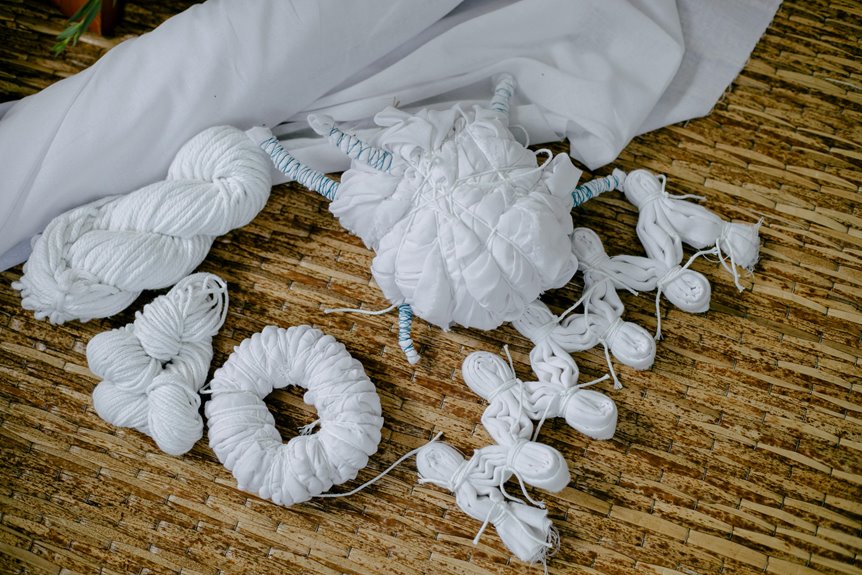
If you want crisp lines and sharp designs with dry tie-dye, start by tightly folding and securing dry fabric to control dye placement. Use fiber-reactive dyes sparingly, applying them carefully with small tools to avoid bleeding. Make sure the fabric is completely dry before adding colors, and allow each section to dry slightly between applications. Using rubber bands, tape, or wax as resist materials can help preserve clear patterns. Keep going, and you’ll discover how to master vibrant, precise designs every time.
Key Takeaways
- Apply fiber-reactive dye directly onto dry, tightly folded fabric to prevent bleeding and ensure sharp, crisp lines in designs.
- Use precise folding, rubber bands, and resist materials like tape or wax to control dye placement and create defined patterns.
- Avoid oversaturating fabric with dye; apply colors sparingly and allow each layer to dry partially before adding more.
- Work on a clean, flat surface with organized tools to prevent smudging and maintain pattern accuracy during application.
- Heat-set dyed fabric following manufacturer instructions and wash gently to preserve sharp lines and vibrant colors.
Understanding the Basics of Dry Tie-Dye
Although dry tie-dye differs from traditional methods, you’ll find it just as creative and fun. Instead of soaking fabric in dye, you apply color directly to dry, folded, or twisted cloth. This approach gives you crisp lines and sharp designs because the dye doesn’t bleed as much.
You use precise placement, controlling where the color hits the fabric, which means your patterns look cleaner and more defined. Dry tie-dye requires patience and a steady hand, but it’s rewarding when you see those distinct shapes emerge.
Essential Materials for Dry Tie-Dye Projects
Before you start your dry tie-dye project, gather the right materials to guarantee crisp, vibrant results. You’ll need high-quality fiber-reactive dyes since they bond well with natural fabrics and produce sharp colors.
Choose white or light-colored 100% cotton garments for the best dye absorption. Grab rubber bands or string to create tight, defined patterns—these help keep your design lines clean.
Use disposable gloves to protect your hands and a plastic table cover to keep your workspace tidy. Have spray bottles or squeeze bottles on hand to apply dye precisely without oversaturating.
Finally, keep paper towels nearby to blot any excess dye immediately. With these essentials ready, you’ll set yourself up for a successful dry tie-dye experience that delivers bold, crisp designs.
Preparing Your Fabric for Dry Tie-Dye
With your materials ready, the next step is to prepare your fabric to guarantee the dye adheres properly and the patterns come out sharp.
Start by washing your fabric without fabric softener to remove any finishes or residues that might block the dye. Avoid drying it; keep the fabric damp, as moisture helps the dye absorb evenly.
Next, decide on your pattern and fold or twist the fabric tightly, securing it with rubber bands or strings. The tighter the binding, the crisper the lines will be. Make sure the fabric is evenly folded to prevent unwanted dye spots.
Finally, set up a clean, flat workspace with protective covering to avoid stains. Proper preparation sets the foundation for striking dry tie-dye results.
Choosing the Right Dyes and Colors
How do you pick dyes that will make your dry tie-dye project stand out? First, choose fiber-reactive dyes because they bond well with cotton and other natural fabrics, guaranteeing vibrant, lasting colors. Avoid all-purpose dyes, as they mightn’t produce crisp lines.
Next, consider the color contrast; pick shades that sharply contrast with your fabric’s base color to highlight your design’s edges. Bold colors like deep blues, reds, and purples work well against white or light backgrounds.
Also, think about your design’s mood—cool tones for calm, warm tones for energy. Finally, test your chosen dyes on a small fabric swatch to check colorfastness and saturation before committing.
This way, you’ll guarantee your dry tie-dye project pops with sharp, eye-catching colors.
Step-by-Step Dry Tie-Dye Application Process
First, you’ll need to prepare your fabric properly to guarantee the dye adheres well.
Then, apply the dye precisely to create sharp patterns without bleeding.
Finally, set and dry your piece carefully to lock in the colors and finish the process.
Preparing Fabric Properly
A clean, well-prepared fabric guarantees your dry tie-dye design turns out vibrant and long-lasting.
Start by choosing 100% cotton or another natural fiber, as synthetic blends won’t absorb dye well. Before you begin, wash the fabric without fabric softener to remove any sizing, dirt, or oils that might block dye absorption.
Once washed, dry it completely—moisture can cause colors to blur. Next, stretch your fabric tightly over a flat surface or frame to keep it stable during the application. Secure it firmly with clamps or tape to prevent shifting.
Finally, iron the fabric if needed to eliminate wrinkles, creating a smooth canvas for your crisp tie-dye patterns. Proper preparation sets the foundation for sharp, striking results.
Applying Dye Precisely
Begin by selecting the right dye applicator—such as a fine-tip bottle or brush—to guarantee you can control the amount and placement of dye with accuracy. Next, steady your hand and apply dye slowly along the folded fabric edges to create sharp lines. Avoid over-saturating; a little dye goes a long way. Use small, deliberate strokes for intricate patterns. Keep a scrap fabric nearby to test dye flow and adjust pressure.
| Step | Action | Tip |
|---|---|---|
| 1 | Choose applicator | Fine-tip for precision |
| 2 | Apply dye carefully | Steady hand, slow strokes |
| 3 | Avoid oversaturation | Use minimal dye |
| 4 | Test on scrap fabric | ascertain consistent flow |
This approach guarantees crisp, clean designs every time.
Setting and Drying
Once you’ve applied the dye carefully, you’ll need to set and dry your design properly to guarantee vibrant, lasting colors. This step locks in the crisp lines and sharp patterns that make dry tie-dye unique.
Here’s how to do it right:
- Wrap your fabric in plastic wrap to keep the dye moist and prevent smudging.
- Let it rest at room temperature for 6-8 hours or overnight to allow the dye to set fully.
- Unwrap and rinse gently with cold water to remove excess dye without blending colors.
- Air dry flat in a shaded area to maintain color intensity and avoid fading from direct sunlight.
Following these steps assures your design stays bold and clean, showcasing the precision of the dry tie-dye technique.
Techniques to Achieve Crisp Lines and Sharp Edges
To get crisp lines and sharp edges, you’ll want to focus on precise folding methods that control where the dye lands.
Applying dye carefully and using resist materials can help keep colors from bleeding.
These techniques work together to create clean, defined patterns every time.
Precise Folding Methods
Although tie-dye often embraces randomness, mastering precise folding methods lets you create crisp lines and sharp edges that stand out.
You’ll want to focus on how you manipulate your fabric before dyeing to control the final design.
Try these folding techniques:
- Accordion Fold – Fold the fabric back and forth in narrow, even pleats for parallel lines.
- Triangle Fold – Fold fabric diagonally to form sharp triangular shapes and edges.
- Bullseye Fold – Pinch a central point and fold fabric outward in tight, concentric folds.
- Square Fold – Fold fabric into neat squares or rectangles, creating distinct blocks of color.
Each method helps you define where dye penetrates.
Practice these to sharpen your dry tie-dye designs.
Controlled Dye Application
Mastering precise folding sets the stage, but how you apply dye determines the sharpness of your final design. To achieve crisp lines, you need to control the amount and placement of dye carefully.
Use small, precise applicators like squeeze bottles or fine brushes to target specific areas without bleeding over edges. Work slowly and steadily, applying dye in thin layers to prevent saturation that blurs lines. Avoid over-saturating your fabric; too much dye seeps under folds, softening edges.
If you want distinct color boundaries, apply colors separately and let each section dry slightly before moving on. Keep your workspace organized to minimize accidental smudging.
With controlled dye application, your tie-dye patterns will have the sharpness and clarity that stand out beautifully.
Using Resist Materials
When you want your tie-dye patterns to have truly crisp lines and sharp edges, using resist materials can make all the difference.
These materials block dye from reaching certain fabric areas, creating distinct boundaries in your design. You can easily control where colors stop and start, making your patterns pop with precision.
Here are four common resist materials to try:
- Rubber bands – Wrap tightly around fabric sections to keep dye out.
- Wax – Apply melted wax to fabric; it repels dye and preserves white spaces.
- Tape – Use masking or painter’s tape to mask off straight lines for geometric shapes.
- Glue – Brush on fabric glue that dries clear and resists dye for intricate details.
Experimenting with these helps you master sharp, clean lines in dry tie-dye.
Tips for Preventing Color Bleeding in Dry Tie-Dye
How can you keep your colors vibrant and sharp in dry tie-dye projects?
First, make sure your fabric is completely dry before applying any dye. Moisture encourages colors to bleed.
Use high-quality, fiber-reactive dyes designed for dry application—they bond better and reduce bleeding.
Apply dye sparingly and avoid oversaturating fabric folds or edges. You can also use a fixative spray after dyeing to lock colors in place.
When layering colors, wait for each layer to dry fully to prevent mixing.
Finally, after dyeing, heat-set your design according to the dye manufacturer’s instructions; this step helps stabilize the colors.
Common Mistakes to Avoid With Dry Tie-Dye
Keeping your fabric dry and applying dye carefully helps preserve vibrant colors, but even with the best techniques, certain mistakes can still trip you up.
To get crisp, sharp designs, avoid these common pitfalls:
- Over-saturating the fabric: Too much dye can cause colors to bleed and blur your lines.
- Not securing folds tightly: Loose folds let dye seep under, ruining your sharp patterns.
- Using low-quality dye: Cheap dyes often lack pigmentation, resulting in dull, uneven colors.
- Skipping drying time: Rushing to rinse or unfold before the dye sets can smudge your design.
Creative Design Ideas Using the Dry Tie-Dye Method
Although the dry tie-dye technique demands careful application, it opens up a world of creative possibilities. You can experiment with geometric patterns by folding fabric into sharp creases and applying dye along the edges for crisp lines.
Try creating bold stripes or chevrons by tightly binding sections with rubber bands or string. For a modern twist, use stencils on dry fabric before dyeing to achieve detailed motifs and sharp contrasts.
Mixing vibrant colors in controlled zones lets you highlight specific areas without bleeding. You can also layer multiple colors by waiting for each to dry before adding the next, enhancing depth and precision.
With patience and practice, you’ll craft unique designs that stand out with clean, defined edges only dry tie-dye can deliver.
Caring for Your Dry Tie-Dye Creations
Once you finish your dry tie-dye project, you’ll want to preserve its vibrant colors and crisp patterns by caring for it properly.
Treat your creation with care to keep it looking fresh and sharp. Here’s how you can do it:
- Wash your item separately in cold water to prevent colors from bleeding.
- Use a mild detergent, avoiding bleach or harsh chemicals that can fade the design.
- Turn your garment inside out before washing to protect the surface patterns.
- Air dry your piece or use a low heat setting to avoid shrinking and maintain fabric integrity.
Frequently Asked Questions
Can Dry Tie-Dye Be Done on Synthetic Fabrics?
You can tie-dye synthetic fabrics, but they don’t absorb dye as well as natural fibers. You’ll need special dyes made for synthetics, and colors might be less vibrant or fade quicker. Test first!
How Long Does the Dry Tie-Dye Process Take to Complete?
You’ll find the process dances between patience and creativity, usually taking around 4 to 6 hours. This time lets colors settle like a whispered secret, ensuring your design’s crispness and vibrancy shine through perfectly.
Is Dry Tie-Dye Safe for Children’s Clothing?
You can safely use dry tie-dye on children’s clothing if you choose non-toxic, kid-friendly dyes and follow all safety guidelines. Always wash the clothes thoroughly before your child wears them to avoid skin irritation.
Can I Use Natural Dyes With the Dry Tie-Dye Technique?
You can use natural dyes with dry tie-dye—think of earthy tones meeting crisp patterns. Just guarantee your fabric’s dry and your dyes are concentrated. This combo helps you achieve sharp, vibrant designs effortlessly.
What Is the Best Way to Store Leftover Dry Tie-Dye Materials?
You should store leftover materials in airtight containers to keep them fresh and prevent contamination. Keep dyes and powders in a cool, dry place away from sunlight. Label everything clearly so you can easily find and reuse them later.