
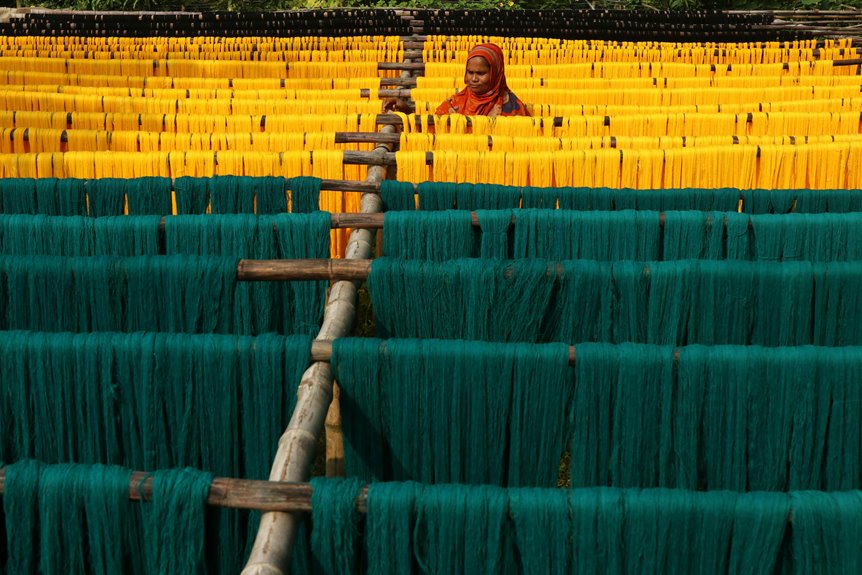
If you’re exploring yarn dyed fabric manufacturers in Bangladesh, you’ll find a thriving industry blending modern technology with skilled artisanship. These manufacturers produce vibrant, durable fabrics known for sharp patterns and excellent colorfastness. They use automated dyeing processes and sustainable practices to meet global standards while facing challenges like resource supply and environmental compliance. With ongoing innovation and strong export potential, the sector shows promising growth and quality improvement. Keep going to discover more about their journey and future outlook.
Key Takeaways
- Bangladesh’s yarn dyed fabric manufacturers combine traditional weaving with modern technology to produce vibrant, durable fabrics for global markets.
- Leading factories employ automated dyeing and computer-controlled color matching for consistent quality and efficient production.
- Manufacturers maintain strict quality control, using manual and automated inspections to meet international standards like ISO 9001 and OEKO-TEX.
- Sustainable practices, including eco-friendly dyes and water recycling, are increasingly adopted despite challenges like outdated machinery and energy shortages.
- Skilled artisans and ongoing workforce training drive innovation and support Bangladesh’s position as a top textile exporter in yarn dyed fabrics.
Overview of Yarn Dyed Fabric Production in Bangladesh
Although Bangladesh is widely known for its ready-made garment industry, it has also developed a strong presence in yarn dyed fabric production.
When you explore this sector, you’ll see how manufacturers focus on weaving dyed yarns into fabrics that offer vibrant colors and durability. You’ll find that many producers use modern technology alongside traditional techniques, ensuring quality and consistency.
If you’re sourcing yarn dyed fabrics, Bangladesh’s manufacturers can provide a variety of options, from cotton to blends, meeting diverse needs. The country’s skilled workforce and competitive pricing make it easier for you to access high-quality materials without breaking your budget.
Key Features of Yarn Dyed Fabrics
Yarn dyed fabrics stand out for their vibrant colors and lasting quality, which come from dyeing the yarns before weaving.
When you choose yarn dyed fabrics, you get patterns with crisp, sharp designs that don’t fade easily because the color penetrates the fiber deeply. These fabrics also offer excellent colorfastness, so you won’t worry about colors bleeding during washing.
Additionally, the texture feels richer and more durable compared to piece-dyed fabrics since the dyeing process strengthens the yarn itself. You’ll notice that the intricate patterns, like checks and stripes, maintain their clarity over time.
Historical Development of Textile Industry in Bangladesh
Since the mid-20th century, Bangladesh has rapidly transformed its textile industry from small-scale handloom operations to a global manufacturing powerhouse.
You’ll find that this growth began with the establishment of jute mills and cotton weaving units in the 1950s. Over the decades, government policies encouraged industrialization, leading to the rise of large-scale textile factories.
Growth started in the 1950s with jute mills and cotton weaving, boosted by industrial policies.
The 1980s and 1990s marked significant expansion, fueled by export incentives and foreign investment. You can see how the industry shifted focus from basic fabrics to more value-added products like yarn dyed fabrics.
Today, Bangladesh ranks among the top textile exporters worldwide, thanks to its skilled workforce and competitive production costs.
Understanding this history helps you appreciate the expertise behind their yarn dyed fabric manufacturers.
Leading Yarn Dyed Fabric Manufacturers in Bangladesh
When you explore the textile market in Bangladesh, you’ll find several manufacturers setting high standards in yarn dyed fabric production. These companies are known for quality, innovation, and meeting global demands efficiently. You can rely on them for diverse fabric types, from cotton to blended yarns, catering to both domestic and international markets.
Here’s a quick look at some leading manufacturers:
| Manufacturer Name | Specialization |
|---|---|
| Square Textiles Ltd. | Cotton & blended yarn fabrics |
| Nadia Fabrics Ltd. | Premium yarn dyed cotton |
| Envoy Textiles Ltd. | Yarn dyed shirting fabrics |
| Pacific Jeans Ltd. | Denim & yarn dyed fabrics |
| Beximco Textiles Ltd. | Exceptional yarn dyed textiles |
Choosing any of these will guarantee you get first-rate yarn dyed fabrics from Bangladesh.
Technological Advancements in Yarn Dyeing Processes
Although dyeing techniques have evolved over decades, recent technological advancements have truly transformed the yarn dyeing process in Bangladesh.
You’ll notice manufacturers now use automated dyeing machines that offer precise color control and reduce water and energy consumption. This shift not only boosts efficiency but also minimizes environmental impact.
Additionally, computer-controlled systems help you achieve consistent color matching, ensuring each batch meets exact specifications. Many factories have adopted eco-friendly dyes and closed-loop water recycling systems, which you’ll appreciate for sustainability.
With these innovations, you can expect faster turnaround times and superior fabric quality.
Quality Control Measures Among Manufacturers
You’ll find that top manufacturers use strict inspection techniques to catch any defects early in the process.
They also follow rigorous compliance standards to guarantee consistent quality in every batch.
Inspection Techniques
Since quality defines the reputation of yarn dyed fabric manufacturers in Bangladesh, they employ rigorous inspection techniques to confirm every batch meets industry standards.
When you visit these facilities, you’ll notice they use both manual and automated inspections to catch defects early. Visual checks identify color inconsistencies, weaving faults, and yarn irregularities. Advanced machines measure fabric strength, color fastness, and dimensional stability with high accuracy.
You’ll also find that manufacturers conduct random sampling throughout production to confirm consistency. If you’re sourcing fabric, these inspections give you confidence in the product’s reliability.
Compliance Standards
Building on thorough inspection techniques, yarn dyed fabric manufacturers in Bangladesh strictly adhere to compliance standards that govern quality control.
When you work with these manufacturers, you’ll notice they follow international certifications like ISO 9001 and OEKO-TEX, ensuring their fabrics meet safety and quality benchmarks.
They implement rigorous testing procedures at every production stage, from raw material sourcing to final output.
You’ll find continuous monitoring systems that detect defects early, reducing waste and improving consistency.
Plus, these manufacturers maintain transparent documentation and traceability, so you can track product quality throughout the supply chain.
Export Markets and Global Demand Trends
You’ll find that Bangladesh’s yarn dyed fabric manufacturers primarily export to markets in Europe, North America, and Asia.
These regions show growing demand for high-quality, sustainable textiles.
Understanding these export destinations helps you grasp the global market trends shaping the industry’s future.
Key Export Destinations
Although the global textile market constantly evolves, Bangladesh’s yarn dyed fabric manufacturers have secured strong footholds in key export destinations like the US, EU, and Canada.
You’ll find these regions consistently demand high-quality yarn dyed fabrics for apparel, home textiles, and fashion accessories. Manufacturers in Bangladesh meet these needs by adhering to strict quality standards and offering competitive pricing.
You can also see growing interest from emerging markets in Asia and the Middle East, expanding Bangladesh’s export reach.
When you consider sustainability trends, many buyers in Europe and North America prioritize eco-friendly production, pushing manufacturers to adopt greener practices.
Global Market Growth
As global demand for yarn dyed fabrics rises, Bangladesh’s manufacturers are poised to capitalize on expanding export markets.
You’ll find that these producers are tapping into growing apparel and home textile sectors worldwide, especially in Europe, North America, and emerging Asian markets.
Trends show consumers increasingly favor durable, colorful fabrics, boosting demand for yarn dyed textiles.
You can expect Bangladesh’s competitive pricing, skilled labor, and improved infrastructure to attract more international buyers.
Plus, manufacturers are adapting quickly to sustainable practices, aligning with global market expectations.
If you’re a buyer, you’ll appreciate the country’s ability to meet large orders without compromising quality.
As global trends shift toward quality and eco-friendliness, Bangladesh’s yarn dyed fabric industry is well-positioned to thrive and expand its global footprint.
Sustainable Practices in Yarn Dyed Fabric Production
When manufacturers adopt sustainable practices in yarn dyed fabric production, they reduce environmental impact while meeting growing consumer demand for eco-friendly products.
You’ll notice many Bangladeshi manufacturers focus on using organic or recycled fibers, cutting water and energy consumption through advanced dyeing techniques. They also implement waste management systems to minimize pollution and recycle excess materials.
By choosing eco-friendly dyes, you help lower harmful chemical runoff, protecting local ecosystems. Sustainable certifications like GOTS and OEKO-TEX guarantee quality and environmental responsibility—these are becoming standard in Bangladesh’s textile industry.
When you source from manufacturers committed to sustainability, you not only support cleaner production but also align your brand with global green initiatives. This shift benefits both the planet and your business reputation.
Challenges Faced by Yarn Dyed Fabric Manufacturers
Despite the growing demand for yarn dyed fabrics, manufacturers in Bangladesh face several significant challenges that can impact production quality and efficiency.
Manufacturers in Bangladesh confront key challenges affecting the quality and efficiency of yarn dyed fabric production.
You might struggle with inconsistent raw material supply, which disrupts production schedules and raises costs. Additionally, outdated machinery often limits your ability to maintain high-quality standards and meet tight deadlines.
Energy shortages and unreliable power supply can halt operations unexpectedly, causing delays. Environmental regulations require careful compliance, sometimes increasing operational complexity.
You also face intense competition from global markets, pushing you to innovate while controlling expenses. Logistics and transportation inefficiencies further complicate timely delivery.
Overcoming these challenges demands strategic planning, investment in technology, and strong supplier relationships to stay competitive and fulfill growing market demands effectively.
Role of Skilled Workforce in the Industry
Although technology plays an essential role in yarn dyed fabric production, you can’t overlook the importance of a skilled workforce in ensuring quality and efficiency.
When you work with experienced artisans and technicians, you’re tapping into their deep knowledge of dyeing techniques, fabric handling, and machinery operation. Their expertise helps minimize defects and maintain consistent color vibrancy, which is vital for meeting buyer expectations.
You’ll also find that skilled workers can troubleshoot issues quickly, reducing downtime and waste.
In Bangladesh, many manufacturers invest in training programs to sharpen employees’ skills, recognizing that human talent drives innovation and productivity.
Future Prospects for Yarn Dyed Fabric Manufacturing in Bangladesh
You’ll see strong market growth potential as demand for yarn dyed fabrics rises globally.
Embracing new technologies can boost your production efficiency and fabric quality.
Plus, expanding export opportunities will open doors to new international markets.
Market Growth Potential
As global demand for sustainable and high-quality textiles rises, Bangladesh is positioned to expand its yarn dyed fabric manufacturing considerably.
You’ll find that the country’s abundant skilled labor and competitive production costs give it a strong edge in meeting growing market needs.
As international brands increasingly seek eco-friendly materials, you can expect Bangladesh to attract more business opportunities in this niche.
Furthermore, expanding export markets and favorable trade agreements will help you tap into new regions more easily.
If you’re investing or partnering in this sector, you’ll benefit from a market enthusiastic for innovation and quality.
Technological Advancements Impact
When you embrace new technologies, yarn dyed fabric manufacturing in Bangladesh can leap forward considerably. You’ll see improvements in production speed, quality consistency, and design innovation.
These advancements help you meet growing market demands while reducing waste and costs.
By adopting digital weaving and automated dyeing systems, you can enhance efficiency and precision. Smart technology also enables better inventory management and quicker response to trends.
Here’s what technological progress offers you:
- Increased production capacity with less manual intervention
- Superior fabric quality through precise color control
- Enhanced design flexibility using computer-aided techniques
As a result, you position yourself to compete globally and satisfy sophisticated buyers.
Staying updated with technology guarantees your manufacturing stays relevant and profitable in the future.
Export Opportunities Expansion
While global demand for high-quality textiles keeps rising, expanding your export opportunities in yarn dyed fabric manufacturing in Bangladesh becomes essential for growth.
You can tap into emerging markets in Europe, North America, and Asia, where buyers increasingly seek unique, durable fabrics. Strengthening relationships with international buyers and participating in global trade fairs will boost your visibility.
Additionally, complying with environmental and labor standards opens doors to premium markets. Leveraging digital platforms for marketing and direct sales can also accelerate your reach.
Frequently Asked Questions
What Types of Yarn Are Most Commonly Used in Bangladesh’s Yarn Dyed Fabrics?
You’ll find cotton and polyester blends are the most common yarns used in yarn dyed fabrics. They offer durability and vibrant colors, making your fabric both comfortable and long-lasting for various textile applications.
How Do Local Climate Conditions Affect Yarn Dyeing Processes in Bangladesh?
You’ll find that Bangladesh’s humid and warm climate speeds up dye absorption but requires careful moisture control to avoid uneven coloring. You’ll need to adjust drying times and ventilation to guarantee consistent, high-quality yarn-dyed fabrics.
What Are the Typical Lead Times for Yarn Dyed Fabric Orders From Bangladesh?
Imagine waiting for morning coffee—the typical lead times for yarn dyed fabric orders from Bangladesh range from 4 to 8 weeks. You’ll want to plan ahead, as quality takes time and patience to brew perfectly.
How Do Manufacturers Handle Custom Color Matching Requests?
When you request custom color matching, manufacturers usually ask for a sample or color code, then run tests to confirm accuracy. They’ll adjust dyes as needed and provide a proof before full production starts, keeping you involved throughout.
Are There Any Government Incentives for Yarn Dyed Fabric Manufacturers in Bangladesh?
You might be surprised—yes, the government offers incentives like tax breaks and subsidized loans to boost yarn dyed fabric production. These perks help you cut costs and grow your business in a competitive market.