
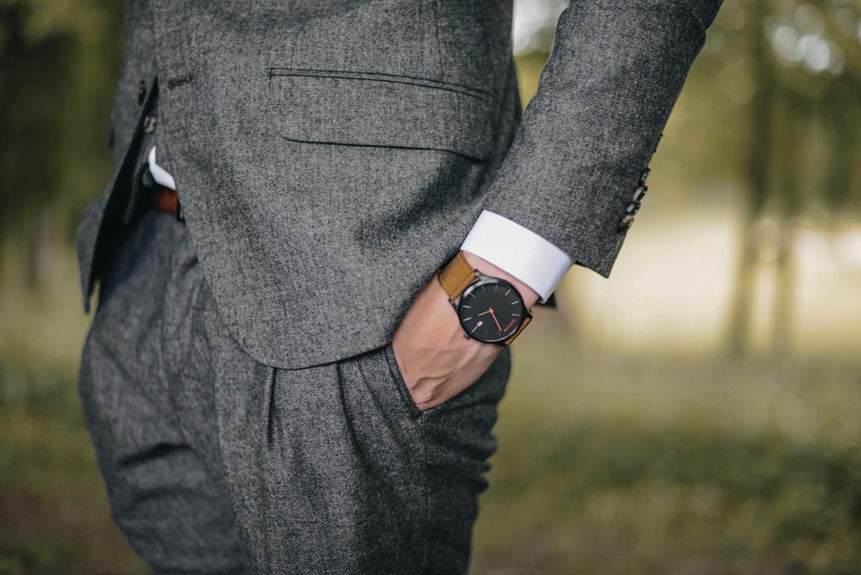
You’ll love wool gabardine fabric for suiting and trousers because it offers unbeatable durability, wrinkle resistance, and breathability. Its tightly woven twill weave keeps garments sharp and comfortable, while natural wool fibers provide warmth without overheating. Whether for formal events or daily wear, gabardine maintains a polished look and weather resilience. It’s a smart investment that balances style and function effortlessly. Keep exploring to uncover how its history and care make it a top choice.
Key Takeaways
- Wool gabardine’s tight twill weave ensures durability, wrinkle resistance, and a sharp, polished appearance ideal for suiting and trousers.
- Its breathable, water-resistant surface offers comfort and protection across varied climates, from mild winters to high-altitude regions.
- The fabric balances softness with structure, providing excellent shape retention and a smooth texture suitable for formal and everyday wear.
- Compared to cotton or linen, wool gabardine resists abrasion, pilling, and maintains a crisp look throughout long wear.
- Proper care, including dry cleaning and storage on padded hangers, preserves gabardine’s texture, fit, and longevity in tailored garments.
Understanding the History of Wool Gabardine
Although you mightn’t realize it, wool gabardine has a rich history that shapes its reputation today.
You’ll find that this fabric was invented in the late 19th century by Thomas Burberry, who wanted a durable, water-resistant material for outdoor wear. Originally designed for trench coats during World War I, gabardine’s tightly woven structure made it ideal for withstanding harsh weather.
As you explore its past, you’ll see how it evolved from functional outerwear to a staple in suiting and trousers, admired for its refined look and practicality.
Understanding this history helps you appreciate why wool gabardine maintains its status as a classic fabric choice, combining heritage with performance in modern fashion.
Key Characteristics of Wool Gabardine Fabric
The rich history of wool gabardine sets the stage for understanding what makes this fabric stand out today. When you choose wool gabardine, you’re picking a fabric known for its durability and smooth finish.
Wool gabardine combines timeless durability with a sleek, smooth finish that defines quality fabric.
Here are four key characteristics you’ll appreciate:
- Tightly woven texture – This gives gabardine its distinctive firmness and resistance to wrinkles.
- Water-resistant surface – Thanks to its weave, it repels moisture better than many other wools.
- Breathability – Despite its durability, it allows air circulation, keeping you comfortable.
- Elegant drape – It holds shape well, making suits and trousers look sharp and polished.
These features make wool gabardine an excellent choice for both formal and everyday wear.
The Weaving Process Behind Gabardine
You’ll notice that gabardine’s durability comes from its distinctive twill weave structure, which creates a tight diagonal pattern.
Before weaving, the yarns undergo careful preparation to guarantee strength and smoothness.
Understanding these steps helps you appreciate why gabardine fabric holds up so well in suiting and trousers.
Twill Weave Structure
When you examine gabardine closely, you’ll notice its distinctive diagonal ribbing, a result of the twill weave structure used in its creation. This weaving technique gives gabardine its durability and smooth finish, making it ideal for suiting and trousers.
Here’s what you need to know about twill weave:
- Threads pass over and under multiple yarns, creating a strong diagonal pattern.
- The weave’s tightness enhances gabardine’s resistance to wrinkles and wear.
- The structure allows for a firm yet flexible fabric, comfortable for daily wear.
- It produces a fabric with a subtle sheen, adding to its polished look.
Understanding twill weave helps you appreciate why gabardine stands out in quality and performance.
Yarn Preparation Techniques
Before weaving gabardine’s distinctive twill pattern, manufacturers carefully prepare the yarn to guarantee strength and consistency.
You’ll notice that the wool fibers undergo cleaning and carding to remove impurities and align them uniformly. Then, the fibers are spun into yarns with controlled tension, ensuring durability.
Sometimes, the yarns are even mercerized or treated to enhance smoothness and luster. This preparation is essential because it prevents weak spots that could compromise the fabric’s integrity.
When you wear wool gabardine, you benefit from this meticulous yarn preparation, which creates a tightly woven, resilient fabric ideal for suiting and trousers.
Understanding these steps helps you appreciate the craftsmanship behind gabardine’s smooth surface and long-lasting performance.
Comparing Wool Gabardine to Other Suiting Fabrics
When you compare wool gabardine to other suiting fabrics, you’ll notice its exceptional durability and resistance to wear.
You’ll also find its smooth texture offers a comfortable feel, striking a balance between softness and structure.
Plus, gabardine performs well across different climates, making it a versatile choice for your wardrobe.
Durability and Wear Resistance
Although many suiting fabrics offer style and comfort, wool gabardine stands out for its exceptional durability and wear resistance. When you choose wool gabardine, you get a fabric that holds up remarkably well over time compared to alternatives like cotton or linen. Here’s why:
- Tight Weave: The dense twill weave resists abrasion and pilling, keeping your suit looking sharp.
- Natural Fibers: Wool fibers naturally bend and recover, reducing wear from daily movement.
- Moisture Resistance: It repels light moisture, preventing fabric breakdown.
- Shape Retention: Gabardine maintains its form, so you avoid sagging or bagging in high-stress areas.
These traits make wool gabardine a reliable choice if you want suiting that stays pristine through frequent wear.
Texture and Comfort Levels
Since comfort plays a key role in choosing suiting fabric, you’ll want to understand how wool gabardine compares to others in texture and feel. Wool gabardine offers a smooth, tightly woven surface that feels soft yet structured, giving you comfort without sacrificing form. Unlike coarser fabrics, it gently molds to your body, making it ideal for all-day wear.
| Fabric Type | Comfort Feeling |
|---|---|
| Wool Gabardine | Smooth, breathable, flexible |
| Cotton Twill | Soft but less structured |
| Linen | Lightweight but rougher |
Wool gabardine’s balance between softness and firmness guarantees you stay comfortable and polished, no matter the occasion.
Climate Suitability Comparison
Understanding how wool gabardine performs across different climates helps you pick the right fabric for your needs.
Compared to other suiting fabrics, wool gabardine offers unique advantages:
- Warmth in Cooler Weather: Wool fibers trap heat, making gabardine excellent for chilly climates.
- Breathability: Its tight weave still allows airflow, so you stay comfortable without overheating.
- Moisture Resistance: Gabardine’s water-repellent finish helps you stay dry in light rain, unlike cotton.
- Versatility in Changing Seasons: It balances warmth and breathability better than heavier tweeds or lighter linens.
Advantages of Wool Gabardine for Tailoring
When you choose wool gabardine for tailoring, you tap into a fabric that offers exceptional durability and a sleek finish. It resists wrinkles, maintains its shape, and provides a smooth texture that enhances any suit or trousers. Wool gabardine also breathes well, keeping you comfortable without sacrificing style. Its tightly woven fibers guarantee longevity, making your tailored pieces a smart investment.
| Feature | Benefit | Why It Matters |
|---|---|---|
| Durability | Long-lasting wear | Saves money over time |
| Wrinkle Resistance | Maintains crisp look | Keeps you sharp all day |
| Smooth Texture | Sleek appearance | Elevates overall style |
| Breathability | Comfort in movement | Prevents overheating |
| Shape Retention | Consistent fit | Preserves tailored silhouette |
Ideal Climates for Wearing Wool Gabardine
Although wool gabardine is known for its durability and breathability, you’ll find it performs best in moderate to cool climates.
Its tightly woven structure provides insulation without overheating, making it versatile for various weather conditions.
When choosing wool gabardine for your suits or trousers, consider these ideal climates:
- Temperate regions – Enjoy comfortable wear in spring and fall when temperatures fluctuate.
- Mild winters – Stay warm without bulky layers in climates with cool but not extreme cold.
- Oceanic climates – Benefit from wool gabardine’s moisture resistance and breathability near coastal areas.
- High-altitude areas – Experience warmth and wind resistance in cooler mountainous environments.
Wearing wool gabardine in these conditions guarantees you stay stylish and comfortable year-round.
How Wool Gabardine Enhances Suit and Trouser Durability
You’ll appreciate how wool gabardine’s tight twill weave boosts the strength and longevity of your suits and trousers.
Its natural fibers add resilience, helping your garments withstand daily wear.
Plus, the fabric’s resistance to wrinkles keeps your look sharp without constant touch-ups.
Tight Twill Weave
Because of its tight twill weave, wool gabardine stands out as a highly durable fabric for suits and trousers. This weave creates a smooth, dense surface that resists wear and tear better than many other fabrics.
When you choose wool gabardine, you get:
- Enhanced fabric strength, reducing the chance of snags or pulls.
- Improved wrinkle resistance, keeping your suit sharp throughout the day.
- Greater shape retention, so your trousers maintain a clean, tailored look.
- Increased longevity, ensuring your investment lasts through frequent use.
This tight weave also helps the fabric repel moisture slightly, adding to its practical benefits.
When durability matters, wool gabardine’s tight twill weave delivers reliable, long-lasting performance for your wardrobe.
Natural Fiber Strength
Wool’s natural fiber strength plays an essential role in making gabardine an excellent choice for suits and trousers.
When you wear wool gabardine, you benefit from fibers that naturally resist wear and tear, giving your garments impressive longevity. These fibers have a resilient structure that withstands daily movement and friction, so your suit or trousers maintain their shape and integrity over time.
You don’t have to worry about the fabric thinning or weakening quickly, even with regular use. Additionally, wool’s ability to flex without breaking adds to the durability of gabardine, helping your clothing endure the stresses of active wear.
Choosing wool gabardine means investing in suits and trousers that stay strong, comfortable, and looking sharp for longer.
Resistance to Wrinkles
Beyond its natural fiber strength, wool gabardine also excels at resisting wrinkles, which plays a big part in keeping your suits and trousers looking polished throughout the day.
You’ll appreciate how this fabric maintains a crisp appearance, even after long hours of wear. Here’s how wool gabardine enhances wrinkle resistance:
- Tight Weave: The dense twill weave minimizes creasing.
- Elastic Fibers: Natural wool fibers bounce back from folds.
- Moisture Management: It absorbs and releases moisture, reducing fabric stress.
- Durability: The fabric withstands repeated movement without permanent wrinkles.
With wool gabardine, you get a suit or trousers that look sharp from morning meetings to evening events, letting you focus on your day without worrying about your outfit’s condition.
Styling Tips for Wool Gabardine Suits and Trousers
When you choose wool gabardine suits and trousers, you tap into a fabric that combines durability with a sleek, smooth finish, making it ideal for both formal and smart-casual looks.
To style gabardine suits, pair them with crisp white shirts and classic leather shoes for timeless appeal. Add a slim tie or pocket square to elevate your formal look.
For smart-casual occasions, swap dress shoes for loafers or brogues, and wear a lightweight knit or patterned shirt underneath.
When styling gabardine trousers, balance their tailored fit with casual pieces like a well-fitted polo or a soft cashmere sweater. Stick to neutral or muted colors to keep the look polished.
Caring for Wool Gabardine Garments
To keep your wool gabardine suits and trousers looking sharp, you’ll need to handle them with care that respects the fabric’s unique qualities.
Here’s how you can maintain their crisp appearance and durability:
- Dry Clean Only: Avoid washing at home; professional dry cleaning preserves the fabric’s texture and shape.
- Proper Storage: Hang your garments on wide, padded hangers to maintain structure and prevent creases.
- Brush Off Dirt: Use a soft clothes brush after each wear to remove surface dirt and keep fibers fresh.
- Air Out Regularly: Let your wool gabardine breathe by airing it outside for a few hours before storing.
Following these steps guarantees your wool gabardine pieces stay elegant, comfortable, and long-lasting.
Popular Wool Gabardine Brands and Manufacturers
Although choosing the right wool gabardine fabric can be challenging, knowing the top brands and manufacturers makes it easier to find quality suiting and trousers.
Selecting the perfect wool gabardine becomes simpler when you know the leading brands and makers.
You’ll want to explore reputable names like Loro Piana, known for their luxurious, finely woven wool gabardine that offers durability and elegance.
Vitale Barberis Canonico also stands out, delivering consistent quality with a rich heritage in textile production.
If you’re after classic British craftsmanship, Harrisons of Edinburgh provides exceptional wool gabardine with a refined finish.
For a blend of tradition and innovation, consider Scabal, which offers premium fabrics tailored to modern demands.
Innovations in Wool Gabardine Fabric Technology
As textile technology advances, wool gabardine fabrics are evolving to meet modern needs without sacrificing their classic appeal. You’ll find innovations that enhance durability, comfort, and style.
Here’s how wool gabardine is advancing:
- Nano-coating treatments improve water and stain resistance, keeping your suit pristine.
- Blended fibers integrate stretch materials, offering better mobility and fit.
- Advanced weaving techniques increase fabric strength without adding weight.
- Moisture-wicking finishes help regulate temperature, making wool gabardine comfortable year-round.
These developments mean you don’t have to compromise on elegance or function.
When you choose modern wool gabardine, you get a fabric that’s not only timeless but also perfectly suited to today’s lifestyle demands.
Sustainable Aspects of Wool Gabardine Production
When you choose wool gabardine, you’re supporting a fabric that often embraces sustainable practices from farm to finished product.
Wool is a renewable resource, as sheep produce new fleece annually without harm. Many producers prioritize ethical farming methods, ensuring animal welfare and reducing environmental impact.
The tightly woven gabardine fabric is durable, meaning your suit or trousers last longer, reducing waste. Additionally, wool is biodegradable, so at the end of its life cycle, it breaks down naturally without polluting.
Some manufacturers also adopt eco-friendly dyeing techniques and minimize water usage during production.
Frequently Asked Questions
Can Wool Gabardine Fabric Be Used for Casual Clothing?
They say, “Don’t judge a book by its cover.” You can definitely use wool gabardine for casual clothing since it’s durable and comfortable. You’ll enjoy its smooth texture and wrinkle resistance for everyday wear.
Is Wool Gabardine Suitable for Summer Suits?
You can wear wool gabardine in summer, but choose lightweight versions. They breathe well and resist wrinkles, keeping you comfortable and sharp. Avoid heavy weights to prevent overheating, and you’ll stay stylish even in warmer weather.
How Does Wool Gabardine Fabric React to Water Exposure?
Wool gabardine resists water pretty well thanks to its tight weave. You’ll notice it repels light rain, but heavy exposure might cause damp spots. Always let it dry naturally to keep it looking sharp and fresh.
Are Wool Gabardine Garments Prone to Shrinking After Washing?
Picture your favorite wool gabardine jacket fresh from the wash—it can shrink if you don’t handle it carefully. You’ll want to avoid hot water and tumble drying to keep its perfect fit intact.
Can Wool Gabardine Be Dyed Easily for Custom Colors?
You can dye wool gabardine, but it requires care since the tight weave affects absorption. Using professional textile dyes and following proper techniques guarantees vibrant, custom colors without damaging the fabric or altering its texture.