
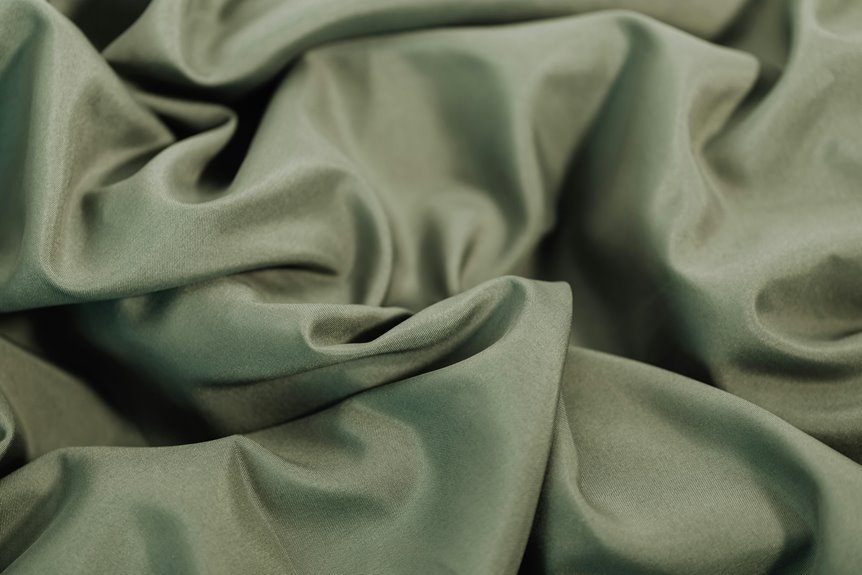
Your crepe fabric puckers because your sewing machine settings, needle, or technique might be too harsh for its delicate texture. To fix this, use a fine needle (70/10 or 80/12), loosen thread tension, and increase stitch length slightly. Also, reduce presser foot pressure and sew slowly to avoid stretching the fabric. Stabilizing the fabric with lightweight interfacing helps, too. Keep these tips in mind, and you’ll discover even more ways to sew crepe smoothly and beautifully.
Key Takeaways
- Puckering often results from incorrect needle size, tight tension, or rough handling of delicate crepe fabric.
- Use a fine, sharp needle (size 70/10 or 80/12) to avoid damaging the fibers and causing puckers.
- Loosen thread tension and increase stitch length slightly to prevent fabric from being pulled too tightly.
- Stabilize crepe fabric with lightweight interfacing or tissue paper to reduce shifting and bunching during sewing.
- Sew slowly with reduced presser foot pressure and use a walking foot for even fabric feeding to minimize puckering.
Common Causes of Puckering in Crepe Fabric
Although crepe fabric looks delicate and smooth, it often puckers due to several common causes. You might be using the wrong needle; a needle that’s too large or dull can damage the fabric’s fine fibers, causing puckers.
Tension that’s too tight on your sewing machine pulls the fabric unevenly, leading to puckering as well. If you’re not stabilizing the fabric properly, especially with lightweight crepe, the fabric can shift and bunch up while sewing.
Additionally, sewing too quickly or handling the fabric roughly can stretch or distort the weave, resulting in puckers. Finally, using inappropriate thread types or stitch lengths can also affect how the fabric lays.
Understanding these causes helps you prevent puckering before you start sewing.
Adjusting Your Sewing Machine Settings
Addressing common causes of puckering is just the first step; fine-tuning your sewing machine settings can make a big difference in how your crepe fabric behaves.
You’ll want to adjust your machine to handle the delicate texture without causing tension issues. Start by checking your stitch length, as shorter stitches can pull the fabric too tightly. Loosening the thread tension prevents puckering caused by overly tight threads.
Also, consider reducing the presser foot pressure to avoid compressing the fabric excessively. Finally, slow down your sewing speed to maintain control and prevent fabric distortion.
Here’s what to focus on:
- Increase stitch length slightly
- Loosen thread tension
- Decrease presser foot pressure
- Sew at a slower speed
These tweaks help your crepe fabric lie flat and smooth.
Choosing the Right Needle and Thread
Since crepe fabric has a unique texture and stretch, choosing the right needle and thread is essential to prevent puckering.
Choosing the right needle and thread is key to sewing crepe fabric without puckering.
You want to use a fine, sharp needle—typically a size 70/10 or 80/12—to pierce the fabric cleanly without causing damage. Avoid heavy or dull needles, as they can snag the delicate fibers and create puckers.
For thread, opt for a lightweight polyester or cotton-wrapped polyester thread that offers some flexibility and strength. This combination moves smoothly through the fabric, reducing tension issues that lead to puckering.
Also, match the thread color closely to your fabric to maintain a polished look.
Techniques for Preventing Puckering While Sewing
When you sew crepe fabric, controlling tension and handling the material carefully can make a big difference in preventing puckering. Start by adjusting your sewing machine’s tension settings to suit the lightweight nature of crepe. Use a shorter stitch length to avoid pulling the fabric too tightly.
Always stabilize the fabric with a lightweight interfacing or tissue paper to keep it smooth as you sew. Finally, avoid stretching the fabric while sewing; let the machine feed it naturally.
Here are some techniques to prevent puckering:
- Use a walking foot to evenly feed fabric layers.
- Pin or clip your fabric generously to prevent shifting.
- Sew slowly to maintain control.
- Press seams gently with a low-heat iron to set stitches without distorting fabric.
Frequently Asked Questions
Can Washing Crepe Fabric Cause Puckering?
You might be surprised, but yes, washing crepe fabric can cause puckering if you’re not careful. Using hot water or a rough cycle can damage the fibers, so always wash it gently and air dry to prevent wrinkles.
Does Fabric Type Affect Puckering in Crepe?
Yes, fabric type affects puckering in crepe. Natural fibers like silk or wool handle heat and moisture differently than synthetics, so you’ll need to adjust washing and ironing techniques to prevent puckering based on the specific crepe fabric.
How Does Humidity Impact Crepe Fabric Puckering?
Did you know 60% humidity can affect fabric fibers? When humidity’s high, your crepe fabric absorbs moisture, causing fibers to swell and distort, which makes puckering more likely. You’ll want to control your environment to prevent this.
Can Ironing Crepe Fabric Reduce Puckering?
Yes, ironing crepe fabric can reduce puckering if you use a low heat setting and a pressing cloth. You’ll want to avoid direct heat to prevent damage and gently smooth the wrinkles without stretching the fabric.
Is Puckering Reversible After Sewing?
You can reduce puckering after sewing, you can ease the fabric gently, and you can press carefully. Though puckering isn’t always fully reversible, with patience and care, you’ll often improve your crepe’s smooth appearance greatly.