
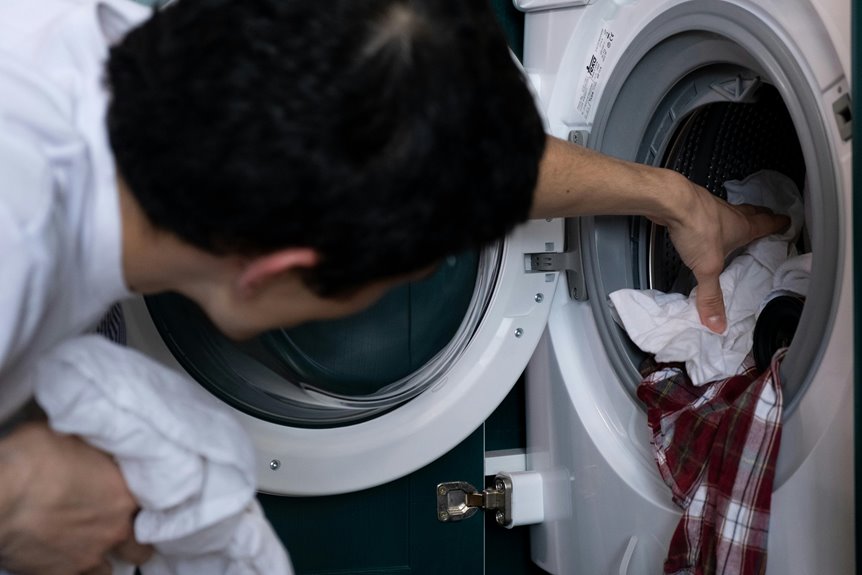
Your washing machine may cause pilling on clothes due to excessive agitation, high spin speeds, or overloading. When clothes rub against each other too much, it leads to fiber breakage and tangling, creating those annoying pills. Using gentle cycles, lower spin speeds, and washing similar fabrics together can help reduce this problem. If you want to keep your clothes looking their best, you’ll find more useful tips and advice on preventing and treating pilling.
Key Takeaways
- Excessive agitation during wash cycles can cause fibers to break and tangle, leading to pilling on clothes.
- High spin speeds may create friction between garments, increasing the likelihood of fabric pilling.
- Overloading the washing machine restricts movement, resulting in more rubbing and wear on fabrics.
- Using hot water can weaken fibers, making them more prone to pilling compared to cold or warm washes.
- Washing different fabric types together can heighten friction, contributing to pilling on softer materials.
Understanding Fabric Pilling
While you mightn’t notice it at first, fabric pilling can become a common issue with your clothes over time. Pilling occurs when fibers in your fabric break and tangle together, creating those annoying little balls on the surface.
This can happen with any type of fabric, but it’s more prevalent in softer materials like knitwear or fleece. Factors like friction during wear, washing, and drying contribute to this problem. When you rub against surfaces or toss clothes together in the wash, you increase the likelihood of pilling.
Understanding how pilling forms helps you take precautions. By choosing high-quality fabrics and treating your clothes with care, you can minimize pilling, keeping your wardrobe looking fresh and new for longer.
The Role of Washing Machine Settings
Since the settings on your washing machine can greatly impact fabric pilling, it’s essential to choose them wisely.
The right settings can help minimize wear and tear on your clothes, reducing the likelihood of pilling. Here are a few key considerations:
- Wash Cycle: Opt for a gentle cycle to reduce agitation.
- Water Temperature: Use cold or warm water instead of hot to protect fibers.
- Spin Speed: Lower spin speeds can help prevent excessive friction.
- Load Size: Don’t overload the machine; it can cause clothes to rub against each other more violently.
Types of Fabrics and Their Susceptibility
Fabrics vary widely in their susceptibility to pilling, and understanding these differences can help you make smarter laundry choices.
Natural fibers like cotton and linen tend to resist pilling better than synthetic fabrics. However, blends that include polyester may pill more easily due to the fibers’ characteristics.
Wool is soft and cozy but can also be prone to pilling, especially if it’s loosely woven. On the other hand, tightly woven fabrics, like denim, usually show less pilling.
You might also notice that lighter fabrics, such as t-shirts, are more susceptible compared to heavier ones like sweatshirts.
Knowing which fabrics are more prone to pilling can guide you in selecting what to wash together and how to care for your clothes.
Prevention Methods to Reduce Pilling
To keep your clothes looking fresh and free from pilling, you’ll want to adopt a few smart laundering habits. By being mindful of how you wash and dry your garments, you can greatly reduce the risk of pilling.
Adopting smart laundering habits can keep your clothes looking fresh and minimize pilling.
- Wash similar fabrics together to minimize friction.
- Use a gentle cycle and cold water to protect fibers.
- Turn clothes inside out before washing to shield the fabric surface.
- Avoid overloading the washing machine, allowing items to move freely.
Implementing these practices not only extends the life of your clothes but also keeps them looking their best.
Effective Ways to Remove Existing Pills
Even with the best prevention methods, pills can still appear on your favorite garments. To tackle this issue, start by using a fabric shaver. These handy devices quickly remove pills without damaging your clothes.
If you don’t have one, a lint roller can also work in a pinch. Simply roll it over the affected areas to lift some pills away.
Another option is to use a pair of fine-tipped scissors to carefully snip off the pills. Just make sure you don’t cut the fabric itself!
For a more natural approach, try using a pumice stone; gently rub it over the pilled areas to pull the fibers free.
Whatever method you choose, always test it on an inconspicuous area first.
Frequently Asked Questions
Can I Use Fabric Softener to Reduce Pilling?
Yes, you can use fabric softener to help reduce pilling. It lubricates fibers, making them less prone to friction and tangling. Just remember to follow the instructions on your washing machine and fabric softener label.
Is Pilling More Common in New Clothes?
Oh sure, new clothes just love to show off their pilling potential! You’ll find it’s more common in freshly bought fabrics, which often haven’t quite mastered the art of staying smooth and snag-free.
How Often Should I Clean My Washing Machine?
You should clean your washing machine every one to three months, depending on usage. Regular cleaning prevents buildup of detergent and fabric softener residue, ensuring your machine runs efficiently and keeps your clothes in great condition.
Will Drying Clothes Contribute to Pilling?
Drying clothes can be like a rough sea tossing a fragile boat. Yes, the heat and friction from your dryer can contribute to pilling, causing fibers to fray and create those pesky little balls on your garments.
Are Certain Washing Machines Better for Preventing Pilling?
Certain washing machines, especially those with gentle cycles and advanced fabric care features, reduce pilling. Look for machines that minimize agitation and offer options tailored for delicate fabrics to help keep your clothes looking new.