
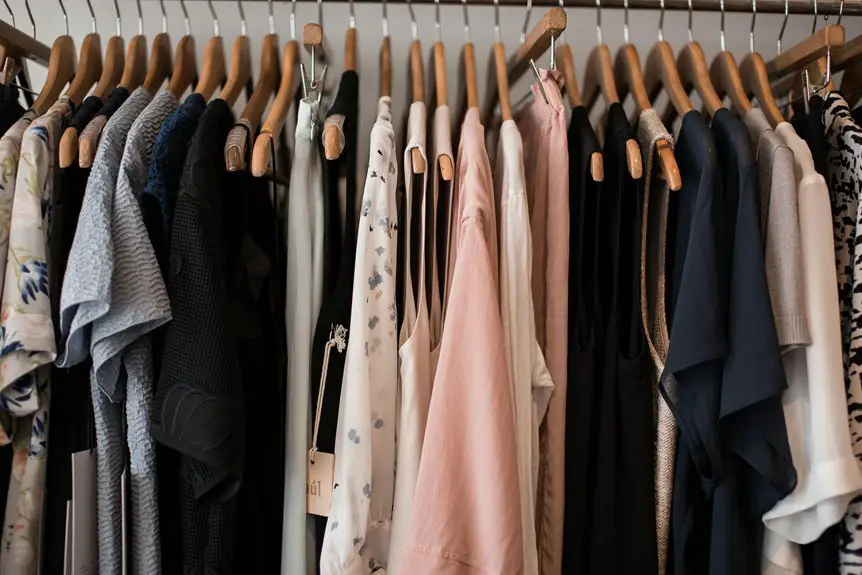
Some of your clothes pill while others don’t, even if they’re made of similar fabric, due to differences in fiber length, fabric construction, and washing methods. Short fibers tend to tangle and pill more easily, while tightly woven fabrics resist it better. Additionally, how you wash and dry your clothes can cause pilling. By taking care of your garment storage and knowing which fabrics are prone to pilling, you can keep your clothes looking new longer.
Key Takeaways
- The length and quality of fibers used in fabric can significantly affect pilling; longer, high-quality fibers are less prone to pilling.
- Differences in fabric construction, such as weave density and yarn type, influence how easily fibers can tangle and form pills.
- Washing methods, including cycle type and water temperature, can increase or decrease friction, impacting the likelihood of pilling.
- The presence of rough surfaces or friction sources during everyday activities can exacerbate pilling on certain garments.
- Blends of natural and synthetic fibers can vary in pilling resistance, depending on the proportion and quality of each fiber used.
Understanding Fabric Composition
When it comes to understanding fabric composition, knowing the materials that make up your clothes is key. Different fibers behave uniquely, influencing how well they resist pilling.
Understanding fabric composition is essential; different fibers impact comfort and pilling resistance in your clothing.
For instance, natural fibers like cotton and wool typically provide comfort but can be more prone to pilling than synthetic options. Meanwhile, polyester and nylon are generally more durable and resistant to wear.
Blends, which combine natural and synthetic fibers, can offer a balance of comfort and durability. Understanding these materials helps you choose clothes that suit your lifestyle and maintain their appearance longer.
Always check labels to know what you’re buying; this knowledge empowers you to make informed decisions and care for your garments properly, ultimately extending their lifespan.
The Role of Fiber Length
While you mightn’t think about it often, the length of fibers in your clothing plays an essential role in how they resist pilling.
Longer fibers tend to create a smoother surface, which helps reduce the friction that leads to pilling. When fibers are short, they’re more likely to loosen and tangle, forming those annoying little balls you despise.
Fabrics made from longer fibers, like high-quality cotton or silk, generally resist pilling better than those made from shorter fibers. This is why some garments feel softer and last longer, while others quickly show signs of wear.
Fabric Construction Techniques
When it comes to fabric construction techniques, the type of yarn and the weave density play essential roles in pilling.
Different yarns can affect how easily fibers break and tangle, while tighter weaves often resist pilling better than looser ones.
Understanding these factors can help you choose garments that maintain their appearance longer.
Yarn Type Differences
Understanding yarn type differences is essential to grasping why some fabrics pill more than others. Different yarns have unique characteristics that affect their durability and tendency to pill. For instance, short-staple fibers, like cotton, often create yarns that are softer but more prone to pilling.
In contrast, long-staple fibers, such as silk or certain types of wool, usually produce stronger, smoother yarns that resist pilling better.
Furthermore, the twist and ply of the yarn play vital roles. Yarn that’s tightly twisted tends to be more resilient, while loosely spun yarns can fray and form pills quickly.
Weave Density Impact
The way fabric is woven considerably influences its tendency to pill. Tighter weaves, for example, create a denser structure that holds fibers in place better, reducing the likelihood of pilling.
When you wear a loosely woven garment, the fibers can move more freely, leading to friction and eventual pilling. Fabrics like denim or canvas, with their dense weaves, tend to resist pilling effectively, while lighter knits might be more prone to it.
You should also consider the stitch type used in the fabric. Some stitches create more surface area for fibers to rub against each other, increasing pilling risk.
Types of Fibers and Their Pilling Potential
While you might love the feel of a soft sweater, it’s essential to know that not all fibers are created equal when it comes to pilling.
Some materials are more prone to forming those pesky little balls of fuzz. Understanding the types of fibers can help you make better clothing choices.
- Wool: Soft but can pill easily due to its structure.
- Cotton: Generally durable, but blends with synthetic fibers can lead to pilling.
- Polyester: Often resistant to pilling, but lower-quality versions may still form pills.
The Impact of Washing and Drying Methods
Washing and drying methods can greatly influence how much your clothes pill, regardless of the fiber type. When you wash your clothes in a harsh cycle, the agitation can cause fibers to loosen and tangle, leading to pilling. It’s best to use a gentle cycle and cold water, as this reduces friction and helps maintain the fabric’s integrity.
Additionally, using a mild detergent can protect your clothes from wear.
When drying, opt for air drying or a low-heat setting in the dryer. High heat can weaken fibers and promote pilling. Always turn your clothes inside out to reduce friction during washing and drying.
Wear and Friction: How It Affects Your Clothes
When you wear your clothes, the fabric composition plays an essential role in how they react to friction.
Different materials can handle wear differently, affecting their longevity and appearance.
Proper care and maintenance practices can help minimize pilling and keep your garments looking fresh.
Fabric Composition Impact
The fabric composition of your clothes plays an essential role in how they wear over time and how they respond to friction. Different materials interact with surfaces in unique ways, influencing pilling and overall durability.
For instance, tightly woven fabrics tend to resist pilling better than loosely woven ones. Here are a few factors to take into account:
- Fiber Type: Natural fibers like cotton and wool may pill less than synthetic options like polyester.
- Yarn Structure: Filament yarns usually create smoother surfaces, reducing friction and pilling.
- Blend Ratios: Fabrics blended with high-quality fibers often perform better regarding wear and resistance to pilling.
Understanding these aspects can help you make informed choices when selecting clothes that stand the test of time.
Care and Maintenance Practices
While proper care and maintenance can greatly extend the life of your clothes, it’s important to understand how wear and friction come into play. When you wear your garments, they naturally rub against surfaces, other fabrics, and even your skin, causing fibers to break down.
To minimize pilling, choose gentle washing methods, like hand washing or using a delicate cycle. Avoid overcrowding your washing machine, as this can increase friction.
When drying, opt for air drying or low heat to reduce stress on the fabric. Additionally, store your clothes properly to prevent them from rubbing against each other.
The Influence of Fabric Blends
Fabric blends play an essential role in how clothes pill over time. When you combine different fibers, their characteristics can either enhance or diminish pilling. For instance, a blend of polyester and cotton often results in more durability compared to pure cotton.
Fabric blends significantly influence pilling, with combinations like polyester and cotton offering greater durability than pure cotton.
Here are some factors to evaluate about fabric blends:
- Fiber Composition: Natural fibers like wool can pill more easily than synthetic ones like nylon.
- Tension and Weave: The way fibers are woven together affects their strength; tighter weaves tend to resist pilling.
- Finish Treatments: Some blends receive special treatments to reduce friction, which can minimize pilling.
Identifying High-Pilling Fabrics
When you’re shopping for clothes, knowing how to identify high-pilling fabrics can save you from disappointment down the line.
Look closely at the fabric content labels; natural fibers like cotton and wool tend to pill less than synthetic blends. Fabrics with a high percentage of polyester or acrylic are often more prone to pilling.
Additionally, examine the fabric’s texture; smooth, tightly woven materials usually resist pilling better than loosely woven or fluffy options.
You can also check for signs of quality, such as the weight and feel of the fabric. If it feels thin or flimsy, it mightn’t hold up well against wear and tear, leading to pilling.
Trust your instincts and choose wisely!
Care Tips to Minimize Pilling
To keep your clothes looking their best, wash them with care.
Use gentle cycles and cold water to reduce the chances of pilling.
Also, steer clear of friction sources like rough fabrics or bulky items in the same load.
Wash With Caution
Though you might be tempted to toss all your clothes into the washing machine together, taking a little extra care can greatly reduce pilling.
Start by sorting your laundry based on fabric type. Washing delicate items separately helps protect them. Additionally, consider the wash cycle you choose. A gentle cycle is often best for preventing wear and tear.
Here are some tips to keep in mind:
- Use cold water: It’s gentler on fabrics and can minimize agitation.
- Select a mild detergent: Harsh chemicals can weaken fibers, leading to pilling.
- Avoid overcrowding: Give your clothes room to move freely during the wash.
Avoid Friction Sources
While you may not realize it, everyday activities can create friction that leads to pilling on your clothes. To minimize this, be mindful of how you wear and store your garments.
For instance, avoid carrying heavy bags that rub against your clothes. When you sit, be cautious about rubbing your fabric against rough surfaces like leather seats. Additionally, choose seating options that are gentler on your attire.
Opt for smoother materials when layering, as they’ll reduce friction. When cleaning, try to wash similar fabrics together to limit snags.
Finally, consider rotating your wardrobe to prevent constant wear on the same items. By taking these steps, you can help keep your clothes looking fresh and pilling-free for longer.
The Importance of Proper Garment Storage
When you store your clothes properly, you not only extend their lifespan but also keep them looking fresh and ready to wear. Effective storage techniques can prevent pilling and maintain the quality of your fabrics.
Here are a few tips to guarantee your garments stay in top condition:
- Use breathable garment bags: These protect delicate fabrics from dust and moisture while allowing air circulation.
- Avoid overcrowding your closet: Giving your clothes space prevents friction, which can cause pilling over time.
- Store seasonal items appropriately: Keep off-season clothes in a cool, dry place, ideally in bins or vacuum-sealed bags to protect against wear and tear.
Frequently Asked Questions
Are Certain Colors More Prone to Pilling Than Others?
Certain colors aren’t inherently more prone to pilling, but darker shades can show pilling more clearly. Fabric construction and fiber type greatly influence pilling, so it’s essential to take into account those factors when choosing your clothes.
Does the Way I Fold My Clothes Affect Pilling?
Like a well-organized library, how you fold your clothes can impact their longevity. If you’re careless, friction builds up, increasing pilling. So, treat your garments with care for a smoother, longer-lasting experience.
Can Pilling Occur in Brand New Clothes?
Yes, pilling can occur in brand new clothes. It often happens due to friction during manufacturing, packaging, or handling. You might notice it more in fabrics like wool or blends, even when they’re fresh.
Should I Avoid Wearing Pilled Clothing in Public?
Wearing pilled clothing can feel like draping yourself in a cloud of disappointment. You might want to avoid it in public; it can distract from your style and undermine your confidence. Choose smoother options instead.
Does My Body Chemistry Influence Pilling on Fabrics?
Yes, your body chemistry can influence pilling on fabrics. Oils, sweat, and skin types contribute to how fibers react. When you wear certain clothes, your body’s unique chemistry might make pilling more likely over time.