
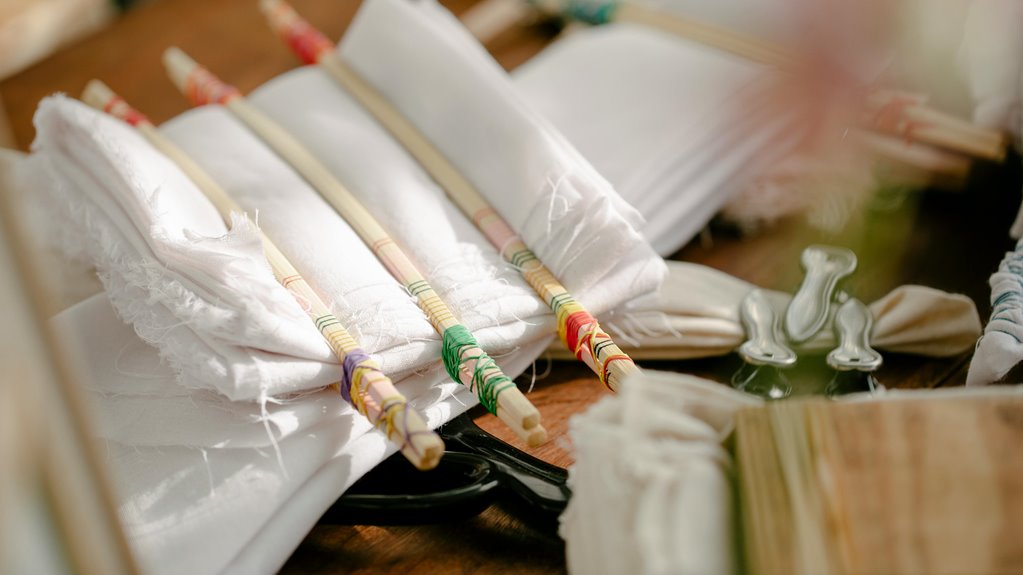
You’ll find that indigenous communities pioneered textile dyeing techniques in Argentina, expertly using natural materials like cochineal insects, quebracho wood, and native plants to create vibrant, lasting colors. They connected dyes to cultural rituals and identity, mastering skills like tie-dyeing and resist dyeing. Later, Spanish colonization blended new methods with native traditions, evolving these rich practices. Keep exploring, and you’ll uncover how these early techniques shaped Argentina’s textile legacy today.
Key Takeaways
- Indigenous communities pioneered Argentina’s textile dyeing using natural plant-based materials and minerals.
- Native artisans mastered dyeing fibers like llama and alpaca wool with cultural symbolism.
- Spanish colonizers introduced cochineal and indigo dyes, blending their methods with indigenous techniques.
- Early artisans developed unique natural dyeing methods, including tie-dyeing and resist dyeing.
- The foundation of Argentina’s dyeing techniques combines ancestral knowledge with Spanish influences.
Indigenous Communities and Early Dyeing Practices
Although much of Argentina’s textile history is shaped by modern influences, indigenous communities laid the foundation with their early dyeing practices.
When you explore Argentina’s rich textile heritage, you’ll notice how these communities mastered natural dyeing techniques long before European contact. They carefully selected plant-based materials and minerals, applying them skillfully to fibers like wool from llamas and alpacas.
You’d find that their methods weren’t just practical but deeply connected to cultural rituals and symbolism. These early dyers understood color’s significance, using it to express identity, status, and spirituality.
Natural Resources Used in Traditional Argentine Dyeing
Argentina’s diverse landscape offers a wealth of natural resources that traditional dyers have relied on for centuries.
When you explore these practices, you’ll find that native plants like the cochineal cactus provide rich reds, while quebracho wood gives deep, lasting browns.
You can also use roots and barks from local trees such as the palo santo and sumac to create yellows and tans.
The Andean regions offer unique dyes from wildflowers and native shrubs, letting you achieve vibrant blues and greens.
Don’t overlook minerals and clay-rich soils, which help fix and enhance colors on fabrics.
Techniques and Methods Developed by Native Artisans
You’ll find that Native artisans in Argentina developed unique dyeing techniques using natural pigments sourced from their environment.
They mastered the art of weaving while ensuring colors stayed vibrant through traditional fixation methods.
Let’s explore how these practices shaped their textile heritage.
Traditional Indigenous Dyeing
Many indigenous communities in Argentina have preserved centuries-old dyeing techniques that reflect their deep connection to nature.
When you explore traditional indigenous dyeing, you’ll notice how artisans use intricate methods like tie-dyeing and resist dyeing to create vibrant patterns on textiles.
You’ll also find hand-spinning and weaving combined with these dyeing practices, producing unique, culturally rich fabrics.
These artisans rely on time-tested processes, carefully applying dyes to maintain colorfastness and texture.
As you learn about their techniques, you recognize their skill in balancing artistry and utility, ensuring each piece tells a story.
Natural Pigment Sources
Natural pigments form the vibrant foundation of indigenous textile dyeing, drawn directly from the environment by skilled artisans.
You’ll find these artisans expertly extract colors from plants, insects, and minerals, creating hues that are both rich and sustainable.
When you explore their methods, you’ll notice they rely on:
- Cochineal insects for brilliant reds
- Indigo plants for deep blues
- Walnut shells for warm browns
- Annatto seeds for bright oranges
- Clay and ochre for earthy yellows and reds
Weaving and Color Fixation
Although dye extraction sets the stage, the true magic happens during weaving and color fixation, where native artisans transform raw threads into lasting, vibrant fabrics.
You’ll find that artisans carefully interlace dyed fibers on handlooms, ensuring patterns hold together tightly. They use techniques like backstrap weaving, which lets them control tension and create intricate designs.
To fix the colors, they apply natural mordants—such as tannins from tree bark or alum—locking pigments deep into the fibers. This process not only enhances colorfastness but also enriches hues, making the textiles more vivid.
When you handle these fabrics, you’re touching centuries of refined skill, where every step from threading to finishing preserves the integrity and beauty of Argentine textile traditions.
Influence of Spanish Colonization on Textile Dyeing
You’ll notice that Spanish colonization brought new dye materials and techniques to Argentina’s textile traditions.
Spanish craftsmanship blended with indigenous methods, creating unique colonial-era dye practices.
Understanding this fusion helps you see how Argentina’s textile artistry evolved over time.
Colonial Era Dye Practices
When the Spanish colonizers arrived in Argentina, they brought new dyeing methods that dramatically changed local textile traditions. You’d see their influence in the introduction of plant-based dyes and new mordants, which helped fix colors more effectively.
Their techniques blended with indigenous practices, creating unique colonial era dye styles. You’d notice:
- Use of cochineal dye for vivid reds
- Introduction of indigo for deep blues
- Adoption of alum as a mordant for brighter hues
- Experimentation with walnut shells for brown dyes
- Integration of boiling and fermenting processes
These practices not only enhanced color variety but also improved fabric durability.
Spanish Textile Craftsmanship
Since Spanish colonization introduced advanced textile techniques, you can see how their craftsmanship reshaped Argentina’s dyeing traditions.
The Spanish brought sophisticated methods like mordant dyeing, which fixed colors more permanently to fabrics. You’d notice their use of natural dyes derived from plants and insects, such as cochineal, which produced vibrant reds previously unseen locally.
They also introduced weaving styles that influenced fabric texture, affecting how dyes absorbed. As a result, you’d find a blend of European aesthetics with local materials, creating distinct patterns and richer color palettes.
Their skilled artisans passed down these techniques, setting a foundation that transformed Argentine textile dyeing from simple, functional uses to more intricate, decorative expressions.
This legacy highlights Spain’s significant role in evolving Argentina’s textile arts.
Indigenous and Spanish Techniques
Although Indigenous artisans had long developed their own vibrant dyeing traditions, Spanish colonization introduced new techniques that reshaped Argentina’s textile arts.
When you explore this fusion, you’ll notice how both cultures influenced each other, creating unique textile masterpieces. The Indigenous used natural dyes from local plants and insects, while the Spanish brought advanced methods and new dye sources.
Here’s what you should know:
- Indigenous artisans relied on cochineal for deep reds and native plants for varied colors.
- The Spanish introduced wool processing and dyeing techniques from Europe.
- You’ll see combined patterns reflecting Indigenous symbolism and Spanish motifs.
- New dye mordants improved colorfastness, a Spanish contribution.
- Trade routes expanded access to exotic dyes and materials.
Evolution of Dyeing Techniques Through the Centuries
As you trace the history of textile dyeing in Argentina, you’ll see how techniques have transformed from simple, natural methods to complex, industrial processes.
Early artisans relied on native plants, insects, and minerals to create vibrant colors, mastering extraction and fixation with hands-on skill.
Early artisans transformed native plants, insects, and minerals into vibrant colors through skilled, hands-on dyeing techniques.
As centuries passed, European influences introduced new dyes and tools, blending local knowledge with imported methods.
The Industrial Revolution marked a turning point, bringing synthetic dyes and mechanized dyeing, boosting efficiency and color variety.
You’ll notice how artisans adapted, preserving traditional hues while embracing innovation.
Throughout these changes, dyeing evolved from a purely artisanal craft to a sophisticated industry, reflecting Argentina’s cultural shifts and technological advancements.
This evolution set the stage for modern textile production without losing its historic roots.
Legacy of Traditional Dyeing in Modern Argentine Textiles
When you explore modern Argentine textiles, you’ll find that traditional dyeing techniques still shape their vibrant colors and unique patterns.
These methods pass down cultural stories and craftsmanship that you can see in every piece. You’ll notice how artisans blend old and new, keeping heritage alive while innovating.
Here’s what you can appreciate about this legacy:
- Use of natural dyes from indigenous plants and minerals
- Handcrafted patterns reflecting regional identities
- Preservation of techniques like batik and tie-dye
- Sustainable practices rooted in ancestral knowledge
- Fusion of traditional motifs with contemporary design
Frequently Asked Questions
What Are the Most Popular Modern Synthetic Dyes Used in Argentina?
Diving into Argentina’s vibrant textile scene, you’ll find popular synthetic dyes like azo dyes, reactive dyes, and disperse dyes. They’re the colorful brushstrokes artists use to make fabrics pop with lasting brilliance and style.
How Has Industrialization Impacted Textile Dyeing Jobs in Argentina?
You’ve seen industrialization boost efficiency in Argentina’s textile dyeing jobs, but it’s also reduced manual labor demand. Automation’s replaced many roles, so you’ll need new skills to stay competitive in this evolving industry.
Are There Any Famous Argentine Textile Artists Known Internationally?
Imagine threads weaving stories beyond borders—artists like Marta Minujín and Liliana Porter have dyed Argentina’s textiles with global fame. You’ll find their work vibrant, symbolizing cultural identity and innovation on the international stage.
What Role Do Universities Play in Textile Dyeing Research in Argentina?
You’ll find Argentine universities actively researching textile dyeing, developing sustainable methods, and innovating natural dyes. They collaborate with industries, train students, and push boundaries, ensuring Argentina stays competitive and eco-friendly in textile production.
How Do Argentine Textile Exports Influence the Global Market?
You’ll see Argentine textile exports boost global diversity by offering unique fabrics and designs. They compete with quality and innovation, influencing market trends while expanding Argentina’s presence in international trade and helping local industries grow worldwide.