
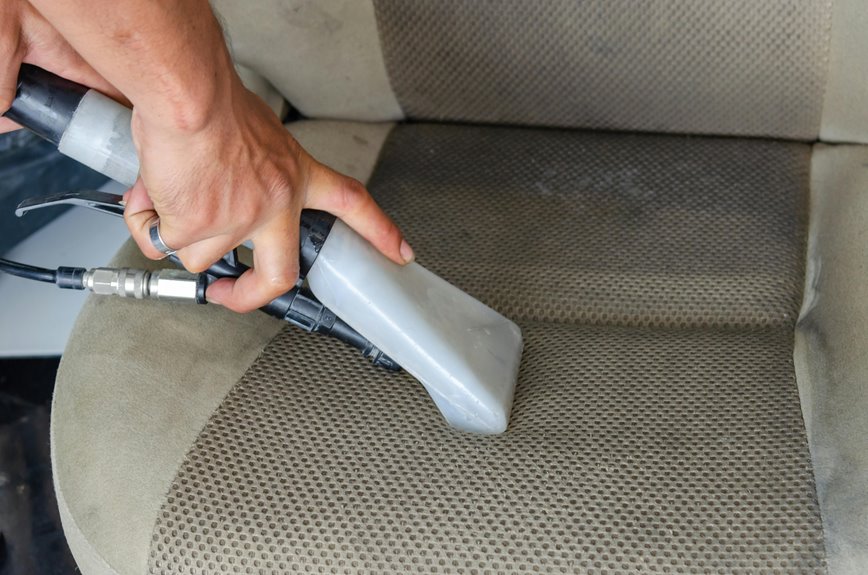
You can rely on professional upholstery cleaners to safely and effectively restore your furniture’s look using specialized tools and techniques tailored to different fabrics. They handle everything from steam and dry cleaning to spot treatments and deodorizing, saving you time and preventing damage. If your cushions show stains, odors, or allergens, experts can provide deep cleaning that keeps your upholstery fresh and healthy. Keep exploring to find out how to pick the right service and extend your furniture’s life.
Key Takeaways
- Professional upholstery cleaners specialize in cleaning various fabric types safely and effectively using appropriate methods like steam, dry, or foam cleaning.
- They bring expertise, specialized tools, and products to remove stains, odors, allergens, and bacteria, ensuring thorough and damage-free cleaning.
- Hiring professionals saves time and effort while maintaining the appearance and extending the lifespan of upholstery.
- Upholstery cleaning professionals address visible stains, lingering odors, allergy triggers, and fabric discoloration that regular cleaning cannot fix.
- Costs depend on fabric type, size, and soil level, with professionals offering tailored services for optimal cleaning and maintenance advice.
Understanding Upholstery and Its Cleaning Needs
Although upholstery comes in many materials and styles, understanding its unique cleaning needs is essential to keep your furniture looking fresh and lasting longer.
You’ll find fabrics like cotton, leather, microfiber, and velvet, each requiring specific care to avoid damage. For instance, leather needs gentle cleaning with specialized products, while microfiber often tolerates water-based cleaners.
You should always check the manufacturer’s cleaning code—usually found on a tag—to know what’s safe to use. Regular vacuuming can prevent dirt buildup, but stains need prompt attention with appropriate methods.
Types of Upholstery Cleaning Services
Choosing the right upholstery cleaning service can make a big difference in maintaining your furniture’s appearance and longevity. You’ll find several types of cleaning options tailored to different needs.
Steam cleaning uses hot water extraction to remove dirt deeply embedded in fibers, ideal for durable fabrics.
Steam cleaning deeply extracts dirt with hot water, perfect for tough, durable upholstery fabrics.
Dry cleaning, on the other hand, employs chemical solvents with minimal moisture, perfect for delicate materials that can’t get wet.
Foam cleaning creates a low-moisture foam that lifts dirt without soaking your upholstery, suitable for quick drying.
Additionally, some services offer spot cleaning for localized stains or deodorizing treatments to eliminate odors.
Understanding these types helps you pick a method that protects your furniture’s fabric and fits your schedule and budget.
How Professional Upholstery Cleaners Work
When you hire professional upholstery cleaners, they use specific techniques tailored to your fabric’s needs.
They bring specialized equipment and cleaning products designed to remove dirt without causing damage.
Understanding their process helps you appreciate the care that goes into restoring your furniture.
Cleaning Techniques Explained
Professional upholstery cleaners use several specialized techniques to restore your furniture’s appearance and hygiene effectively.
When you hire a pro, they first assess the fabric to choose the safest method. Then, they apply the appropriate cleaning technique, ensuring deep but gentle care.
Here are three common techniques they’ll use to bring your upholstery back to life:
- Steam Cleaning: This penetrates deep into the fibers, loosening dirt and killing bacteria without harsh chemicals.
- Dry Cleaning: Perfect for delicate fabrics, it uses minimal moisture to prevent shrinkage and color fading.
- Foam Cleaning: It lifts dirt from the surface with a light foam, which is quick-drying and invigorating.
Equipment and Products Used
Several essential tools and products help upholstery cleaners deliver thorough and safe results. When you hire a professional, they use specialized vacuum systems to remove dust and debris deep within the fabric.
You’ll notice they also rely on steam cleaners or hot water extraction machines that penetrate fibers without causing damage. Professionals select cleaning solutions tailored to your upholstery’s material—whether it’s leather, microfiber, or cotton—making certain stains lift effectively while protecting the fabric.
Enzyme-based or eco-friendly products are common choices for tough spots and odors. You can trust these experts to combine the right equipment and detergents, giving your furniture a fresh, clean look without risking wear or discoloration.
This careful approach guarantees your upholstery stays in great shape longer.
Benefits of Hiring Professional Upholstery Cleaners
Although you might be tempted to clean your upholstery yourself, hiring experts brings unmatched advantages that guarantee a deeper, safer clean.
When you choose professional upholstery cleaners, you get:
- Expertise and Experience – They know how to handle different fabrics without causing damage.
- Time and Convenience – They save you hours of scrubbing, letting you focus on what matters most.
- Healthier Environment – Professionals remove allergens, dust mites, and bacteria that regular cleaning might miss.
Common Techniques Used in Upholstery Cleaning
When cleaning your upholstery, you’ll often encounter steam cleaning and dry cleaning methods.
Steam cleaning uses hot water vapor to remove dirt and kill bacteria, while dry cleaning employs specialized solvents for a gentler approach.
Understanding these techniques helps you choose the best option for your furniture’s care.
Steam Cleaning Benefits
Anyone looking to refresh their upholstery will find steam cleaning highly effective. This method uses hot steam to penetrate deep into fabric fibers, loosening dirt and stains without harsh chemicals. You’ll appreciate how it revitalizes your furniture while being eco-friendly.
Here’s why steam cleaning stands out:
- Kills bacteria and dust mites – It sanitizes your upholstery, creating a healthier environment for you and your family.
- Removes tough stains – The heat breaks down stubborn grime that regular cleaning can’t tackle.
- Dries quickly – Unlike soaking methods, steam cleaning leaves your furniture damp but not soaked, so you can use it sooner.
Choosing steam cleaning means you’re investing in a thorough, safe, and efficient upholstery refresh.
Dry Cleaning Methods
Steam cleaning offers a powerful way to refresh your upholstery with heat and moisture, but it’s not the only option.
Dry cleaning methods use little to no water, making them ideal for delicate fabrics or pieces that can’t handle moisture. When you choose dry cleaning, professionals typically apply specialized solvents or powders that break down stains without soaking your furniture.
These solvents evaporate quickly, minimizing drying time and reducing the risk of mold or shrinkage. You might also encounter encapsulation cleaning, where cleaning agents surround dirt particles, allowing them to be vacuumed away easily.
Dry cleaning methods help preserve your upholstery’s texture and color, so if you want a gentle yet effective clean, this approach is worth considering.
Identifying When Your Upholstery Needs Professional Cleaning
How can you tell if your upholstery truly needs a professional cleaning? Sometimes, the signs are subtle, but ignoring them can lead to costly damage or health issues. Here are three clear indicators:
- Visible stains or discoloration: If spills and dirt have set in, no amount of home cleaning will restore your fabric’s original look.
- Lingering odors: Persistent smells from pets, smoke, or food signal deep-seated grime that only pros can eliminate.
- Allergy flare-ups: Increased sneezing or itching around your furniture might mean dust mites and allergens have built up beyond what vacuuming can tackle.
When you spot any of these, it’s time to call in experts who can refresh your upholstery safely and effectively.
Don’t wait until damage worsens or your health suffers.
How to Choose the Right Upholstery Cleaning Service
Recognizing the signs that your upholstery needs professional cleaning is just the first step. To choose the right service, start by checking their credentials and reviews.
You want a company with certified technicians who use safe, effective methods suitable for your fabric type. Ask about their cleaning process and if they offer a satisfaction guarantee.
Don’t hesitate to request references or before-and-after photos of their work. Also, make certain they use eco-friendly products if that’s important to you.
Communication matters, so pick a service that answers your questions clearly and promptly. By doing your homework and comparing options, you’ll find a reliable upholstery cleaner who restores your furniture’s look without hassle or damage.
Cost Factors in Upholstery Cleaning Services
While the quality of service matters most, understanding the cost factors in upholstery cleaning can help you make an informed decision. Prices vary based on several key elements that directly impact your budget.
- Type of Fabric: Delicate materials like silk or velvet require special care and gentle cleaning solutions, which can increase the price.
- Size and Number of Pieces: Larger or multiple pieces need more time and effort, naturally raising the cost.
- Stains and Condition: Tough stains or heavily soiled upholstery demand extra treatment, adding to the overall expense.
Knowing these factors helps you anticipate costs and choose a service that fits your needs without surprises.
Don’t hesitate to ask providers for detailed quotes to guarantee transparency and value.
Tips for Maintaining Upholstery Between Professional Cleanings
Understanding what influences upholstery cleaning costs can help you decide when to schedule professional services, but keeping your furniture in good shape between cleanings plays a big role too.
You can extend the life of your upholstery by regularly vacuuming to remove dust and debris that cause wear. Treat spills immediately with a clean cloth and mild detergent to prevent stains from setting.
Rotate cushions frequently to guarantee even wear and maintain shape. Avoid exposing your furniture to direct sunlight, which can fade fabric.
Using slipcovers or throws can protect high-traffic areas. Finally, keep pets off the furniture or use protective covers to minimize damage.
Frequently Asked Questions
Can I Clean Upholstery With Homemade Solutions Safely?
You can safely clean upholstery with homemade solutions if you test a small, hidden area first. Use gentle ingredients like vinegar and baking soda, but avoid harsh chemicals that might damage fabric or cause discoloration.
How Long Does Upholstery Take to Dry After Cleaning?
When it comes to drying, upholstery usually takes anywhere from 4 to 12 hours, depending on fabric and ventilation. You can’t rush the process; let it dry naturally to avoid any unwanted surprises like mold or odors.
Are Upholstery Cleaning Chemicals Safe for Pets?
You should check if the upholstery cleaning chemicals are pet-safe before use. Many professional products are non-toxic, but some contain harsh ingredients. Always ventilate the area and keep pets away until the upholstery fully dries.
Can Upholstery Cleaning Remove All Types of Stains?
Imagine a knight battling dragons—some stains battle your upholstery cleaning tough, but you can’t remove every single one. You’ll handle most, yet some ancient ink or deep-set dyes might stubbornly remain despite your efforts.
How Often Should Delicate Fabrics Be Professionally Cleaned?
You should have delicate fabrics professionally cleaned every 12 to 18 months to maintain their appearance and prevent damage. However, if you notice stains or odors sooner, don’t hesitate to schedule a cleaning.