
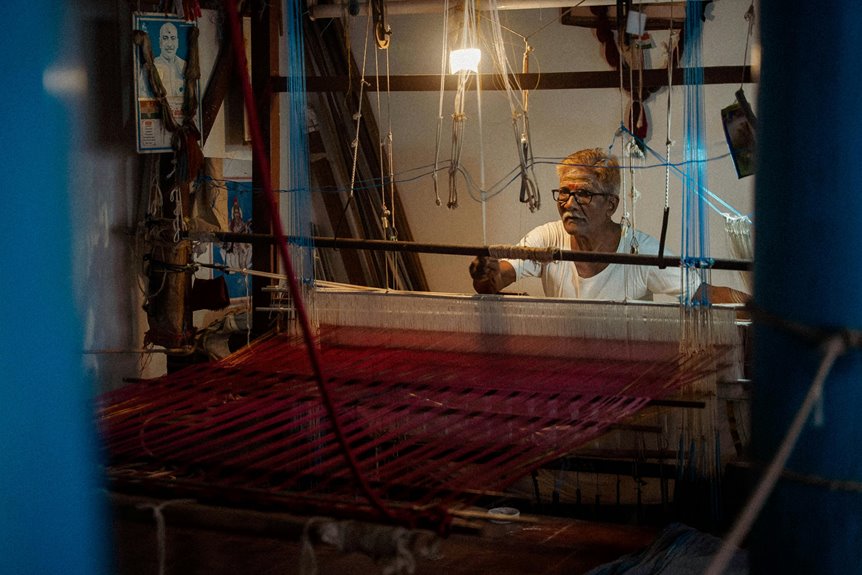
You’ll find Chanderi fabric originates from the historic town of Chanderi in Madhya Pradesh, India, nestled between the Vindhya and Malwa plateaus. Known for its rich weaving heritage, artisans blend fine silk, cotton, and intricate zari work by hand, creating lightweight, elegant textiles renowned for cultural significance and craftsmanship. This fabric embodies centuries of tradition and artistry. Keep exploring, and you’ll uncover how this heritage continues to inspire contemporary fashion worldwide.
Key Takeaways
- Chanderi fabric originates from the town of Chanderi, located between the Vindhya and Malwa plateaus in Madhya Pradesh, India.
- The region’s strategic location on historic trade routes influenced the cultural and artistic aspects of Chanderi weaving.
- Traditional Chanderi weaving uses a unique blend of silk and cotton fibers, hand-spun for lightweight, breathable fabric.
- The fabric features intricate patterns woven directly into the cloth, reflecting centuries-old craftsmanship and Mughal influences.
- Chanderi weaving is renowned for its zari work, incorporating gold and silver threads that enhance the fabric’s elegance and heritage.
Historical Origins of Chanderi Fabric
Although its exact beginnings are debated, Chanderi fabric has roots that trace back several centuries in India. You’ll find that this textile tradition blends fine silk, cotton, and zari threads, creating a lightweight yet elegant fabric.
When you explore its history, you’ll notice influences from the Malwa and Mughal periods, reflecting cultural exchanges that shaped its unique style. Chanderi weaving flourished under royal patronage, which helped artisans refine their craft and maintain quality.
You can appreciate how the weavers perfected intricate patterns like florals and geometric designs, making each piece a work of art. Understanding Chanderi’s historical origins reveals not just a fabric but a legacy of skilled craftsmanship passed down through generations.
Geographical Significance of Chanderi Town
You’ll find Chanderi nestled between the Vindhya and Malwa plateaus, giving it a unique landscape that influenced its weaving style.
Its location along historic trade routes made it a key spot for cultural and commercial exchange.
Understanding this geography helps you see why Chanderi fabric gained such widespread popularity.
Location and Landscape
Chanderi town sits at a strategic crossroads in Madhya Pradesh, India, where the Malwa plateau meets the Vindhya hills. When you visit, you’ll notice the gently rolling terrain and fertile soil that support agriculture and natural vegetation.
The Betwa River flows nearby, providing essential water resources that have nourished the community and its crafts for centuries. This unique landscape offers a blend of flatlands and rugged hills, creating a perfect environment for the growth of raw materials used in weaving.
The climate here, with moderate rainfall and warm temperatures, also plays a crucial role in maintaining the quality of fibers. Understanding this location helps you appreciate why Chanderi became a hub for exquisite fabric production rooted deeply in its natural surroundings.
Historical Trade Routes
Because it lies at the crossroads of several ancient trade routes, Chanderi town has long served as a vital link between northern and southern India.
When you explore Chanderi, you’ll see how merchants once traveled these routes, exchanging silk, spices, and textiles. This strategic position helped Chanderi’s fabric gain fame far beyond its borders.
You can imagine how the easy access to diverse markets fueled the demand for its exquisite weaving. The town’s location also allowed ideas and techniques to flow, enriching its craft.
Traditional Materials Used in Chanderi Weaving
When you explore Chanderi weaving, you’ll notice artisans carefully select natural fibers like silk and cotton for their unique blend.
They use hand-spun yarn techniques that add texture and strength to the fabric.
These traditional materials are key to the fabric’s distinct feel and elegance.
Natural Fibers Selection
Although many fabrics rely on synthetic fibers today, traditional Chanderi weaving embraces natural materials that have been cherished for centuries.
When you explore Chanderi fabrics, you’ll notice artisans carefully select fibers like pure silk and fine cotton. These fibers provide a lightweight, breathable texture that feels gentle against your skin.
The natural fibers also allow the fabric to drape beautifully, enhancing the elegance of each piece. You’ll appreciate how this choice supports sustainability and maintains the authenticity of the craft.
By choosing these fibers, weavers preserve the heritage and guarantee the fabric’s durability and comfort.
Silk and Cotton Blend
The natural fibers chosen for Chanderi weaving often combine to create a unique silk and cotton blend that defines the fabric’s character.
When you touch this blend, you’ll notice:
- The smooth sheen of silk that catches the light beautifully.
- The breathable softness of cotton that keeps you comfortable.
- The durable yet delicate texture that balances strength with elegance.
- The lightweight feel that makes it perfect for warm climates.
This blend isn’t just about materials; it’s a carefully crafted harmony.
You’ll appreciate how silk adds richness, while cotton offers resilience. Together, they create fabric that’s both luxurious and practical, making Chanderi a timeless choice for garments that flow gracefully and feel wonderful against your skin.
Hand-Spun Yarn Techniques
Crafting authentic Chanderi fabric relies heavily on hand-spun yarn techniques that have been passed down through generations.
When you explore the weaving process, you’ll notice artisans use silk, cotton, or a blend, spun carefully by hand to maintain the yarn’s strength and texture. You’ll find that the hand-spun yarns give Chanderi its distinctive lightweight yet durable quality.
As you watch the spinners, you’ll see how their skilled fingers twist and draw fibers into fine threads, preserving the fabric’s natural sheen and softness. This traditional practice connects the fabric to its heritage, ensuring every thread carries the legacy of craftsmanship.
Unique Techniques Behind Chanderi Fabric Production
When you explore Chanderi fabric production, you’ll find that its unique techniques set it apart from other textiles. The process combines tradition and skill to create its signature lightness and sheen. You’ll notice:
Chanderi fabric blends tradition and skill to achieve its distinctive lightness and subtle sheen.
- Fine weaving on handlooms, which demands precision and patience.
- Using a blend of silk and cotton threads, giving the fabric its soft texture.
- Intricate patterns woven directly into the fabric, avoiding prints or embroidery.
- Careful finishing that enhances the fabric’s natural shine, making it glow subtly in light.
Each step reflects generations of craftsmanship, ensuring the fabric is both durable and elegant.
When you wear Chanderi, you’re embracing a rich heritage woven into every thread.
The Role of Zari Work in Chanderi Textiles
Along with the fine weaving techniques, zari work adds a distinctive sparkle to Chanderi textiles that catches your eye.
When you look closely, you’ll notice how artisans incorporate delicate gold and silver threads into the fabric, elevating its elegance. This metallic embroidery isn’t just decoration; it reflects the rich cultural heritage and craftsmanship of the region.
Zari work enhances the lightweight, sheer texture of Chanderi fabric by adding intricate borders, motifs, and patterns that shimmer subtly in the light.
As you wear or admire a Chanderi saree, the zari elements highlight its luxurious appeal without overpowering the fabric’s natural charm.
This blend of weaving finesse and metallic detailing makes Chanderi textiles truly unique and timeless.
Evolution of Chanderi Fabric Through the Ages
Although Chanderi fabric has roots that stretch back centuries, its evolution reflects a blend of tradition and innovation that continues to captivate you today.
You’ll notice how artisans adapt techniques to modern tastes while preserving heritage. Here’s how Chanderi has transformed over time:
- Early weavers used pure silk and cotton, focusing on lightweight, sheer textures for comfort.
- Mughal influences introduced intricate motifs like florals and geometric patterns.
- The integration of zari brought shimmering elegance, enhancing ceremonial appeal.
- Contemporary designers experiment with color palettes and fabric blends, making Chanderi versatile for everyday and festive wear.
This dynamic journey shows you how Chanderi remains timeless yet relevant, connecting past craftsmanship with today’s fashion sensibilities.
Cultural Impact of Chanderi on Indian Fashion
The way Chanderi fabric has evolved over time has shaped more than just its appearance—it’s influenced how Indian fashion embraces tradition and innovation.
When you wear Chanderi, you connect with a rich cultural legacy that blends intricate weaving techniques with symbolic motifs. This fabric has long been a favorite for ceremonial attire, signaling elegance and respect for heritage.
Designers have woven Chanderi into contemporary styles, showing you how tradition can meet modernity effortlessly. You’ll find that its sheer texture and subtle sheen add grace to sarees, suits, and lehengas alike.
Contemporary Uses and Global Popularity of Chanderi Fabric
Chanderi fabric continues to captivate designers and fashion enthusiasts worldwide with its blend of tradition and versatility. You’ll find it seamlessly fitting into modern wardrobes while honoring its heritage.
Today, Chanderi isn’t just for sarees; it’s redefining style globally through:
- Elegant dresses and gowns that showcase its sheer texture.
- Stylish scarves and stoles adding a touch of sophistication.
- Contemporary kurtas and tops blending comfort with grace.
- Home décor items like curtains and cushion covers highlighting artisanal craftsmanship.
When you wear or use Chanderi, you embrace a fabric that’s both timeless and trendy.
Its global popularity stems from this unique fusion, making it a favorite among those who appreciate authentic, handcrafted textiles with a modern twist.
Frequently Asked Questions
How Do You Care for and Clean Chanderi Fabric Garments?
Soft, delicate, and divine—treat Chanderi fabric with gentle care. You shouldn’t machine wash it; instead, hand wash in cold water with mild detergent. Always air dry away from direct sunlight to keep its shimmer alive.
What Are the Price Ranges for Authentic Chanderi Fabric Items?
You’ll find authentic Chanderi fabric items typically range from $50 to $500, depending on intricacy and craftsmanship. Higher-end pieces with detailed zari work or custom designs can cost even more, reflecting their artisanal value.
Are There Synthetic Alternatives to Traditional Chanderi Fabric?
Imagine a garden where real flowers and plastic blooms coexist; similarly, you’ll find synthetic alternatives mimicking traditional Chanderi fabric. They’re affordable and durable, but they won’t capture the authentic elegance and heritage woven into the original.
Can Chanderi Fabric Be Used in Home Décor Items?
Yes, you can definitely use Chanderi fabric in home décor items. Its lightweight texture and elegant sheen add a luxurious touch to curtains, cushion covers, and table runners, enhancing your living space with a unique charm.
How to Identify Genuine Chanderi Fabric From Imitations?
Imagine spotting a rare bird by its vibrant feathers—genuine Chanderi fabric shines with its sheer texture and intricate zari work. You’ll notice its lightness and natural sheen, unlike heavier, dull imitations. Trust your touch and eye!