
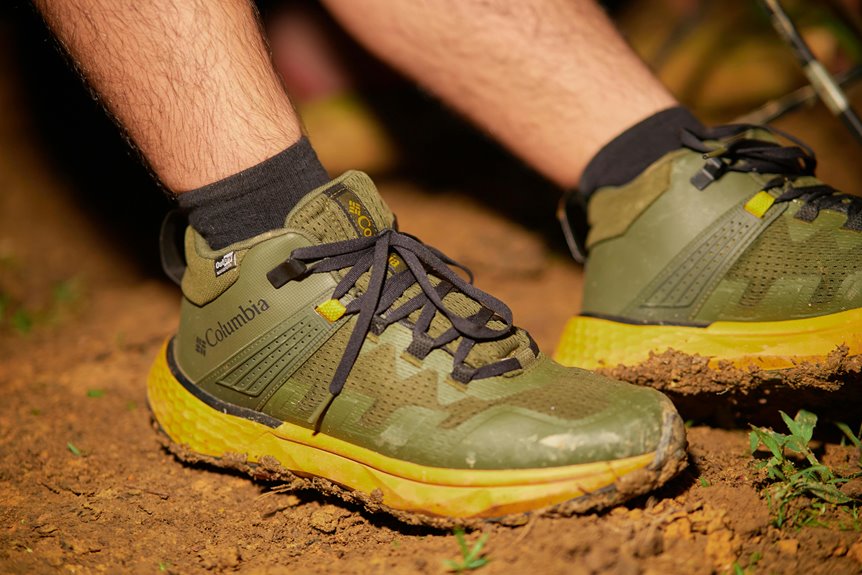
You should replace your Gore-Tex hiking boots when you notice persistent leaks, worn-out soles with flattened treads, or decreased cushioning that causes discomfort. If your boots feel loose or create new pressure points, or if seams and waterproof membranes show damage, it’s time for new ones. Frequent use in rough terrain speeds up wear, compromising support and traction. Keep track of their age and condition to avoid injuries. There’s more to reflect on when deciding your next upgrade.
Key Takeaways
- Replace boots if waterproofing fails and persistent leaks occur during hikes.
- Change boots when soles show worn tread, cracks, or reduced traction and cushioning.
- Swap boots if comfort declines due to flattened cushioning or new pressure points.
- Upgrade when stitching, seams, or upper materials show significant damage or wear.
- Consider replacement after frequent use in harsh conditions causes material breakdown.
Signs of Wear and Tear in Gore-Tex Hiking Boots
You’ll notice several clear signs when your Gore-Tex hiking boots start to show wear and tear.
First, check the outsole; if the treads are worn flat or the sole begins to separate from the upper, it’s a strong indicator your boots have reached their limit.
Check the outsole for worn treads or sole separation—key signs your boots are worn out.
Inspect the stitching and seams for any fraying or gaps, as these can let dirt and moisture in.
The boot’s upper material may also show cracks, deep scuffs, or holes, which compromise durability.
Pay attention to the laces and eyelets—if they’re damaged or missing, your boots won’t fit securely.
Finally, if your boots feel less supportive or comfortable, it might be time to contemplate replacement.
These signs mean your boots no longer offer the protection and performance you need.
How Waterproofing Breaks Down Over Time
You’ll notice your Gore-Tex boots lose their waterproofing as the membrane gradually degrades.
Everyday wear and tear, like scuffs and flexing, speeds up this breakdown.
Understanding how these factors affect your boots helps you know when it’s time to replace them.
Waterproof Membrane Degradation
Although waterproof membranes like Gore-Tex are designed to keep your feet dry, they don’t last forever. Over time, exposure to moisture, dirt, and repeated flexing causes the membrane’s microscopic pores to clog or tear. This degradation reduces breathability and waterproofing, meaning your feet might start feeling damp during hikes.
Here’s a simple way to visualize the process:
| Stage | Membrane Condition | Effect on Waterproofing |
|---|---|---|
| New | Intact pores | Fully waterproof, breathable |
| Moderate Use | Pores begin to clog | Reduced breathability |
| Worn Out | Tears and blockages | Leaks and dampness |
You’ll notice your boots feel less dry and comfortable when the membrane degrades, signaling it’s time to contemplate replacement.
Impact of Wear and Tear
As you trek through varied terrain, your Gore-Tex hiking boots face constant abrasion, flexing, and exposure to elements that gradually wear down their waterproofing.
Each step bends the membrane, and over time, microscopic tears develop, allowing water to seep in. Dirt and debris can clog the membrane’s pores, reducing breathability and trapping moisture inside.
The outer fabric and seams also degrade, compromising the overall barrier. Even regular cleaning and treatment can’t fully restore lost waterproofing once wear sets in.
You’ll notice wet spots during hikes or damp insides, signaling that the membrane’s effectiveness has diminished. Recognizing these signs early helps you decide when it’s time to replace your boots, ensuring your feet stay dry and comfortable on every adventure.
Impact of Sole Condition on Boot Performance
When the soles of your Gore-Tex hiking boots wear down, they directly affect your grip, stability, and overall comfort on the trail.
Worn-out soles lose their tread pattern, reducing traction on slippery or uneven surfaces. This can increase your risk of slips and falls, especially on wet rocks or muddy paths.
The cushioning and shock absorption also decline, making each step less comfortable and putting more strain on your joints. Additionally, damaged soles may let water seep in, compromising the waterproof protection Gore-Tex provides.
If you notice cracking, separation, or significant tread wear, it’s a clear sign your boots are underperforming.
Replacing your boots at this stage helps maintain safety and performance, ensuring your adventures remain enjoyable and injury-free.
When Comfort and Fit Start to Decline
Worn soles don’t just affect your boots’ external performance—they also impact how they feel on your feet.
When you notice your Gore-Tex hiking boots becoming less comfortable, it’s a clear sign they’re wearing out. If the cushioning feels flattened or uneven, your feet won’t get the support they need, leading to discomfort or even pain during hikes.
Pay attention to any new pressure points or tightness that wasn’t there before, as these can signal the boot’s structure is breaking down. If your boots no longer fit snugly or your foot slides inside, it’s time to contemplate replacing them.
Staying comfortable is essential for safe and enjoyable hiking, so don’t wait until discomfort turns into injury.
Effects of Frequent Use and Harsh Environments
Frequent use and exposure to harsh environments take a serious toll on Gore-Tex hiking boots. When you trek through mud, water, rocks, and rough terrain regularly, the materials start to break down faster.
The Gore-Tex membrane can lose its waterproofing ability as dirt and abrasion wear it thin. The sole often wears unevenly, reducing traction and stability, which increases your risk of slipping.
Over time, dirt and wear thin the Gore-Tex membrane, while sole wear reduces grip and stability.
Constant flexing and impact cause seams to weaken and stitching to unravel. You might notice that your boots feel less supportive or develop small leaks during heavy rain.
If you hike in extreme conditions frequently, you’ll need to inspect your boots more often and consider replacing them sooner to keep your feet dry, comfortable, and safe on the trail.
How to Properly Clean and Maintain Your Boots
Because dirt and grime can degrade your Gore-Tex hiking boots over time, you should clean them regularly to maintain their performance.
Start by removing loose dirt with a soft brush or cloth. Avoid harsh detergents; instead, use a mild soap and lukewarm water to gently scrub the surface. Rinse thoroughly to remove all soap residues.
After cleaning, stuff your boots with newspaper to help them dry naturally—never place them near direct heat sources, as this can damage the materials.
Once dry, apply a suitable waterproofing treatment recommended for Gore-Tex fabrics to restore water repellency.
Regularly inspect your boots for signs of wear and clean them after each hike to extend their lifespan and keep the Gore-Tex membrane functioning effectively.
Repair Options Before Replacing Your Boots
Before deciding to replace your Gore-Tex hiking boots, consider exploring a few key repair options that can extend their life.
Start by inspecting the soles—if they’re worn but the uppers are intact, resoling can restore traction and comfort without buying new boots.
Address minor tears or loose stitching by taking your boots to a professional cobbler; many can reinforce seams or patch damaged areas.
Don’t overlook replacing broken eyelets or laces, which can improve fit and function.
If the Gore-Tex membrane has minor leaks, some specialized treatments might help, though severe membrane damage often means replacement is necessary.
The Role of Boot Age in Replacement Decisions
While the condition of your boots matters most, the age of your Gore-Tex hiking boots plays a crucial role in deciding when to replace them. Over time, materials degrade, and even without visible damage, the waterproof membrane can lose effectiveness. Typically, boots older than five years may need closer inspection or replacement, especially if you hike frequently.
| Boot Age | Typical Use Frequency | Replacement Recommendation |
|---|---|---|
| Under 2 years | Casual / Occasional | Inspect annually; usually fine |
| 2-5 years | Moderate / Frequent | Inspect every 6 months; consider replacement |
| Over 5 years | Heavy / Daily | Likely time to replace |
Keep track of your boots’ age and use to guarantee they keep protecting your feet effectively.
Comparing New Gore-Tex Technologies and Features
Understanding when to replace your Gore-Tex boots naturally leads to contemplating what improvements new models offer.
Today’s Gore-Tex hiking boots often feature enhanced waterproofing and breathability, thanks to updated membrane technologies. You’ll notice advancements like increased durability in the outer materials and more ergonomic designs that improve comfort and reduce fatigue.
Some newer models incorporate eco-friendly materials without sacrificing performance, which might appeal if sustainability matters to you. Additionally, outsole innovations provide better traction and stability on varied terrain, making your hikes safer.
When comparing, focus on features that align with your hiking style and conditions. By evaluating these improvements, you can decide if upgrading will enhance your outdoor experience or if your current boots still meet your needs.
Choosing the Right Time to Upgrade Your Hiking Boots
Deciding when to upgrade your Gore-Tex hiking boots depends largely on how well they perform during your adventures. If you notice persistent leaks, worn-out soles, or diminishing support, it’s a clear sign your boots are past their prime.
Don’t wait for discomfort or injuries to push you into replacing them. Pay attention to how your boots feel on the trail—if they no longer provide stability or cause blisters, it’s time to act.
Also, consider upgrading when new technologies offer better waterproofing, breathability, or weight reduction that can enhance your hiking experience.
Regularly inspecting your boots after trips helps you spot issues early. Choosing the right time to upgrade guarantees your feet stay protected and comfortable, making every hike safer and more enjoyable.
Frequently Asked Questions
Can Gore-Tex Boots Be Recycled or Are They Environmentally Friendly?
You might find Gore-Tex boots don’t simply vanish after use—they’re challenging to recycle due to mixed materials. While designed for durability and protection, their environmental friendliness isn’t perfect, so consider extended use and responsible disposal.
How Do Gore-Tex Boots Perform in Extreme Cold Versus Hot Weather?
Gore-Tex boots keep you dry and breathable, performing well in extreme cold by preventing moisture buildup and in hot weather by allowing sweat to escape. However, insulation varies, so choose boots suited for your specific conditions.
Are There Specific Socks Recommended for Use With Gore-Tex Hiking Boots?
You’ll want moisture-wicking, breathable socks with Gore-Tex boots, like merino wool or synthetic blends. They keep your feet dry, prevent blisters, and complement the boots’ waterproof, breathable features for a comfortable hike.
What Are the Best Brands That Use Gore-Tex Technology in Hiking Boots?
You’ll want to check out brands like Salomon, Merrell, and The North Face—they use Gore-Tex technology in their hiking boots. These brands offer durability, waterproofing, and comfort, perfect for your outdoor adventures.
How Do Gore-Tex Hiking Boots Compare to Non-Waterproof Hiking Boots?
Want to stay dry on wet trails? Gore-Tex boots keep water out while letting sweat escape, unlike non-waterproof boots that soak through. You’ll enjoy better comfort and protection, especially in rainy or snowy conditions.