
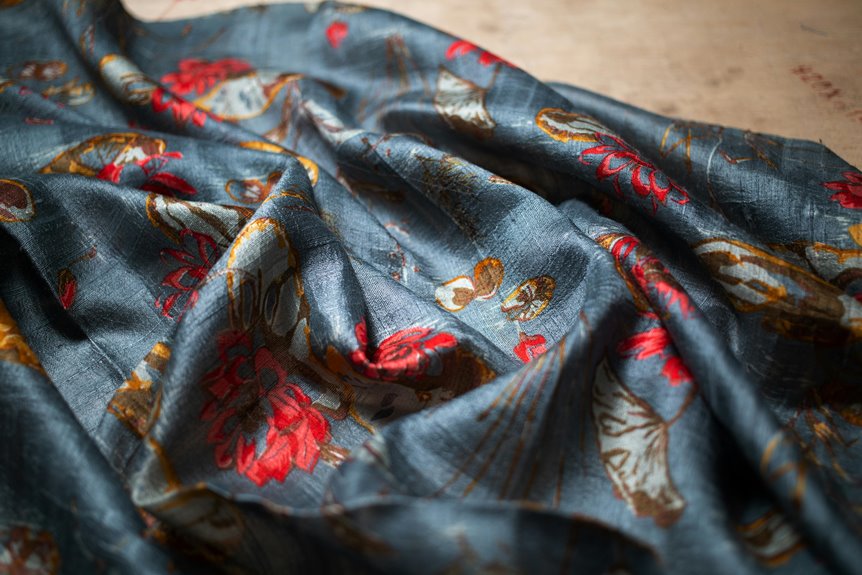
When buying Mulberry silk fabric in India, you’ll want to spot authentic silk by its smooth texture, natural sheen, and tight weave. Understand the grade—Grade A offers the best quality with long fibers. Choose suppliers from key regions like Karnataka or West Bengal who follow ethical and sustainable practices. Care matters too: wash gently, air dry, and store properly to keep it luxurious. Exploring these details will help you make a confident, informed purchase.
Key Takeaways
- Mulberry silk is prized for its smooth texture, natural sheen, breathability, and durability, making it ideal for clothing and home textiles in India.
- Identify authentic Mulberry silk by its smooth feel, subtle sheen, tight weave, and the burnt hair smell in a burn test.
- Grade A Mulberry silk offers the highest quality with long, unbroken fibers, while Grades B and C have shorter fibers and less durability.
- Purchase from reputable regions like Karnataka and West Bengal, verifying supplier certifications and ethical sourcing practices.
- Care for Mulberry silk by hand washing in cold water, air drying in shade, and ironing on low heat to maintain fabric quality.
Understanding Mulberry Silk and Its Unique Qualities
Mulberry silk stands out as the highest quality silk available, known for its smooth texture and natural sheen. When you choose Mulberry silk, you’re getting fibers produced by silkworms fed exclusively on mulberry leaves. This diet makes the silk exceptionally fine and strong, giving it that luxurious feel you’ll notice instantly.
You’ll also appreciate Mulberry silk’s breathability and hypoallergenic nature, perfect if you have sensitive skin. It’s naturally temperature-regulating, so it keeps you cool in summer and warm in winter.
Plus, its durability means your fabric will last longer without losing its luster. By understanding these qualities, you can confidently select Mulberry silk fabric that suits your needs and enjoy its unmatched comfort and elegance.
Different Grades of Mulberry Silk Fabric
Silk fabric comes in various grades that directly affect its texture, durability, and price. When you shop for Mulberry silk in India, you’ll encounter three main grades: A, B, and C.
Grade A is the highest quality, featuring long, unbroken filaments that give you a smooth, lustrous finish and superior strength.
Grade A silk boasts long, unbroken filaments for a smooth, shiny finish and exceptional strength.
Grade B silk has shorter fibers and minor imperfections, making it less shiny and slightly weaker but still suitable for many uses.
Grade C contains more broken fibers and irregularities, resulting in rougher texture and lower durability.
Knowing these grades helps you pick the right fabric for your needs without overspending.
Always consider how you plan to use the silk to choose the grade that balances quality and cost effectively.
How to Identify Authentic Mulberry Silk
Although it might seem challenging at first, you can learn to spot authentic Mulberry silk by paying attention to a few key characteristics.
Here’s how you can identify genuine Mulberry silk:
- Feel the Texture: Authentic Mulberry silk feels smooth, soft, and luxurious, not coarse or rough.
- Check the Shine: Real Mulberry silk has a natural, subtle sheen that changes with the light, unlike synthetic fabrics that may look overly shiny.
- Look at the Weave: Examine the fabric closely; genuine silk has a tight, even weave without irregularities or pulls.
- Perform a Burn Test: If possible, burn a small thread. Real silk smells like burnt hair and leaves a crisp ash, while synthetics smell like plastic.
Use these tips to confidently choose authentic Mulberry silk fabric.
Common Uses of Mulberry Silk in India
When you explore traditional and contemporary Indian textiles, you’ll find this fabric playing an essential role in everything from elegant sarees to luxurious bedding.
Mulberry silk is prized for its smooth texture and natural sheen, making it a favorite for bridal and festive wear. You’ll also see it in scarves, stoles, and dupattas, adding a touch of sophistication to any outfit.
Beyond fashion, Mulberry silk is popular in home décor, used in cushion covers, curtains, and bedsheets for its durability and comfort.
If you value quality sleep, silk pillowcases made from Mulberry silk can help reduce skin and hair friction.
Whether for clothing or interiors, Mulberry silk’s versatility and elegance make it a sought-after choice across India.
Factors That Affect the Price of Mulberry Silk
Because you want the best value for your purchase, understanding what drives Mulberry silk prices in India is essential.
Several key factors influence the cost:
Multiple important elements determine the overall price of Mulberry silk in India.
- Quality of Silk: Higher-grade silk with longer, finer fibers costs more.
- Weaving Technique: Handwoven fabrics demand higher prices than machine-made ones.
- Raw Material Sourcing: Silk from well-maintained farms tends to be pricier due to better quality control.
- Dyeing and Finishing: Natural or eco-friendly dyes and superior finishing processes add to the price.
Popular Regions in India Known for Silk Production
Understanding the factors that influence Mulberry silk prices gives you a clearer picture of where the finest silk comes from. In India, certain regions are renowned for producing high-quality Mulberry silk, thanks to favorable climate and skilled artisans. When buying, knowing these areas helps you identify genuine products.
| Region | Notable Silk Type |
|---|---|
| Karnataka | Mysore Silk |
| Tamil Nadu | Kanchipuram Silk |
| West Bengal | Baluchari Silk |
| Andhra Pradesh | Pochampally Silk |
| Assam | Muga Silk (not Mulberry, but notable) |
Karnataka leads in Mulberry silk production, especially Mysore. Tamil Nadu and West Bengal also contribute considerably. While Assam is famous for Muga silk, it’s worth knowing for overall silk expertise in India.
Tips for Buying Mulberry Silk Fabric Online
Since buying Mulberry silk fabric online requires careful evaluation, you should focus on key factors like authenticity, thread count, and seller reputation.
To make a confident purchase, follow these tips:
- Verify seller credentials and check customer reviews to guarantee reliability.
- Look for clear product descriptions specifying silk type, thread count, and origin.
- Request certification or proof of authenticity when possible to avoid counterfeit products.
- Compare prices across platforms; extremely low prices can signal poor quality or fake silk.
Caring for Your Mulberry Silk Fabric
Once you’ve secured high-quality Mulberry silk fabric, proper care will keep it looking its best for years. Handle it gently and avoid harsh chemicals. Always wash it by hand in cold water with a mild detergent. Dry your silk fabric away from direct sunlight to prevent fading. Iron on a low setting while the fabric is slightly damp to avoid damage.
| Care Aspect | Do’s | Don’ts |
|---|---|---|
| Washing | Use cold water, mild detergent | Avoid bleach or hot water |
| Drying | Air dry in shade | Don’t use a dryer or sunlight |
| Ironing | Iron on low heat, damp fabric | Avoid high heat or dry ironing |
| Storage | Store in a cool, dry place | Don’t fold tightly or hang in direct sun |
Comparing Mulberry Silk With Other Types of Silk
When you compare Mulberry silk with Tussar silk, you’ll notice differences in durability and texture.
Mulberry silk tends to be smoother and stronger, while Tussar has a coarser feel and a more natural, rustic look.
Understanding these contrasts helps you choose the right fabric for your needs.
Mulberry Vs Tussar
Although both Mulberry and Tussar silk come from silkworms, you’ll notice key differences in texture, sheen, and durability that affect their use and value.
When choosing between them, consider these points:
- Mulberry silk boasts a smooth, fine texture with a natural sheen, making it perfect for luxurious garments.
- Tussar silk has a coarser feel and a matte finish, lending an ethnic, rustic charm ideal for traditional wear.
- Mulberry silk is produced under controlled conditions, ensuring uniformity and higher quality.
- Tussar silk is wild-harvested, which gives it unique, natural variations but less consistency.
Durability and Texture Differences
Since silk varieties differ widely, understanding the durability and texture of Mulberry silk compared to other types can help you make a smarter choice.
Mulberry silk is known for its long, smooth fibers, making it incredibly strong and resistant to wear. You’ll notice its soft, lustrous texture feels luxurious against your skin.
In contrast, silks like Tussar or Eri have shorter fibers, which often results in a coarser texture and less durability. While Tussar offers a natural, rustic feel, it won’t last as long under frequent use.
If you want silk that’s both durable and silky smooth, Mulberry silk stands out. It’s ideal for garments and bedding that need to endure regular wear without losing their sheen or softness.
Sustainable and Ethical Considerations in Silk Production
Understanding sustainable and ethical considerations in silk production helps you make informed choices about the fabric you buy.
Knowing the ethical and sustainable aspects of silk guides better purchasing decisions.
Mulberry silk, while luxurious, involves practices that impact the environment and communities. To shop responsibly, consider these key points:
- Eco-friendly farming: Look for producers who minimize pesticide use and water consumption.
- Animal welfare: Some silk production kills silkworms; seek brands that support non-violent harvesting.
- Fair labor: guarantee workers receive fair wages and work in safe conditions.
- Certifications: Certifications like GOTS or OEKO-TEX can indicate ethical and sustainable standards.
Where to Find Reputable Mulberry Silk Suppliers in India
Anyone looking to buy high-quality Mulberry silk fabric in India can find reputable suppliers by focusing on key regions known for their silk production and verifying the authenticity and ethical practices of the vendors.
Start your search in places like Karnataka, West Bengal, and Tamil Nadu, where Mulberry silk thrives. Visit well-established markets or contact certified cooperatives that support local sericulture communities.
Check for suppliers who provide transparent information about their sourcing and production methods. Don’t hesitate to ask for certifications or samples to assess fabric quality firsthand.
Online platforms with verified reviews can also help you identify trustworthy sellers. By doing your homework and choosing suppliers committed to sustainable practices, you’ll guarantee you get genuine Mulberry silk fabric that meets your expectations.
Frequently Asked Questions
Can Mulberry Silk Fabric Be Dyed at Home Safely?
You can safely dye mulberry silk fabric at home using acid dyes or fabric-specific silk dyes. Just make sure to follow instructions carefully, use gentle detergents, and avoid high temperatures to preserve its softness and sheen.
What Is the Typical Lifespan of Mulberry Silk Clothing?
You can expect your mulberry silk clothing to last around 5 to 10 years with proper care. Imagine a delicate fabric that’s strong enough to stay beautiful, even after many wears and gentle washes.
How Does Humidity Affect Mulberry Silk Storage?
You shouldn’t store mulberry silk in humid places because moisture can weaken fibers and cause mildew. Keep it in a cool, dry spot with breathable fabric covers to maintain its softness and longevity without damage.
Are There Any Health Benefits to Wearing Mulberry Silk?
You’ll enjoy mulberry silk’s natural hypoallergenic properties, reducing skin irritation and allergies. It also helps retain moisture, keeping your skin hydrated, and its smooth texture minimizes friction, which can prevent wrinkles and hair damage effortlessly.
Can Mulberry Silk Cause Allergies or Skin Irritation?
You might wonder if mulberry silk causes allergies, but it rarely does. Its natural, hypoallergenic properties usually soothe your skin rather than irritate it, making it a safe, gentle choice for most people with sensitive skin.